

One of the most common questions cottage food vendors ask is whether they can ship their products to customers. The answer is more complicated than it should be — and getting it wrong can put your entire business at risk.
This guide explains the shipping and delivery rules for cottage food in plain language, including why interstate shipping is almost always off-limits, which states allow in-state shipping or delivery, and what your alternatives are.
The short version: You almost certainly cannot ship cottage food across state lines. When food crosses state lines, it becomes interstate commerce, and federal FDA regulations apply — your state's cottage food exemption does not protect you. Whether you can ship or deliver within your own state depends on your specific state law. About 35 states allow some form of mail order or delivery, but the rules range from full in-state shipping to vendor-only delivery to in-person sales only. If shipping is essential to your business model, you may need to move to a commercial kitchen and get a proper food business license.
Ready to start selling locally? Take orders and get paid online in about 15 minutes — set up a Homegrown storefront ($10/mo, 0% commission), or compare the best platforms to sell food from home.
No — with very rare exceptions. This is the most important rule to understand, and it catches many vendors off guard.
Here's why: Cottage food laws are state laws. They exempt you from your state's food safety regulations (commercial kitchen requirements, licensing, inspections) so you can legally sell food made in your home kitchen. But those exemptions only apply within your state's borders.
The moment your food crosses into another state, it becomes interstate commerce. Interstate commerce is regulated by the federal government — specifically the FDA under the Federal Food, Drug, and Cosmetic Act and the Food Safety Modernization Act. The FDA does not recognize cottage food exemptions. As far as federal regulators are concerned, you're an unlicensed food manufacturer shipping unregulated food products.
The rare exceptions: A very small number of states have laws that reference interstate sales. North Dakota, for example, allows cottage food producers to sell to out-of-state customers. However, even where a state law appears to allow this, the federal government's authority over interstate commerce doesn't disappear. The practical risk may be low for small-scale sellers, but the legal exposure exists.
The bottom line: If you want to sell food across state lines — whether by mail, through a shipping service, or through an online marketplace — you almost certainly need to operate as a licensed food business, not a cottage food operation.
Understanding the legal structure helps this make more sense.
How cottage food laws work: Your state created an exemption that says, essentially, "If you meet these requirements (certain food types, revenue cap, labeling rules), you don't need a commercial kitchen or food manufacturing license to sell food within our state." This exemption exists only under state law.
What triggers federal jurisdiction: When a product moves across state lines, the federal government has authority under the Commerce Clause of the Constitution. The FDA regulates food in interstate commerce, and it requires food manufacturers to follow federal standards — registered facilities, HACCP plans, proper labeling under federal rules, and more. None of your state cottage food protections apply.
Your cottage food permit doesn't travel: Think of your state's cottage food exemption like a parking permit that's only valid in one city. It works great where it was issued, but it means nothing in the next city over. Your state cottage food status means nothing to the FDA or to another state's regulators.
The Food Safety Modernization Act (FSMA): FSMA added further federal requirements for food producers. While there are some exemptions for very small producers selling mostly through direct sales, these exemptions have their own requirements and don't simply extend cottage food status to interstate sales.
This is where the rules vary dramatically. Each state's cottage food law defines where and how you can sell, and those rules range from very flexible to very restrictive.
States generally fall into three categories when it comes to shipping and delivery:
These states permit cottage food vendors to ship products to customers within the state using mail services or commercial delivery:
These states allow the vendor (or a household member) to personally deliver products to the customer, but don't allow shipping through carriers:
The key distinction: in these states, the vendor handles delivery directly rather than using a third-party shipping service.
Some states still require all cottage food sales to happen face to face — at a farmers market, roadside stand, or similar direct-sales venue. In these states, you can't take online orders for delivery or shipping. Customers must be physically present to purchase.
These restrictions are becoming less common as more states update their cottage food laws, but they still exist. If your state requires in-person sales, you're limited to selling at farmers markets, events, farm stands, and similar venues.
Cottage food laws change frequently. Several states update their laws every legislative session, and the trend is toward more flexibility — allowing online sales, delivery, and broader selling channels. The categories above reflect general patterns, but always verify your state's current law before making business decisions. Your state's department of agriculture or health department website will have the most up-to-date rules. If you cannot find a clear answer online, call your state agency directly — a 10-minute phone call can prevent you from accidentally violating a rule that could cost you your cottage food status.
This is where many vendors get confused. Taking orders online and shipping products are two different things — and your state may allow one without allowing the other.
Online ordering ≠ shipping. Many states allow cottage food vendors to take orders through a website, social media, or an online platform. The customer places the order online, but the product is picked up in person or delivered locally by the vendor. The online component is just the ordering method — the food never enters a shipping carrier's system.
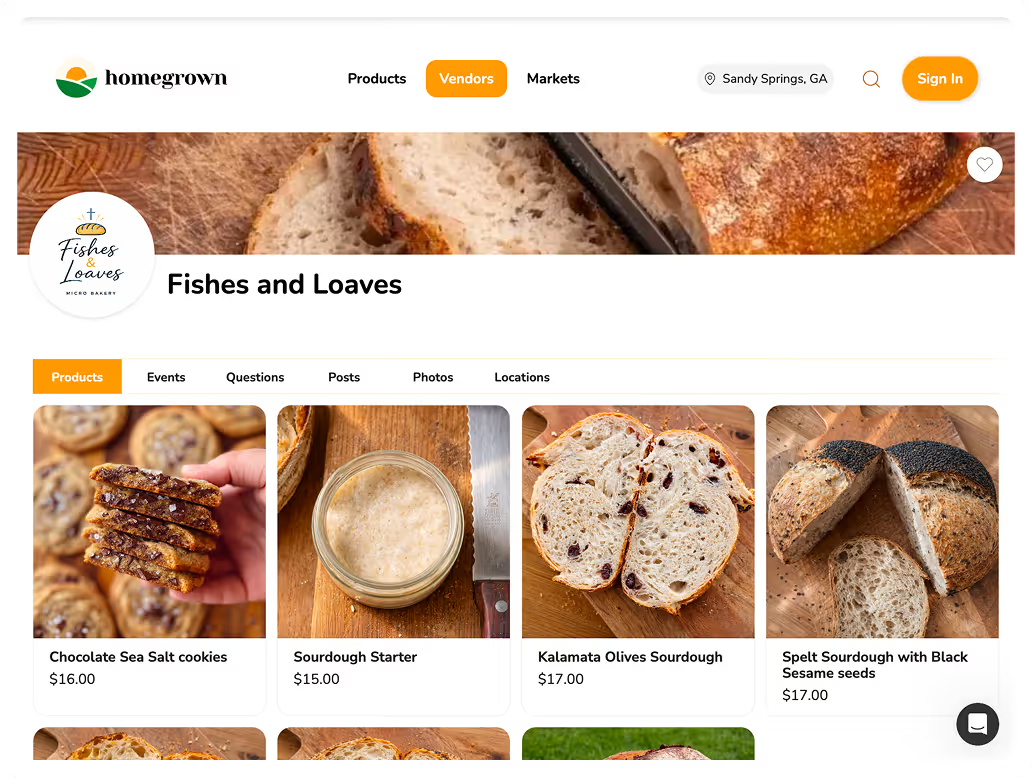
This is how most cottage food vendors sell online. You set up an ordering page, list your products, and customers in your area place orders for pickup or local delivery. You handle the handoff personally.
Where it gets tricky: Some states define "direct sales" or "face-to-face" so narrowly that even local delivery or online ordering may not qualify. Others are more flexible. If your state allows online sales but requires in-person delivery, you can still reach more customers than selling at a booth alone — you just can't put a package in the mail.
If you're transitioning from farmers market sales to online, understanding your state's delivery rules is essential before setting up your online storefront.
The consequences depend on whether you're violating state or federal rules.
Shipping within your state when your law doesn't allow it:
Shipping across state lines:
The practical reality: Enforcement against very small cottage food sellers shipping a few packages is uncommon. But "uncommon" doesn't mean "safe." A single customer complaint, a foodborne illness report, or a competitor's report to regulators can trigger an investigation. And once regulators start looking, they don't just address the shipping violation — they review your entire operation. The risk isn't worth it when legal alternatives exist.
If you can't ship your cottage food products, you still have several ways to reach more customers.
Local delivery. Many states that restrict shipping still allow the vendor to deliver products directly. This expands your reach beyond your booth without entering the mail system. You can take online orders and deliver within a reasonable radius of your home.
Pickup locations. Since most states do not allow you to ship cottage food, the best alternative is local pre-orders with pickup. Homegrown is $10/month with no percentage fees beyond standard payment processing and lets customers order your cottage food products online and pick up at your home, a farmers market, or another convenient location — keeping you within the direct-to-consumer rules that cottage food laws require. Compare that to Etsy (6.5% per transaction, designed for shipping — the opposite of what cottage food vendors need) or managing orders through DMs and Venmo with no pickup scheduling. Homegrown doesn't handle shipping or interstate sales — it gives you a structured ordering system for local pickup, which is exactly how cottage food is meant to be sold.
Multiple markets and events. Sell at additional farmers markets, craft fairs, and community events to reach customers in different areas. Each new venue expands your customer base without shipping.
Pre-orders. Let customers order ahead for pickup at your next market day. This guarantees sales before you show up and reduces waste. Pre-orders also let you produce exactly what customers want rather than guessing — if you know you have 15 orders for cinnamon rolls and 8 for banana bread before you start baking, you avoid overproducing items that might not sell and underproducing your bestsellers.
Get a commercial kitchen license. If shipping is essential to your business model, consider moving to a commercial kitchen. With a proper food business license, you can ship within your state (and potentially across state lines) without cottage food restrictions. Many shared commercial kitchens rent by the hour, making this more affordable than building your own.
If your business is growing and the cottage food shipping restrictions are holding you back, that's actually a good problem to have. It means there's demand for your product beyond what cottage food allows.
Signs you might need to upgrade beyond cottage food:
The path forward: Moving from cottage food to a licensed food business typically involves getting a commercial kitchen (either your own or a shared/rented space), proper food manufacturing licenses, and meeting all federal and state food safety requirements. It's a bigger commitment, but it removes the shipping and selling restrictions entirely.
If you're starting a cottage food business, it's worth thinking about your long-term goals. If you know you'll eventually want to ship nationally, build your brand and recipes under cottage food rules while planning your transition to licensed production.
It depends on your state. If your state allows in-state shipping of cottage food, you can sell on Etsy and ship to customers within your state. However, you cannot ship across state lines under cottage food rules. Many cottage food vendors use Etsy for local pickup or delivery orders rather than shipped orders. If you want to sell on Etsy with nationwide shipping, you'll need to operate as a licensed food business — not under cottage food exemptions.
No. Mailing food to another state is interstate commerce, which is regulated by the FDA. Your state's cottage food exemption doesn't apply once the package crosses state lines. If you want to ship cookies nationally, you'll need a commercial kitchen, proper food manufacturing licenses, and federal compliance. Some states also have their own requirements for receiving shipped food products.
Many states allow cottage food vendors to deliver products directly to customers within the state. However, some states require that you — the vendor or a member of your household — make the delivery personally (you can't use a third-party delivery service like DoorDash). Other states require all sales to happen in person at a designated selling venue. Check your state's cottage food law for specific delivery rules.
Most states now allow some form of online cottage food sales, but what "online sales" means varies. In some states, you can take orders online and ship within the state. In others, you can take orders online but must deliver in person or have customers pick up. A small number still require in-person, face-to-face transactions with no online ordering. Check your state's cottage food laws for the current rules on online sales.
Under most cottage food laws, "shipping" means sending a product through a mail carrier or delivery service (USPS, UPS, FedEx). "Delivery" usually means the vendor personally brings the product to the customer. Many states that prohibit shipping still allow vendor delivery, and the distinction matters. If your state says cottage food can be "delivered" but doesn't mention shipping, you likely need to handle delivery yourself rather than dropping packages at the post office.
Having an LLC doesn't change your cottage food shipping rules. An LLC is a business structure that protects your personal assets — it doesn't give you additional food safety exemptions or override your state's cottage food restrictions. Whether you operate as a sole proprietor or an LLC, the same cottage food rules about shipping, delivery, and where you can sell apply.
This article is for informational purposes and does not constitute legal advice. Cottage food laws and shipping regulations vary by state and change frequently. Check your state's current cottage food law for the rules that apply to your situation.
An ordering page built for local food vendors supports pickup and delivery orders that work within your state's cottage food rules.