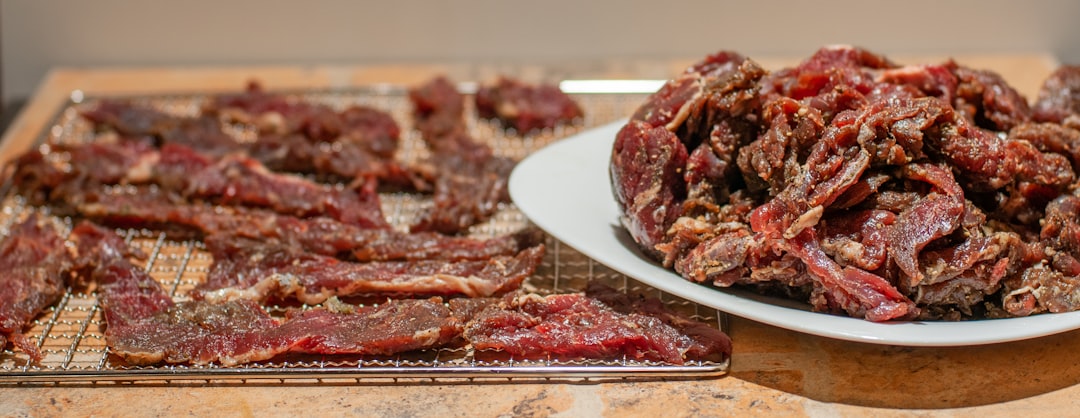


Beef jerky is one of the most searched homemade food products people want to sell. It is shelf-stable, lightweight, has a loyal customer base, and commands premium prices. But here is the reality most guides gloss over — selling beef jerky from home is significantly harder than selling cookies, jam, or bread. Meat products face stricter regulations than almost any other food category.
This guide covers the legal landscape honestly, the pathways that actually work for small producers, the food safety requirements you cannot skip, equipment needs, pricing, and where to sell your jerky once you are legal.
The short version: Most states do not allow beef jerky under cottage food laws because it is a meat product regulated under stricter food safety rules. To sell legally, you typically need a USDA-inspected facility, a retail exemption, or a rented commercial kitchen, with startup costs running $500 to $3,000. Jerky sells for $8 to $16 per bag with 40 to 60 percent margins, and flavors like original, teriyaki, and spicy move the fastest. The legal barriers are real, but jerky buyers are some of the most loyal repeat customers in the food business.
The short answer for most states is no — at least not from your home kitchen without additional licensing. Here is why.
Cottage food laws were designed to allow home producers to sell low-risk foods like baked goods, jams, and dry mixes. Meat products like beef jerky are classified as potentially hazardous foods because improper processing can lead to serious foodborne illness from bacteria like E. coli O157:H7 and Salmonella.
States like Colorado explicitly prohibit "meat products such as bacon, jerky, and poultry" from cottage food operations. Most other states with cottage food laws take the same approach — meat is simply excluded from the list of allowed products.
Even though your home kitchen is likely off-limits for jerky production, several legal pathways exist for small producers.
"Beef jerky is not a product you can just start making and selling tomorrow. But the vendors who do the legal work upfront build businesses with loyal customers and premium prices that most cottage food producers never reach."
The first step is always to contact your state department of agriculture and ask specifically about selling dried meat products as a small producer. Every state handles this differently, and the rules change frequently.
Whether you produce in a commercial kitchen or qualify for an exemption, food safety is non-negotiable with meat products. The stakes are higher than with baked goods because improperly processed jerky can cause serious illness.
According to NDSU Extension's jerky production guide, the internal temperature of beef must reach 160 degrees Fahrenheit to kill harmful bacteria. For poultry jerky, the target is 165 degrees Fahrenheit.
There are two approaches to reaching this temperature.
The University of Arkansas Extension's guide on making safe jerky outlines essential handling practices.
Properly dried jerky must reach a water activity level below 0.85 to be considered shelf-stable. In practical terms, this means the finished jerky should crack but not break when you bend it. If it bends without cracking, it is not dry enough and will need refrigeration.
Properly dried jerky stored in airtight packaging at room temperature lasts about two months. Refrigerated jerky lasts three to four months. Vacuum-sealed jerky can last up to six months at room temperature.
The equipment list depends on whether you are producing in your own space (under a state exemption) or renting commercial kitchen time.
| Item | Cost Range | Notes |
|---|---|---|
| Commercial food dehydrator | $200 - $800 | Home dehydrators are too small for production |
| Meat slicer | $150 - $400 | Consistent thickness is critical for even drying |
| Vacuum sealer | $100 - $300 | Extends shelf life significantly |
| Food thermometer (digital) | $20 - $50 | Must verify 160°F internal temperature |
| Vacuum seal bags | $30 - $50 per 100 | Ongoing cost |
| Labels and printer | $30 - $50 | Required for legal sales |
| Cutting boards and knives | $50 - $100 | Dedicated to raw meat only |
| Gloves and sanitizing supplies | $20 - $30 | Food safety requirement |
If you are renting a commercial kitchen, expect to pay $15 to $30 per hour or $100 to $250 per day. Some shared kitchens offer monthly memberships for $500 to $1,500 that include unlimited production hours and storage. This is often the most practical path for a small jerky producer who does not want to build out their own inspected facility.
| Path | Startup Range |
|---|---|
| Commercial kitchen rental + basic equipment | $500 - $1,500 |
| Own equipment + kitchen rental | $1,000 - $3,000 |
| Own inspected facility (major investment) | $10,000 - $50,000+ |
Most small producers start with the kitchen rental path. You bring your recipes, spices, and techniques — the kitchen provides the inspected space, sinks, and refrigeration.
Beef jerky commands premium pricing, especially for small-batch, handmade products. Your customers are not comparing you to gas station jerky — they are comparing you to artisan brands that charge $10 to $15 per bag.
| Size | Suggested Price | Your Cost | Margin |
|---|---|---|---|
| 2 oz bag | $8 - $10 | $3.00 - $4.00 | 55-63% |
| 4 oz bag | $12 - $16 | $5.00 - $7.00 | 50-58% |
| 8 oz bag | $20 - $25 | $8.00 - $12.00 | 48-55% |
For a typical 5-pound batch of beef jerky (which yields about 2 to 2.5 pounds of finished product after drying).
The math shows why kitchen rental costs matter. If you can negotiate a monthly membership or find a lower-cost facility, your margins improve significantly. Some producers share kitchen time with other food vendors to split costs.
"Jerky buyers are some of the most loyal customers in the food business. Once someone finds a jerky they love, they come back month after month."
The jerky market rewards both classic flavors and creative experimentation. Start with proven sellers and add specialty flavors as your customer base grows.
| Flavor | Popularity | Notes |
|---|---|---|
| Original/Classic | Very high | Your signature base recipe |
| Teriyaki | Very high | Sweet and savory, broad appeal |
| Peppered | High | Simple and traditional |
| Spicy/Hot | High | Heat levels from mild to extreme |
| BBQ/Smoky | High | Sweet and smoky profile |
| Garlic | Moderate | Underrated but has devoted fans |
| Sweet and Spicy | Moderate | Combines two popular profiles |
Start with three to four flavors. Original, teriyaki, and one spicy option covers most customer preferences. Add seasonal or limited-edition flavors (like maple-bourbon in fall or habanero-mango in summer) to keep regulars excited.
Packaging and labeling requirements for meat products are more detailed than for cottage food products.
Labeling requirements vary by state and your licensing type, but most jurisdictions require the following at minimum.
Once you have your production and licensing sorted, jerky sells well through multiple channels.
Jerky is ideal for farmers markets — it is shelf-stable, easy to display, and customers can sample it. Check with your market manager about requirements for selling processed meat products. Some markets require additional documentation beyond what they ask from bakers or produce vendors. For more sales channels beyond markets, check out our guide on 7 places to sell homemade food that are not Etsy or Shopify.
Jerky is shelf-stable and ships easily, so online sales are a natural fit. The question is where to send your market customers between Saturdays. Etsy takes 6.5% of every sale plus listing fees — on a $14 bag, that's nearly a dollar gone before processing. Shopify charges $39/month and is built for brands shipping nationally, not a small producer selling locally. Homegrown is $10/month with no percentage fees on your sales — list your flavor lineup with photos, set your production schedule, and share the link at your booth or on your packaging. Customers pick flavors, pick bag sizes, and pay before you start your next batch.
Homegrown won't help you manage wholesale accounts with breweries or set up cross-state shipping compliance — for those, you need direct relationships and a proper e-commerce setup. But for turning your farmers market jerky customers into weekly pre-order buyers who pay before you fire up the dehydrator, the flat $10/month means every dollar of your premium pricing stays in your pocket.
Monthly jerky subscriptions are one of the strongest recurring revenue models in the food business. Offer two or three tiers (for example, a $25 sampler with three flavors, a $40 classic pack with larger bags). Keep your ordering page open year-round so subscribers can reorder on their own schedule.
To learn more about the cottage food licensing process and how it works for products that do qualify, read our guide on how to start a cottage food business. And if you want to add online ordering alongside your in-person sales, check out how to add online ordering to your existing market business.
In most states, no. Cottage food laws typically exclude meat products because of the higher food safety risks associated with improperly processed meat. A few states have exceptions for certain dried meat products, but this is uncommon. Check your state's specific cottage food rules.
Starting costs range from $500 to $3,000 for most small producers using a commercial kitchen rental. This includes equipment like a dehydrator, meat slicer, vacuum sealer, and packaging materials, plus kitchen rental fees. Building your own inspected facility costs $10,000 or more.
Properly dried, vacuum-sealed jerky lasts about two months at room temperature and three to four months refrigerated. With vacuum sealing and an oxygen absorber, shelf life can extend to six months. Always label packages with a best-by date.
Margins typically run 40 to 60 percent for small-batch jerky, depending on your beef costs, facility rental, and packaging. A 4-ounce bag costing $5 to $7 to produce sells for $12 to $16. Volume helps — the more you produce per session, the lower your per-unit kitchen rental cost.
It depends on your state and how you sell. If you sell across state lines, USDA inspection is required. For in-state direct-to-consumer sales, some states offer exemptions or have their own meat inspection programs. Contact your state department of agriculture for your specific options.
Top round, bottom round, and eye of round are the most popular cuts for jerky. They are lean, affordable, and slice well. Flank steak also works but costs more. Always choose lean cuts — fat does not dehydrate properly and causes jerky to spoil faster.
Yes, and jerky is one of the easiest food products to ship because it is shelf-stable and lightweight. You will need proper packaging (vacuum-sealed), accurate labeling, and compliance with both your state's regulations and any states you ship to. Start with local sales and add shipping as your volume grows.