

A new customer costs you something. It might be a sample, a conversation at your booth, a social media post that caught their attention, or the time it took to set up a display that pulled them in from across the farmers market. A repeat customer costs you almost nothing. They already know what you sell, they already trust the quality, and they come back because they've decided on their own that what you make is worth returning for, as the Small Business Administration recommends.
The short version: Repeat customers are the foundation of a profitable food business. Keep them coming back with consistent product quality, personal recognition at your booth, a weekly email so they remember farmers market day, and pre-orders through your ordering page so they can commit before Saturday. Most of these tactics cost nothing — they just require showing up, making great food, and treating people like they matter.
The math behind this is straightforward and worth understanding. A food business with 50 customers who each buy from you twice a month is more stable, more predictable, and more profitable than one that needs to find 100 new customers every month. Repeat buyers spend more per visit over time because they trust your products and they're willing to try new products. They're also your most likely advocates — the people who tell friends, post photos, and pull others toward your booth without being asked.
This guide covers what actually drives repeat business for a small food operation selling at farmers markets or directly to local customers. Most of these tactics are simple, low-cost, and don't require any marketing expertise. They just require consistency and attention to the people who already like what you make.
Repeat customers are more valuable because they spend more, cost nothing to re-acquire, and send new customers to you for free. First-time customers are uncertain. They don't know how your bread tastes, whether your jam is as good as it looks, or if you'll even be at the farmers market next week. Every first purchase involves a small leap of trust, and many first-time buyers never come back — not because they didn't like what they bought, but because they simply forgot about you or got busy the following week.
A repeat customer has resolved all of that uncertainty. They've tried your products, they've decided you're worth coming back for, and they've built your booth into their mental map of what they do on farmers market day. That resolved trust is enormously valuable, and it shows up in several practical ways.
| Customer Type | Avg. Lifetime Revenue | Acquisition Cost | Referral Likelihood |
|---|---|---|---|
| One-time buyer | $15–$30 (1–2 visits) | High — samples, displays, social media | Low |
| Repeat customer (monthly) | $180–$360/year | Near zero after first visit | High |
| Weekly regular | $780–$1,500/year | Near zero after first visit | Very high — active advocate |
They spend more over time. A customer who visits your booth 20 times over two years and spends $15 each time generates $300 in total revenue. Five different customers who each visit once or twice and spend $15 generate $75 to $150. The lifetime value of a loyal customer dwarfs the value of a one-time buyer, and that gap widens the longer they keep coming back.
They cost nothing to re-acquire. You don't need to attract them again with samples, displays, or social media posts. You just need to be there and be consistent. Every dollar you'd spend acquiring a new customer to replace them is a dollar you save by keeping the ones you already have.
They send others to you. Loyal customers are the primary source of word-of-mouth for small food businesses. They don't refer strangers through impersonal channels — they tell people they know and trust. A regular customer who tells three friends about your booth is generating new customers for you at zero cost, and those referred customers arrive with built-in trust because someone they know already vouched for you. The Harvard Business Review's customer retention research provides additional guidance on this.
They're forgiving. If you run out of a popular product, have a rough batch, or show up at a different spot than usual, a loyal customer will come back anyway because their relationship with your business is deeper than any single transaction. A first-time buyer who has a mediocre experience probably won't return. A loyal customer who has one off day will give you the benefit of the doubt because they know from repeated experience that you're usually excellent.
Consistent product quality is the non-negotiable foundation — nothing else works without it. Repeat business is built entirely on the expectation that what was good last time will be good this time. A customer who bought your sourdough last Saturday and loved it is coming back this Saturday expecting the same quality. If what they get this time is noticeably different — denser, less flavorful, unevenly baked — the trust breaks.
This doesn't mean every batch has to be identical. Small-batch and seasonal products have natural variation, and most customers understand and even appreciate that. A slight difference in color between two batches of jam is fine. What can't slip is the core quality standard. If your sourdough was exceptional in spring and inconsistent through summer, customers learn they can't count on it, and that uncertainty works directly against repeat visits.
Before you focus on retention tactics, focus on consistency:
The product is the foundation everything else rests on, and no amount of marketing or relationship-building compensates for inconsistent quality.
Customers come back to places where they feel recognized — and your farmers market booth has a built-in advantage over any grocery store. The personal connection between vendor and customer is one of the primary reasons people shop at farmers markets instead of grocery stores, and the vendors who lean into that connection build the strongest repeat customer bases.
You don't need to memorize every customer's name or keep a mental file on their families. But small moments of recognition matter enormously:
These interactions take seconds. They cost nothing. And they create a completely different experience than a silent, impersonal transaction. Customers who feel personally acknowledged at a farmers market booth are dramatically more likely to seek you out again because the relationship itself becomes part of what they're buying.
This is one of the real structural advantages small food vendors have over grocery stores and large retailers. You can offer something no supermarket can replicate: a genuine human relationship with the person who made the food. Every conversation, every moment of recognition, every personalized recommendation reinforces that advantage and makes it harder for customers to drift away.
Remove the friction that prevents willing customers from returning — email, pre-orders, and a predictable schedule do this best. The biggest barrier to a repeat purchase often isn't desire — it's friction. Someone who enjoyed your jam last month might not be at the farmers market next week, might have a busy stretch, might simply lose track of your schedule. The customer wanted to come back but life got in the way.
The vendors who build the strongest repeat business make it easy to stay connected and easy to buy again. Here are the tools that remove friction:
Each of these channels works independently, but they work best together. A customer on your email list who also follows you on Instagram and occasionally places pre-orders is deeply embedded in your business. They're hearing from you through multiple channels, buying from you regularly, and unlikely to drift away.
Simple acts of generosity and attention create outsized goodwill that keeps people coming back. Repeat customers often come back partly because of how you made them feel, not just the product itself. Small gestures that go slightly beyond the basic transaction create disproportionate goodwill and make your booth feel like a place people want to return to.
None of this requires a formal loyalty program, a punch card, or any kind of tracking system. It's just treating your best customers like they matter, which they do.
Announcing new or seasonal products gives existing customers a specific reason to visit this week. One of the simplest ways to bring a customer back is to tell them about something they didn't know existed. A new product, a seasonal flavor, a special batch — these are natural triggers for customers who already like your food. They don't need to be convinced of your quality. They just need to know there's something new worth trying.
This is where your email list and social media presence become directly useful for retention. "New flavor this week: lemon thyme shortbread" in your weekly farmers market email catches the eye of every subscriber who likes cookies. "First batch of strawberry preserves is ready — only available for a few weeks" creates genuine urgency that drives visits from customers who might have otherwise skipped this Saturday.
If you have a customer's email, a note saying "our strawberry preserves are back in stock — I know you've asked about them before" will almost certainly result in a visit. That's not marketing or spam. That's a genuine service — letting someone know that the thing they wanted is available.
Seasonal and limited products are especially effective retention triggers because they create natural urgency. Customers who know that your peach jam is only available for three weeks in July will make a point of coming to the farmers market during that window.
Pre-orders transform casual buyers into committed weekly customers by creating advance commitment. A customer who places a pre-order is definitionally coming back to your booth. They've already decided to buy, already committed to picking up, and already incorporated your products into their weekly plan. That advance commitment transforms a casual customer into a reliable one.
Over time, regular pre-order customers become the most dependable part of your business. They've built a habit around ordering from you each week. They plan their Saturday morning around picking up their order. Their weekly food routine includes your products as a regular fixture rather than an occasional impulse purchase. That's a deeply loyal customer who generates consistent, predictable revenue.
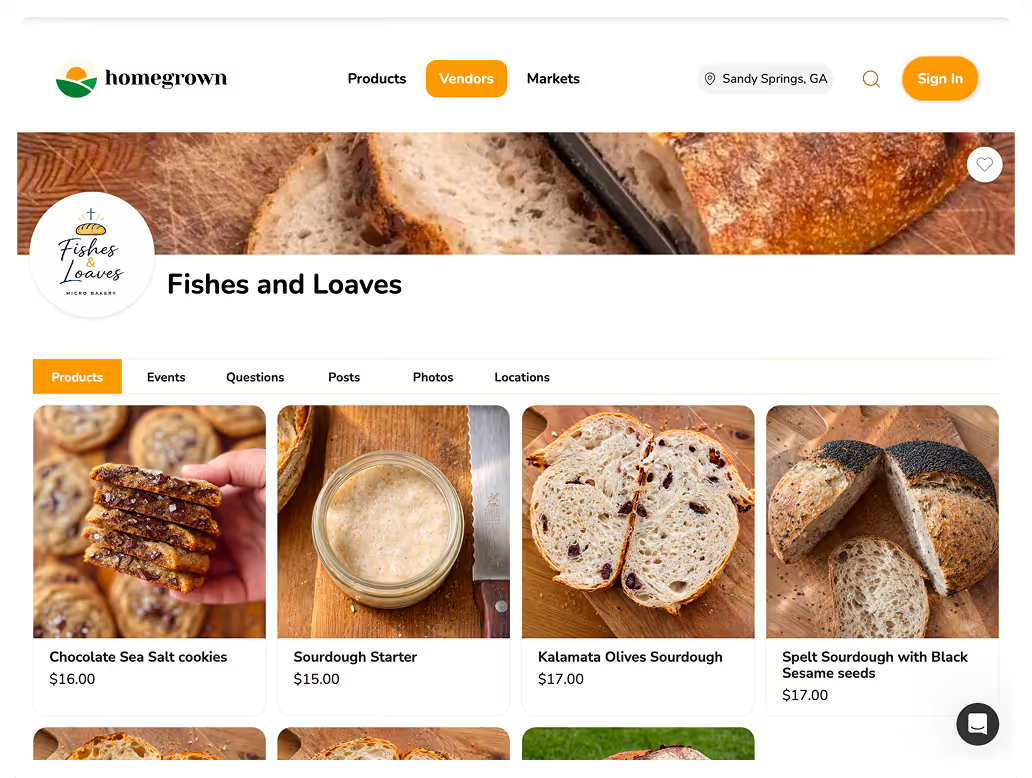
The question is what tool handles those pre-orders. DMs and texts work at 5 orders a week but break at 20 — you're managing each one manually. Etsy charges 6.5% per transaction and is designed for shipping to strangers, not weekly regulars who pick up in person. Homegrown is $10/month with no percentage fees beyond standard payment processing and gives you one ordering page to drop in your weekly email and your social media bio. Customers see what's available, order, and pay — all before Saturday. Homegrown doesn't build your email list tool, manage your social media, or handle shipping — it handles the ordering step that converts a casual buyer into a committed weekly customer.
The transition from walk-up customer to pre-order customer typically happens gradually:
That progression from casual buyer to committed pre-order customer represents the most valuable conversion in your entire business.
Your repeat customers are your most effective and most credible marketing channel — they recommend you naturally. They talk about you when it's relevant — when a friend mentions they'll be at the farmers market, when someone's hosting a dinner party and looking for good bread, when a neighbor asks where to find locally made jam.
You can't control word of mouth directly, but you can create the conditions that make it more likely:
Specific details are what people actually share in conversation, not vague statements about quality. Resources from Zendesk's customer retention guide offer more detail here. "You have to meet the woman who makes this bread" is a more compelling referral than "there's a bread booth at the farmers market."
Every positive experience your repeat customers have at your booth becomes a potential referral moment. The loyalty you build through consistency, recognition, and genuine care creates advocates who recruit new customers for you at no cost and with more credibility than any advertising could achieve.
Repeat customers are built through a predictable progression of positive experiences, not a single great interaction. Understanding that progression helps you be patient with the process and deliberate about making each stage easy. For a deeper look at this topic, see getting more customers at farmers markets.
The pattern usually follows a predictable path:
Your job is to make each step in that progression as easy and natural as possible. Consistent product quality means they want to come back after the first visit. Personal recognition makes them feel welcomed on the second visit. Email and pre-orders remove the friction from returning on the third and fourth visits. Small gestures keep the relationship warm as they become a regular.
None of this is complicated. Most of it costs nothing beyond attention and consistency. The food businesses with the most loyal customer bases aren't usually the ones that run the most promotions or spend the most on marketing. They're the ones that have been consistently excellent and consistently present — showing up every week, making great food, and treating people like they matter.
Show up. Make good food. Make people feel like they matter. That's the whole thing, and it works.
Most vendors start seeing a reliable core of repeat customers after two to three months of consistent farmers market attendance. The key word is consistent — showing up every week at the same time and place lets customers build a habit around you. If you're also sending a weekly email and offering pre-orders through your ordering page, the timeline shortens because you're giving people more ways to stay connected.
No. Formal loyalty programs add complexity that most small food vendors don't need. The personal recognition and small gestures described in this guide — remembering preferences, offering samples, expressing genuine gratitude — are more effective at building loyalty than any punch card system. Your repeat customers come back because of the product and the relationship, not because they're collecting stamps.
If you have their email, a personal note works well. Something like "Haven't seen you in a while — just wanted you to know we have [their favorite product] this Saturday" feels genuine and personal. If you don't have their contact information, the best strategy is to be consistently present at the farmers market so that when they do return, you're there to welcome them back.
This varies widely, but a vendor who attends a farmers market weekly for a full season and actively builds relationships might have 20 to 50 recognizable regulars by the end of the year. Of those, 10 to 20 may become true weekly buyers. That core group often represents 40 to 60 percent of your total farmers market revenue, which is why retention matters so much more than acquisition.
Discounts can work for re-engagement, but they're rarely the best retention tool for a farmers market vendor. Your products have value because of their quality and the personal connection you offer. Discounting trains customers to wait for sales rather than buying at full price. Instead, focus on the tactics that cost you nothing — recognition, consistency, communication, and small gestures of appreciation.
Pre-orders through your ordering page convert casual farmers market shoppers into committed weekly buyers. Once a customer starts pre-ordering, they've built your products into their weekly routine. They're guaranteed to get what they want, they don't have to worry about products selling out, and the habit of ordering ahead keeps them coming back week after week. It's the single most effective conversion for turning a good customer into a great one.
Address it directly and sincerely. If a product wasn't up to your usual standard, acknowledge it and offer to replace it. Most repeat customers are forgiving when you handle a mistake honestly. What damages trust isn't a single off batch — it's pretending nothing went wrong or failing to make it right. A customer who sees you take responsibility and fix the issue often becomes even more loyal than before.