

Popcorn is one of the most profitable cottage food products you can make. A bag of kernels costs a couple of dollars, a batch of flavored popcorn takes 20 minutes, and you can sell each bag for $5 to $12 at the farmers market. The margins are hard to beat — most popcorn vendors see profit margins around 70%.
Snack mixes like trail mix, seasoned nuts, and party mix work the same way. Shelf-stable, inexpensive to produce, and easy to package in attractive bags that catch a customer's eye.
If you have been thinking about starting a popcorn or snack mix business from home, this guide covers everything you need to get started — whether it is legal, what permits you need, how to price your products, and where to sell them.
The short version: Popcorn and snack mixes are allowed under cottage food laws in virtually every state because they are shelf-stable, non-perishable products. You will need a cottage food permit or registration (usually free to $75), proper labeling, and packaging that keeps your products fresh. Most popcorn vendors price bags at $5 to $8 for standard sizes and $10 to $12 for large or gift bags, with profit margins around 70%. Start with three to five flavors, invest in quality packaging, and sell at farmers markets, local events, and through online pre-orders.
Yes. Popcorn is one of the most straightforward cottage food products, and it is allowed under cottage food laws in virtually every state.
The reason is simple: popcorn is a shelf-stable, non-perishable product. It does not require refrigeration, it is not a potentially hazardous food (also called a TCS food), and it has a long shelf life when packaged properly. These are exactly the characteristics that cottage food laws are designed for.
This applies to all types of popcorn you might want to sell:
As long as you prepare the popcorn in your home kitchen and follow your state's cottage food laws, you can sell it directly to customers. Most states allow direct-to-consumer sales at farmers markets, roadside stands, and local events. Some states also allow online sales with local delivery or pickup.
The one thing to watch is candy-coated or chocolate-dipped popcorn. If your recipe includes chocolate, caramel, or other coatings, it still qualifies as cottage food in most states as long as the finished product does not require refrigeration. A caramel corn that stays shelf-stable at room temperature is fine. A chocolate-dipped popcorn that needs to be kept cool might not qualify in every state — check your state's rules.
Snack mixes are also allowed under cottage food laws in most states, as long as the finished product is shelf-stable. This includes:
The key requirement is the same as popcorn: the product must be shelf-stable and not require refrigeration. A trail mix made with dried fruit and roasted nuts qualifies easily. A snack mix that includes fresh fruit, dairy, or anything perishable would not.
One important note about nuts: Some states have allergen labeling requirements that apply specifically to nut-containing products. If your snack mix includes tree nuts or peanuts, your label must clearly list them. Nut allergies are serious, and proper labeling protects your customers and your business. Check your state's cottage food labeling rules for specifics.
The permits for selling popcorn and snack mixes from home are the same basic cottage food permits you need for any shelf-stable cottage food product.
What most states require:
What most states do NOT require for popcorn:
Every state's cottage food rules are slightly different. Look up your state's specific requirements in our cottage food laws by state guide to make sure you have everything covered.
Revenue caps to know about: Most states cap how much you can earn under a cottage food permit. Caps range from $25,000 to $75,000 per year in most states, though some states have no cap at all. For a part-time popcorn vendor, you are unlikely to hit these limits early on — but it is good to know where the ceiling is.
The best-selling popcorn flavors at farmers markets and local events tend to fall into a few proven categories.
Sweet flavors (consistently the top sellers):
Savory flavors (strong repeat buyers):
Spicy flavors (growing fast):
Seasonal and limited-edition flavors:
Start with three to five flavors and expand based on what sells. Most successful popcorn vendors recommend having at least one sweet, one savory, and one unique or signature flavor. Your signature flavor is what sets you apart from every other popcorn bag at the market — it gives customers a reason to seek you out specifically.
For snack mixes, the same principle applies. Start with two or three mixes — a classic trail mix, one seasoned nut variety, and one party mix — then add flavors based on customer feedback.
Most cottage food popcorn vendors price their products in these ranges:
Snack mix pricing is similar, though seasoned nuts and trail mix with premium ingredients (macadamia nuts, dried mango, dark chocolate) can command higher prices — $8 to $15 per bag for a 6 to 8 oz portion.
To calculate your per-bag cost:
For most popcorn recipes, the ingredient cost per bag is $0.50 to $1.50 depending on the flavor. Packaging adds another $0.30 to $0.75 per bag. A bag that costs you $1.50 to make and sells for $6 gives you a $4.50 profit — a 75% margin.
Pricing tips:
For a deeper look at pricing cottage food products, see our complete guide to pricing food products.
Good packaging does two things: it keeps your popcorn fresh, and it makes your product look professional enough that customers feel good about paying $5 to $8 for a bag of popcorn.
Packaging options:
Labeling requirements:
Every cottage food product needs a label. Your state determines exactly what must be on it, but most states require:
Tips for labels:
One of the best things about a popcorn business is the low startup cost. You do not need expensive commercial equipment to get started.
Essential equipment:
Optional upgrades as you grow:
Total startup cost for most popcorn vendors is $100 to $300, not counting ingredients for your first few batches. That makes popcorn one of the cheapest cottage food businesses to start.
For snack mixes, the equipment list is even simpler. A baking sheet, mixing bowls, a food scale, and packaging supplies are all you need. If you are making roasted or candied nuts, an oven and a candy thermometer ($10 to $15) are the main additions.
Popcorn and snack mixes sell well in more places than almost any other cottage food product. They are lightweight, shelf-stable, and appeal to a wide range of customers.
Farmers markets are the number-one sales channel for most cottage food popcorn vendors. The impulse-buy factor is high — a colorful display of flavored popcorn bags catches attention, and $5 to $6 per bag is an easy purchase.
Tips for farmers market success:
Craft fairs, holiday markets, school events, sporting events, and community festivals are all strong venues for popcorn sales. Events with high foot traffic and a festive atmosphere are ideal because popcorn is a snack people buy on impulse.
Once you have three or four flavors selling consistently, you will start hearing the same question every Saturday: "Can I order ahead for next week?" Popcorn is the perfect pre-order product — you can pop exactly what is ordered instead of guessing how many bags of each flavor to bring.
The problem is how those orders come in. A customer texts "can I get two caramel and one ranch for Saturday?" Then another DMs on Instagram asking for the dill pickle. By Thursday night you are scrolling back through 15 conversations trying to figure out whether Ashley wanted three bags of cinnamon sugar or three bags of kettle corn, and whether the ranch order was a large or a standard.
Etsy works if you want to ship popcorn nationally — customers search for "gourmet popcorn" and find your listing. But Etsy takes 6.5% plus listing fees plus payment processing, and the platform is built around shipped orders. For a vendor whose customers pick up at Saturday's market, that is a lot of overhead for something that should be simple.
A Google Form and Venmo costs nothing, but you are manually matching payments to orders, chasing people who submitted a form but never paid, and re-entering everything into your own tracking spreadsheet.
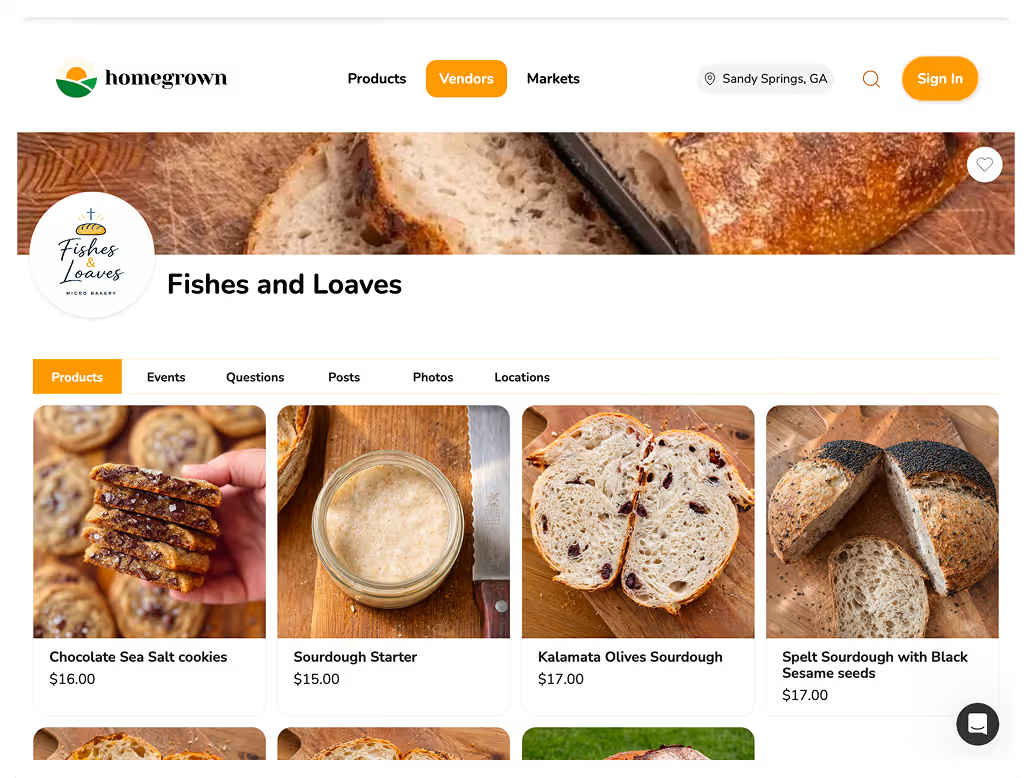
Homegrown is $10/month. You list your flavors with photos and bag sizes, set a cutoff (Thursday at noon, for example), and share the link. Customers pick their flavors, pick their bag size, and pay when they order. You see exactly how many bags of each flavor to pop before Saturday — no guessing, no text threads, no chasing payments. When the kettle corn sells out, it closes automatically.
Homegrown is not going to help you ship popcorn tins across the country or get your product onto store shelves — for national shipping, Etsy is the better fit. But for turning your Saturday market regulars into pre-order customers who pay before you pop, it replaces the text-thread chaos for less than the cost of two bags of popcorn per month.
Popcorn tins, gift bags, and sampler packs sell extremely well during the holiday season. Corporate gift orders, teacher appreciation gifts, and party favors can become a significant revenue stream once you build a reputation.
Some cottage food laws allow you to sell to retail stores — coffee shops, gift shops, farm stands, and boutiques. Check your state's rules on indirect sales before approaching stores, since some states restrict cottage food to direct-to-consumer sales only.
Three to five flavors is the right starting point. Master those recipes so every bag is consistent, then add new flavors based on customer demand. A vendor with five outstanding flavors outsells a vendor with fifteen mediocre ones.
Your signature flavor is the one that nobody else at the market makes. It is the reason customers walk past other vendors to find your booth. Think about flavors that combine unexpected ingredients — brown butter and sage, miso caramel, Nashville hot honey, or lavender lemonade. Your signature flavor is your brand.
Popcorn is cheap to produce, which means samples cost you almost nothing. Every sample bag you give out is a marketing investment. Most vendors find that one out of every two or three people who sample will buy a bag.
Collect email addresses or phone numbers at every market. A simple sign-up sheet or a QR code that links to a sign-up form works. Use your list to announce when you will be at the next market, promote new flavors, and take pre-orders for holidays.
Once you have regular customers, offer a monthly popcorn subscription or a "flavor of the month" club. Bundles like "movie night pack" (three bags plus a candy bar) or "game day sampler" (four savory flavors) give customers a reason to buy more at once.
In most states, you need a cottage food permit or registration, not a full food business license. The requirements vary by state — some require a simple registration form and a food handler's certificate, while others require no registration at all. Check your state's cottage food laws for the specific requirements.
Properly packaged flavored popcorn stays fresh for two to four weeks. Plain popcorn lasts longer — up to six weeks in an airtight container. Caramel corn and candy-coated popcorn typically have a three to four week shelf life. Heat-sealed bags and stand-up pouches with good moisture barriers give you the longest shelf life.
Most popcorn vendors start with $100 to $300 in equipment and supplies. This covers a stovetop popcorn maker ($25 to $35), a food scale ($15 to $25), packaging supplies ($50 to $100), and your first batch of ingredients ($20 to $40). It is one of the lowest startup costs of any cottage food business.
Some states allow cottage food vendors to ship within the state, but many restrict sales to in-person, direct-to-consumer transactions. If your state allows shipping, popcorn ships well because it is lightweight and shelf-stable. Use padded mailers or small boxes and include cushioning material so the popcorn does not get crushed.
Yes. Kettle corn is a shelf-stable popcorn product and is allowed under cottage food laws in virtually every state. If you plan to make kettle corn on-site at events (using a propane kettle), check whether your local health department or event organizer has additional requirements for open-flame cooking.
Revenue varies widely based on your market size, pricing, and product variety, but many part-time popcorn vendors report earning $200 to $500 per market day. A vendor selling bags at $5 to $6 each needs to sell 40 to 100 bags to hit that range — which is realistic at a busy market, especially if you offer samples and accept card payments.
Ready to start selling your popcorn and snack mixes? Set up your Homegrown ordering page and let customers pre-order their favorite flavors before the next market day.