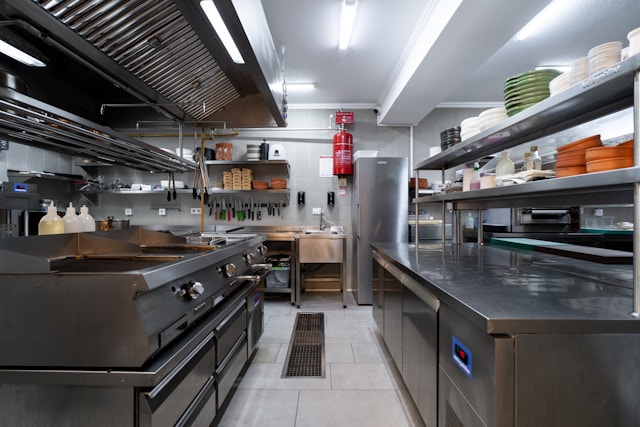


If your cottage food business is growing and your home kitchen feels like it is holding you back, you are probably wondering whether it is time to move to a commercial kitchen. The short answer: if you are consistently hitting your production limits, turning away orders, or bumping up against your state's revenue cap, it is time to seriously consider the switch.
Moving from cottage food to a commercial kitchen is one of the biggest decisions a home food vendor will make. It changes your costs, your legal requirements, and your production capacity — but it also opens doors that cottage food laws keep closed. This guide will help you figure out if you are ready and show you exactly how to make the transition.
The short version: You are probably ready to move from your home kitchen to a commercial kitchen when you are consistently maxing out production, hitting your state's cottage food revenue cap, turning down wholesale opportunities, or running out of space. Your main options are renting time in a shared commercial kitchen ($15–$50 per hour), leasing a dedicated space ($1,000–$3,000+ per month), or building your own ($40,000–$200,000+). The transition also means getting a commercial food license, which removes your revenue cap and lets you sell wholesale — but adds inspection, insurance, and food safety certification requirements. Most vendors start by renting shared kitchen time before committing to a bigger investment.
Not every cottage food vendor needs a commercial kitchen. Most do not. But if any of these signs sound familiar, it is time to start planning your next step.
The clearest signal is reaching your state's cottage food revenue cap. If you are bumping up against a $25,000 or $50,000 annual limit and have to stop selling partway through the year, a commercial kitchen removes that ceiling entirely. You can sell as much as the market demands.
If customers want to buy more than you can produce, or retailers and coffee shops want to carry your products but you cannot fill wholesale orders from your home kitchen, you are leaving money on the table. A commercial kitchen gives you the capacity to say yes.
When you are waking up at 4 a.m. to bake before your family needs the kitchen, or your dining table is permanently covered in packaging supplies, your home kitchen has become a bottleneck. If production is consistently taking over your living space, it is time for a dedicated workspace.
Cottage food laws restrict the types of food you can sell — typically only shelf-stable, non-perishable items. If you want to sell products that require refrigeration, like cheesecakes, cream-filled pastries, or prepared meals, you need a licensed commercial kitchen. Check your state's list of allowed cottage foods to see what falls outside the exemption.
Most cottage food laws limit you to direct-to-consumer sales — farmers markets, roadside stands, and local delivery. If you want to sell to grocery stores, restaurants, gift shops, or ship your products to customers outside your area, you typically need a commercial license and a licensed kitchen.
This one matters more than people think. If your sales are steady month after month — not just a good holiday season — that consistency means you can forecast your commercial kitchen costs and know the investment will pay for itself. A vendor who sells $3,000 per month every month can plan around a $500 kitchen rental with confidence. A vendor who sells $5,000 in December and $800 in February cannot. Look at your last six months of sales data before making any financial commitments — if there is a clear baseline you hit every month regardless of season, that is the number you use to evaluate whether a commercial kitchen makes sense.
You have three main paths, each with different costs and commitment levels.
Shared commercial kitchens — also called commissary kitchens or community kitchens — rent production time by the hour, day, or month. You show up, use the licensed space and equipment, clean up, and leave.
Typical costs:
Best for: Vendors who have outgrown cottage food but are not ready for a major financial commitment. This is the lowest-risk way to test commercial production.
How to find them: Search for "shared commercial kitchen" or "commissary kitchen" plus your city or county. Many are run by nonprofits, churches, food incubator programs, or economic development agencies. The Food Corridor and The Kitchen Door are online directories that list shared kitchens by location.
Leasing your own space gives you a private kitchen that you control — your schedule, your equipment, your layout.
Typical costs:
Best for: Vendors with steady revenue who need consistent access and want to build a long-term production home. Makes sense when your shared kitchen costs exceed what a lease would cost, or when your production schedule needs more flexibility than a shared space allows.
Some vendors convert a garage, outbuilding, or separate room into a licensed commercial kitchen on their property. This keeps the convenience of working from home while meeting commercial standards.
Typical costs:
Best for: Vendors in rural areas with limited access to shared kitchens, or those with existing outbuildings that can be converted. Not practical in all states — some do not allow residential commercial kitchens, and local zoning laws may prohibit it.
Important: Before investing in any home conversion, check your local zoning regulations and talk to your county health department about what is required for licensing.
Moving to a commercial kitchen means you are no longer operating under your state's cottage food exemption. That changes several things.
Instead of a cottage food permit or registration, you will need a commercial food establishment license from your local or state health department. The application process typically involves a kitchen inspection, a food safety plan, and annual renewal fees.
Most states require at least one person in your operation to hold a food safety certification — usually a ServSafe Food Handler or Food Manager certificate. Some cottage food laws do not require this, so it may be new to you. The certification courses take a few hours to a day and cost $15–$150 depending on the level.
Commercial kitchens are subject to health department inspections — typically one to two per year, plus unannounced spot checks. If you are using a shared kitchen, the kitchen operator usually handles the facility inspection. If you lease or build your own space, you are responsible for passing inspections.
While some cottage food vendors carry insurance voluntarily, commercial food operations almost always need it. General liability insurance for a small food business typically costs $300–$600 per year. If you are renting a shared kitchen, the facility may require proof of insurance before you can use the space.
Operating at a commercial level is a good time to formalize your business — whether that means forming an LLC, getting a sales tax permit, or setting up a dedicated business bank account. This protects your personal assets and makes your finances cleaner as revenue grows.
The good news: once you have a commercial food license, the cottage food revenue cap no longer applies. You can sell as much as the market supports without worrying about hitting a dollar limit.
Here is a practical timeline for moving from cottage food to commercial kitchen production.
Some vendors continue selling under cottage food while they get their commercial kitchen set up. Check with your state — in many states, you can maintain your cottage food registration while also operating commercially, as long as you follow the rules for each.
Your ordering process is one of the things that should upgrade alongside your kitchen. If you have been managing orders through text messages and Venmo — which works fine at cottage food volumes — a commercial kitchen means higher volume and tighter production schedules. You need to know exactly what to produce before your kitchen rental window starts. Square Online charges 2.9% + $0.30 per transaction, and Shopify starts at $39/month — both built for businesses that need full e-commerce, not a cottage food vendor scaling up. Homegrown is $10/month — list your weekly menu, collect pre-orders with payment included, and walk into your kitchen session with an exact production list. It will not handle wholesale accounts or restaurant distribution — but for managing your direct-to-customer pre-orders while your commercial kitchen costs are still new, the flat fee keeps your overhead predictable.
The most common mistake is moving to a commercial kitchen before you have the revenue to support it. If you are paying $800 per month for kitchen time but only making $1,200 in sales, the math does not work — your ingredient and packaging costs will eat through that remaining $400 before you take home anything. Run the numbers for at least three months of projected costs before you commit, and build in a buffer for unexpected expenses like equipment repairs or slow sales months. Make sure your profit margins can absorb the new costs before you sign any agreement.
Shared kitchens vary wildly in quality, equipment, cleanliness, and scheduling flexibility. Always visit in person, ideally during operating hours, before signing any agreement. Talk to other vendors who use the space — ask them about scheduling conflicts, equipment reliability, and whether the kitchen management is responsive when something breaks. A kitchen that looks great in photos might have a broken oven half the time or double-book prime production hours on weekends.
The hourly rental fee is not the only cost. Factor in storage fees, ingredient transport, gas and travel time, packaging changes, insurance, licensing fees, and food safety certification. Add it all up before comparing it to your cottage food overhead.
Some vendors start using a commercial kitchen but forget to update their licensing. Once you are producing in a commercial kitchen, you are no longer operating under cottage food rules — you need a commercial food license. Operating without one puts your business at risk.
Start with less time than you think you need. You can always add hours later. Locking into a long-term lease or a high monthly membership before you know your actual production needs can waste money. Many vendors overestimate how much kitchen time they need because they are used to the inefficiency of a home kitchen — a commercial kitchen with proper equipment and workspace often lets you produce the same volume in significantly less time. Book two or three sessions first to calibrate your actual hourly output before committing to a monthly plan.
Shared commercial kitchen rates typically range from $15 to $50 per hour, depending on your area and the kitchen's equipment. Monthly memberships run $300 to $1,500 per month. In major cities, rates can be higher. Storage for ingredients and finished products usually costs an additional $50 to $200 per month.
In most states, yes — you can maintain your cottage food registration while you set up your commercial operation. Check your state's cottage food law to confirm. The key is that any products you sell under cottage food rules must still be made in your home kitchen, not in the commercial kitchen.
In most states, yes. Commercial food operations typically require at least one person to hold a food safety certification, such as a ServSafe Food Handler or Food Manager certificate. The requirements vary by state and sometimes by county. Check with your local health department for specific requirements.
It depends on your situation. Building a home commercial kitchen costs $40,000 to $200,000+ and makes the most sense if you are in a rural area without access to shared kitchens, have an existing outbuilding to convert, and plan to operate the business for many years. For most vendors, renting shared kitchen time is a smarter first step.
At minimum, you typically need a commercial food establishment license from your health department, a business license from your city or county, a food safety certification, and liability insurance. Some states also require a sales tax permit, a fire department inspection, and specific food handler permits. Your local health department can give you the complete list for your area.
Leasing makes sense when your shared kitchen costs consistently exceed what a private lease would cost — typically when you are using 20 or more hours per week — or when scheduling conflicts at the shared kitchen are limiting your production. If you need refrigerated storage, specialized equipment, or the flexibility to produce any time of day, a dedicated space may be worth the investment.
The transition from cottage food to commercial kitchen is a big step. Having your ordering and payment system set up before your first production run means one less thing to figure out on the fly.