

If you have been selling homemade food under cottage food laws, you already know the biggest limitation: you can only sell shelf-stable, non-perishable products. That means no hot meals, no soups, no dishes that need refrigeration. If you want to sell tamales, curries, casseroles, or full cooked meals from your home kitchen, cottage food laws will not cover you.
That is where MEHKO laws come in. MEHKO stands for Microenterprise Home Kitchen Operation, and it is a newer type of home food permit that lets you sell cooked meals — including potentially hazardous foods — directly to consumers from your residential kitchen. It fills the gap between cottage food (limited to shelf-stable products) and a commercial kitchen (expensive and complex to set up).
The short version: A MEHKO permit lets you cook and sell hot meals, soups, and other perishable foods from your home kitchen — foods that are not allowed under cottage food laws. MEHKO permits require a kitchen inspection, food manager certification, and a permit from your local health department. You are limited to 30 meals per day, 90 meals per week, and roughly $100,000 to $107,000 in annual sales. As of 2025, California is the primary state with active MEHKO programs, with Utah also having passed MEHKO legislation. Permit costs range from about $269 to $1,108 depending on your county.
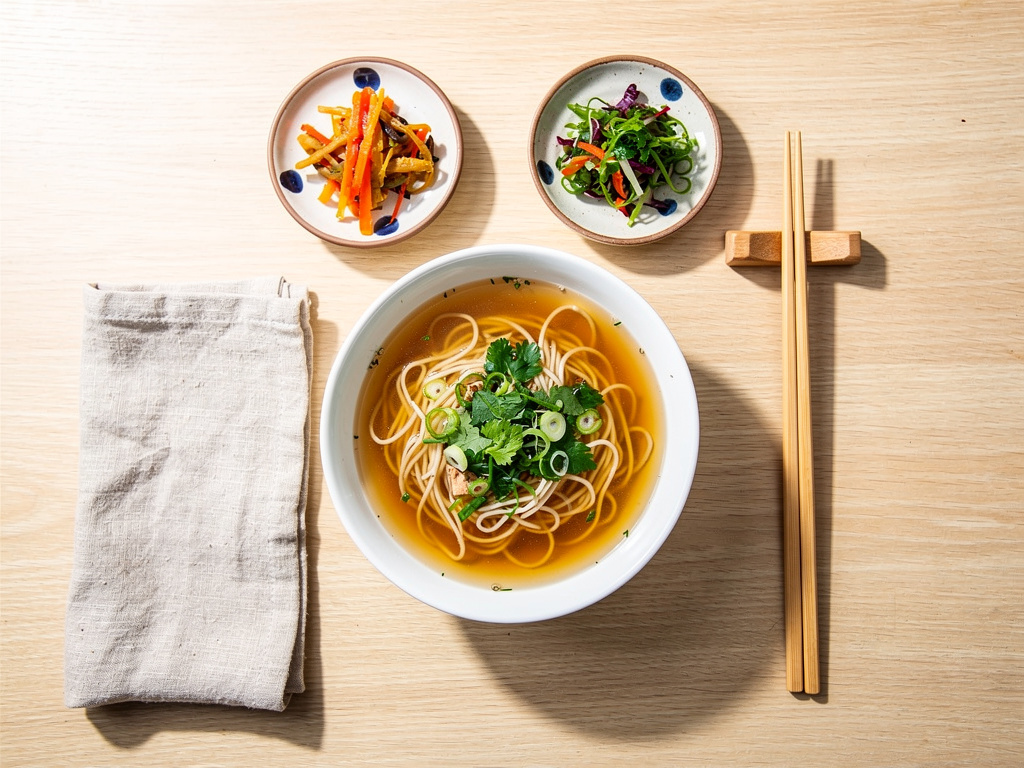
A MEHKO — Microenterprise Home Kitchen Operation — is a food facility operated by a resident in their private home where food is stored, handled, prepared, and sold directly to consumers. Unlike cottage food operations, which are limited to shelf-stable products like baked goods and jams, a MEHKO allows you to prepare and sell hot meals, cooked dishes, and foods that require temperature control.
Think of it as a very small home restaurant. You cook meals in your own kitchen and sell them to people in your community through home pickup or local delivery. The food is meant to be consumed the same day it is prepared.
Key limits that define a MEHKO:
A MEHKO is not a catering operation, a wholesale business, or a restaurant. It is designed for small-scale home cooking for your local community.
MEHKO and cottage food both let you sell food from your home kitchen, but they are very different in what they allow and what they require. Understanding these differences helps you decide which path is right for your business.
Cottage food laws restrict you to shelf-stable, non-perishable foods — products that do not need refrigeration and are safe at room temperature. The typical list includes baked goods, jams, jellies, honey, dry mixes, candies, and similar products. Check your state's list of allowed cottage foods for specifics.
MEHKO permits allow you to sell cooked meals and potentially hazardous foods — hot dishes, soups, stews, curries, tamales, rice dishes, casseroles, and meals that include meat, dairy, and other ingredients that require temperature control. Essentially, if you can cook it in your kitchen, you can likely sell it under a MEHKO permit.
Cottage food gives you more selling options. In most states, you can sell at farmers markets, from your home, through local delivery, and in some cases online or through retail stores. Some states even allow indirect sales through third-party retailers.
MEHKO is more restrictive on selling channels. In most jurisdictions, you can only sell through home pickup and local delivery. You typically cannot sell at farmers markets, through retail stores, or at temporary events with a MEHKO permit. Your home is your sales location.
Cottage food revenue caps vary widely by state — most fall between $25,000 and $75,000 per year, though some states go higher. The meal count is not typically limited under cottage food.
MEHKO has both revenue and volume limits: roughly $100,000 to $107,000 per year, plus the 30 meals per day and 90 meals per week caps. The annual revenue cap is higher than most cottage food limits, but the daily and weekly meal caps create a natural ceiling on how much you can produce.
Cottage food keeps things simple. Most states do not require a kitchen inspection — many just ask for a self-certification form. Food handler certification (a basic 2-4 hour course) is the most common training requirement, and some states require no training at all. Getting a cottage food permit is typically straightforward and affordable.
MEHKO requires significantly more. You need a food manager certification (a proctored exam, not just a food handler course), your kitchen will be inspected before you can operate, and you will have ongoing inspections after that. The application process is more involved, and the fees are substantially higher.
Cottage food permits are typically issued to one person — the permit holder — and most states expect only the permit holder (and sometimes household members) to prepare the food.
MEHKO allows you to hire up to one full-time equivalent (FTE) employee. That means you can have multiple part-time workers as long as their combined hours do not exceed 40 per week. Any employees or household members who help with food preparation need their own food handler cards.
MEHKO laws are still relatively new. Unlike cottage food laws, which exist in some form in all 50 states, MEHKO legislation has only been adopted in a handful of states so far.
California is the pioneer. The state passed AB 626 in 2018 (amended by AB 377 in 2019), creating the legal framework for MEHKOs. But here is the important detail: California's MEHKO law requires each county to opt in before residents can apply. The state law exists, but your county has to pass its own ordinance or resolution to activate it.
As of mid-2025, approximately 18 California jurisdictions (17 counties plus the City of Berkeley) have authorized MEHKO operations. Major participating counties include Los Angeles, Santa Clara, San Mateo, Sonoma, Monterey, Santa Cruz, and Lake County. More counties continue to adopt MEHKO programs over time.
Utah passed its own version of MEHKO legislation in 2021, making it the second state to formally allow microenterprise home kitchen operations.
States considering MEHKO: Washington, Minnesota, and Hawaii have explored or introduced similar legislation. Washington has directed agencies to conduct feasibility studies and environmental justice reviews. As this is an evolving area of law, new states may adopt MEHKO or similar programs.
Food freedom states (Wyoming, North Dakota, Maine, Utah) take a different approach — they broadly deregulate home food sales rather than creating a specific MEHKO permit structure. Some food freedom laws may allow similar activities to MEHKO, but through a different legal framework. Check your state's cottage food law to see what is available where you live.
If your state does not have MEHKO laws yet, your options for selling cooked meals from home are limited. You would typically need to either work within your state's cottage food rules (shelf-stable products only), use a commercial kitchen, or advocate for MEHKO legislation in your state.
Getting a MEHKO permit is more involved than getting a cottage food permit, but it is still far simpler than setting up a commercial kitchen. Here is what the process generally looks like.
MEHKO requires a food manager certification, which is a step above the basic food handler certification that most cottage food operations require. The food manager certification involves a proctored exam (typically about 2 hours) that tests your knowledge of food safety principles, temperature control, cross-contamination prevention, and sanitation. It costs $80 to $150 and is offered through providers like ServSafe and the National Registry of Food Safety Professionals.
In addition to the food manager certification, food handler cards are required for any household members or employees who assist with food preparation. These are the same basic food handler courses used for cottage food — they take 2 to 4 hours and cost $10 to $25 per person.
Unlike most cottage food operations, MEHKO requires a kitchen inspection before your permit is issued. An inspector from your local environmental health department will visit your home kitchen to verify it meets food safety standards.
What inspectors typically check:
If your kitchen does not pass inspection, you will receive a list of what needs to be corrected. Most issues are straightforward to fix — adding a handwashing station, installing a thermometer, or addressing storage concerns.
You apply for a MEHKO permit through your local environmental health department — not the state. This is different from cottage food, which is often managed at the state level.
Your application typically requires:
Permit fees vary significantly by county:
Once you have your MEHKO permit, you need to maintain it:
The total cost to start a MEHKO operation is significantly higher than cottage food but still a fraction of what a commercial kitchen costs. Here is a realistic breakdown of what to expect.
Startup costs:
Total typical startup cost: $400 to $1,500
For comparison:
MEHKO sits in the middle — more than cottage food, but dramatically less than going fully commercial. For someone who wants to sell cooked meals without the overhead of a commercial space, MEHKO can be the most cost-effective path.
Annual ongoing costs:
Not every home food vendor needs a MEHKO permit. Choosing the right path depends on what you want to sell, how you want to sell it, and what is available in your state.
In most jurisdictions, yes. You can hold a cottage food permit for your shelf-stable products (baked goods, jams, honey) and a MEHKO permit for cooked meals. This gives you the widest range of products — sell your shelf-stable items at farmers markets under cottage food rules, and sell hot meals through home pickup and delivery under your MEHKO permit. Check with your local health department to confirm this is allowed in your county.
In most jurisdictions, no. MEHKO permits are typically limited to direct sales through home pickup and local delivery. Farmers market sales are generally not allowed under MEHKO. If selling at farmers markets is important to your business, a cottage food permit or a commercial food license would be the better path.
A MEHKO permit does not require a specific business structure — you can operate as a sole proprietor. However, because you are selling prepared meals that could carry food safety liability, forming an LLC may be worth considering for personal asset protection. The same considerations apply as with any home food business structure.
If your county has not opted in to MEHKO, you cannot get a MEHKO permit there — even if your state has passed the enabling legislation. Your options are to advocate for MEHKO adoption in your county, operate under cottage food laws with their product restrictions, or use a commercial kitchen for non-cottage food products. You can also check whether a neighboring county that has adopted MEHKO would allow you to operate from a residence in that county.
You can take orders online, but the food must be picked up at your home or delivered locally. MEHKO does not allow shipping food to distant customers. Homegrown is $10/month with no percentage fees beyond standard payment processing and gives you an ordering page where customers browse your meal menu, place orders, and pay upfront for pickup or delivery. Compare that to Etsy (6.5% per transaction, designed for shipping) or managing orders through DMs and Venmo with no consolidated order list. Homegrown doesn't handle food safety compliance, but it lets you offer pickup or local delivery and gives you the ordering infrastructure to run a MEHKO professionally.
The timeline varies by county, but plan for 4 to 12 weeks from start to finish. That includes time for completing your food manager certification (1 to 2 weeks), preparing your application and SOP document, scheduling and passing your kitchen inspection, and waiting for permit processing. Counties with newer MEHKO programs may have longer wait times as they build out their processes.
Whether you are selling cottage food or exploring MEHKO, having the right ordering tools makes running your home food business easier. Focus on what you do best — cooking food people love.