

Most food vendors earn the bulk of their income in a 5-6 month window. Farmers markets open in May, foot traffic peaks through summer, and by October the season starts winding down. But here is the problem — your expenses do not take the winter off. Storage fees, insurance, permits, and ingredient costs keep running whether you are selling or not.
Seasonal businesses can earn 70% of their annual revenue within just a few months, according to the U.S. Chamber of Commerce. That kind of income concentration makes the off-season feel like a financial cliff. And it catches a lot of vendors off guard — a 2023 study by U.S. Bank found that 82% of small business failures during seasonal downturns stem from cash flow mismanagement.
The good news is that you do not need to reinvent your business to earn off-season income. You just need a few practical strategies that work with what you already have — your recipes, your products, and the customers who already know and trust you.
The short version: You do not need a commercial kitchen or a major investment to make money during the off-season. Take pre-orders for holiday gift boxes and seasonal products. Teach what you know through cooking or baking classes. Sell shelf-stable products online year-round through your Homegrown storefront. Build your email list during market season so you have customers to sell to when markets close. The goal is not to match your summer income — it is to keep enough revenue flowing to cover costs and stay motivated until markets reopen.
Most food vendors earn 70% or more of their annual revenue during a 5-6 month market season, leaving 6-7 months with little to no income while fixed costs continue. For part-time vendors who sell $200 to $800 per market day, losing that weekly income can mean months of dipping into savings or picking up extra work just to get by.
The off-season hits hard for three reasons:
Most part-time cottage food vendors spend $100 to $300 per month on fixed costs during the off-season, even when they are not making a single sale. That adds up to $600 to $1,800 over a six-month off-season — money that comes straight out of your market season earnings if you do not have any winter revenue.
The solution is not to panic or to dramatically scale up. It is to build a few low-cost income streams that keep cash flowing, customers engaged, and your business momentum intact until the next market season.
Pre-orders, online storefronts, and direct delivery let you sell year-round without needing a physical market booth. You already have the products and the customer base — the off-season just requires a different way to reach them.
Pre-orders are the easiest off-season revenue strategy because you only produce what is already paid for. There is no wasted inventory and no guessing about demand.
Holiday seasons are the best time to take pre-orders:
Here is how to set it up:
For a deeper walkthrough on setting up your first pre-order system, check out this guide on how to take pre-orders for your food business.
A vendor who takes 30 pre-orders for a $25 holiday gift box earns $750 in a single batch — with zero booth fees and zero leftover inventory.
Shelf-stable products are the backbone of year-round food vendor income because they do not expire in a week and they can sit on a shelf until someone orders them. If you make any of these, you already have an off-season product line:
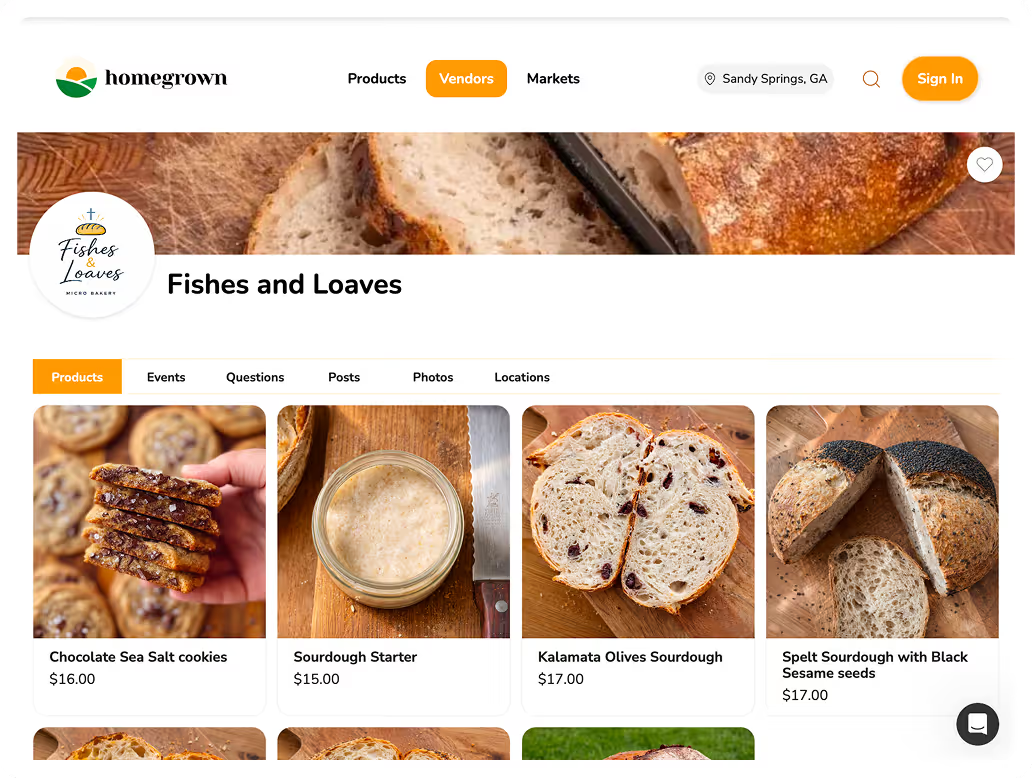
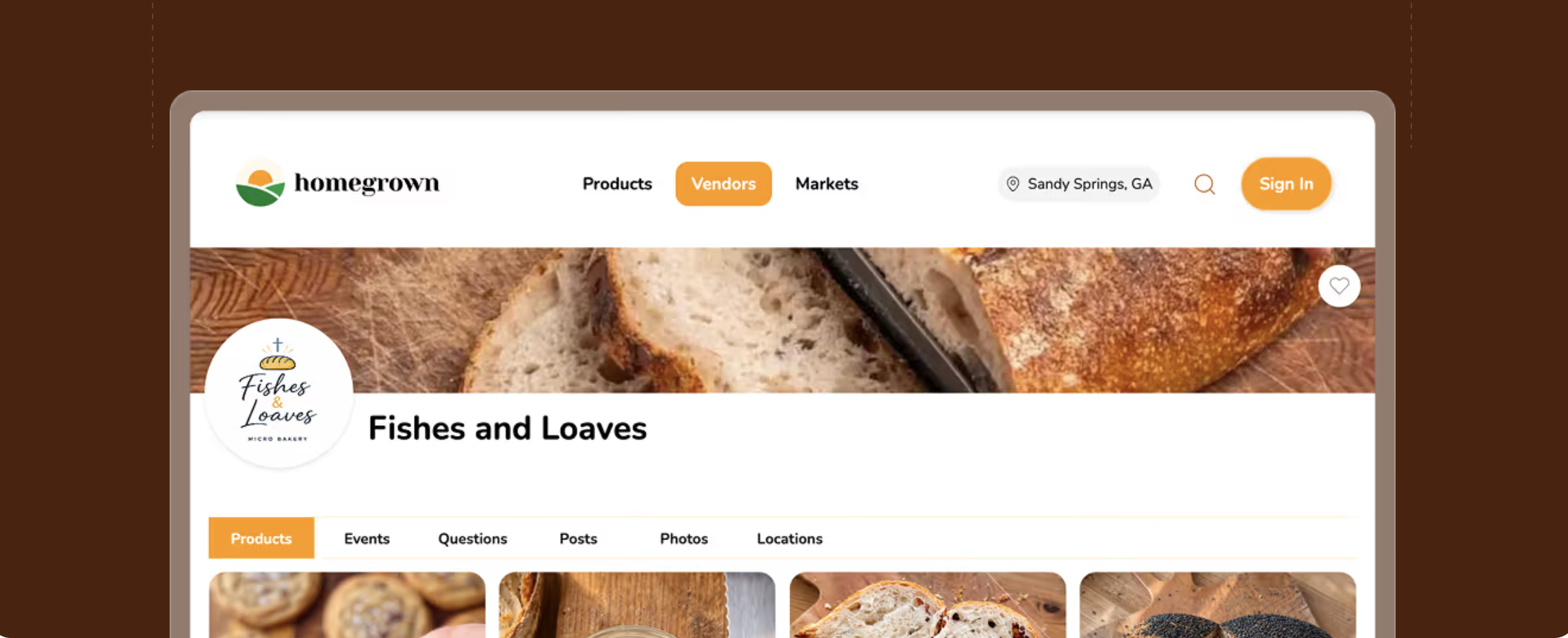
Your online ordering page stays open when farmers markets close. Homegrown is $10/month with no percentage fees beyond standard payment processing — a fixed cost that stays the same whether you sell $200 or $2,000 in off-season orders. That matters when revenue is unpredictable and you cannot afford a platform that takes a bigger cut as sales grow. Compare that to Etsy, where 6.5% per transaction means every holiday gift box order costs you more in fees, or Shopify at $39/month where you are paying for features built for year-round ecommerce operations you do not need during a seasonal slowdown. List your shelf-stable products, set pricing that includes packaging and your time, and offer pickup or local delivery. Homegrown does not help you decide what to sell in the off-season or manage your production schedule — it keeps a storefront running for the customers who want to buy from you between market seasons.
A food drop is a smaller-scale version of market day. You take orders online during the week, batch-produce everything, and set a single pickup window — usually a 2-3 hour window at your home, a church parking lot, or a local coffee shop.
Food drops work well for:
The key to making food drops work is consistency. Pick a day, pick a time, and stick with it. "Every other Friday, 4-6pm" is easy for customers to remember and plan around. Announce each drop through your email list a few days in advance so people have time to place orders.
Teaching classes, catering small events, and consulting for new vendors are three high-margin services you can offer with zero inventory risk. Unlike selling products, services require almost no upfront cost — just your time and expertise.
If you know how to make something well enough to sell it, you know enough to teach it. Cooking and baking classes are one of the highest-margin off-season income streams because your main cost is your time.
Here is what a basic class setup looks like:
A single 2-hour baking class with 8 participants at $50 per person earns you $400 in one afternoon — with maybe $30 in ingredient costs.
To fill seats, announce classes through your email list and social media. Your existing market customers are your best audience — they already trust your products and want to learn your methods.
Small-scale catering does not mean renting a commercial kitchen and feeding 200 people. It means making what you already make, in larger quantities, for private events:
Price your catering per-person or per-tray. Most cottage food vendors charge $12 to $25 per person for a catered spread, or $40 to $80 per tray depending on the product. Start with events for people you already know — friends, family, neighbors, and loyal market customers.
Small-scale catering can bring in $300 to $1,500 per event with minimal overhead, especially if you are making products you already know how to produce efficiently.
Every year, new vendors show up at farmers markets with great products and no idea how to set up a booth, price their products, or navigate cottage food laws. You have that knowledge. It is worth something.
Ways to offer consulting:
This is not a full-time business. It is a side income stream that uses knowledge you already have. Even two coaching sessions per month at $75 each adds $150 to your off-season income.
An email list is the most reliable way to stay connected with customers between market seasons. Social media algorithms are unpredictable — your post might reach 5% of your followers or it might reach 50%. But emails land directly in their inbox every time.
Your email list is the single most important off-season asset you can build. If you collected emails during market season, you already have a direct line to people who bought your products and liked them enough to give you their contact information.
Here is how to use it during the off-season:
If you have not started building an email list yet, check out this guide on how to build a customer email list as a food vendor. Even a list of 50 people is enough to generate meaningful off-season sales.
Social media is useful for staying visible, but it is not a reliable sales channel on its own. Use it to support your off-season efforts, not to carry them.
Good off-season social media content:
The goal of social media in the off-season is to drive traffic to your storefront and your email list — not to generate sales directly through DMs or comments.
A loyalty program gives your best customers a reason to keep buying from you year-round. It does not have to be complicated:
For more ideas on turning one-time buyers into loyal regulars, read this guide on how to get repeat customers for your food business.
Most part-time cottage food vendors who actively pursue off-season sales earn $200 to $1,000 per month — enough to cover costs and maintain momentum, not enough to replace peak season income. And that is perfectly fine. The goal is not to match your summer revenue. It is to keep your business alive, your skills sharp, and your customer relationships warm.
Here is a realistic breakdown of off-season income by strategy:
| Strategy | Income Per Instance | Typical Frequency | Off-Season Total |
|---|---|---|---|
| Pre-orders (holiday gift boxes) | $300 to $1,500 per batch | 2-4 batches per off-season | $600 to $6,000 |
| Shelf-stable online sales | $100 to $400 per month | Monthly | $600 to $2,400 |
| Cooking or baking classes | $200 to $500 per class | 1-2 per month | $1,200 to $6,000 |
| Small-scale catering | $300 to $1,500 per event | 1-3 per off-season | $300 to $4,500 |
| Consulting or mentoring | $50 to $100 per session | 2-4 per month | $600 to $2,400 |
| Food drops | $150 to $600 per drop | Bi-weekly or monthly | $900 to $3,600 |
A vendor who runs two pre-order batches ($500 each), teaches one class per month ($300), and does bi-weekly food drops ($200 each) could earn $2,600 to $4,000 over a six-month off-season. That is not life-changing money, but it covers fixed costs, keeps customers engaged, and means you are not starting from scratch every spring.
The most important thing is to track your numbers. Know what each strategy costs you in time and ingredients, and know what it brings in. If a strategy is not worth the effort, drop it and try something else.
The biggest off-season mistake is going completely dark — no communication, no products, no presence — and expecting customers to remember you when spring arrives. But there are a few other traps that catch vendors off guard.
Customers forget vendors who go silent for six months. It does not matter how much they loved your jam in July — if they have not heard from you since October, they are buying from someone else by April.
You do not have to sell something every week. But you should stay in contact:
Staying visible during the off-season is the single cheapest investment you can make in next year's market season.
The off-season is a great time to experiment — but experimentation should not mean buying expensive equipment for a product line you have not validated yet.
Before you invest in a dehydrator, a new mixer, or professional-grade canning equipment:
Validate demand before you spend money. If 20 people pre-order your new spice blend, then you know it is worth investing in better packaging or equipment. If nobody orders it, you just saved yourself hundreds of dollars.
The off-season is the best time to review your market season performance and make adjustments. Most vendors are too busy during market season to sit down and analyze what is working.
Review these during the off-season:
For more strategies on making the most of slow periods, check out this guide on how to handle slow days at the farmers market. Many of the same principles that help you handle a slow Saturday also apply to handling a slow season.
Start planning your off-season income at least 6-8 weeks before your last market day. The worst time to figure out your winter strategy is November, when the markets have already closed and your foot traffic is gone. Plan while you still have customers in front of you.
Here is a week-by-week checklist for the last 6 weeks of market season:
6 weeks before your last market:
4 weeks before your last market:
2 weeks before your last market:
Last market day:
The vendors who earn the most during the off-season are the ones who start planning before the season ends. They do not wait until January to figure it out. They use the last few weeks of foot traffic to build the foundation for winter income.
Yes, cottage food laws apply year-round — not just during market season. Your cottage food permit or exemption covers sales regardless of the time of year. The rules about what you can sell, how you label products, and where you can sell them stay the same. Check your state's specific rules on online sales and delivery, since some states have restrictions on how cottage food vendors can sell outside of in-person markets.
Pre-orders for holiday gift boxes and seasonal products are the easiest place to start. You already have the recipes and the customer base — you just need to take orders and set a pickup date. A vendor who takes 20-30 pre-orders for a $25 gift box earns $500 to $750 in a single batch with no booth fees and no leftover inventory.
A simple online storefront is the fastest way to take off-season orders. You do not need a full website with a blog, about page, and all the extras. With Homegrown, you can set up a storefront in about 15 minutes and start taking pre-orders immediately. Your storefront stays open year-round, so customers can browse and order whenever they want.
Your email list from market season is your best off-season asset. If you collected emails during the summer, you already have a list of people who bought from you and want to hear about new products. Start there. Social media helps too, but email is more reliable because you control it — no algorithm decides who sees your message.
If there is a winter or holiday market near you, it is worth trying. About 16% of farmers markets operate year-round, and holiday markets pop up in November and December in most areas. The booth fees are usually lower than peak season, and competition is thinner because fewer vendors show up. It will not replace your summer income, but it keeps you visible and can bring in a few hundred dollars per event.
Start at least 6-8 weeks before your last market day. Use that time to collect emails aggressively, announce holiday pre-orders while you still have foot traffic, and set up your online storefront. The vendors who wait until markets close to start planning always earn less than the ones who use the end of the season to build momentum.
Small-scale catering — holiday parties, office events, private dinners — can bring in $300 to $1,500 per event with minimal overhead. You are making products you already know how to produce, just in larger quantities. Start with events for people you already know, and let word of mouth bring in more opportunities. Even one or two catering gigs per month can cover your off-season fixed costs.
The off-season does not have to be a dead zone for your food business. You do not need to match your summer income or dramatically change what you do. Pick one or two strategies that fit your schedule and your products, and start small. A few pre-orders, one class, or a monthly food drop can keep cash flowing, customers engaged, and your business ready to hit the ground running when markets reopen.
Ready to keep selling year-round? Set up your ordering page and start taking off-season orders today.