

Most food vendors earn all their income in a five-to-six month window and then go quiet for the rest of the year. Online ordering changes that. With a simple storefront and a customer list from your market days, you can keep orders coming in through the off-season without renting a second booth or finding a winter market.
The short version: Most food vendors earn all their income in a five-to-six month window and go dark the rest of the year. Start collecting customer emails at the market in September and set up a basic online ordering page before your market closes. Shift to shelf-stable products, holiday pre-orders, and subscription boxes during the off-season. Even 10 online orders per week at a $25 average can generate $7,000 during the 28 weeks your market is closed.
Eighty-eight percent of U.S. farmers markets operate fewer than six months per year. The average seasonal market runs roughly April through October, leaving vendors with no sales channel from November through March — sometimes longer.
That is not just a slow period. For most seasonal vendors, it is zero revenue for half the year.
Meanwhile, consumer demand for local food does not disappear in November. Winter market vendors consistently report that demand exceeds supply. One North Carolina vendor told the Carolina Farm Stewardship Association, "Any produce we bring to the winter market is going to sell because demand exceeds production."
The disconnect is clear: customers want to buy local food year-round, but most vendors only sell for five months. Online ordering bridges that gap.
Here is the scale of the opportunity:
The math is simple. If you only sell at a seasonal market, you are capturing maybe half of what your business could earn. Online ordering during the off-season is not a bonus — it is the other half of your income.
Your summer market lineup probably includes perishable items that do not ship or store well. The off-season requires a product shift toward items with longer shelf life, higher perceived value, and holiday relevance.
| Category | Examples | Shelf Life | Off-Season Demand |
|---|---|---|---|
| Baked goods (shelf-stable) | Cookies, biscotti, shortbread, granola | 2-4 weeks | High (holiday gifts) |
| Preserved foods | Jams, honey, fruit butters, pickles | 6-12 months | High (pantry stocking, gifts) |
| Spice blends and seasonings | Taco seasoning, BBQ rubs, baking spice | 6-12 months | High (holiday cooking) |
| Dried goods | Dried fruit, jerky, tea blends, soup mixes | 3-6 months | Moderate-High |
| Candy and confections | Caramel, toffee, fudge, chocolate bark | 2-6 weeks | Very high (Nov-Feb) |
| Gift sets and bundles | Curated boxes of 4-6 items | Varies | Very high (Nov-Dec) |
The highest-revenue off-season strategy is holiday pre-orders. These are not shelf-stable products sitting on a shelf. They are made-to-order items customers pay for in advance.
Pre-orders are ideal for small vendors because you only make what is ordered. No waste, no unsold inventory, and you collect payment before you buy ingredients.
You do not need a full e-commerce website to take online orders. You need four things:
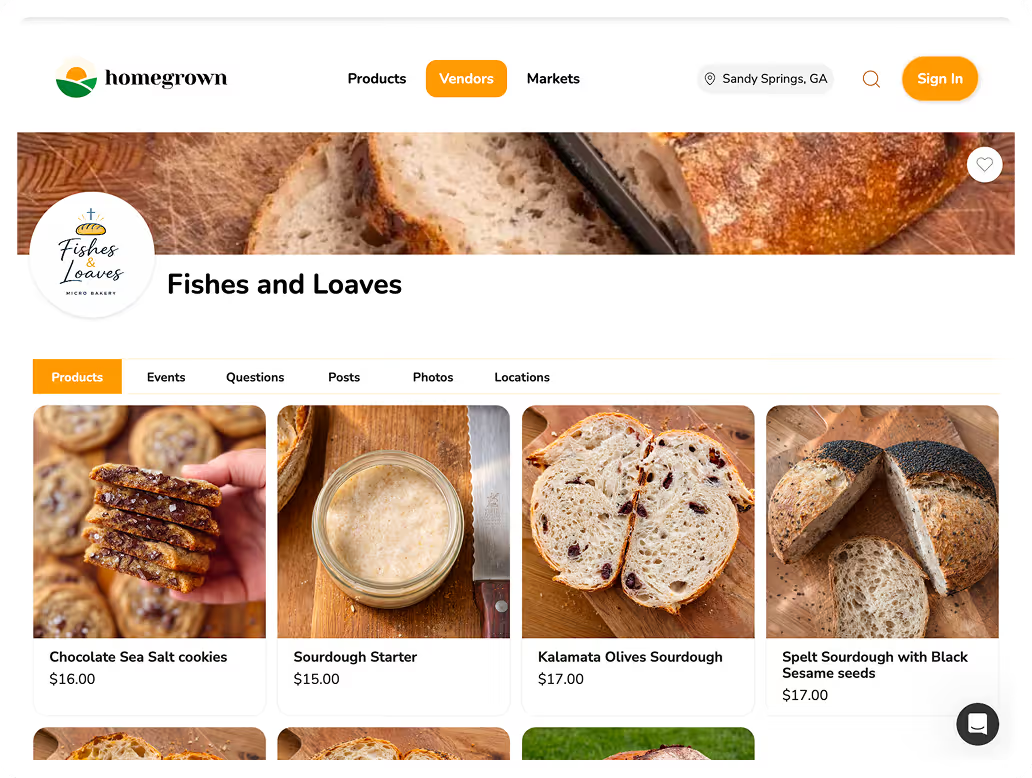
The simplest approach is a dedicated food vendor storefront that handles all four in one place. Platforms built for local food vendors let you set up a page, list your products, accept payments, and manage pickup — usually in under 15 minutes.
The goal is: customer sees your menu, places an order, pays, and picks up. The fewer steps, the more orders you get.
Homegrown is $10/month with no percentage fees — you get a single ordering page where customers see your off-season menu, pick what they want, and pay upfront. No chasing Venmo requests, no cross-referencing a Google Form against your PayPal notifications. When a product hits your production cap, the listing closes automatically. Shopify charges $39/month minimum plus transaction fees — overkill for a vendor selling 10 items locally. Etsy charges 6.5% per transaction and drops you into a national marketplace where your local advantage disappears. Homegrown is built for the vendor who sells 10-20 products to local customers with pickup, not a vendor shipping nationwide. It will not manage your email list or automate your social media posts — that is your phone and your Monday morning. But for the ordering-and-payment step that turns "DM me to order" into an actual system, it is what you set up in September and use all winter.
The biggest mistake vendors make is waiting until the market closes to think about online sales. By then, you have lost your best opportunity to convert in-person customers into online buyers.
Your market is still running in September. Your regulars are still showing up every week. This is when you plant the seed.
| Month | Action |
|---|---|
| September | Set up your online ordering page. Add QR code to market table. Start collecting emails. |
| October | Run your first online-only offer (Thanksgiving pre-orders). Send your first email to your list. |
| November | Market closes. Email your list with your off-season menu. You already have an audience and a working system. |
| December | Holiday gift sets and Christmas pre-orders. Peak off-season revenue month. |
| January-March | Monthly subscription boxes, Valentine's Day pre-orders, custom orders. |
You do not need all five. Pick one or two that match your products and audience, then add more as you get comfortable.
The highest-value off-season strategy. Thanksgiving pies at $25-$40 each, Christmas cookie boxes at $20-$35, Valentine's boxes at $15-$30. You set an order deadline, make everything in one batch, and schedule a single pickup day. Twenty Thanksgiving pie orders at $30 each is $600 in revenue from one product.
A curated box of your products shipped or available for pickup once a month. Price at $25-$45 per box. Even 15 subscribers generates $375-$675 per month through the off-season. Start with a three-month commitment to test demand before committing to year-round.
Birthday cakes, party platters, baby shower desserts, corporate gifts. These trickle in year-round if people know you take custom orders. List your custom order options on your online page with clear pricing and lead time requirements.
Approach one or two local coffee shops, cafes, or boutiques about carrying your products. Even a small weekly order of 24 cookies or 12 jars of jam provides steady baseline revenue. Start with a consignment arrangement if the shop is hesitant — you provide the product, they keep a percentage of each sale.
This requires zero production. Sell gift cards through your online storefront that customers redeem later. Holiday gift cards are especially popular — someone buys a $25 gift card as a Christmas gift, the recipient redeems it in February. You collect revenue now and fulfill orders later.
Out of sight, out of mind. If you disappear from November to April, your regulars will find another vendor or forget about you entirely. Staying visible during the off-season is just as important as having products to sell.
Email outperforms social media for food vendors because it reaches people who have already bought from you. They opted in. They want to hear from you.
Send an email every one to two weeks during the off-season. Keep it simple:
That is it. Three short sections, under 200 words. Do not overthink it.
According to Growing for Market, vendors who maintain customer relationships through the off-season with value-added products and regular communication see significantly better retention when markets reopen in spring.
You do not need to post every day. One post per week showing what you are making, what is available to order, or a reminder about upcoming holiday deadlines is enough to stay visible. Use the same content from your email.
Let's run realistic numbers for a part-time vendor.
| Stream | Weekly Revenue | Season Total |
|---|---|---|
| 10 online orders at $25 average | $250 | $7,000 |
| Thanksgiving pre-orders (one-time) | — | $600 |
| Christmas pre-orders (one-time) | — | $800 |
| Valentine's Day pre-orders (one-time) | — | $400 |
| Off-Season Total | $8,800 |
These are conservative numbers. Ten orders per week is one to two orders per day. A $25 average order is a jar of jam, a bag of cookies, and a spice blend. The holiday pre-order numbers assume just 20-30 orders per holiday.
Most vendors who add online ordering during the off-season are surprised by how much demand already exists. Their customers were always willing to buy between markets. They just had no way to do it.
According to OnDeck's seasonal business guide, the most successful seasonal businesses build off-season revenue streams rather than simply waiting for the next season to begin. For food vendors, online ordering is the simplest path to that year-round income.
If your market closes in the next few months, start here:
You do not need everything perfect before you start. One product, one email, one QR code at your table. That is enough to begin building off-season income this year.
Set up your online ordering page before your last market day so your regulars have somewhere to order from when the booth is gone.
Three to five shelf-stable products is enough to launch. You do not need your full summer lineup. Start with your best sellers that travel well: jams, cookies, spice blends, or honey. Add holiday-specific items as the season approaches.
That is enough. Twenty warm contacts who have bought from you and enjoyed your products are more valuable than 500 cold followers on Instagram. A 20-person email list that converts at 15-20 percent gives you three to four orders per email you send.
Start with pickup only. It is simpler, costs you nothing, and most local food customers expect it. Set one or two pickup windows per week at a convenient location — your home, a church parking lot, or a partner business. Add delivery later if demand warrants it.
August or September, while your market is still running. You want your online ordering page live and your email list growing before the market closes. If you wait until the market ends, you have missed your best window to convert in-person customers to online buyers.
In most states, yes — but the rules vary. Some states allow online ordering for cottage food as long as the transaction happens in person (you hand them the product at pickup). Others allow full online sales including payment. Check your state's cottage food laws before listing products online.
Set clear order cutoff times and pickup windows. Most part-time vendors take orders Monday through Wednesday and fulfill on Thursday or Friday with weekend pickup. An online ordering system handles the order intake automatically — you just check your dashboard each morning and batch your production.
Your market may be seasonal, but your business does not have to be. The vendors who build their off-season ordering channel in September sell year-round. The ones who wait until closing day start from zero every spring.