A Blog Cover Single Image
A Client Image
Evan Knox
Cofounder, Homegrown
Farmers Markets
10 min read
March 6, 2026

How to Build a Customer Email List as a Food Vendor

Social media is useful for discovery, but it doesn't belong to you. Algorithms decide which of your followers actually see what you post. Platforms change their rules without warning. Accounts get restricted or suspended for reasons that are never fully explained. An email list is fundamentally different. When you send an email, it goes directly to the inbox of every person who signed up to hear from you. No algorithm filters it. No platform decides whether your message is worth showing. The connection is direct, and the list is yours.

The short version: Your customer email list is the single most reliable way to reach the people who already buy from you. Start collecting email addresses at your booth this weekend with a simple signup sheet, send one short email before each farmers market listing what you're bringing, and watch your repeat sales grow. Free tools like Mailchimp or Kit handle everything you need. The list you build becomes a business asset that no algorithm can take away.

For farmers market vendors and cottage food vendors, a small email list is one of the most practical business tools you can build. It lets you tell customers what you're bringing this Saturday, announce when a favorite product is back in stock, share that you've added a new market to your schedule, or let regulars know you'll be at a different location this week. And it actually reaches them, which is the part that makes email different from posting on Instagram and hoping the right people see it.

This guide covers how to start collecting email addresses, what tools to use at different stages, what to actually send, and how the list integrates with pre-orders to create a reliable revenue channel between market days. The whole process is simpler than most vendors expect, and you can get started this weekend with nothing more than a clipboard and a pen.

Why Does Email Outperform Social Media for Customer Retention?

Email reaches more of your audience more reliably than any social media platform. A social media post on Instagram or Facebook typically reaches 5 to 15 percent of your followers through organic distribution. The rest of your followers never see it unless the algorithm decides your post is engaging enough to push further. For a vendor with 500 followers, that means only 25 to 75 people see your Saturday morning farmers market post. The other 425 people who chose to follow you have no idea you posted anything.

Email doesn't work that way. When you send an email to your list, it goes to every single person on the list who has a working email address. Open rates for small, personal email lists from local businesses typically run 30 to 50 percent or higher, which means your weekly farmers market email reaches two to five times more people than a social media post to the same audience size. And the people opening your emails chose to be there. They signed up specifically because they wanted to hear from you, which makes them a higher-quality audience than a casual social media follow.

ChannelTypical ReachYou Own It?Best For
Email list30–50% open rateYes — fully portableRetention and repeat sales
Instagram post5–15% of followersNo — algorithm controlledDiscovery and brand awareness
Facebook post2–10% of followersNo — algorithm controlledCommunity engagement

Ownership is the other critical difference. Your email list belongs to you. You can export it, move it between email tools, and use it regardless of what any social media platform does. If Instagram changes its algorithm next month and your post reach drops to 2 percent, your email list is unaffected. If Facebook decides your account looks suspicious and restricts it for a week, your email list is still there. The list is an asset you own, and it grows more valuable over time as you add engaged subscribers.

The right mental model is that social media and email serve different purposes. Social media is best for discovery — reaching people who don't know you yet. A well-timed farmers market photo or behind-the-scenes post can introduce your products to someone who's never visited your booth. Email is best for retention — keeping the people who already know and love your products coming back consistently. For a farmers market vendor, the retention side is where most of the money is, because repeat customers are worth far more over a season than one-time buyers.

How Do You Collect Email Signups at the Farmers Market?

The best time to collect an email address is right after a purchase, when the customer is holding your product and feeling good about it. That moment of positive experience is when the request feels natural rather than pushy. Here are three methods that work, and you can use all of them at the same time.

The Signup Sheet

A clipboard with a simple sheet at the front of your booth is the lowest-tech option, and it works surprisingly well. The sheet needs two columns: name (optional) and email address. That's it. Don't ask for a phone number, a mailing address, or anything else. Every additional field you add reduces the number of people who fill it out.

Keep the signup sheet visible at the front of your booth or near your payment area where customers are already pausing. When you hand back change or process a card payment, mention it naturally. "If you want to know what I'm bringing each week, I send a short email — you can add your name right there." That's the entire pitch. Low pressure, clear value, easy action.

The physical clipboard works because it requires almost no effort from the customer. They don't need to pull out their phone, navigate to a website, or fill out an online form. They pick up the pen, write their email, and they're done. For a busy farmers market where customers are juggling bags and kids and coffee, that simplicity matters.

A QR Code Signup

A QR code on a small tent card or sign that links to a short signup form works for customers who'd rather not write anything down. You can create a free signup form through Mailchimp, Kit, or even a simple Google Form, then generate a QR code pointing to that form using any free QR code generator online.

Print the QR code on a small card and place it near your payment area or sample station. Add a one-line description so people know what they're signing up for: "Get the weekly farmers market update" or "Know what's fresh this Saturday." Without that line, people won't scan a random QR code because they have no idea where it leads.

The Verbal Ask

Don't underestimate simply asking customers out loud. When a regular customer is at your booth and clearly engaged — they bought multiple products, they asked questions about what you make, they mentioned they'll be back next week — that's the right moment to say: "Do you want to be on my email list? I send a quick note before each farmers market so you know what's available."

Most people who say yes to a direct verbal ask actually read your emails because the commitment was personal. They opted in face-to-face, which creates a stronger connection than a passive form submission.

You don't need to ask every single customer. Focus on the regulars, the enthusiastic buyers, and the ones who seem genuinely interested in your business. Over a season of farmers markets, these conversations add up to a substantial list of highly engaged subscribers.

What Should You Offer in Exchange for an Email Address?

The most effective incentive is simply the value of the email itself — telling customers what you're bringing each week. Some vendors offer a discount or incentive in exchange for signing up. Ten percent off your next purchase, a free sample on your next visit, a bonus product with your next order. These incentives can work, but they have a downside that's worth understanding. Discount-driven signups attract people who want the discount more than they want your emails. The list you build with incentives tends to be less engaged over time because a portion of subscribers were motivated by the one-time deal rather than genuine interest in hearing from you.

The simpler and often more effective pitch is just the value of the list itself. "I'll let you know what I'm bringing each Saturday and when I have something new." For a customer who already likes your products enough to be standing at your booth, that's a genuinely useful thing to receive. They want to know when the strawberry jam is back. They want to be reminded that farmers market day is coming. They want to hear about the new cookie flavor before it sells out. The email itself is the value, and framing it that way attracts subscribers who actually want to read what you send.

Incentive ApproachProsCons
Discount (10% off next purchase)Drives quick signupsAttracts deal-seekers, lower engagement
Free sample on next visitGets people back to boothSome never return to claim it
Content-only ("know what's fresh")Attracts genuinely interested subscribersSlower initial signup rate

The discount approach makes more sense if you're selling through your Homegrown storefront and want to drive first purchases from people who haven't tried your products yet. For a farmers market vendor focused on keeping regulars showing up week after week, the straightforward pitch builds a more engaged and more valuable list.

What Tools Should You Use to Manage Your Email List?

You don't need expensive software or technical skills. The tools available at the free tier are more than sufficient for any farmers market vendor, and the simplest option might be the one you already have.

Google Contacts Plus BCC

If you're just getting started and have fewer than 30 to 50 email addresses, sending a BCC email from your personal Gmail account works fine. Add your subscribers to a Google Contacts group, write your weekly email, and BCC the group. Every subscriber gets the email, nobody sees anyone else's address, and it costs nothing.

This approach has real limits:

  • No easy way for subscribers to unsubscribe
  • No tracking to see who opened your email
  • Can trigger spam filters beyond a few dozen addresses
  • No signup form or automation

It's a perfectly fine starting point for a brand-new list, but plan to upgrade once you pass 50 subscribers.

Mailchimp

Mailchimp's free tier lets you send to up to 500 contacts and includes a signup form you can link to, basic email templates, and open rate tracking so you can see how many people read each email. It's the most widely used email tool for small businesses, which means there's plenty of documentation, tutorials, and community help available if you get stuck.

The interface is slightly more complex than other options because Mailchimp has grown into a full marketing platform, but the core features — build a list, write an email, send it — are straightforward once you've done it once. The free tier doesn't require a credit card to start, which removes any risk from trying it out.

Kit (Formerly ConvertKit)

Kit's free plan is the most generous of the three options, allowing up to 10,000 subscribers on the free tier. The interface is cleaner than Mailchimp for simple use cases, and it's built specifically for creators and small business owners rather than large companies.

If you want to eventually set up automated sequences — a welcome email that goes out automatically when someone joins your list, a reminder email two days before each farmers market — Kit handles automation well even on the free plan. For a vendor who plans to grow their email presence over time, Kit offers the most room to scale without hitting a paywall.

Which Tool Should You Pick?

ToolFree Tier LimitBest ForKey Feature
Gmail BCCUnlimited (but risky past 50)Brand-new lists under 50 contactsZero setup required
Mailchimp500 contactsVendors ready for a real email toolMost documentation and community help
Kit10,000 contactsVendors planning to grow long-termAutomation on free plan

If you have fewer than 50 contacts right now, BCC from Gmail is fine until you outgrow it. If you're starting fresh and ready to use a real email tool, Mailchimp is the safe default choice because of its familiarity and documentation. If you want a cleaner experience or plan to grow beyond 500 subscribers, Kit gives you more room on the free tier. All three options work. The best one is whichever you'll actually use consistently.

What Should You Send in Your Weekly Farmers Market Email?

Send a short message before each farmers market day telling your subscribers what you're bringing and where to find you. This single email, sent consistently, is enough to keep your regulars showing up and to stay top of mind for occasional buyers.

Here's what to include:

  • Clear subject line: "This Saturday at Riverside Market — what I'm bringing" or "Fresh this weekend: sourdough, cookies, and new strawberry jam"
  • What you're bringing: The full product list or at least the highlights
  • Anything new or limited: "This week only: blueberry lemon jam while supplies last"
  • Where and when: Especially if you attend multiple farmers markets or if the location is unusual
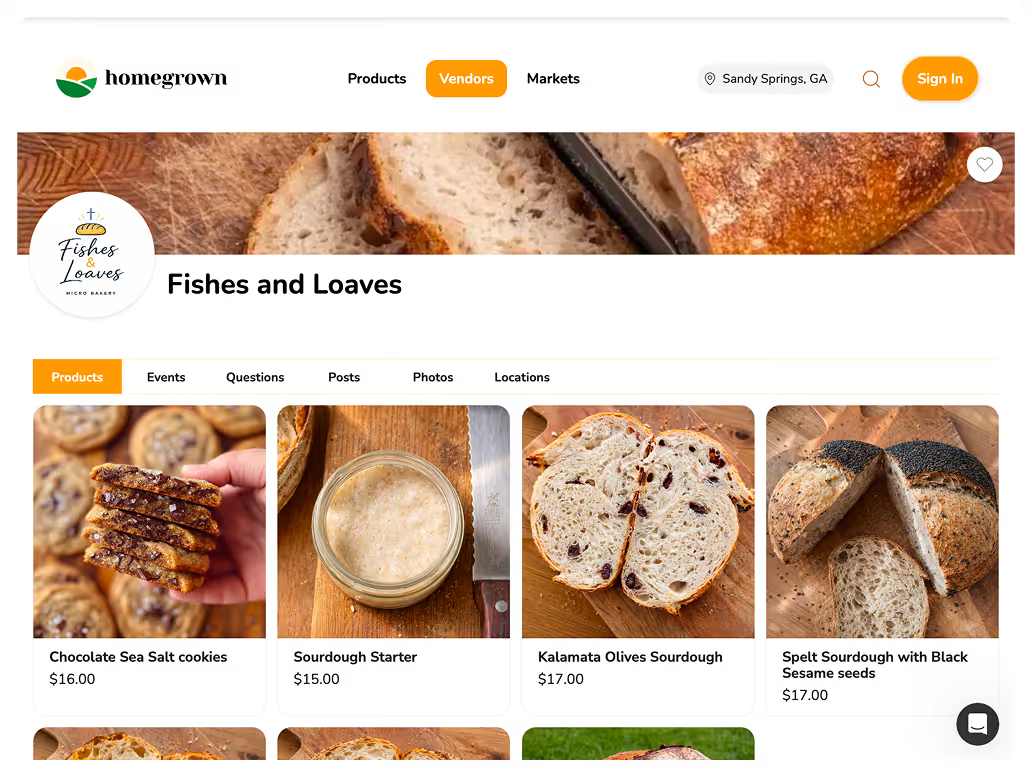
  • Pre-order link: If you offer pre-orders through your Homegrown storefront, include the link

That's it. You don't need to write an essay, tell a long story, or fill the email with photos and formatting. The goal is to give your regulars the information they need to plan their Saturday and a reason to make sure they stop by your booth. A simple, useful email beats a beautifully designed one that takes you two hours to produce.

How Often Should You Send Emails, and What Tone Should You Use?

Once a week before your farmers market day is the right sending frequency for most vendors. Sending more often than that without a clear reason trains people to ignore your emails or unsubscribe. Sending less than once a week lets the list go cold, and cold lists don't drive farmers market attendance.

During the off-season or when you're not at market, scale back to once or twice a month. Send seasonal updates, share news about new products you're developing, or let subscribers know when your farmers market season starts back up. The goal during the off-season is to stay in the subscriber's awareness without cluttering their inbox.

For tone, write like you'd talk to a customer at your booth. You're not a corporation sending a marketing blast. You're a person telling your neighbors what you're making this week. Short sentences, direct language, a bit of personality. Customers who buy from farmers market vendors are specifically choosing the personal connection over the anonymity of a grocery store. Your email should reflect that same warmth and directness.

The most important tone advice is this: don't overthink it. The vendor who sends a slightly imperfect email every week will always outperform the vendor who sends nothing because they're waiting for the perfect subject line or the perfect template. Consistency matters more than polish. Hit send and move on to your baking.

How Does Email Integrate With Pre-Orders?

Email and pre-orders create a direct sales channel that turns subscribers into committed buyers before farmers market day. Your weekly email is the primary place to announce that pre-orders are open, and the pre-order link in your email turns passive readers into committed buyers. Instead of sending an email and hoping people show up Saturday, you send an email and watch orders come in during the week.

If you use Homegrown for your pre-orders, you can link directly to your Homegrown storefront in your weekly email. Customers who want to guarantee they get your most popular products can order ahead with one click. Everyone else can still walk up and buy at the farmers market. Your email becomes the trigger for both types of customers — the planners who pre-order and the spontaneous shoppers who just needed a reminder that farmers market day is coming.

The combination of email plus pre-orders creates a feedback loop that strengthens over time:

  1. Your email drives pre-orders
  2. Pre-orders create committed revenue
  3. Committed revenue gives you confidence to produce more
  4. More product availability means better selection at the farmers market
  5. Better selection attracts more customers
  6. More customers means more email signups
  7. The cycle feeds itself

How Do You Grow Your Email List Over Time?

Consistent, small efforts at every farmers market compound into a substantial list over weeks and months. Here are the practices that work:

  • Add a signup link to every online presence you have. Your Instagram bio, your Facebook page, your farmers market's vendor directory listing, your Google Business profile if you have one. Every place someone might discover you online should include a path to your email list.
  • Mention the list on social media occasionally. A post saying "I send a short email before each farmers market so you know what's coming — link in bio to join" will add subscribers without requiring a big campaign or push.
  • Ask at checkout consistently, but selectively. Not every transaction warrants the ask. Focus on customers who are clearly engaged — they bought multiple products, they asked about your process, they said they'd be back next week. Those are the people most likely to sign up and most likely to read what you send.
  • Keep your list clean over time. After a few months, check whether any addresses consistently never open your emails. Remove inactive subscribers rather than keeping them on the list. A smaller, engaged list outperforms a large, unresponsive one.
  • Cross-promote between channels. Mention your Homegrown storefront in your emails. Mention your email list on your Homegrown storefront. Every channel should feed into the others.

The compounding effect of consistent list-building is real and meaningful. A vendor who collects a few email addresses at every farmers market and sends a weekly email will, after one year, have a reliable communication channel reaching hundreds of local customers who actively want to buy from them. That's a genuine business asset built at virtually zero cost, and it's one that grows more valuable every month.

Getting Started This Weekend

You don't need to have everything set up perfectly before you start. Here's the minimum viable version that gets you moving immediately.

  1. This week, put a clipboard with a signup sheet at your booth
  2. Ask a few customers if they'd like to know what you're bringing each week
  3. Once you have 10 or more email addresses, set up a free Mailchimp or Kit account and move them over
  4. Before your next farmers market, send a short email listing what you're bringing and where you'll be

That's enough. Templates, automations, segmentation, beautiful design — all of that can come later. The list only grows if you start collecting addresses, and collecting addresses only happens if you put the signup sheet out and open your mouth. Start this weekend.

Frequently Asked Questions

How many email addresses do I need before I start sending?

You can start sending with as few as five or ten subscribers. There's no minimum threshold that makes an email list "worth it." Even a small list of engaged local customers who want to hear from you is valuable. The sooner you start sending, the sooner you build the habit of consistent communication — and the sooner your subscribers start showing up at your farmers market booth because of your emails.

Do I need to pay for an email marketing tool?

No. Both Mailchimp and Kit offer free tiers that are more than sufficient for most farmers market vendors. Mailchimp is free up to 500 contacts, and Kit is free up to 10,000 contacts. You won't need a paid plan until your customer email list grows well beyond what a typical local food vendor needs.

How long should my weekly email be?

Keep it short — two to three short paragraphs or a simple bullet list. Your subscribers want to know what you're bringing, where you'll be, and whether there's anything new or limited. That information fits in a few sentences. Vendors who write shorter, more frequent emails see better open rates and more consistent farmers market attendance from their subscribers.

What's the best day to send my weekly email?

Send it one to two days before your farmers market day. For Saturday markets, Thursday or Friday morning works best. This timing puts your email in subscribers' inboxes right when they're making weekend plans, which maximizes the chance they'll remember to visit your booth.

Can I use my personal Gmail to send emails?

Yes, when you're just starting out. BCC your subscribers from a Google Contacts group. This works fine for lists under 50 people. Once you pass that threshold, switch to Mailchimp or Kit for better deliverability, unsubscribe compliance, and open rate tracking.

How do I avoid my emails going to spam?

Use a reputable email tool like Mailchimp or Kit rather than sending mass BCCs from a personal account. Include an unsubscribe link in every email. Avoid spammy subject lines with all caps or excessive exclamation points. Most importantly, only email people who actually signed up — a clean, opt-in customer email list has far fewer spam issues than a purchased or scraped list.

Should I include photos in my emails?

Photos can help, but they're not required. A simple text email that clearly lists your products and farmers market schedule performs just as well as a photo-heavy email for most vendors. If you include a photo, one good product shot is enough. Don't let photo editing become the reason you skip sending your weekly email.

For more on getting repeat customers at a farmers market, including approaches that work alongside an email list to build a loyal customer base, see that guide.

About the Author

Evan Knox is the cofounder of Homegrown, where he works with hundreds of small food vendors across the country to sell online. He and his Co-founder David built Homegrown after seeing how many local vendors were stuck taking orders through DMs and cash-only sales.

Your Store Could Be Live Tonight

15 minutes. That's all it takes. Add your products, share your link, and start taking orders. Free for 7 days.