

You've been making your honey almond granola for years. Friends ask for the recipe. Family requests it at the holidays. Someone at work offered to pay you for a bag. At some point the math becomes obvious: you should be selling this.
Granola and dry mixes are among the best products to start a cottage food business with. They're shelf-stable, have long shelf life, batch easily, and fall under cottage food law in most states without requiring a commercial kitchen. Unlike baked goods that go stale in days or produce that wilts in hours, a bag of granola sits comfortably on a shelf for weeks. You can make it on a Tuesday, sell it on a Saturday, and it's just as good as the day you bagged it.
The gap between giving this stuff away and selling it is smaller than you think. If you're already making granola or dry mixes that people love, the product is proven. You just need the legal knowledge, the right packaging, smart pricing, and somewhere to sell it.
This guide covers all of that: what's legal, what to put on the label, how to price and package your products, where to sell them, and how to build a product line that keeps customers coming back.
The short version: You can legally sell granola from home in most states under cottage food law — no commercial kitchen needed. Package your products in stand-up kraft bags with proper labels, price granola at $8-12 per 8 oz bag, and start selling at your local farmers market or through pre-orders on a Homegrown storefront. Shelf stability is your biggest advantage: these products last weeks, ship well, and make great gifts. Get your labeling right (especially allergens), and you're in business.
Yes, in most states. Granola and dry mixes are explicitly allowed under cottage food laws or fall clearly within the permitted categories. These products hit every marker that makes something cottage food-friendly: shelf-stable, no refrigeration required, low spoilage risk, and minimal food safety concerns compared to meat, dairy, or canned goods.
Cottage food laws exist in all 50 states and allow home producers to sell certain low-risk foods directly to consumers without a commercial kitchen, health inspection, or food handler's license. The specifics vary by state, but the principle is the same: if the product is safe, shelf-stable, and sold direct to the person eating it, most states give home producers a legal path to sell it.
What's typically allowed under cottage food:
What varies by state:
| Requirement | Details |
|---|---|
| Revenue caps | Range from $25,000 to $75,000 per year; a growing number of states have eliminated caps entirely |
| Sales channels | Most states allow farmers markets, home sales, and local pickup. Some allow online sales within the state. A few allow shipping. Most don't permit selling to grocery stores or restaurants under cottage food rules |
| Labeling requirements | Every state has some version of cottage food labeling rules (covered in detail below) |
| Registration or permits | Some states require a simple cottage food registration or a basic food safety course. Neither is difficult or expensive |
Check your state's specific rules at Forrager's cottage food law directory. Forrager maintains a current database of what each state allows, including which product categories are permitted, revenue caps, and any restrictions on sales channels. For a full walkthrough of what it takes to sell food legally from your home kitchen, how to sell food from home covers the cottage food framework in detail.
One practical note: even where cottage food law is broad, you still need to label your products correctly. The label is what demonstrates compliance, and it's worth getting right before your first market day.
The category is broader than most people realize. If you make any of the following, you're likely working with a cottage-food-eligible product.
Granola and baked grain products. This is the core category: oats mixed with oil, honey or maple syrup, nuts, seeds, and dried fruit, then baked until golden and crunchy. Classic granola is one of the most widely permitted cottage food products across states. Granola bars may be classified differently than loose granola in some states, so check if you plan to sell bars. Muesli (unbaked oat mix with dried fruit and nuts) is also generally permitted as a shelf-stable dry product.
Trail mix and nut mixes. Combinations of nuts, dried fruit, seeds, chocolate chips, and other shelf-stable ingredients. Trail mix is straightforward from a regulatory standpoint since you're combining shelf-stable ingredients without cooking. Roasted nuts can shift classification in some states, so if you're roasting your own nuts as part of your mix, verify that your state allows it under cottage food. Resources from food allergen labeling guide offer more detail here.
Baking mixes. Pancake and waffle mix, muffin mix (blueberry, corn, chocolate chip), biscuit and scone mix, brownie and cookie mix, bread mix. These are dry ingredient blends that the customer adds wet ingredients to at home. They're popular cottage food products because they're shelf-stable, lightweight, and have strong gift appeal. The "cookie mix in a jar" concept with layered ingredients visible through glass is particularly popular at holiday markets.
Spice and seasoning blends. Dry rubs for grilling, soup and chili seasoning packets, everything bagel seasoning, herbes de Provence, taco seasoning, chai spice blend. Spice blends are small in size but high in value per ounce. They're lightweight, shelf-stable for months, and repeat-purchase products. A customer who loves your dry rub will buy it again and again.
Hot beverage mixes. Hot cocoa mix, chai spice blend, mulled cider spice mix, golden milk powder. These are especially strong during fall and winter markets and make excellent gift products.
If you make more than one of these, you can build a cohesive product line from a single cottage food operation. Same kitchen, similar labeling requirements, complementary products at a market booth. A customer who buys your granola sees your pancake mix and picks that up too. A gift shopper grabs a bundle of three different products. The variety works in your favor.
Your packaging is your first sales pitch. At a farmers market, a customer usually can't taste your granola before buying. They're deciding based on what they see: the bag, the label, the window into the product, and how it compares to everything else on the table.
Good packaging does selling work for you. Bad packaging — a zip-lock bag with a handwritten label — undermines even the best product. You don't need expensive custom packaging, but you do need something that looks intentional and clean.
Packaging options compared:
| Packaging Type | Cost Per Unit | Best For | Notes |
|---|---|---|---|
| Stand-up kraft bags with window | $0.30-0.50 | Granola, trail mix | Most popular choice; shows product texture; stands up for display |
| Clear sealed bags with printed label | $0.30-0.50 | Trail mix, spice blends | Clean look; shows full contents |
| Mason jars | $0.75-1.50 | Layered mixes, gift products | Unbeatable gift presentation; too heavy for shipping |
| Compostable/recyclable bags | $0.40-0.60 | Eco-conscious customers | Strong selling point at farmers markets |
Budget $0.40-1.00 per package depending on the format. Labels add $0.15-0.30 each. Start with bags — you can always upgrade packaging as your business grows.
Every label needs specific information to comply with cottage food law. Requirements vary by state, but most require these elements:
For dry mixes that need additional preparation (pancake mix, muffin mix, cookie mix), also include:
What's usually NOT required for cottage food:
Add a best-by date even if it's not required. It communicates product quality and tells customers how long they have to enjoy peak freshness. For granola: "Best by" 3-4 weeks from production. For dry mixes: "Best by" 2-6 months from production depending on ingredients.
The allergen statement deserves extra attention. This is the most commonly missed labeling element for dry mix vendors. If your granola contains almonds, that's a tree nut allergen. If your pancake mix contains wheat flour, that's a wheat allergen. If you make products in a kitchen that also processes peanuts, note that: "Made in a facility that also processes peanuts." Allergen disclosure protects both your customers and you.
Dry mixes price well — you can expect healthy margins right from the start. Customers are accustomed to paying $8-14 for a bag of specialty granola at a grocery store, and handmade, locally produced versions with a story behind them command at least that. Premium ingredients (organic oats, local honey, high-quality nuts) justify the upper end of pricing ranges.
Typical pricing by product type:
| Product | Size | Price Range | Notes |
|---|---|---|---|
| Granola | 8 oz bag | $8-12 | $9-10 for classic flavors; $11-12 for premium/specialty |
| Granola | 16 oz bag | $14-18 | Price at ~1.5x the small bag to incentivize upsizing |
| Trail mix | 6 oz bag | $7-10 | Nut-heavy mixes justify higher end |
| Baking mixes | Makes one batch | $8-12 | Customers pay for convenience and quality |
| Spice blends | 2 oz jar or packet | $6-9 | Small quantity, high perceived value |
| Gift sets | 2-3 products bundled | $22-38 | Especially powerful during holiday markets |
How to calculate your price: Add up your ingredient cost per unit, packaging cost per unit, and label cost per unit. That's your cost of goods. Multiply by 3-4x to get your retail price. If the result is below market rate, price at market rate. If it's above market rate, either find ways to reduce cost or reconsider whether that product makes sense at the scale you're producing. The granola and snack industry trends provides additional guidance on this.
Example: A batch of granola uses $18 in ingredients and yields 12 eight-ounce bags. That's $1.50 per bag in ingredients. Add $0.50 for packaging and label. Your cost of goods is $2.00 per bag. At $10 retail, that's an 80% gross margin. Healthy for any cottage food product, and typical for well-priced granola at a farmers market.
If your products are consistently selling out at a farmers market, raise your price by $1. If you're bringing inventory home, either adjust the price slightly or reduce your production volume. The market will tell you what to charge.
Farmers markets are the best starting point for most vendors selling granola from home. Your products have excellent booth presence — they stack well, display attractively, photograph well, and hold up in outdoor conditions that would destroy fresh produce or baked goods in summer heat. While the vendor next to you is worried about keeping their lettuce from wilting, your bags of granola look exactly the same at 2pm as they did at 8am.
What works well at a farmers market for dry products:
For more on setting up a booth and running a successful market day, how to sell at a farmers market covers the operational side in detail.
Dry mixes are perfectly suited for online pre-orders because they store easily and don't degrade between order and pickup. You can take orders for weekly or biweekly batches, produce everything in one session, and organize pickups on a set day.
A simple model works like this:
Customers browse your current flavors, order online, pay, and pick up from your home, your porch, or a local drop point. The long shelf life means you can even batch-produce ahead of time and build inventory without waste risk.
The question is how customers place those pre-orders. Most granola vendors start by posting on Instagram and fielding DMs — which works until 12 people are texting "two honey almond and one dark chocolate please" and you are mentally tallying bag counts while mixing your next batch.
Etsy works if you want to ship granola nationally — customers search "homemade granola" and find your listing. But Etsy takes 6.5% plus listing and processing fees per sale, and the platform is built around shipping. For customers who pick up at your porch or your Saturday booth, you are paying marketplace fees for a local handoff.
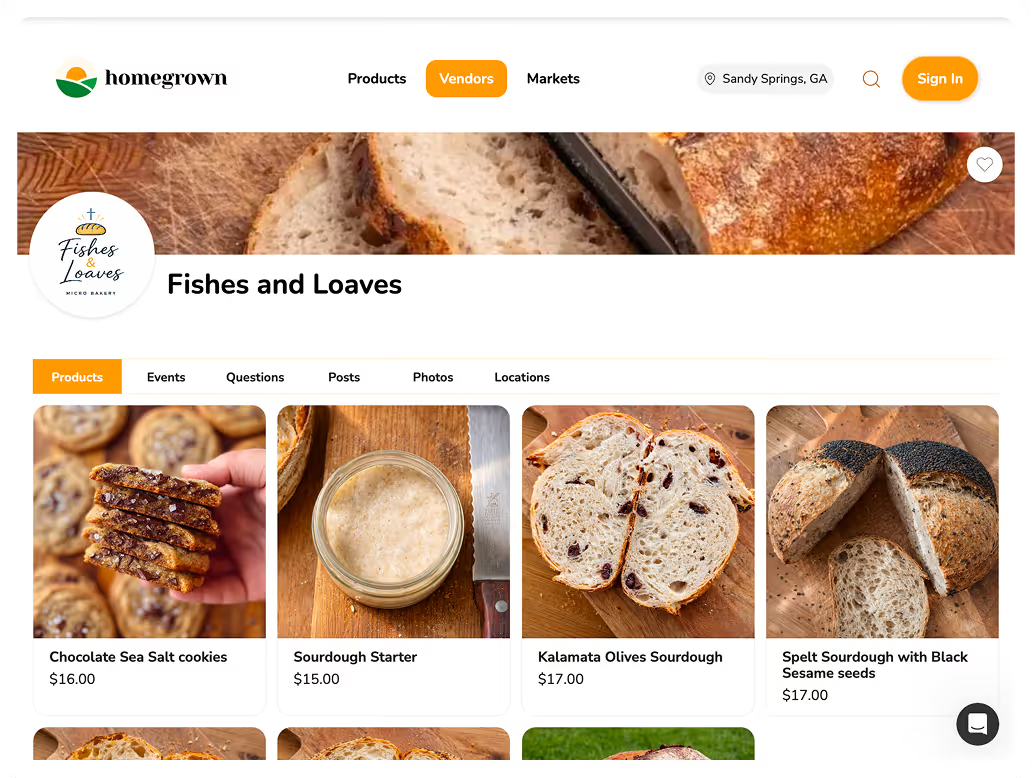
Homegrown is $10/month. List your flavors and bag sizes, set a cutoff day, and share the link. Customers order and pay before you measure a single cup of oats. You see a clean production list — not a thread of DMs — with exact bag counts by flavor. When the maple pecan sells out for the week, it closes automatically. Homegrown is not an e-commerce store and will not help you ship bags to customers across the state — for that, Etsy is the better fit. But for local pre-orders and market pickup, it turns "did she want two bags or three?" into a dashboard you check once. Shoppers can order for pickup or local delivery.
Holiday season is your biggest revenue opportunity — not an afterthought. Granola and dry mixes in attractive packaging are natural gift products, and this is a meaningful revenue channel worth planning around.
The strongest gift seasons for cottage food products:
Gift sets are where the money is. Bundle two or three products into a box or bag with ribbon: granola + trail mix + hot cocoa, or pancake mix + maple granola + a small jar of local honey. Price these at $22-38. The perceived value of a curated gift set is much higher than the sum of individual products, and gift buyers are less price-sensitive than regular shoppers.
Holiday craft fairs and gift markets are worth applying to separately from your regular farmers market. The buying intent at these events skews toward gifts, and your products fit the category perfectly. A booth at a December holiday market with gift-ready packaging can generate more revenue in one weekend than a month of regular farmers markets.
Yes — once your product is consistent and your packaging looks professional. Local retail placement becomes a strong option once you have a track record of direct-to-consumer sales.
Retail channels that work for granola and dry mixes:
Direct vs. wholesale sales compared:
| Direct Sales (Farmers Market, Pre-Orders) | Wholesale (Retail Stores) | |
|---|---|---|
| Price per unit | Full retail ($10/bag) | ~50% of retail ($5/bag) |
| Margin per unit | Higher | Lower |
| Effort per sale | Active (you're at the booth) | Passive (drop off and restock) |
| Customer relationship | Direct, personal | Through the retailer |
| Best for | Starting out, building brand | Scaling volume once established |
Start with farmers market and direct-to-consumer sales to establish your product and pricing before approaching retail stores. Having a track record and professional packaging makes the conversation with a store owner much easier.
Start with your best-selling product and expand into complementary categories. One of the biggest advantages of working with dry mixes is how naturally a product line develops. From a single home kitchen, you can offer a range of complementary products without fundamentally changing your production process.
A cohesive lineup might look like:
That gives a farmers market booth 6-10 products without requiring different equipment or dramatically different skills. Customers who buy your granola notice the pancake mix. Gift shoppers pull from multiple categories. Repeat customers try new products each visit. The small batch food production tips provides additional guidance on this.
Keep your line cohesive. A brand that does granola, spice blends, cookie mix, hot cocoa, trail mix, soup mix, dog treats, and candles is trying to be a general store. Pick 4-8 products that make sense together, do those well, and let your line feel curated rather than scattered. A focused product line looks more professional and is easier to produce, stock, and display.
Introduce new flavors seasonally. A pumpkin spice granola in October, a peppermint hot cocoa mix in December, a berry muesli in summer. Seasonal flavors create urgency, give regulars something new to try, and provide social media content that drives attention to your brand.
No, in most states you do not. Granola and dry mixes are among the most widely permitted cottage food products. You can produce them in your home kitchen and sell directly to consumers at farmers markets, through local pickup, and often online. Check your state's specific rules at Forrager to confirm what's allowed where you live.
That depends on your state. Some states allow cottage food products to be sold online and shipped within the state. Many restrict cottage food sales to in-person, direct-to-consumer transactions only. A few allow interstate shipping; most don't. Dry mixes are ideal for shipping when it's allowed — they're lightweight, shelf-stable, and not fragile. If your state permits it, online sales through a Homegrown storefront can significantly expand your customer base beyond your local area.
Properly made and stored granola lasts 3-4 weeks at room temperature in an airtight package. Standard granola with dried fruit, nuts, and seeds stores well within that window. Including a best-by date on your label tells customers exactly when to expect peak freshness and crunch. If you're using fresh fruit, fresh-squeezed juice, or other high-moisture ingredients in your recipe, shelf life shortens significantly and you may need to adjust your formulation for a product intended for sale.
Missing the allergen statement. If your granola contains tree nuts (almonds, pecans, cashews, walnuts), that's a tree nut allergen that must be disclosed. If your product contains wheat flour or oats that may be cross-contaminated with wheat, disclose that. "Contains: tree nuts (almonds), wheat" should appear clearly on your label. The second most common mistake is omitting the cottage food disclosure statement that most states require.
Track every ingredient that goes into one full batch of your product. Add up the cost of everything: oats, honey, oil, nuts, dried fruit, salt, whatever goes in. Divide that total by the number of bags or jars you produce from that batch. Add your packaging cost per unit (bag plus label plus any ties or closures). Then multiply your total cost of goods by 3-4x to arrive at a retail price that gives you healthy margins.
Set up a Homegrown storefront. It lets you list your products, open orders on your schedule, and get paid before you start production — without building or maintaining a full e-commerce site. Share a single link with your customers for ordering, and you get a clean production list instead of managing DMs and texts. It's designed specifically for local vendors who sell granola from home and other cottage food products.
Start with one to three products that you already make well and that people already ask for. Most successful vendors begin with a signature granola flavor or two, then add complementary products like trail mix or a baking mix once they have a steady customer base. Trying to launch with ten products on day one stretches your production time, increases packaging costs, and dilutes your brand before you've proven what sells.
Granola and dry mixes are genuinely one of the most accessible cottage food businesses you can start. The products are shelf-stable, legal in most states, hold up beautifully at farmers markets, and have built-in gift appeal that creates a secondary revenue stream every holiday season. If you've been making granola that people love and giving it away, you're already past the hardest part. The product is proven. You just need to package it, price it, and put it in front of buyers.
If you also sell baked goods or are thinking about expanding into a broader product range, how to sell baked goods covers the adjacent territory and shares a lot of common ground with the dry mix business. And if you are ready to formalize your home food operation — from registering with your state to building a reliable customer base — how to start a cottage food business walks through every step of that process.
When you're ready to take pre-orders and manage local pickup without building a full e-commerce site, Homegrown makes it easy to list your products, open orders, and get paid before you start production. Share a link with your regulars instead of managing DMs.
Your granola is already better than what's on the shelf at the grocery store. The people who've been eating it know that. You're just giving them a way to buy it.