

You already make the food. Friends rave about your salsa. Coworkers fight over your banana bread. Someone at church asked if you sell your jam — and you said "not yet" because you didn't know where to start.
The good news: selling food from home is legal in nearly every state, doesn't require a commercial kitchen, and you can start as early as this weekend. The bad news: most of the advice online assumes you want to build the next big food brand. You don't. You want to sell your stuff to people nearby and get paid for it.
Here's everything you need to know — what you can sell, what's legal, how to set up your kitchen, where to find customers, how to handle orders, and what you can realistically make.
The short version: Selling food from home is legal in nearly every state under cottage food laws. You can sell baked goods, jams, honey, candy, and other shelf-stable products from your home kitchen without a commercial license. Start with 2-3 products people already ask you for, sell at a farmers market or through a Homegrown storefront, and expect to make $500-2,000/month part-time. Total startup costs are usually under $300.
Ready to choose where to sell? See our pick for the best platform to sell food from home.
You can sell shelf-stable baked goods, jams, honey, candy, granola, and dry mixes from your home kitchen in nearly every state. Every state has some version of a cottage food law that allows home-based food sales. What you're allowed to sell depends on where you live, but the general pattern is the same: shelf-stable foods made in a home kitchen, sold directly to the end consumer.
Products that almost always work under cottage food laws:
Products that usually need a commercial kitchen:
The safest starting point: stick with what your state explicitly allows. Most cottage food laws have a clear list of approved products. If your go-to product is on the list, you're in business.
Start with what people already ask for. If everyone loves your lemon bars, sell lemon bars. If your neighbor keeps asking for more of that strawberry jam, sell the jam. Don't try to launch with 15 products — pick two or three things you make well and that people already want.
The legal requirements are much simpler than most people expect — cottage food laws let you sell directly to customers from your home kitchen with just a simple registration in most states. Cottage food laws were designed specifically to let people like you sell homemade food without jumping through commercial hoops — and labeling requirements can help with that.
What cottage food laws typically require:
What you typically DON'T need:
The one thing you need to do right now: Search "[your state] cottage food law" and read the requirements for your state. Every state is different. Some are very permissive (Texas, for example, allows a wide range of products with high revenue caps). Others are more restrictive. Know your state's rules before you start selling.
When you need more than cottage food: If you want to sell products that aren't on your state's approved list, sell through retail stores, sell across state lines, or exceed your revenue cap, you'll need a licensed kitchen. Shared commercial kitchens rent for $15-30 per hour in most areas. But for most home food sellers starting out, cottage food laws cover everything you need.
You do not need to renovate your kitchen — just keep it clean, follow your state's cottage food guidelines, and set up for consistent batch production. You need to keep it clean, organized, and set up for consistent batch production.
What "compliant" means at home: Follow your state's cottage food guidelines. In most states, this means a clean kitchen with proper handwashing facilities, safe food storage, and no pets in the kitchen during production. It's not a commercial inspection — it's basic food safety practices you probably already follow.
Packaging and labeling basics: Most states require your products to include:
Labels don't need to be fancy. A printed label from your home printer works fine when you're starting out. You can upgrade to professional labels once you're selling consistently.
Batch production tips: The biggest difference between cooking for fun and cooking to sell is consistency and efficiency. A few things that help:
Working within home constraints: You're sharing this kitchen with your family. That's fine. Most home food sellers produce in focused blocks — a few hours on a weekday evening or a full morning on Friday. You don't need a dedicated production space. You need a schedule that works around your life.
Start with people you already know, then expand to farmers markets, social media, and a Homegrown storefront. You don't need to figure out all your sales channels at once. Start with the easiest path and add more as you find your rhythm.
Start with who you know. Your first 10-20 customers are already in your life. Friends, family, neighbors, coworkers, church members, parents from your kids' school. These people already know your food is good — they just need to know they can buy it and how to order. Tell them what you're selling, what it costs, and when they can get it.
Farmers markets are the best discovery channel. Once you're ready to sell beyond your personal network, a farmers market puts your products in front of dozens or hundreds of potential customers every week. Booth fees typically run $20-75 per market day. You show up, set up a table, and sell directly to people. Markets are also the fastest way to learn what sells, what pricing works, and what customers want more of. For a complete walkthrough, see our guide on how to sell at a farmers market. See local food safety regulations for additional context.
Social media is a marketing tool, not an ordering system. Post photos of what you're making on Instagram. Share your market schedule on Facebook. Join local food groups. Baked goods and homemade food photograph well, and people love supporting local makers. But don't try to run your ordering through DMs — that breaks fast. Use social media to attract customers, then send them somewhere to actually order and pay.
An online storefront brings it all together. The upgrade that changes everything for home food sellers is a simple online ordering link. Customers see what you're selling, place an order, and pay — all without texting you back and forth. You share one link everywhere: text it to regulars, post it on Instagram, hand it out at the market. For platform options, see our guide on the best platform to sell local food online.
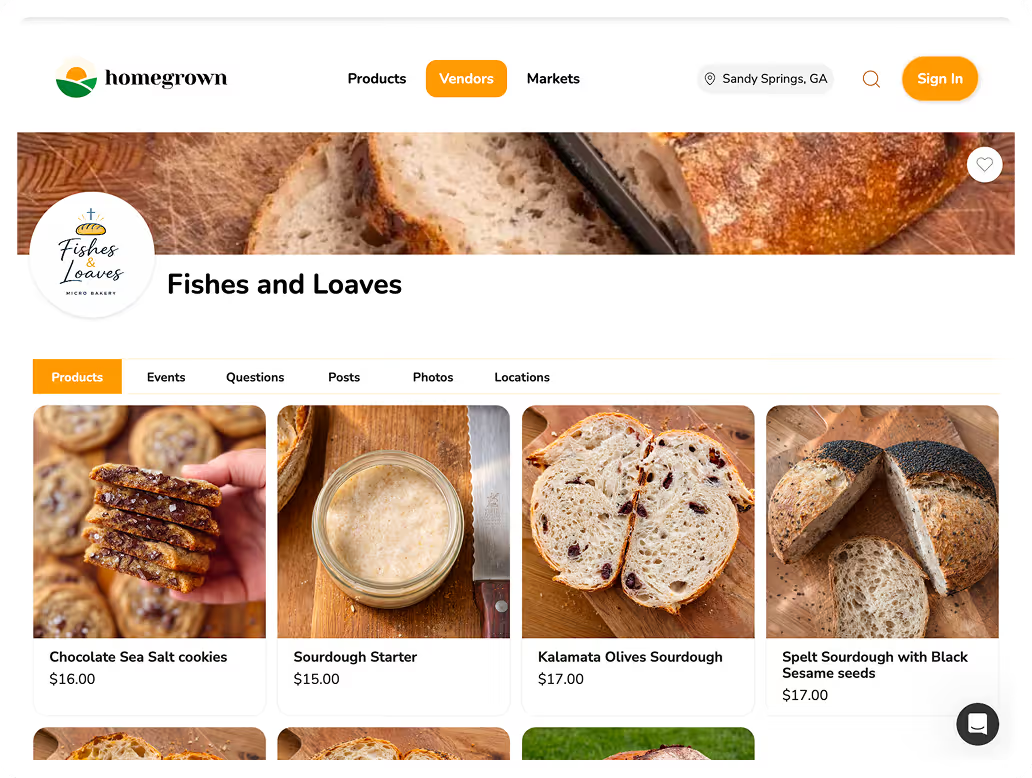
Set up a Homegrown storefront with one shareable link — customers order and pay on their own schedule, and you get a clean order list and money in your bank. This is where most home food vendors hit a wall — not in making the food, but in managing orders.
Here's what happens: someone at the market says they want to order next week. They text you Wednesday. Another person DMs you on Instagram. A coworker sends an email. Your neighbor catches you in the driveway. Now you have orders coming from four different places, no clear record of who's paid, and you're trying to figure out how much to make while juggling your day job and getting kids to school.
The DM juggle is the number one thing that burns out home food sellers. Not the baking. Not the legal stuff. The constant back-and-forth of managing orders through personal messages.
What you actually need is one link. A single URL where customers go to see what you're selling, choose what they want, pick a time to get it, and pay. That's the entire system. The question is which tool gives you that link without costing more than you make.
Google Forms + Venmo is free but entirely manual. You build a form, share it, then match Venmo payments to form responses yourself. It works for your first five orders. By order fifteen, you're spending more time tracking payments than baking.
Etsy charges $0.20 per listing plus 6.5% of every sale plus payment processing. On a $40 cookie order, Etsy takes about $3.50 — and Etsy owns the customer relationship, not you. Small local sellers also get buried under commercial bakeries with professional photography and ad budgets.
Square Online has a free tier, but it's built for retail stores and restaurants. The setup is more complex than what someone selling 30 jars of jam per week from their kitchen actually needs, and you don't need inventory management or shipping integration.
Shopify starts at $39/month and is designed for e-commerce businesses shipping products nationwide. It's engineered for a completely different scale than home food sales.
Homegrown costs $10/month and is built specifically for local food vendors selling from home. You get:
Setup takes about 15 minutes. No website building, no coding, no monthly contracts.
| Platform | Monthly Cost | Transaction Fees | Built for Home Sellers | Customer Discovery |
|---|---|---|---|---|
| Google Forms + Venmo | Free | None | No | No |
| Etsy | Free to list | 6.5% + $0.20/listing + processing | No | Yes (but favors large sellers) |
| Square Online | Free tier | 2.9% + $0.30 | No | No |
| Shopify | $39/mo | 2.9% + $0.30 | No | No |
| Homegrown | $10/mo | Payment processing only | Yes | Yes |
Homegrown does not handle custom orders with back-and-forth quoting, wholesale invoicing, or nationwide shipping. It's built for vendors who sell a set menu of products on a regular schedule to local customers — which is exactly what most home food sellers do.
Pre-orders eliminate the biggest risk of selling from home. When customers order and pay ahead of time, you know exactly how much to make. No guessing, no overproduction, no waste. You bake what's ordered, plus a small batch for walk-ups or last-minute requests.
Most part-time home food vendors make $500-2,000/month selling at one market per week plus online pre-orders. Here's what's realistic at different levels:
Need more help here? See our guide on starting a cottage food business.
Part-time (one market per week + online orders): $500-2,000 per month. This is the most common starting point — you sell at a Saturday market, take pre-orders from regulars during the week, and bake in focused blocks around your schedule.
More dedicated (multiple markets or heavy online ordering): $2,000-5,000+ per month. This requires more production time and usually a larger product lineup, but it's still operating from your home kitchen under cottage food laws.
What a typical week looks like for a part-time home food seller:
| Level | Revenue/Month | Time/Week | Description |
|---|---|---|---|
| Part-time | $500-2,000 | 12-20 hours | One market/week + online pre-orders |
| More dedicated | $2,000-5,000+ | 25-35 hours | Multiple markets + heavy online ordering |
| Near full-time | $5,000-8,000+ | 35-45 hours | Shared kitchen, multiple sales channels |
Why pricing matters more than volume. A batch of cookies that costs $8 in ingredients and takes an hour to make should sell for $30-40 per dozen — not the $12 you might be tempted to charge. If you underprice, you'll burn out before you build anything sustainable. Your products are handmade, fresh, and local — price them accordingly. For more on pricing baked goods specifically, see our guide on how to sell baked goods. Resources from home business planning guide offer more detail here — and selling baked goods can help with that.
In most states, cottage food sales require only a simple registration or permit — not a full business license. Some states don't even require that. However, getting a basic business license ($50-100 in most places) is smart — it makes your operation more legitimate and makes it easier to open a business bank account. Check your specific state's requirements.
Baked goods (cookies, breads, brownies) consistently sell well because they're easy to produce in batches, travel well, and people buy them on impulse. Jams, honey, and specialty condiments also do well because they make great gifts and people can't easily make them at home. The best thing to sell is whatever you already make that people ask for.
You can market your food on social media and even take orders through DMs. It works fine for your first handful of customers. But it doesn't scale — once you have more than about 10 regular customers, managing orders through messages becomes a part-time job on its own. Most successful home food sellers use social media for marketing and a separate online storefront for ordering and payment.
Very little. Your kitchen and equipment are already there. Startup costs typically include ingredients for your first batches ($50-100), packaging and labels ($25-50), any state permits ($0-50), and possibly a farmers market booth fee ($20-75 for your first market). Total: $100-275 to start. Add a basic product liability insurance policy ($200-500/year) once you're selling regularly.
Most states don't legally require insurance for cottage food sales. But many farmers markets do require proof of product liability coverage. Even if it's not required, a basic policy ($200-500/year) protects you if someone claims your product caused harm. It's affordable peace of mind.
Yes. Cottage food laws in nearly every state allow you to make and sell certain shelf-stable products from your regular home kitchen. No commercial kitchen required. You only need a commercial or shared kitchen if you want to sell products not covered by cottage food laws, sell wholesale, or exceed your state's revenue cap.
Most states require your name, home address, product name, complete ingredient list, allergen information, net weight, and a "made in a home kitchen" disclaimer. Labels can be simple printed labels from your home printer when starting out. Check your state's specific cottage food labeling requirements for exact rules.
For more on selling food without a physical retail space, see our guide on how to sell food without a storefront.
Selling food from home doesn't require a commercial kitchen, a business degree, or a Shopify store. It requires a home kitchen, the right labels, a few legal checkboxes, and a way for customers to find you and pay you. Most people overthink the starting part. The food is already good. The customers are already asking. The legal boxes are simpler than you expect. Start this weekend.
Ready to take orders from home? Set up your Homegrown storefront in 15 minutes and share the link with your first customers today.