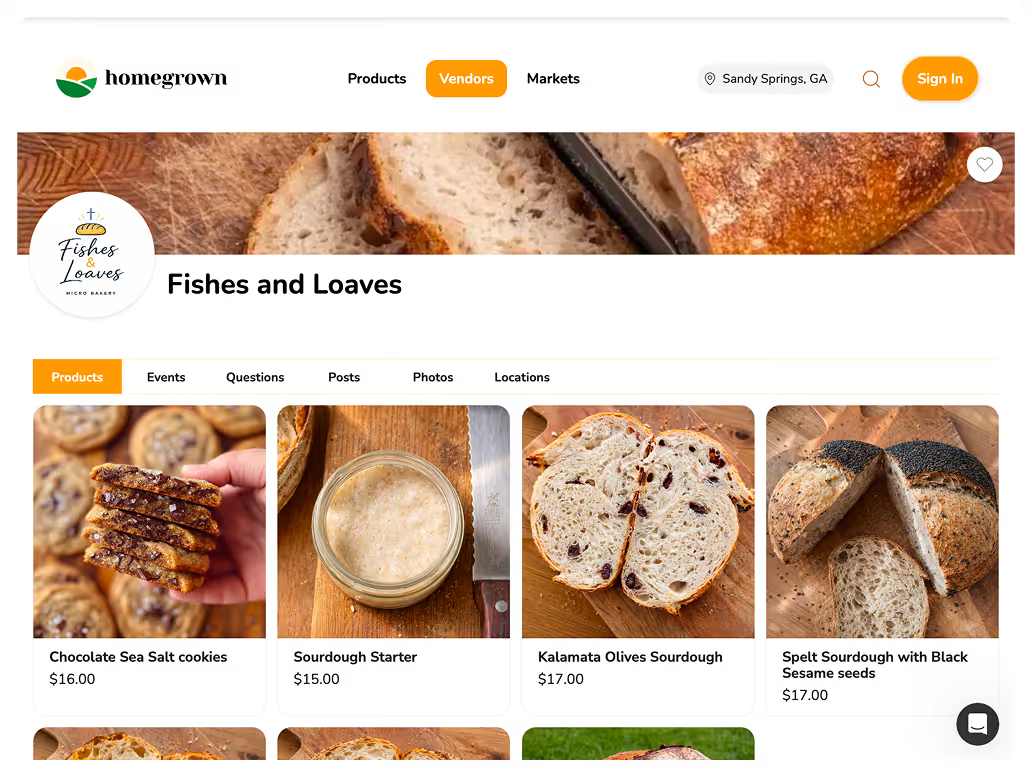



The best app to sell food from home for most cottage food vendors is Homegrown — a simple online storefront with built-in payments and local pickup and delivery scheduling for $10 per month, no transaction fees beyond card processing.
Homegrown gives you everything you need. You add your products, set pickup times at your home or another location, share one link, and customers order and pay on their phone. Setup takes about 15 minutes, and you do not need a website, a commercial kitchen, or any technical skills.
The short version: If you sell baked goods, jam, honey, or other cottage food products from your home kitchen, you need a platform that handles online ordering and local pickup without the complexity of a full e-commerce store. Homegrown ($10 per month with payment processing built in at 2.9% + $0.30) is built specifically for this. Other strong options include Castiron (closed late 2025; while operational, free to start with a 10% per-sale fee on top of card processing — best for custom cake and cookie orders), Bakesy ($9.99 to $17.99 per month plus payment processing on top, best for managing bakery orders and invoicing), and Cookin (free to list, built for home chefs). Shopify ($39 per month plus payment processing at 2.9% + $0.30) and Facebook Marketplace (free) work but were not designed for home-based food sales. For most vendors selling from home for local pickup, Homegrown is the simplest and most affordable option.
Selling food from home means making products in your home kitchen and selling them directly to customers, usually for local pickup. In most states, this falls under cottage food laws, which allow you to sell certain homemade foods without a commercial kitchen or food establishment license.
Common home-based food businesses include:
If you want a broader look at online selling options beyond home-based, our guide to the best e-commerce platforms for farmers market vendors covers platforms for every selling style. But the key difference between selling food from home and selling food online in general is that home-based vendors almost always sell locally. You are not shipping sourdough across the country. You are baking it Thursday night and handing it to your neighbor Saturday morning.
That local, pickup-based workflow is exactly what most general e-commerce platforms get wrong. They are built for shipping. You need something built for pickup.
Before comparing platforms, here is what actually matters for a home-based food vendor:
These six requirements eliminate most general e-commerce platforms immediately. Shopify, Squarespace, and Wix all require you to build a website and then configure it for local pickup. Platforms built for home-based vendors start with pickup as the default.
Six platforms stand out for home-based food sellers. Each one fits a different selling style and budget. Here is what they cost, what they do well, and who they are actually built for.
Homegrown is an online storefront built for local vendors who sell for pickup or local delivery. You add your products, set prices, choose pickup times and locations (including your home address, a farmers market, or a designated drop-off spot), and share one link. Customers browse, order, and pay from their phone.
Here is what you get:
The workflow is exactly how home vendors sell: you share your link, customers order during the week, you bake on Thursday, and they pick up Saturday morning. No guessing how much to make. No DMs to sort through. No Venmo to track.
Pros:
Cons:
Best for: Any home-based vendor who sells cottage food products for local pickup and wants the simplest ordering system available.
If you spend more than an hour per week managing orders through DMs, texts, and Venmo, a Homegrown storefront replaces all of that with one link. Customers order, pay, and choose their pickup time. You see a clean list of what to make.
Castiron is a storefront platform built for home bakers and food creators who take custom orders. It is free to create an account, but Castiron took a 10% fee on every transaction.
Here is what you get:
Pros:
Cons:
Best for: Home bakers who primarily do custom orders (birthday cakes, wedding cookies, event platters) and want a free platform to get started. Less ideal for vendors selling standard products on a regular schedule.
Bakesy is a business management platform designed specifically for home bakers. It goes beyond ordering to include invoicing, recipe costing, and customer management.
Here is what you get:
Pros:
Cons:
Best for: Established home bakers who need business management tools (invoicing, costing, scheduling) beyond just taking orders. Not the best fit if you just need customers to see your products and order.
Cookin is a marketplace platform where home chefs list meals and prepared foods. Customers in your area browse, order, and either pick up or get delivery through the platform.
Here is what you get:
Pros:
Cons:
Best for: Home chefs who cook prepared meals and want a marketplace with built-in delivery. Not ideal for cottage food bakers or vendors who want their own branded ordering page.
Shopify is the world's largest e-commerce platform. It can sell anything, including food, but it was designed for businesses that ship products nationwide.
Key details:
Pros:
Cons:
Best for: Home vendors who plan to ship products nationally and want a full-featured online store. If you have already compared the best platforms to sell food online, you know Shopify is powerful but often overkill for home-based sellers.
Facebook Marketplace lets you list products and connect with local buyers for free. Many home food sellers start here because it costs nothing and reaches people already on Facebook.
Key details:
Pros:
Cons:
Best for: Vendors just starting out who want to test demand before paying for a platform. Not a long-term solution for managing regular orders.
| Platform | Monthly Cost | Transaction Fee | Pickup Scheduling | Delivery Scheduling | Custom Orders | Best For |
|---|---|---|---|---|---|---|
| Homegrown | $10/mo | 2.9% + 30¢ | Yes | Yes | No | Local pickup vendors |
| Castiron | $0 | 10% | No | N/A | Yes | Custom order bakers |
| Bakesy | $9.99-17.99/mo | Included | No | No | Yes | Baker business management |
| Cookin | $0 | Commission | Limited | Limited | No | Home chefs, meals |
| Shopify | $39/mo | 2.9% + 30¢ | Via app | With apps | No | Full e-commerce |
| $0 | None | No | No | No | Testing demand |
At $1,000 per month in home food sales, platform costs range from $39 (Homegrown) to $100 (Castiron's 10% fee) — a $61 per month difference that compounds every month you sell.
For a home vendor doing $1,000 per month in sales:
At $1,000 per month in sales, Homegrown and Bakesy are the most affordable paid options. Castiron's 10% fee made it the most expensive once you pass about $100 per month in sales.
Here is the quick decision:
For most home vendors reading this — the baker selling sourdough from the kitchen, the jam maker taking orders from the porch, the cottage food producer tired of managing DMs — the answer is a platform built for local pickup. You do not need a full website. You do not need shipping. You need one link where customers can see your products, order, pay, and pick up.
If you have been selling through DMs and Venmo, a Homegrown storefront replaces that entire workflow. Customers see your products, place an order, pay online, and choose when to pick up. You see a list of orders instead of a messy inbox. If you have compared other platforms like BakeBug or Square Online, Homegrown consistently wins on simplicity and price for pickup-based selling.
Most states allow you to sell certain homemade food products under cottage food laws without a commercial kitchen license. The rules vary by state, covering what you can sell, how much you can earn annually (caps typically range from $25,000 to $75,000), and where you can sell. You will usually need basic labeling with your name, address, and ingredients. Check your state's specific cottage food law before you start.
No. Cottage food laws typically allow non-potentially-hazardous foods: baked goods, jams, jellies, honey, candy, dry mixes, and similar shelf-stable products. Foods that require refrigeration (dairy, meat, cut fruit) are usually not allowed under cottage food laws. The specific list varies by state.
The simplest approach is a platform with built-in payment processing, like Homegrown (2.9% + 30 cents per transaction). Customers pay when they place their order online. You do not need to set up a separate payment processor account. Avoid relying on Venmo or Cash App for regular sales because they lack order tracking and make it difficult to match payments to specific orders.
Most home vendors can start for under $100 in total. Your biggest costs are ingredients for your first batch, labels and packaging ($20 to $50), and a platform subscription ($0 to $10 per month). You do not need expensive equipment, a commercial kitchen, or a web developer. The whole point of cottage food laws is to let you start small with what you already have.
Set specific pickup windows (for example, Saturday 9 AM to 12 PM) and let customers choose a time when they place their order. Have orders packaged, labeled with the customer's name, and ready at your door or designated pickup spot. Platforms like Homegrown automate this by letting customers select a pickup window during checkout and sending them a confirmation with your address and instructions.
Both have a place, but for different reasons. A marketplace like Cookin or Facebook Marketplace helps new customers find you. Your own ordering page (like a Homegrown storefront) gives you control over your products, pricing, and customer relationships. The best approach for most vendors is to have your own ordering page for regular customers and use marketplaces for discovery, not as your primary sales channel.
Start by telling friends, family, and neighbors what you are making and gauge interest. Post on local Facebook groups or Nextdoor. If five to ten people say "I would buy that," you have enough demand to start. Most home food vendors do not need market research. They need to make their first batch, share a link, and see what happens. The cost to start is low enough that testing is cheaper than planning.