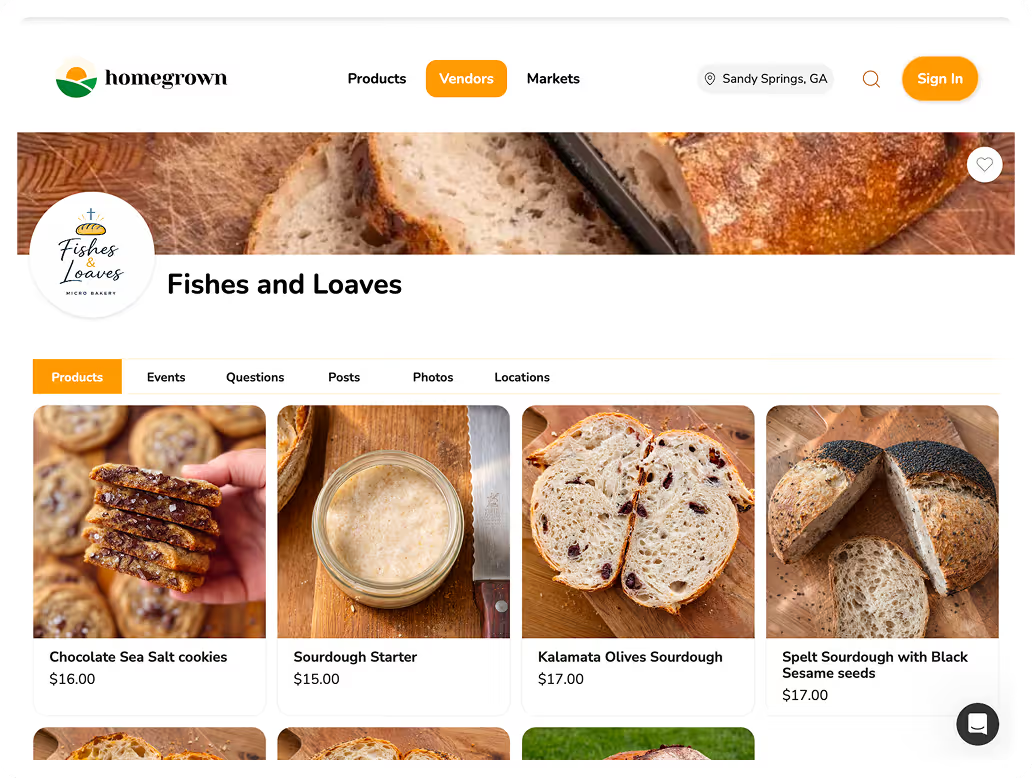



Homegrown is the best Hivey alternative if you are a vendor who wants to sell products and take orders online. Hivey is built for market managers who organize events, not for vendors who need their own storefront. Homegrown gives you a simple online storefront where customers can browse your products, place pre-orders, and pick up at the market — starting at $10 per month.
If you have been using Hivey to apply for markets or pay booth fees, you have probably noticed it does not help you actually sell anything. That is because Hivey and tools like it solve a completely different problem than what most individual vendors need.
This guide breaks down what Hivey actually does, why vendors start looking for alternatives, and which tools are worth considering when you need a way to take orders and grow your sales between market days.
The short version: Hivey is market management software for the people who run farmers markets, not the people who sell at them. It handles vendor applications, booth assignments, and market-day logistics — tools that help market managers, not individual vendors. If you are a vendor looking for a way to take online orders, build a product page, or let customers pre-order for pickup, you need a vendor selling tool. Homegrown costs $10 per month and gives you a simple storefront where customers can browse your products, order, and pay online before market day.
Hivey is an operations platform designed for farmers market managers, festival organizers, and event coordinators. It helps the person who runs the market handle the behind-the-scenes logistics of putting on an event.
Here is what Hivey actually does:
Hivey replaces the spreadsheets, Google Forms, and email chains that market managers used to juggle. It does that job well.
But here is the key thing: Hivey does not give individual vendors a way to sell products, take orders, or reach customers online. It is a tool that vendors interact with when they apply for a market, not a tool that helps vendors grow their business.
Think of it this way. Hivey is for the person who books the venue and organizes the booths. If you are the person baking bread and selling jars of honey from one of those booths, Hivey was not designed for you.
Most vendors who search for a Hivey alternative are not actually looking to replace Hivey. They are looking for a tool that solves a completely different problem — one Hivey was never meant to solve.
Here are the most common reasons vendors start searching:
The core issue is simple. Hivey helps run markets. Vendors need a tool that helps them sell at markets and beyond.
The right alternative depends on what you actually need. If you are a small, part-time food vendor who wants to take orders and sell online, here are the best options.
Homegrown is an online storefront built specifically for small, local food vendors. It is designed for the person who sells at the farmers market on Saturday, runs a cottage food kitchen, or delivers homemade products around town.
What you get:
Pricing: $10 per month (billed annually) or $12.50 per month (billed monthly), with a 7-day free trial.
Best for: Part-time vendors, cottage food producers, farmers market sellers, and anyone who wants to take orders between market days without building a complicated website.
Homegrown is not a market management tool. It does not handle booth assignments or vendor applications. What it does is give you a professional way to sell your products online and take pre-orders for pickup — the exact thing Hivey does not do.
If you are ready to let customers order from you any day of the week, not just when you are standing behind your table, start your free trial at Homegrown.
Local Line is an online sales platform built for farms and food producers. It offers online ordering, inventory management, and delivery route planning.
What you get:
Pricing: Starts around $49 per month for the basic plan. Higher tiers add features like wholesale management and reporting.
Best for: Small to mid-size farms that sell a mix of retail and wholesale. Local Line has more features than most part-time vendors need, and the price reflects that.
Barn2Door is a direct-to-consumer sales platform for farms and ranches. It handles online ordering, subscriptions, and delivery logistics.
What you get:
Pricing: Plans start around $99 per month, plus transaction fees. Barn2Door also charges setup and onboarding fees.
Best for: Established farm operations that sell meat, produce, or dairy direct to consumers and need serious logistics tools. The price point and feature set are built for vendors who are already doing significant volume.
Square Online is a free online store builder that integrates with Square's payment processing ecosystem.
What you get:
Pricing: Free plan available. Paid plans start at $29 per month for additional features. Transaction fees of 2.9% plus 30 cents per online transaction apply to all plans.
Best for: Vendors who already use Square for in-person payments and want to add a basic online ordering option. The free plan is functional, but the store is generic and not tailored to food vendors or the farmers market workflow.
Here is a side-by-side look at how each option stacks up for a typical farmers market vendor:
| Feature | Homegrown | Local Line | Barn2Door | Square Online | Hivey |
|---|---|---|---|---|---|
| Built for individual vendors | Yes | Yes | Yes | Partially | No |
| Online storefront | Yes | Yes | Yes | Yes | No |
| Pre-order system | Yes | Yes | Yes | Yes | No |
| Customer payments | Yes | Yes | Yes | Yes | No (booth fees only) |
| Market manager tools | No | No | No | No | Yes |
| Booth mapping | No | No | No | No | Yes |
| Setup time | 15 minutes | 1-2 hours | 2-3 hours + onboarding | 30-60 minutes | N/A for vendors |
| Monthly cost | $10-$12.50 | $49+ | $99+ | Free-$29 | $99-$499 |
| Best for | Part-time food vendors | Small-mid farms | Established farms | Square users | Market managers |
The most important column is the first row. Hivey is not built for individual vendors — it is built for market organizations. Every other tool on this list gives vendors a way to sell directly to customers.
Hivey is a solid tool for the right user. If you are a market manager, event organizer, or organization that runs recurring vendor events, Hivey solves real problems.
Hivey is a good fit if you:
Market managers can compare Hivey against other management platforms like ManageMyMarket and Marketspread on directories like the Alaska Farmers Markets Toolkit, which lists several market management software options worth evaluating.
If your market manager uses Hivey, that is great. Keep using it for applications and booth fees. But you still need a separate tool for actually selling your products online, and that is where a vendor-focused platform like Homegrown comes in.
Picking the right tool comes down to three questions:
1. How much do you sell right now?
If you are part-time and sell under $2,000 per month, you do not need a platform loaded with wholesale portals, delivery route planning, and subscription management. A straightforward storefront like Homegrown is enough to get you taking orders without the complexity.
2. What do you actually need to do?
Most small vendors need three things: a product page to share with customers, a way to take pre-orders, and a way to collect payment. If that covers your list, you do not need to pay $99 or more per month for features you will never use.
If you are not sure what to sell first at the farmers market, figure that out before investing in any platform.
3. How tech-savvy are you?
Some platforms require hours of setup, custom configurations, and onboarding calls. If you want something you can set up during a lunch break, choose a tool designed for simplicity. Homegrown was built so you can go from zero to a live storefront in about 15 minutes.
Yes, absolutely. Hivey and a vendor selling platform like Homegrown solve different problems, so they work side by side without any conflict.
Here is how that looks in practice:
Many vendors already do this. Their market runs on one system, and their personal sales run on another. It is like using one app for your personal email and a different app for your business calendar — each tool handles what it is good at.
If you are planning your first week as a farmers market vendor, having both tools in place from the start means you can focus on selling instead of scrambling to set up systems later.
If you are a vendor shopping for a selling tool, here is a quick checklist:
If a platform checks all six boxes, it is probably a good fit. If it only checks two or three, keep looking.
Is Hivey free for vendors?
Vendors do not pay for Hivey directly. The market manager or organization pays the Hivey subscription (starting at starting at $99 per month), and vendors access it to submit applications, upload documents, and pay booth fees. There is no cost to the vendor beyond whatever booth and application fees the market charges.
Can I sell products through Hivey?
No. Hivey does not include a storefront, product listings, or customer checkout. It is a market management tool, not a selling platform. To sell products online, you need a separate vendor-focused tool.
What is the cheapest Hivey alternative for vendors?
Square Online offers a free plan, but it is not specifically designed for food vendors. Homegrown starts at $10 per month with a 7-day free trial, which makes it the most affordable option built specifically for farmers market vendors and cottage food producers.
Do I need to leave Hivey to use an alternative?
No. If your market manager uses Hivey, you can continue using it for market applications and booth logistics. Add a vendor selling tool like Homegrown on top of it for your online ordering and customer-facing sales.
Can Homegrown replace Hivey for market management?
No. Homegrown is a vendor storefront, not a market management platform. If you need to manage vendor applications, booth assignments, and event logistics for an entire market, Hivey or a similar management tool is the right choice. Homegrown is for individual vendors who want to sell their own products.
How long does it take to set up a Homegrown storefront?
About 15 minutes. You add your products, set your prices, upload a few photos, and your storefront is live. There is no onboarding process, no design work, and no technical skills required.
Is Homegrown only for food vendors?
Homegrown is built for local food vendors, cottage food producers, and farmers market sellers. If you sell baked goods, preserves, honey, produce, sauces, or other food products locally, it is designed for exactly what you do. If you are still exploring food business ideas you can start from home, Homegrown is ready when you are.
If you have been searching for a Hivey alternative because you want a way to actually sell your products online, Homegrown was built for vendors like you. Set up your storefront in 15 minutes, share your link, and start taking pre-orders before your next market day.