

Getting more customers at a farmers market isn't one problem — it's three separate challenges that each require a different approach. You need people walking the farmers market to notice your booth in the first place. You need the ones who notice to stop, look at your products, and actually buy something. And you need the ones who buy to come back next week and the week after that.
Most vendors focus almost entirely on the first challenge — visibility — and neglect the other two. They think the answer is a bigger sign or a better location. Those things help, but they only solve one piece of the puzzle. A booth in the best spot at the farmers market with great visibility will still underperform if the display doesn't convert browsers into buyers and if there's no system for turning first-time buyers into regulars.
The short version: To get more customers at a farmers market, work on three layers: visibility (use height, color, and positioning so shoppers notice your booth from 20 feet away), conversion (offer samples, engage customers warmly, and use signage that gives people a reason to buy), and retention (learn regulars' names, stay consistent, and offer pre-orders through your Homegrown storefront so committed buyers can order between markets). The on-market-day tactics produce results immediately; the between-market tactics compound over weeks.
This guide covers all three layers with tactics you can actually implement on market day and in the days between markets. These aren't abstract marketing theories. They're specific actions that work for small, part-time vendors selling at local farmers markets.
The most effective way to get more customers at a farmers market starts with visibility — giving shoppers a reason to look your way from 15 to 20 feet away, before they're close enough to read a single label. A customer walking through a busy farmers market has dozens of booths competing for their attention, and they're making snap judgments about which booths are worth approaching.
For a deeper look at the physical setup side, including specific ideas for displays, tablecloths, and height creation on a budget, see farmers market booth setup.
Your product display does the conversion work before you say a word — a well-arranged display communicates quality, professionalism, and ease of buying while a messy or flat display communicates the opposite. Once someone notices your booth, the arrangement is what gets them to stop.
Sampling is the single most reliable conversion tool available to a farmers market vendor. It turns passive browsers into active buyers more consistently than any other tactic — and it works across almost every food product category without requiring a sales pitch.
The mechanics of sampling matter more than most vendors realize. Keep samples small — bite-sized pieces or a small spoonful. You're giving a taste experience, not feeding people lunch. Have a brief description ready for each sample: "This is our honey lavender granola — great with yogurt or just by the handful." That one sentence tells the customer what the product is, what it tastes like, and how they'd use it. Without that context, a sample is just a free bite with no connection to a purchase.
Position your samples where people walking by can see them, not just people who have already committed to stopping at your booth. A sample tray at the front edge of your table catches the attention of passersby and gives them a reason to slow down. Many people who wouldn't have stopped will pause for a sample, and once they've tasted something they like, the mental shift from browser to buyer happens naturally.
Customers who sample are significantly more likely to buy. More importantly, they often buy more than they originally planned because the taste experience makes the price feel justified. A jar of jam at $10 might feel like a lot to someone just scanning your table. That same jar at $10 after they've tasted it on a cracker feels like a reasonable price for something they already know is delicious.
Rotate what you sample throughout the day to drive attention to different products. If your cookies sell themselves without sampling, use your sample station to push the granola or the new jam flavor that needs introduction.
Standing, making eye contact, and greeting people as they approach is the simplest way to get more customers at a farmers market — vendors who do this sell measurably more than vendors who sit in a chair staring at their phone. This isn't about being an extrovert or a salesperson. It's about basic human engagement that makes customers feel welcome.
Simple opening lines that start conversations without pressure:
You don't need a sales script. Standing, making eye contact, smiling, and acknowledging each person who approaches or pauses near your booth is enough to significantly move your conversion rate. The bar is low because many vendors don't even do this much.
Give people space when they need it. If someone is browsing your products with a focused look, let them browse. Step in when they pick something up, when they look uncertain, or when they make eye contact with you. The goal is to be available and approachable without being aggressive.
Effective signage goes beyond product names and prices to give customers a reason to care. Signs that answer the customer's unspoken question — "why should I buy this here?" — consistently outperform signs that only identify what something costs. Resources from Help Scout's customer engagement guide offer more detail here.
Here are the three types of signs that sell:
For detailed guidance on what signs to make, how to size them, and where to position them at your booth, see farmers market signage.
Repeat customers are the foundation of a profitable farmers market business. A regular customer is worth five or more times what a one-time buyer is worth over a full season, because they buy consistently, they buy without needing to be sold, and they refer friends. Building a base of regulars matters more than attracting new customers every week.
Social media won't single-handedly flood your booth with new customers, but it consistently does two things: it reminds existing customers that market day is coming, and it builds familiarity with people in your area who haven't tried your products yet.
Need more help here? See our guide on farmers market signage ideas.
What actually works for farmers market vendors:
What doesn't work as well:
Local community platforms like Facebook groups for your neighborhood and apps like Nextdoor are often more effective for farmers market vendors than Instagram. A simple post — "I'll be at the Saturday farmers market this week with fresh sourdough, cookies, and a new batch of raspberry jam" — in a local group with 5,000 members consistently drives new customers who live within a few miles of the farmers market.
Pre-orders are the most powerful tool for converting occasional farmers market shoppers into committed weekly buyers. When customers can order specific products ahead of time for market-day pickup, they've already decided what they want and set aside the money before farmers market day arrives.
Every customer who buys from you is a potential repeat customer, but only if you have a way to reach them between farmers markets. Building a simple contact list — even just a signup sheet at your booth for a weekly text or email — lets you tell people what you're bringing next week and remind them when market day is approaching.
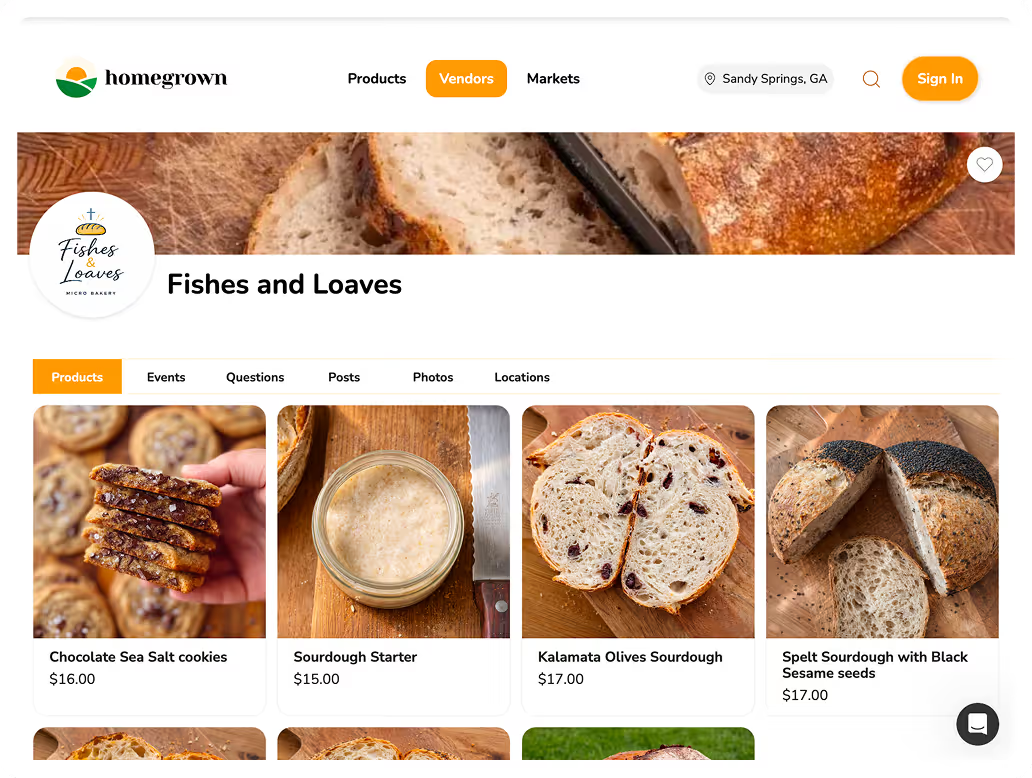
The question is what tool handles the pre-orders. Venmo and Cash App move money but give you no order details — you're still texting every customer to ask what they want this week. Square Online charges monthly and is built for full e-commerce, not a vendor who needs 15 regulars to pre-order before Saturday. Etsy charges 6.5% per transaction and is designed for shipping to strangers, not managing local pickup. Homegrown is $10/month with no percentage fees beyond standard payment processing and gives you one ordering page where customers see your products, pay, and choose pickup or local delivery. It doesn't build your website, manage your social media, or handle shipping — it handles the pre-order step that turns walk-up customers into committed weekly buyers.
A pre-order link displayed on a small sign or QR code at your booth captures interested customers passively. The regulars who already love your products are the first to use it, and their pre-orders become guaranteed revenue you can count on before you even set up on market day. See University of Minnesota's cottage food guidance for additional context.
Not all farmers markets are equal, and strategic choices about where and when you sell can significantly affect your customer numbers without changing anything about your products or booth.
Happy customers are your best and cheapest marketing channel — a regular who tells three friends about your booth is worth more than any social media post. A few simple practices help word of mouth work for you.
Selling at markets or a farm stand? Let customers order ahead online. The easiest way to take local orders and get paid is an online storefront — see the best platform to sell food from home, or set up a Homegrown storefront in about 15 minutes ($10/mo, 0% commission).
Sampling is the fastest single tactic. Offering free samples at the front edge of your table converts passersby into buyers more reliably than any other approach. Combine sampling with standing up, making eye contact, and greeting people as they walk by, and you'll see a measurable difference at your next farmers market.
Booth location matters, but it's not the only factor. Corner spots and entrance-adjacent spots see more foot traffic, and being next to a high-traffic vendor helps. However, a well-set-up booth with height, samples, and good signage in a mid-row position will often outsell a poorly set up booth in a prime spot. Ask your market manager about positioning as you establish yourself.
Start with one farmers market and get your setup, product lineup, and customer engagement dialed in. Once you're consistently selling well at your primary farmers market, add a second one. Most part-time vendors find that two farmers markets per week is the sweet spot — enough to build revenue without burning out on production and setup time.
You don't need social media to succeed, but it helps. The biggest impact comes from posting a simple reminder on Friday for Saturday farmers markets and engaging with local community groups on Facebook or Nextdoor. These low-effort posts remind existing customers to visit and introduce you to new ones in your area.
Pre-orders don't directly bring new customers to your booth, but they lock in committed revenue from existing customers. When regulars pre-order through an ordering page, they show up every week without fail. This creates a reliable revenue base on top of your walk-up sales, and pre-order customers who pick up at your booth often buy additional products while they're there.
First, check your booth setup — add height, use contrasting colors, and put your best products at the front. If foot traffic to the farmers market itself is low, consider trying a different, higher-traffic farmers market. Some farmers markets simply don't draw enough visitors to support consistent sales, and switching to a better-attended farmers market can make more difference than any booth improvement.
Most vendors see their regular customer base start forming after four to six weeks of consistent attendance at the same farmers market. The key is consistency — showing up every week, at the same spot, with the same core products. Regulars build habits around you, and those habits take a few weeks to develop. By the end of your first full season, your regulars should make up a meaningful share of your weekly revenue.
None of these tactics doubles your revenue overnight by itself. But they compound. A better booth setup gets more people to notice you. Samples convert more of those people into buyers. Engaging conversations create the foundation for repeat customers. Social media reminds those customers to come back next week. Pre-orders lock in committed sales before the farmers market even opens. For a deeper look at this topic, see building a customer email list.
Implement the on-market-day tactics first — booth visibility, samples, engagement, signage. These produce immediate results starting at your next farmers market. Then add the between-market tactics — social media, pre-orders, contact collection — as you get your footing. Over weeks and months, the combination transforms a booth that gets occasional sales into one that has a line at opening and committed orders before you arrive.