

The average social media conversion rate sits around 3%, according to Chatdesk's benchmark analysis — meaning for every 100 followers who see a post, roughly 3 take action. The biggest gap in most cottage food businesses is between followers and buyers. You might have 500 Instagram followers but only 15 regular customers. The fix is not more followers — it is converting the followers you already have into first-time buyers, then turning first-time buyers into weekly regulars. This happens through a three-step system: make ordering effortless (one-tap link), deliver a product worth reordering, and stay visible between orders so customers think of you when they are ready to buy again.
The short version: Most Instagram followers never order because of friction, not interest. They follow you because your food looks good. They do not order because the process is unclear, requires a DM conversation, or does not show prices. Fix this by putting a direct ordering link in your bio (a Homegrown storefront at $10 per month), posting your menu with prices every week, and creating a weekly rhythm that trains followers to expect and act on your posts. Once someone orders, turn them into a repeat customer by delivering a great product, sending a thank-you message after pickup, and posting consistently so they see your products every Monday when orders open. The vendors with the highest repeat rates are not the ones with the best products — they are the ones with the most consistent posting schedules and the easiest ordering process, which aligns with Clemson's farm marketing research on posting cadence and community building.
Understanding why followers do not buy is the first step to fixing it. Here are the five most common barriers:
Your bio says "DM to order" but they do not want to start a conversation with someone they have never met. Or your bio has no ordering information at all. The follower likes your food, has money to spend, but literally does not know the next step.
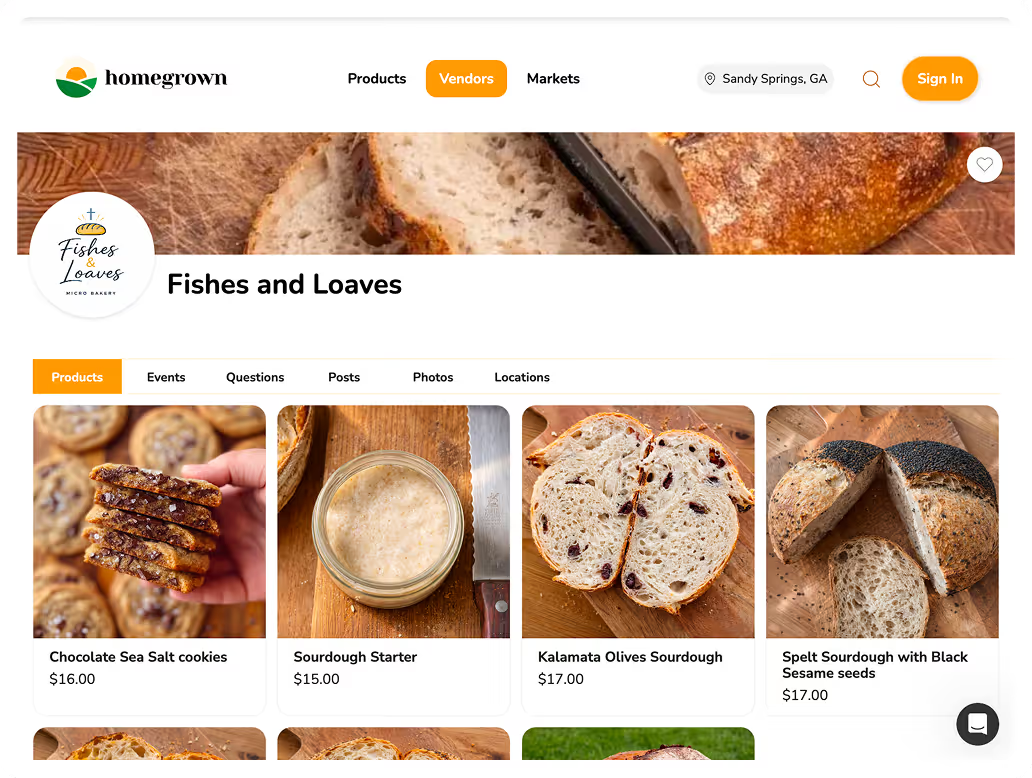
Fix: Put a direct ordering link in your bio. Change "DM to order" to "Order here: link]." A [Homegrown storefront gives you a link where customers see your products, select what they want, pay, and choose pickup — all without messaging you.
Your posts show beautiful cookies but never mention that they cost $18 per dozen. The follower assumes your products are expensive because small-batch, handmade food has a "luxury" perception. In reality, your prices are reasonable — they just do not know that because you never posted them.
Fix: Include prices in every product post and pin a menu post with full pricing to the top of your grid.
Your Instagram could be based anywhere. A follower in Portland might assume you are in Nashville. They follow you for the aesthetic but never consider ordering because they do not realize you are in their city.
Fix: Put your city or market name in your bio. Mention your location in captions. Use local hashtags (#PortlandBaker, #PDXFarmersMarket).
You posted your menu on Monday. They saw it on Thursday, after orders closed. They planned to order next week but forgot.
Fix: Post reminders on your deadline day ("last chance to order — closes tonight at 9 PM"). Save your menu to a Story highlight so it is accessible all week. Use the same posting schedule every week so followers learn when to look.
Some followers watch your posts for weeks or months before ordering. They are interested but have not committed. A special offer, a seasonal product, or a post that addresses their specific hesitation ("never tried ordering from a home baker? Here is what to expect") can push them over the edge.
Fix: Address first-time buyer hesitation directly in a post or Story. "Never ordered from me? Here is how it works: tap my link, pick your products, pay online, and pick up Saturday at the market. Takes 2 minutes. Your order is guaranteed and ready when you arrive."
The conversion from follower to buyer happens through repeated exposure combined with a frictionless ordering path. Here is the sequence:
The follower sees your posts in their feed and Stories. They see your products, your process, and your personality. They start recognizing your brand. No action required from them yet — just awareness.
The follower starts engaging: liking posts, watching Stories to the end, maybe saving a post. They are actively interested but have not committed. They are evaluating whether your products are worth trying.
Something tips them from interest to action. Common triggers:
They tap your ordering link, browse your products, select what they want, pay, and choose a pickup time. If this process takes more than 3 minutes or requires a DM conversation, you lose a significant percentage of first-time buyers. Frictionless ordering is not optional for conversion — it is the entire mechanism.
Getting the first order is the hard part. Keeping the customer is surprisingly easy if you do three things:
This seems obvious but is worth stating: your product has to be good enough that the customer wants it again. Not "fine." Not "decent." Good enough that they tell someone about it. If your sourdough is genuinely great, the customer will reorder. If it is mediocre, no marketing strategy will create a repeat buyer.
Quality is the foundation. Everything else amplifies it.
After a first-time customer picks up, send a personal message: "Hey [name], thanks for your first order! I hope you love the cookies. If you have any feedback or want to order again next week, my ordering link is always live: [link]. Thanks for supporting local."
This message does three things: it shows you care about their experience (personal touch), it pre-loads the reorder link (reduces friction for the next purchase), and it opens a channel for feedback (catches problems before they become complaints).
Do not send automated marketing messages. Do not add them to an email list without permission. Just send one genuine, personal thank-you. That is enough.
The biggest reason first-time buyers do not reorder is not dissatisfaction — it is forgetfulness. They loved your cookies on Saturday. By Wednesday, they have not thought about cookies in three days. By Monday, when you post your menu, they might not see it in their feed.
Staying visible means:
The goal is not to annoy them. It is to be present enough that when they think "I want to order something for Saturday," your name is the first one that comes to mind.
For a detailed Instagram posting strategy, our guide to Instagram tips for farmers market vendors covers posting frequency, content types, and engagement tactics. And for using Stories specifically as a sales tool, see our guide on Instagram Stories for food orders.
The ultimate goal is a customer who orders from you every week without being reminded. Here is how to build that habit:
Monday at 9 AM. Every Monday. No exceptions. After 4 to 6 weeks, your regular customers will check your profile at 9 AM on Monday because they expect your menu. Some will set reminders on their phone. The consistency creates a routine that becomes automatic ordering behavior.
Reward repeat customers with small perks: an extra cookie in their bag, first access to new products, or a handwritten thank-you note. These gestures cost pennies and create loyalty that no competitor can replicate. A customer who receives a handwritten "thanks for ordering every week, Sarah!" will not switch to another vendor for a $1 price difference.
If your ordering page shows their previous orders or saves their payment information, reordering takes 30 seconds instead of 3 minutes. The easier you make it to reorder, the more often they will.
With a Homegrown storefront, customers order through the same link every time. They know your products, they know the process, and the ordering flow is the same every week. Familiarity reduces friction to near zero.
Open orders on a set day, close them on a set day, produce in a batch, and deliver or make available for pickup on a set day. This creates a predictable weekly rhythm that both you and your customers can build their week around. For a complete guide to this model, see our article on how to build a weekly drop model.
A customer who ordered once and disappeared is not lost — they just need a reason to come back. Here are approaches that work:
The key is specificity. "Please order" is generic. "I added the cinnamon rolls you asked about last month" is personal and gives them a reason to act.
A conversion rate of 2 to 5% of followers becoming customers is typical for cottage food vendors. If you have 500 followers, 10 to 25 regular customers is a strong result. The goal is not to convert every follower — it is to convert enough to fill your weekly production capacity.
Most followers take 3 to 8 weeks of seeing your content before they place their first order. Some convert in the first week. Some follow for months before trying. Consistent posting shortens this timeline because it increases exposure and builds trust faster.
Discounts attract price-sensitive buyers who will not pay full price in the future. Instead of discounting, reduce friction: make ordering easier, post prices clearly, and address first-time buyer hesitations directly. The customers who order at full price are the ones who become profitable regulars.
Converting existing followers into buyers is almost always more valuable per hour of effort. You already have their attention. They already follow you because they like your food. The conversion cost is just removing friction and staying visible. Getting new followers requires content that reaches strangers, which is harder and less predictable.
Track which posts generate the most ordering link clicks and orders, not the most likes. Instagram Insights shows link clicks per post. Compare your menu posts, behind-the-scenes posts, and testimonial posts to see which type drives the most orders. Most vendors find that menu posts with prices and a clear CTA outperform everything else for direct sales.
Non-local followers add engagement but not revenue. If most of your followers are outside your delivery or pickup area, focus on building local followers through location-specific hashtags, local Facebook groups, and farmers market cross-promotion. Quality of followers (local, interested, able to buy) matters more than quantity.
Only after your organic conversion system is working. If your bio has a working ordering link, your posts include prices, and you have a weekly posting rhythm, then running a local Instagram ad ($5 to $10 per day targeted to your city) can accelerate customer acquisition. If your organic system is not converting, ads will just bring more people into a broken funnel.
Respond politely and include your ordering link in every reply. Some followers need 3 to 5 DM interactions before they feel comfortable placing a first order. Do not spend more than 1 to 2 minutes per conversation — answer their question, mention a relevant product, and drop the link. If someone repeatedly engages but never buys, that is okay. They may eventually convert, or they may refer someone who does. Do not chase DM conversations as a sales channel — let your ordering page do the selling. The vendors who convert the most followers to customers are not the ones with the most creative content — they are the ones who make ordering effortless and show up consistently every single week.