

You already know pre-orders are a good idea. Customers commit before you produce, you make exactly what is sold, and your week gets more predictable. But knowing pre-orders are valuable and actually building a system that runs smoothly every week are two different things.
Most food vendors who try pre-orders start by posting on social media and asking customers to DM their orders. It works for the first few orders. Then the messages pile up, you lose track of who ordered what, a customer pays late, and by Thursday night you are scrolling through a week's worth of DMs trying to figure out how many loaves of banana bread to bake.
The fix is not better software. It is a system — a repeatable process that handles every pre-order the same way from the moment it comes in until the customer picks it up.
Here is how to build that system, even if you are working solo and handling everything yourself.
---
The short version: A pre-order system has five components: product listings customers can order from, a clear ordering window with cutoff times, payment collection (ideally upfront), a production plan built from actual orders, and automated customer communication. Start with a dedicated storefront or simple online form, set a 48-hour cutoff before your pickup day, require prepayment to eliminate no-shows, and use order totals to create your production and shopping lists. This system works whether you handle 5 pre-orders or 50 per week.
---
A pre-order system eliminates the most expensive problem in a small food business: producing food that does not sell.
According to Galley Solutions, restaurants waste between 4 and 10 percent of the food they purchase, and reducing waste by just one percentage point increases profitability by 6.6 percent. For small food vendors with even tighter margins, the impact of waste is proportionally larger. A cottage food baker who throws away two unsold loaves of bread every week is losing hundreds of dollars per year on wasted ingredients, wasted time, and wasted energy.
Pre-orders flip this equation. Instead of guessing how much to produce and hoping you sell it, you know exactly what has been ordered before you start. Your shopping list comes from actual orders, not estimates. Your production schedule matches committed demand. And the food that comes out of your kitchen already has a buyer.
But the benefit goes beyond waste reduction. A pre-order system gives you committed revenue before you spend a dollar on ingredients. It turns occasional customers into weekly regulars because placing a pre-order becomes part of their routine. And it frees up mental energy because you are not stressing about whether today's batch will sell — it already has.
If you are new to pre-orders and want to understand the basics, including the difference between pre-pay and pay-at-pickup models, our guide on how to take pre-orders for your food business covers the fundamentals. This article focuses on building the actual system that makes pre-orders run smoothly week after week.
A good pre-order system handles five things without requiring you to think about them every time:
Product listings customers can order from. Your customers need a way to see what is available, how much it costs, and any details like ingredients or sizing. This can be a storefront, an online form, or even a printed menu — but it needs to exist somewhere outside of your head.
A clear ordering window with cutoff times. Customers need to know when they can place orders and when orders close. Without a cutoff, you will get last-minute orders that throw off your production plan.
Payment collection. The system needs a way to collect payment, ideally before you start producing. Chasing payments at pickup is stressful and slows everything down.
A production plan built from actual orders. After your ordering window closes, you need a way to quickly tally what has been ordered and turn that into a shopping list and production schedule.
Automated customer communication. Customers need a confirmation when they order, a notification when their order is ready, and a reminder about pickup details. If you are writing these messages from scratch every time, the system is not working.
You do not need restaurant-grade software to handle these five things. You need a simple, repeatable process that you follow every week.
The right tool depends on your order volume and how much time you want to spend managing the process.
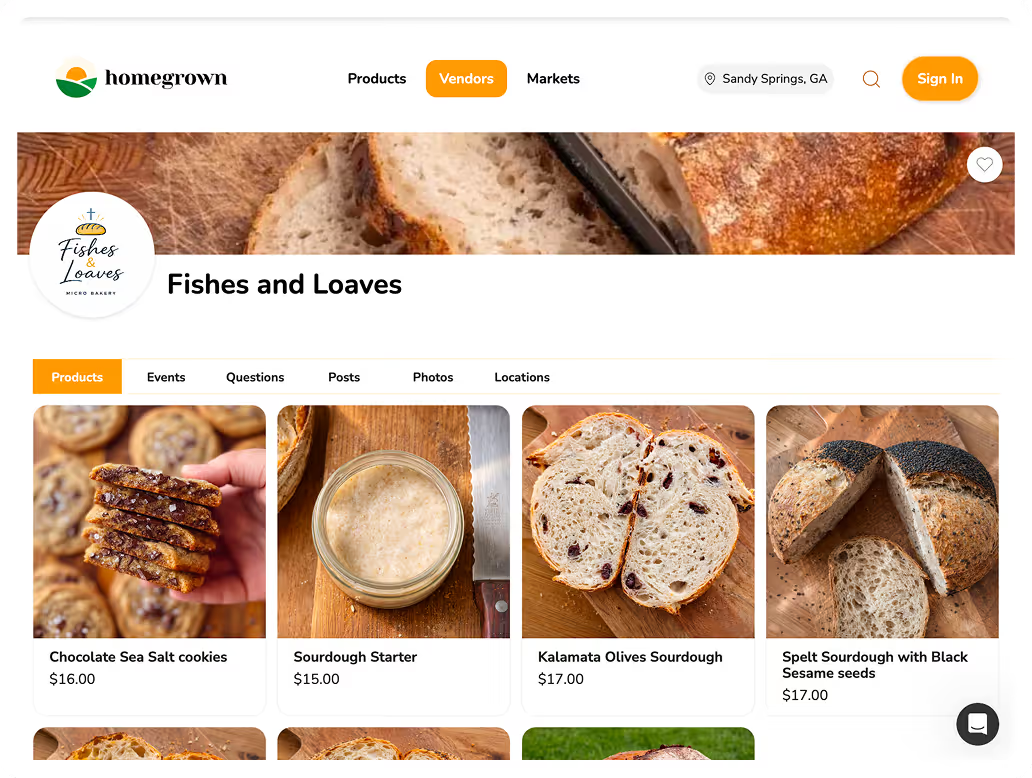
Option 1: A storefront built for food vendors. Homegrown is $10/month and handles all five components in one place. Customers browse your products, place orders, pay online, and receive automatic confirmations. You get an order list you can use to build your shopping and production plan. It will not replace a full e-commerce platform for shipping nationwide or manage wholesale restaurant accounts — but for weekly pre-orders with local pickup, it automates the parts that eat your Thursday nights. Customers choose pickup or local delivery at checkout.
Option 2: A simple online form with separate payment. Google Forms or a similar tool lets you create an order form with your product list, and you can pair it with Square, Venmo, or another payment method. This costs nothing to set up but requires you to manually match payments to orders and send confirmation messages yourself. It works fine for fewer than 10 orders per week.
Option 3: Social media DMs. Taking orders through Instagram or Facebook messages has the lowest barrier to entry. But it is also the hardest to scale because every order requires a back-and-forth conversation, there is no automatic record, and payments happen separately. If you are currently taking DM orders and it feels chaotic, that is normal — it is the tool, not you.
What to look for in any tool:
The best tool is the one that eliminates the most manual steps from your weekly process. Every step you automate is time you get back for actual production.
Your ordering window determines your entire weekly rhythm. Set it up once and keep it consistent so customers learn your schedule.
Start with your pickup day and work backward. If you do farmers market pickup on Saturday, you need your orders finalized by Thursday to give yourself Friday for production. That means your cutoff is Thursday evening.
Give yourself at least 48 hours between cutoff and pickup. This gives you time to tally orders, shop for ingredients, produce everything, and package orders without rushing. Some vendors prefer 72 hours for more complex products like custom cakes or large batches of preserves.
Open your ordering window right after the previous pickup. If Saturday is your pickup day, open the next week's orders on Saturday evening or Sunday morning. This gives customers a full week to plan and order, and it keeps your schedule predictable.
Set a specific cutoff time. "Thursday" is not specific enough. "Thursday at 8 PM" is. A specific time eliminates the gray area where customers message you at 11 PM Thursday asking if they can still order. Communicate this time everywhere — on your product listings, in your order confirmation messages, and on your social media profiles.
Consider event-based ordering windows for special products. If you make seasonal items or limited batches, you can open a separate ordering window with its own timeline. Holiday pre-orders might open two weeks before the holiday with a one-week cutoff. Keep your regular weekly window running alongside any special windows.
This is where the system pays for itself. After your ordering window closes, you have a list of exactly what you need to make. The process of turning that into a production plan takes about 15 minutes.
Step 1: Tally your totals. Go through all orders and count the totals for each product. If you have 12 orders and 8 of them include banana bread, you know you need 8 loaves. If your platform gives you an order summary or export, this takes seconds.
Step 2: Create your shopping list. Scale your recipes to match the order totals. If one batch of banana bread makes 4 loaves and you need 8, you know you need a double batch. List every ingredient and the quantity you need. This is your shopping list.
Step 3: Shop once. Buy everything you need for the week's orders in one trip. No more running to the store because you forgot an ingredient or because a last-minute order came in. Your orders are locked after the cutoff, so your shopping list is final.
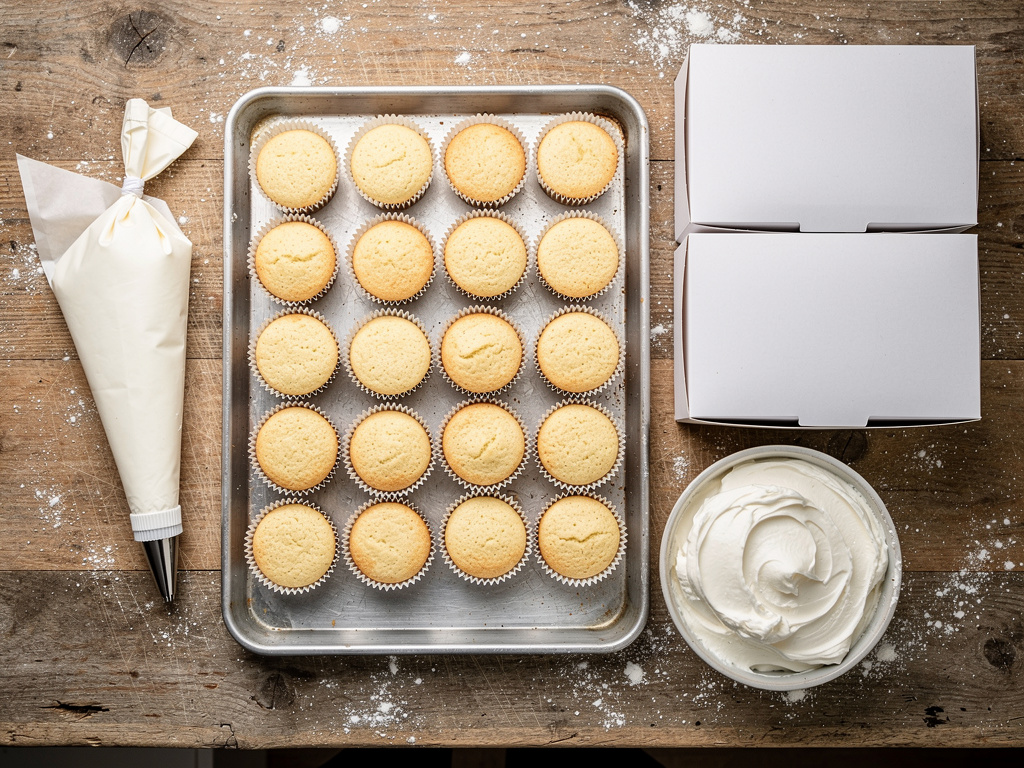
Step 4: Batch your production. Make all of the same product at once. All 8 banana bread loaves in one session, then move to the next product. This is faster and more efficient than making individual orders one at a time.
Step 5: Package and label. As each order is completed, package it and label it with the customer's name and order contents. A simple sticker or a piece of tape with a name written on it works. This takes two minutes per order and prevents mix-ups at pickup.
This workflow means you produce exactly what has been ordered — nothing more, nothing less. No waste, no guessing, no leftover inventory at the end of the day.
Requiring prepayment is the single most impactful decision you can make when building your pre-order system.
According to OpenTable, customers who prepay are 44 percent less likely to no-show and 67 percent less likely to cancel at the last minute compared to those who do not prepay. For food vendors, a no-show does not just mean an empty table — it means ingredients purchased, food produced, and time spent on an order that nobody picks up.
Set up automatic payment at the time of ordering. If you use a storefront like Homegrown, payment happens automatically when the customer places their order. If you use a form-based system, include payment instructions in the form and require payment before confirming the order.
Have a clear refund policy. State your policy upfront: "Full refund if cancelled before the cutoff. No refund after the cutoff because ingredients have been purchased." Most customers find this completely reasonable. Post the policy on your order page so there are no surprises.
Handle order changes before the cutoff. If a customer wants to add or remove items, they can do so before your ordering window closes. After the cutoff, the order is final. This protects your production plan from last-minute changes that throw off your shopping list and batch sizes.
Keep payment records. Whether you use a platform that tracks payments automatically or you are matching Venmo payments to orders manually, keep a record of who has paid and who has not. Check this before you start production — do not produce an order that has not been paid for.
Consistent communication makes your pre-order system feel professional and keeps customers coming back. You need three messages, and you should use the same templates every week.
Order confirmation. Send this immediately after the order is placed. It should include what they ordered, when the pickup is, and how to reach you if they have questions. If your platform sends this automatically, you are done. If not, copy and paste from a saved template.
Ready-for-pickup notification. Send this the day of pickup or the evening before. Include the pickup location, time window, and any instructions like where to find you. This message prevents "where are you?" texts on pickup day.
Post-pickup follow-up. Send this one to two days after pickup. Thank the customer, ask how they enjoyed the products, and remind them that next week's ordering window is open. This message drives repeat orders better than any other marketing you can do.
For detailed communication templates and order management strategies, see our guide on how to handle online orders without losing your mind.
For pickup logistics specifically — where to set up, how to organize orders for quick handoff, and how to handle missed pickups — see our guide on how to offer pickup orders for your food business.
The system that handles 5 orders per week is the same system that handles 50. The difference is how tightly you run it.
Set an order cap. Know how many orders you can comfortably handle in a week and cap your system at that number. Start conservative. If you can handle 15 orders comfortably, set your cap at 15. A message that says "this week's pre-orders are full" creates urgency and protects your time and quality.
Add order windows before adding products. If your Saturday pre-orders are consistently full, add a Wednesday pickup day before adding 10 new products. More pickup windows give you more revenue without increasing the complexity of any single production session.
Limit your product menu. Fewer products means faster production, simpler shopping lists, and fewer mistakes. Five to eight products is the sweet spot for most solo vendors. You can rotate seasonal items in and out, but keep the core menu tight.
Upgrade your tools when manual work becomes the bottleneck. If you are spending more time managing the system than producing food, it is time to move from a form-based setup to a dedicated storefront. The investment pays for itself in time saved.
Know your ceiling. Every vendor has a maximum number of orders they can handle per week while maintaining quality. For most solo vendors, that number is somewhere between 20 and 40 depending on product complexity. Find your number, respect it, and grow by raising prices or expanding to additional pickup days rather than cramming more orders into the same window.
Ready to start selling locally? The easiest way to take local orders and get paid is an online storefront — see the best platform to sell food from home, or set up a Homegrown storefront in about 15 minutes ($10/mo, 0% commission).
Yes, and most vendors do. Pre-orders give you a guaranteed revenue floor, and walk-up sales add revenue on top. Produce enough for your pre-orders first, then make extra inventory for walk-up customers based on your typical sales patterns. Over time, you will find the right balance between pre-order production and walk-up inventory.
Send a message immediately after the pickup window closes. Offer to hold the order until your next pickup day. If the customer does not respond within 24 hours and the product is perishable, you may need to sell it to another customer or accept the loss. If you require prepayment, the financial impact of a missed pickup is much smaller because you have already been paid.
One week is standard for most food vendors. Open orders right after your current pickup and close them 48 to 72 hours before the next one. For holiday or seasonal specials, consider opening orders two to three weeks in advance to give customers time to plan and to give yourself time to source specialty ingredients.
No, but it helps. You can take pre-orders through a simple Google Form, social media DMs, or even a text message list. However, a dedicated storefront or website automates payment collection, sends order confirmations, and keeps everything organized in one place. The less manual work you have to do, the more orders you can handle.
Products with a consistent production process and a clear shelf life work best. Baked goods, jams, sauces, meal prep items, and seasonal specialties are all excellent pre-order products. Items that are highly perishable and need to be consumed the same day are harder to pre-order because customers need more flexibility on pickup timing.
A pre-order system is not a piece of software. It is a weekly rhythm — order window, cutoff, tally, shop, produce, package, hand off. The tools automate pieces of it, but the system is the process you follow every week until it runs on autopilot.