

You started accepting online orders and now your phone buzzes at all hours, your kitchen counter is covered in sticky notes, and you just forgot to tell a customer their order was ready.
Sound familiar?
Managing online orders is one of the biggest challenges small food vendors face. At the farmers market, everything happens face to face. A customer picks what they want, pays, and walks away. Online, there are steps between the order and the handoff — and every step is a place where things can go wrong.
According to VennApps, 61 percent of consumers would stop buying from a brand after just one poor customer service experience. For a small food business, that means one forgotten order or one missed pickup message could cost you a regular customer.
The good news: you do not need expensive software or a complicated system. You need a simple workflow that keeps every order organized from the moment it comes in until the customer picks it up.
Here is how to build that system — even when you are doing everything yourself.
---
The short version: Every online food order has five stages: receive, confirm, produce, package, and hand off. Set up a simple tracking system (a spreadsheet or notebook organized by pickup date), batch your production around order deadlines, use copy-and-paste message templates for customer communication, and set specific pickup windows instead of letting customers choose any time. This system works whether you handle 5 orders or 30 orders per week.
---
Getting orders right is the single most important factor in turning one-time online buyers into repeat customers. When someone orders your food online, they are trusting you with their money before they see, smell, or taste anything. If that experience goes smoothly, they come back. If it does not, they disappear — usually without telling you why.
The numbers back this up. According to Opensend, 69 percent of customers will not return to a retailer when their purchase arrives more than two days past the promised date. For food vendors, the window is even tighter because customers are planning meals around your products.
At a farmers market, a mistake is easy to fix in person. You can apologize, swap out the wrong item, and have a conversation. Online, a missed order just looks like you do not care. The customer does not see your busy kitchen or your overflowing inbox — they just see silence.
That is why a system matters. Not because you are bad at this, but because even the most organized person will forget something when they are taking orders, baking, packaging, texting customers, and managing pickups all at the same time.
Every online food order moves through five stages, and having a clear process for each stage is what keeps things from slipping through the cracks.
This is when the order comes in through your online store. Your job at this stage is simple: see it and log it. Whether you use a spreadsheet, a notebook, or your storefront's built-in tools, every order needs to be recorded in one central place. Do not rely on email notifications alone — they get buried.
Send the customer a confirmation message within a few hours of receiving their order. This does not need to be long. A quick message that says "Got your order, making it fresh for Friday pickup" goes a long way. Customers who hear nothing after placing an order start to wonder if it went through.
This is where you make the food. The key here is batching — do not make each order individually as it comes in. Group all orders for the same pickup day and produce everything in one session. More on this below.
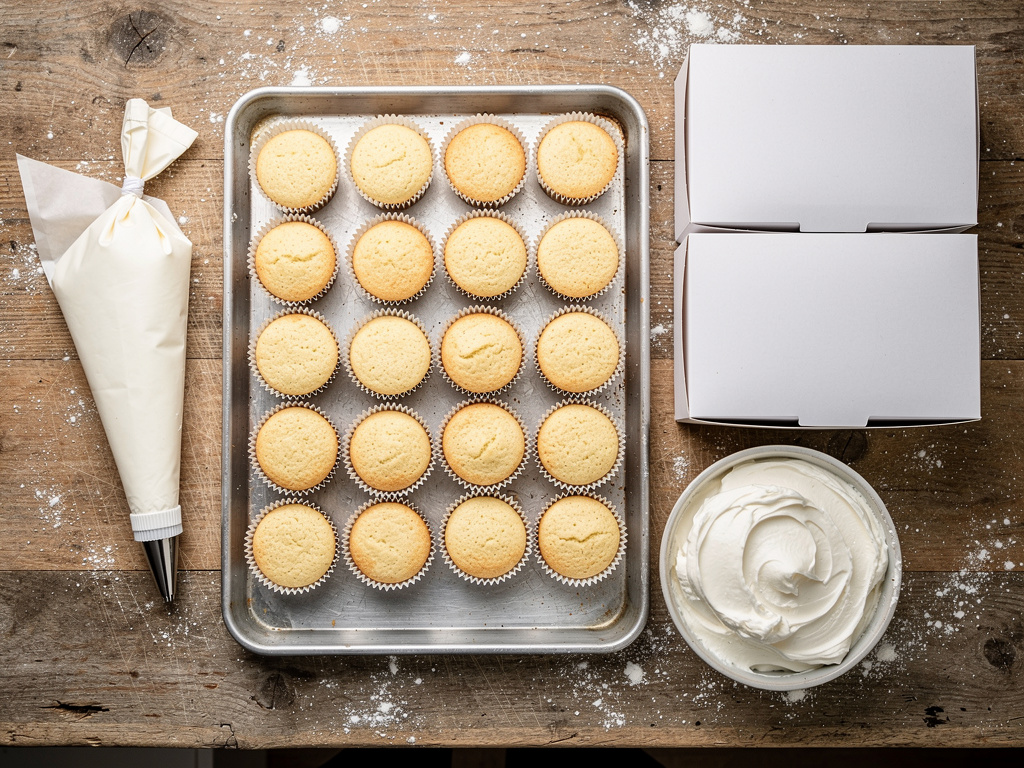
Package each order separately and label it with the customer's name and order details. This takes two minutes per order but prevents mix-ups at pickup. If you have multiple items per order, a simple checklist taped to the bag helps you verify nothing is missing.
This is the pickup or delivery moment. Have orders organized so you can grab the right bag quickly. If customers are picking up, have a designated spot and a clear process — do not make them wait while you dig through a pile of bags.
The best order tracking system is one you will actually use. For most small food vendors handling 5 to 30 orders per week, a spreadsheet or a notebook works better than any app.
Create a tracking sheet with these columns:
The most important detail: organize by pickup date, not order date. You care about when the food needs to be ready, not when someone placed the order. Sort your sheet so Friday's pickups are grouped together, Saturday's pickups are grouped together, and so on.
Check your tracking sheet twice a day — once in the morning to plan your production and once in the evening to confirm everything is on track for the next day.
If you sell through a Homegrown storefront, your orders are already organized in one place. But even then, having your own tracking sheet gives you a production planning tool that no storefront dashboard replaces.
Batching is the difference between spending your whole week in the kitchen and spending two focused sessions. Stop making individual orders as they come in and start grouping them by pickup day.
Here is how to set up a batch production schedule:
Set order cutoff times. If your pickup day is Friday, set a cutoff of Wednesday evening. This gives you Thursday to produce everything. Communicate the cutoff clearly on your product pages and in your order confirmation messages.
Count your totals the night before production day. Go through all orders for that pickup day and tally the totals. If you have 8 orders for banana bread and 5 for chocolate chip cookies, you know exactly what to make and how much.
Make everything for one pickup day in one session. This is more efficient than making three loaves on Monday, two on Tuesday, and four on Wednesday. You set up once, clean up once, and produce in bulk.
Start with your most popular items. If banana bread accounts for half your orders every week, make it first while you are fresh and focused.
This approach also helps with ingredient planning. Instead of running to the store every other day, you buy everything you need for the week's orders in one trip.
Most of the time you spend "managing orders" is actually spent writing the same messages over and over. Fix this by creating three templates you copy and paste for every order.
Send this within a few hours of receiving an order:
"Hi [name], thanks for your order! I have you down for [items] for pickup on [day]. I will message you when everything is ready. Let me know if you have any questions."
Send this when the order is packaged and ready:
"Hi [name], your order is ready for pickup! I will be at [location] from [time] to [time] on [day]. Just let me know your name when you arrive and I will grab your bag."
Send this one to two days after pickup:
"Hi [name], hope you enjoyed the [item]! If you ever want to order again, you can find everything at [your store link]. Thanks for supporting a local food maker."
Keep these saved in a notes app on your phone so you can send them in under a minute. Personalize the name and items but keep the structure the same every time.
These three messages handle 90 percent of your customer communication. They set expectations, prevent "where is my order" questions, and build the kind of relationship that earns repeat business.
Set two to three specific pickup windows per week instead of letting customers choose any time. Open-ended pickup times are one of the fastest ways to burn out as a food vendor.
When customers can pick up whenever they want, your entire day revolves around waiting. You cannot leave the house, you cannot start another batch, and you spend hours watching for text messages. Setting pickup windows solves this completely.
Here is how to do it:
Choose two to three time blocks per week. For example: Friday 4 to 6 PM and Saturday 9 to 11 AM. These become your standard pickup times.
Post your pickup windows on your product pages. Make them visible before the customer places an order so there are no surprises.
Include pickup details in your confirmation message. Reinforce the window so customers know exactly when to show up.
Have a policy for missed pickups. If someone does not show up during the window, send a message offering to hold their order until the next pickup day. After two missed pickups with no communication, you have a decision to make about whether to keep accepting their orders.
Most customers appreciate clear pickup times because it helps them plan too. The ones who push back are usually fine once they see how smooth the process is.
Things will go wrong. An ingredient will run out. An order will be late. A customer will get the wrong item. What matters is how you handle it.
Message the customer as soon as you know. Do not wait until pickup day. Offer a substitution or a refund and let them choose. Most customers are understanding when you communicate early.
"Hi [name], I ran out of [ingredient] and will not be able to make the [item] you ordered. I can substitute [alternative] or give you a full refund — whichever you prefer. Sorry about this!"
If an order will not be ready by the promised pickup time, tell the customer before they show up. Offer a specific alternative time. Never make a customer discover the delay on their own.
Apologize, replace the item as quickly as possible, and throw in something extra — a free cookie, an extra jar, whatever makes sense. A mistake handled well can actually build more loyalty than a perfect order. People remember how you made it right.
The universal rule: communicate before the customer has to ask. A proactive message saying "I am running behind" earns trust. Silence after a missed deadline destroys it.
Add structure before you add volume. Most vendors who burn out did not fail because they had too many orders — they failed because they had no system when the orders started growing.
Limit your product menu. If you sell 15 different items, every order is different and production is complicated. Cut your menu to your top 5 to 8 items. Fewer products means faster production, simpler inventory, and fewer mistakes.
Add another pickup day instead of longer time slots. If Friday pickups are full, add a Saturday window. Do not stretch your Friday window from 2 hours to 5 hours — that just keeps you tied to one spot longer.
Set a weekly order cap. There is no shame in closing orders for the week once you hit your limit. A message that says "This week's orders are full — order early next week" creates urgency and protects your time.
Know your number. Figure out how many orders you can comfortably handle in a week and stick to it. For most solo vendors, that number is somewhere between 15 and 25. You can raise it later when you have the system dialed in.
If you have been running your business through DMs and text messages, the system you need is not another app on top of the pile. Instagram DMs plus Venmo plus a spreadsheet is three tools doing what one should handle. Square Online consolidates payments but is designed for retail stores with shipping, not a vendor who bakes to order with Wednesday cutoffs and Friday pickups. Homegrown is $10/month — orders, payments, and pickup scheduling in one place. Customers pick their pickup window when they order, you see one list sorted by date, and nobody texts you "is my order ready?" because the confirmation went out automatically. It will not generate production sheets or manage your ingredient inventory — but for replacing the five-app juggle with one screen you check twice a day, it is what the system described in this article looks like when it is not held together with sticky notes.
The best app is the one that matches your order volume. For vendors handling fewer than 20 orders per week, a spreadsheet and a messaging app are enough. For vendors handling more than that, a dedicated storefront like Homegrown or a simple ecommerce platform keeps everything organized in one place. You do not need restaurant-grade software.
Most solo food vendors can comfortably handle 15 to 25 orders per week with a good system. Without a system, even 10 orders can feel overwhelming. The number depends on your product complexity, production time, and how many pickup days you offer. Start at a level that feels easy and increase gradually.
Yes. Requiring payment upfront eliminates no-shows, reduces wasted product, and saves you the awkward task of chasing down payments at pickup. Most online ordering platforms handle this automatically. If a customer does not want to pay upfront, that is a signal they are not committed to the order.
Give yourself at least 48 hours between the order cutoff and the pickup day. For baked goods and prepared foods, a 2 to 3 day lead time is standard. This gives you time to buy ingredients, batch produce, and package everything without rushing.
Send a reminder message on pickup day morning. If they still do not show up, hold the order until the next pickup day and let them know. If it happens repeatedly with the same customer, require prepayment (if you have not already) and consider a "two missed pickups" policy where you stop accepting their orders. Perishable food that does not get picked up is money out of your pocket.
The system does not have to be complicated. It has to be consistent. Pick a tracking method, set your cutoffs and pickup windows, save your message templates, and follow the five stages for every order. The vendors who handle 30 orders a week without stress are not superhuman — they just stopped improvising.