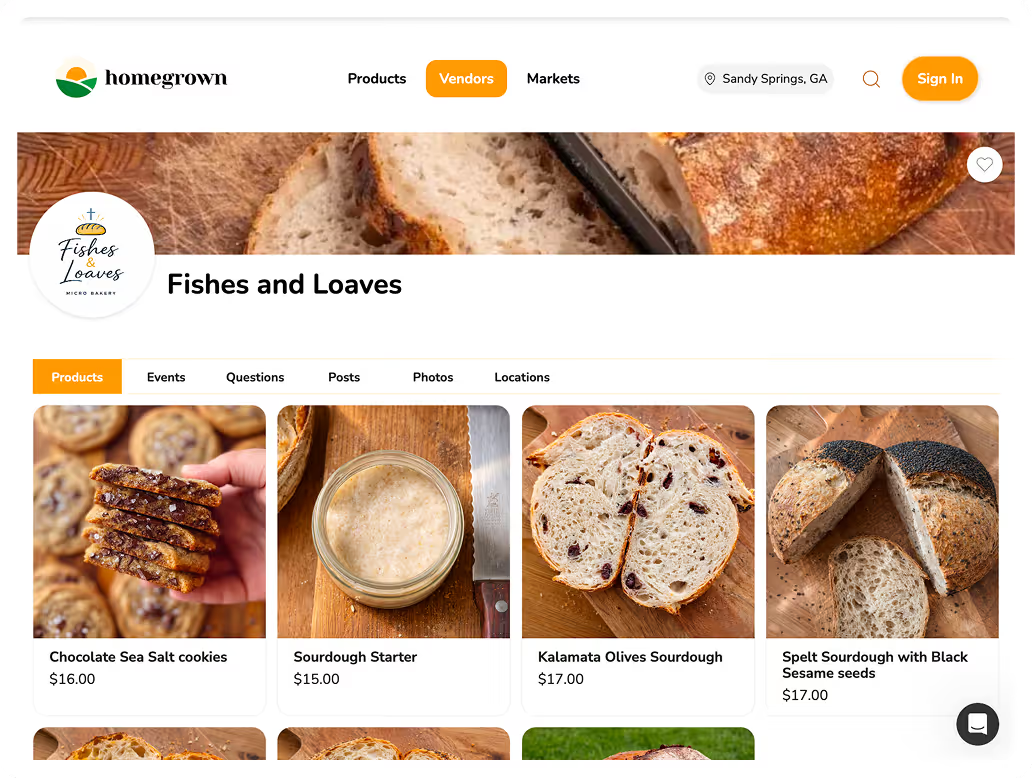
The image on your storefront is not your original: platforms compress on upload. Find the originals first, and rewrite descriptions while you migrate.
The easiest migration in the category, because Google Forms holds nothing hostage. The work is translating form questions into products, which takes an evening.
StandScout is free forever, then $9.99 to $59.99 a month. The paid tiers buy inventory tools, not prominence, and there is no checkout at all.
Export before you cancel, because access ends with the subscription. You need three files, and the field nobody exports is email consent status.
Leaving Square Online is not leaving Square. Keep the reader, the payouts and the history, and move only the online store. The one real cost is the shared catal
Barn2Door charges $399 to $599 one-time. Local Food Marketplace bundles a $499 to $1,499 Launch Package. Compare first-year and steady-state separately.
At $2,000 a month a 5% plus 55 cent fee is $1,728 a year. Absorbing it costs $1,608 more than a flat plan; passing it on costs $120 less.
You do not need a website to sell food online, you need one link that takes money. Square Online and Cottage CMS both give you that for $0.
Pre-orders means five different capabilities. Cottage CMS runs them on a free tier; Hotplate has all five at 5% + 55 cents per order.
7-day free trial · $10/mo after · Cancel anytime