

Selling to friends feels like a business because money changes hands and people love your food. But it does not act like a business because there are no real prices, no ordering system, and no way for new people to find you. Those three gaps are the entire difference between "I sell to friends" and "I have real customers."
Most vendors stay stuck in this middle zone for months or even years. They know something needs to change, but they are not sure what. Here is what is actually happening under the surface.
The short version: You already have proof that people want what you make — your friends and family have been telling you for months. Going from friend sales to real customers means doing three things: setting prices that cover your costs plus a profit (not "friend prices"), giving people a simple way to find you and order (even just an Instagram page and a link), and finding your first five customers who are not personally connected to you. Most vendors make this shift in 2 to 4 weeks once they decide to do it. You do not need to quit your job, rent a kitchen, or invest thousands of dollars.
Selling to friends usually means charging whatever feels "not too much" — and that number is almost always too low. You round down because you feel awkward. You give a discount because they drove to your house. You charge $10 for something that took you 3 hours to make because $10 "seems fair."
This is what vendors call the "friend pricing" trap. You are not pricing based on your costs, your time, or what the product is worth. You are pricing based on guilt. And that guilt is costing you real money.
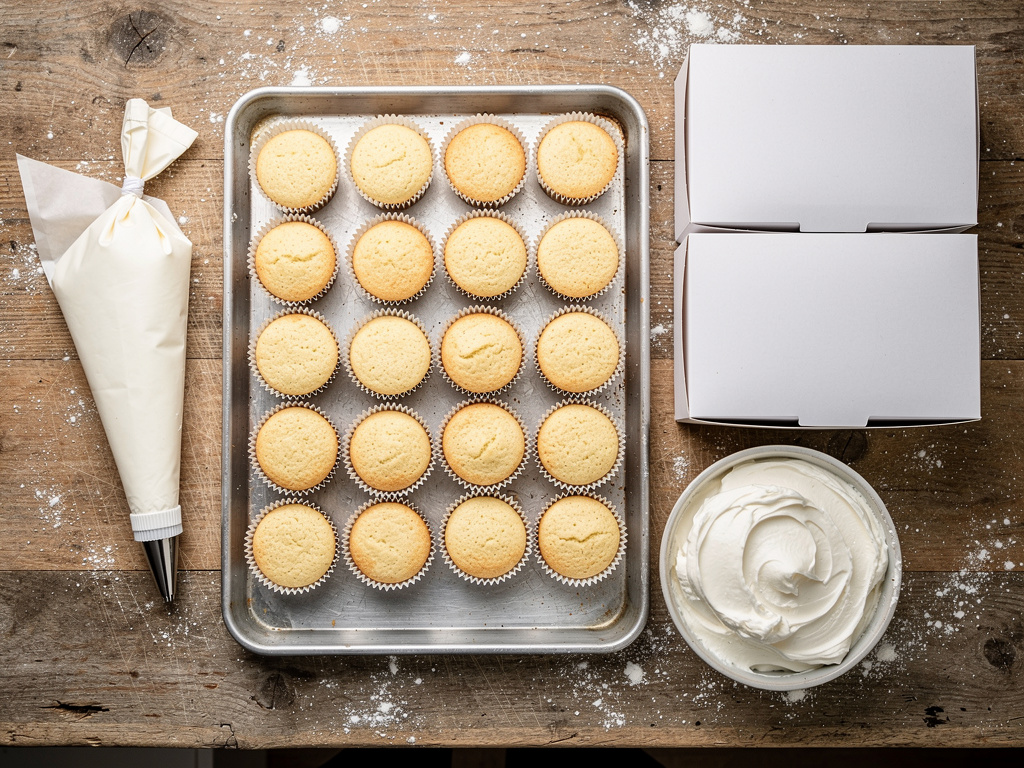
Most vendors who only sell to friends are charging 40 to 60 percent less than what the same product would cost at a farmers market. A dozen cupcakes that would sell for $36 to $48 at a market goes out the door for $15 because it is going to someone you know. Over the course of a month, that gap adds up to hundreds of dollars in lost income.
The worst part is that friend pricing trains you to undervalue your own work. After months of charging $12 for cookies that should be $30, the real price starts to feel outrageous — even though it is completely normal at any bakery or market in town.
When your entire ordering process is a text thread, you do not have a business — you have a group chat. Orders come in at random times. Someone texts "Can I get the usual?" and you have to scroll back three weeks to figure out what "the usual" was. Payment is inconsistent — Venmo sometimes, cash sometimes, "I'll get you next time" sometimes.
There is no order tracking. There is no production planning. You are baking based on what you remember people asked for, not based on confirmed, paid orders. This means you overbake some things, underbake others, and spend your Sunday night answering 15 separate text conversations about pickup times.
Even the simplest real system — a Google Form, an Instagram story with a menu, a Homegrown storefront — would replace all of that chaos with one link where people can see your menu, pick what they want, and pay. The difference between texting orders and having a real system is about 3 to 5 hours a week once you hit 10 or more regular customers.
If the only way someone can buy from you is by already knowing you, your customer base has a hard ceiling. That ceiling is the size of your personal network, and it does not grow very fast.
Right now, you have no online presence that a stranger could find. No Instagram page with your products. No listing in a local directory. No farmers market booth. No way for someone in your town to discover that you make incredible sourdough or the best jam within 20 miles.
Your business can only grow as fast as you personally meet new people. That is not a growth strategy — that is a social life. A real business has at least one channel where new customers can find you without already being your friend.
You are ready to move beyond friends when the demand for your food has started to outgrow your personal circle. You do not need to feel ready — you just need to see the signals that the business is already forming around you.
Here are seven signs that you have outgrown friend sales:
If at least three of these sound familiar, you are not running a hobby — you are running an unlabeled business.
The mindset shift from hobby to product is not about getting a permit or printing business cards. It is about deciding that the food you make has real value and that charging for it is not just OK — it is necessary.
This is the part that trips up most vendors. The practical steps are straightforward. The emotional steps are harder. Here are the three biggest mental blocks and how to move past them.
If people who are not related to you have offered to pay for your food, it is good enough to sell. That is the bar. Not culinary school. Not a perfect Instagram grid. Not a professional kitchen. Just: are non-family members willing to hand you money for this?
Imposter syndrome hits almost every vendor at this stage. You think, "My aunt says my jam is amazing, but she has to say that." Sure. But when your aunt's coworker buys three jars and asks when you are making more, that is market validation. Friends are honest enough — if your cookies were bad, they would stop asking for them.
You do not need to be the best baker in your city. You need to be consistent, reliable, and making something that people enjoy enough to pay for. Start with the one or two products people request most. You can expand later, but right now, "good enough" is more than enough to start. The next stage is transitioning from selling food to friends to reaching strangers — here is how to make that leap.
Charging a fair price for handmade food is not greedy — it is the only way to keep making it. If you charge less than your ingredients cost, you are literally paying other people to eat your food. That is not generosity — that is a path to burnout and resentment.
The emotional block around money is real. Many vendors grew up with the idea that charging friends for food feels wrong, or that asking for "too much" makes them look greedy. But consider this: every hour you spend baking for below-minimum-wage pay is an hour you are not spending with your family, at your day job, or resting. Your time has value.
There is also a practical legal angle here. The IRS evaluates eight factors when deciding whether your side hustle is a hobby or a business, including whether you keep records, operate in a businesslike manner, and intend to make a profit, according to IRS Tax Tip 2025-42. If you are selling food regularly, the government already considers you closer to "business" than "hobby." Might as well price like one.
Reframe price this way: your price is not what you are taking from people. Your price is what it costs to sustain the thing they love. If your customers want you to keep baking, they need you to be able to afford to keep baking.
There is no magic moment when you officially "become" a business — you just start acting like one. No one is going to tap you on the shoulder and say "now you are a real business owner." The shift happens when you decide it does.
Many vendors wait for some external signal: a certain number of customers, a permit, a logo, a "real" kitchen. But those are milestones, not prerequisites. You can start treating your food sales like a business today by doing three things: setting a price list, creating one place where people can order, and telling people beyond your friend group that you sell food.
If you want to learn more about what experienced vendors wish they had known at this stage, read about what I wish I knew before starting a food business.
Your first non-friend customers are closer than you think — most of them are one step removed from your current circle. You do not need a marketing budget, a fancy website, or a viral social media post. You need to do one or two simple things that put your food in front of people who do not already know you.
Here are four proven methods that work for cottage food vendors starting from zero.
Your first non-friend customers are one step away — they are the friends of your current friends. Word of mouth is the most powerful channel for small food businesses — 92 percent of consumers trust personal recommendations over any other form of marketing, according to the Auguste Escoffier School of Culinary Arts.
Ask your current buyers to do three specific things:
You are not asking them to "market" for you. You are asking them to share something they already love. Most people are happy to do this — they just need to be asked directly.
A single post in a local Facebook group or Nextdoor page can bring in 3 to 10 new customers in one week. This is one of the fastest free channels available to cottage food vendors.
What works is not a sales pitch. Do not post "Buy my cookies!" Instead, post something like: "I'm a local baker in [town] offering fresh sourdough loaves for weekend pickup. I bake everything from scratch in small batches. DM me or check out my menu at [link]."
Tips for posting on community pages:
One farmers market, one church bake sale, one community fair — that is all it takes to prove strangers will buy your food. You do not need to commit to a full market season. Start with a single pop-up event to test the waters.
Low-commitment options for your first event:
Bring a sign with your name, a QR code or card with your order link, and a way to collect emails or Instagram follows. The goal is not just to sell at the event — it is to turn event buyers into repeat customers who order from you later. For a full walkthrough of what to expect, check out the guide to your first week as a farmers market vendor.
You do not need a website — you need one link where someone can see what you sell, what it costs, and how to order. That is it. The simpler the better.
Options for your first online presence:
The point is having something you can share beyond your personal contacts. When someone asks "How do I order from you?" you should be able to send one link instead of explaining a multi-step process over text.
| Method | Time to Set Up | Expected First Orders | Cost |
|---|---|---|---|
| Ask friends to share your page | 10 minutes | 2-5 in the first week | Free |
| Post in local Facebook or Nextdoor groups | 15 minutes | 3-10 per post | Free |
| One pop-up or community event | 1-2 hours prep | 5-20 at the event | $0-50 for table fee |
| Instagram page with menu and prices | 1-2 hours | 1-5 in the first month | Free |
| Homegrown storefront | 15 minutes | Ongoing orders from link sharing | $10-12.50 per month |
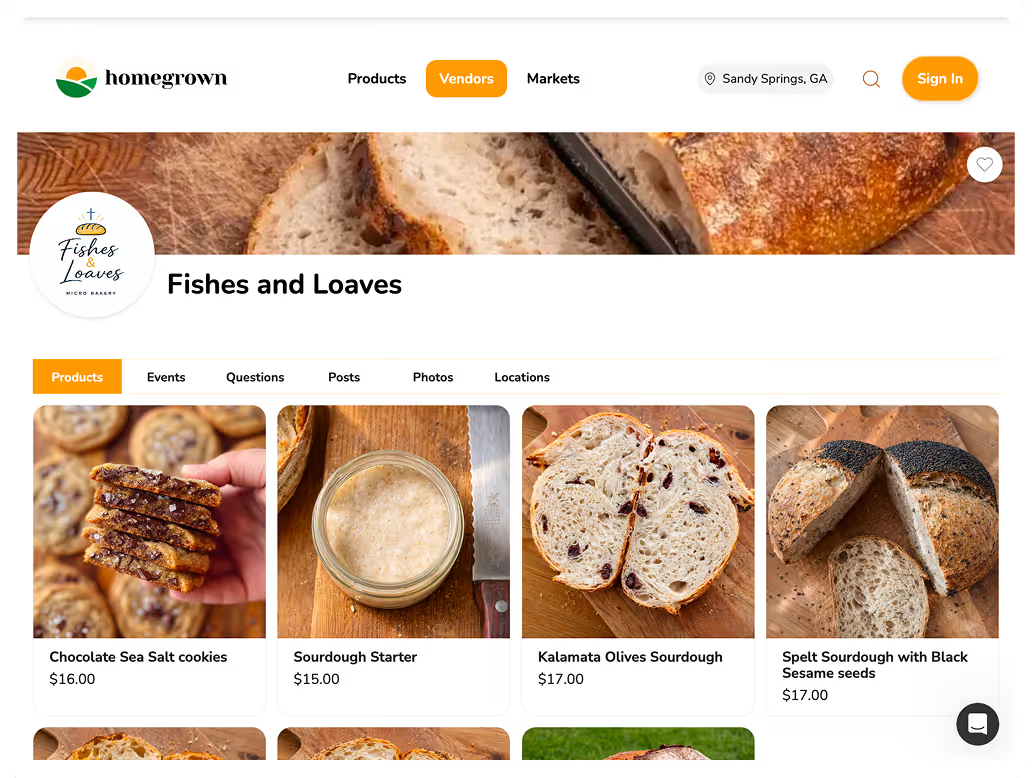
A Homegrown storefront gives you a single link where customers can see your menu, place an order, and pay — all without sending you a text message. You can set one up in about 15 minutes. Start your free trial.
Setting real prices starts with a simple formula: add up your true costs (ingredients, labor, and overhead), then multiply by 2.5 to 3. That gives you a price that covers your expenses and leaves room for profit. If the number feels high, it is because your friend prices were too low — not because the real price is too high.
A good starting price for any homemade food product is 3 times your ingredient cost — and that is the floor, not the ceiling. Here is how to calculate it properly:
Let's walk through a real example. A batch of 24 cookies:
If a dozen cookies costs you $8 in ingredients and an hour of labor, selling them for $12 means you are paying yourself less than $4 an hour. For a deeper look at pricing strategies, read the full guide on how to price your food products.
When you raise your prices, some friends will push back — and that is OK. Most of them will not, but the ones who do are usually the loudest, which makes it feel worse than it is.
Here is a simple script for the conversation:
Do not grandfather old prices. Do not create a "friends and family discount." Those feel generous in the moment, but they create two tiers of customers and make your pricing complicated. One price list for everyone.
What actually happens when most vendors raise their prices:
The friends who support your business at real prices are the ones worth keeping. And the respect you earn by valuing your own work usually strengthens those relationships, not weakens them.
| Product | Typical Friend Price | Real Market Price | Why the Gap Matters |
|---|---|---|---|
| Dozen cookies | $8-12 | $24-36 | You lose money at friend prices |
| Jar of jam (8 oz) | $5-6 | $10-14 | Ingredients plus 1-2 hours of prep |
| Loaf of sourdough | $4-6 | $8-12 | Your starter alone took weeks to develop |
| Dozen cupcakes | $12-18 | $36-48 | Decorating time is real labor |
The simplest ordering system that works is one where a customer can see your menu, choose what they want, and pay you — all without sending you a text message. You do not need a full e-commerce website. You need one step up from your current group chat.
Here are three tiers of ordering systems, from free to more structured:
Tier 1 — Free and simple:
Tier 2 — Slightly more structured:
Tier 3 — When you are ready for more:
If you are still managing orders through text messages with 10 or more regular customers, you are spending 3 to 5 hours a week on order management that a simple online system would handle in minutes.
| Ordering System | Monthly Cost | Setup Time | Handles Payment | Best For |
|---|---|---|---|---|
| Instagram plus Google Form plus Venmo | Free | 1-2 hours | No (separate Venmo step) | Fewer than 10 orders per week |
| Homegrown storefront | $10-12.50 | 15 minutes | Yes | 10-50 orders per week |
| Square Online | Free (plus fees) | 1-3 hours | Yes | 50-plus orders, need inventory |
| Shopify Starter | $5 (plus fees) | 2-4 hours | Yes | 50-plus orders, need shipping |
If you are ready to move past group chats and Venmo requests, a Homegrown storefront handles ordering and payment in one place for $10 a month. Try it free for 7 days.
In most states, you can legally sell homemade baked goods, jams, and other shelf-stable foods from your home kitchen under cottage food laws — no commercial kitchen or restaurant license required. The process is usually simpler and cheaper than most vendors expect.
Here is what cottage food laws typically look like across the country:
Since 2022, over half of all states have updated their cottage food laws to expand what home producers can sell. The trend is toward more freedom, not less.
Getting your cottage food permit typically takes less than a week and costs under $75 in most states. Check your state's specific cottage food laws to see what applies to your situation. Your state's department of agriculture website is usually the most reliable source.
Do not let the legal side scare you into inaction. The permit process is designed for home producers like you. It is not the same as opening a restaurant.
The identity shift does not happen when you get a permit or print business cards — it happens the first time a stranger finds you, orders from you, and comes back for more. That is when "I sell food to friends" stops feeling accurate and "I run a food business" starts to fit.
Here is what the shift looks like in practice:
For most vendors, the identity shift happens around customer number 10 to 15 — when you realize more strangers are buying from you than friends.
This does not mean you need to go big. You can have real customers and still run a small, part-time food business on your own terms. Having real customers just means your income is not dependent on your personal relationships — it is built on a product that people genuinely want and are willing to pay for. Read more about running a food business on your own terms if the idea of "growing" feels overwhelming.
The transition from hobby to business is not a single dramatic moment. It is a series of small decisions: setting real prices, creating one ordering link, telling people outside your circle what you do. Each one makes the next one easier. And the moment you realize you have been running a business all along — just without the right systems — everything clicks into place.
Selling informally to friends is common, but once you start selling regularly and advertising, most states require at least a cottage food permit. The rules vary by state, but getting a basic cottage food permit usually takes less than a week and costs under $75. Check your state's cottage food laws to see what applies to your situation.
If people outside your immediate family have offered to pay for your food without being asked, your food is good enough. The bar for "sellable" is not perfection — it is consistency and taste that people are willing to pay for. Start with the one or two products people request most, and let real customer feedback guide you from there.
Most friends will respect the change once you explain it simply: "I am turning this into a real business, so my prices are changing." A small number may stop buying, and that is fine — they were not your real customer base anyway. The friends who support your business at real prices are the ones worth keeping.
Start with two to three products — the ones people already ask for most. Launching with a small, focused menu keeps your costs low, your production manageable, and your quality consistent. You can add products later once you have a steady flow of orders and know what sells. Many vendors who go from selling to friends to real customers find that a smaller menu actually converts better because it is easier for new customers to choose.
Yes. Cottage food laws in nearly every state allow you to sell certain homemade food products directly to consumers from your home kitchen. Allowed products typically include baked goods, jams, honey, granola, and other shelf-stable items. Some states have sales caps and labeling requirements, but you do not need a commercial kitchen to get started.
Part-time cottage food vendors who sell at one market per week plus take online orders typically earn $500 to $2,000 per month. Your actual numbers depend on your products, pricing, and how many customers you serve. Many vendors who transition from selling food to friends to building a real customer base start at $200 to $400 per month and grow from there as they add repeat customers.
The IRS uses several criteria to distinguish a hobby from a business, but the core factor is profit motive — are you operating with the intention of making money? If you keep records, set prices to cover costs and earn a profit, and put consistent time and effort into selling, the IRS considers that a business. Business income goes on Schedule C and is subject to self-employment tax of 15.3 percent on net earnings above $400.
You do not need to figure everything out before you start. You need one link, real prices, and five customers who are not your friends. A Homegrown storefront gives you all three in about 15 minutes. Get started free.