

You built your food business on Instagram. Customers DM you to order, you write it down, you confirm over text, you send a Venmo request, and then you spend Friday night scrolling back through messages trying to figure out who ordered what for Saturday pickup. It works — until it doesn't.
The problem with DM-based ordering isn't that it's wrong. It's that it breaks the moment your business starts growing. One missed message means a lost order. One Venmo request that goes unpaid means an awkward conversation. One busy week where you can't check DMs for six hours means three customers who think you're ignoring them.
The good news: you don't need to rebuild your entire business to fix this. You can move your ordering off Instagram DMs in a single weekend — Saturday to set it up, Sunday to start taking orders through a real system. Here's exactly how.
The short version: Moving off Instagram DMs means setting up a simple online ordering system (a storefront or order form), redirecting your Instagram bio link to it, and announcing the change to your followers. The whole process takes 2-4 hours on a Saturday. You keep using Instagram for marketing and connecting with customers — you just stop using it as your order management system. Most vendors see fewer lost orders, faster payments, and less stress within the first week.
Instagram DMs break as an ordering system at around 15-20 orders per week. That's the point where you start losing messages, forgetting to confirm orders, and spending more time managing your inbox than making food. For more details, see our guide on alternatives to Bakesy for market sales.
Here's what typically goes wrong:
The core problem isn't Instagram — it's using a communication tool as an order management system. Instagram is built for conversations. It's not built for tracking orders, processing payments, or managing inventory. You need Instagram for marketing. You just need to stop using it for fulfillment.
You have three options, and the right one depends on your volume. If you're not sure which tier fits you, read the full breakdown in our guide on choosing between a website, marketplace, or order form.
| Option | Best For | Cost | Setup Time |
|---|---|---|---|
| Google Form | Under 15 orders/week, testing online orders | Free | 30 minutes |
| Storefront platform | 15-100 orders/week, want payment processing | $10-$30/month | 1-2 hours |
| Full website with ordering | 100+ orders/week, multi-channel brand | $30-$100+/month | 1-4 weeks |
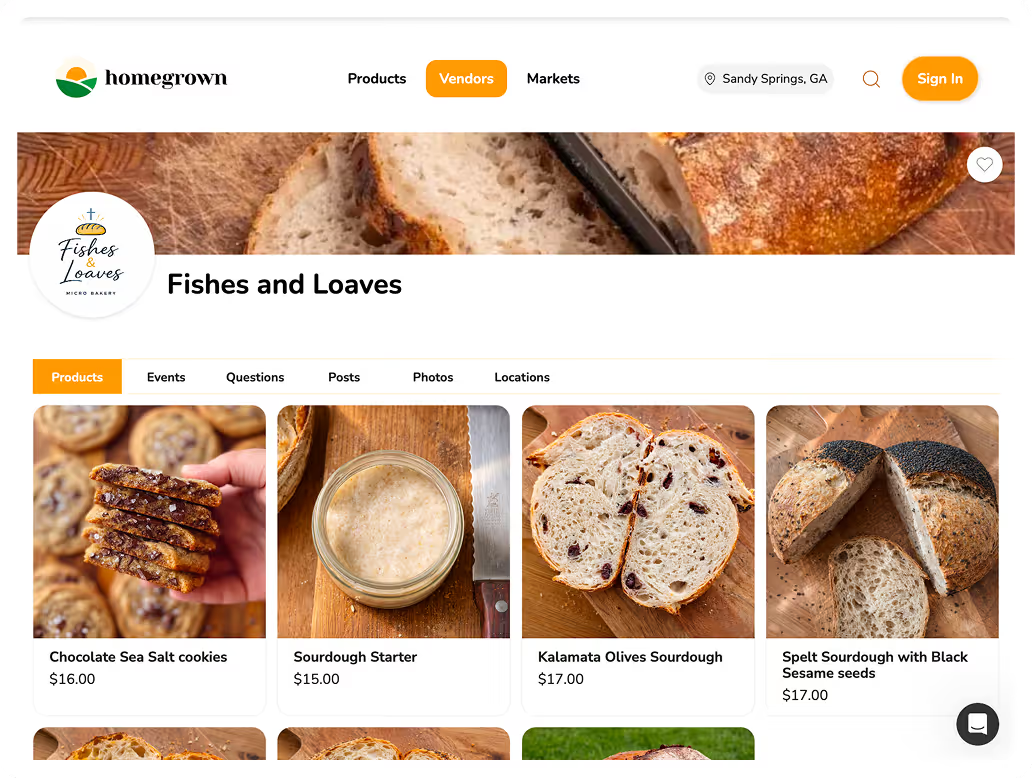
For most vendors moving off DMs, a storefront platform is the sweet spot. It gives you a product catalog, built-in payments, and a single link you can put in your Instagram bio — all without building a website. If you just want to test online ordering first, a Google Form works fine for a few weeks.
Here's your Saturday game plan. Block off 2-4 hours in the morning, and you'll have a working ordering system by lunch.
Don't overthink this. If you want free and simple, use Google Forms. If you want payments built in and a professional product page, set up a Homegrown storefront. Either option takes less than 2 hours to set up completely.
Pick one and move on. You can always switch later. The goal today is to stop taking orders in DMs, not to find the perfect permanent solution.
List every product you regularly sell. For each one, include:
If you sell custom items (decorated cakes, custom cookie boxes), create a "Custom Order Inquiry" option that collects details. Don't try to automate custom orders on day one — just get the standard products listed.
If you're using a storefront platform, payment processing is built in — customers pay when they order. This alone eliminates 90% of the DM headaches.
If you're using Google Forms, add a note at the top: "Payment via Venmo @YourHandle or Cash App $YourHandle. Orders are confirmed once payment is received." Not perfect, but better than chasing payments after the fact.
This is the part DMs can never do. Set a clear cutoff:
Put the cutoff time on your ordering page. When the cutoff passes, close the form or pause ordering. No more 11 p.m. DMs asking if you can add two pies to tomorrow's batch.
Place a test order. Go through the entire process as a customer would. Check that:
Fix anything that's off. Then send the link to one trusted friend or regular customer and ask them to place a test order too.
This is where vendors get nervous. "What if my customers don't want to use a new system?" They will. The customers who DM you at midnight will happily click a link instead — it's actually easier for them.
Create a simple Instagram post or Story. Here's a template you can adapt:
"Big update! You can now order directly from my menu — no more DMs needed. Click the link in my bio to see what's available this week, place your order, and pay in one step. Same products, same pickup, way easier for both of us."
Key points to hit in your announcement:
Replace whatever's in your bio link with your new ordering link. If you use a link-in-bio tool (Linktree, etc.), make the ordering link the first and biggest option. Your bio should clearly say something like:
They will. For the first 2-3 weeks, some regulars will still DM their orders out of habit. Don't ignore them — redirect them with a friendly message:
"Hey! I've got a new ordering system that makes it way easier. Just tap the link in my bio and you can order + pay in one step. Let me know if you need help!"
Copy-paste that response to every DM order for two weeks. Most customers will switch immediately. The ones who don't will switch after the second reminder. Within a month, 90%+ of your orders will come through the new system.
Sunday is your first real test. You've set up the system, announced it, and updated your bio. Now see what happens.
By Sunday evening, you'll have a functioning ordering system that didn't exist 48 hours ago. You'll know exactly who ordered what, payment is handled (or at least organized), and you didn't spend your weekend scrolling through messages.
One thing that surprises most vendors: the new system often brings in orders from people who never DM'd you. Some customers wanted to order but didn't feel comfortable sending a message. A link they can click removes that barrier completely. Don't be surprised if your order count goes up in the first week, not down.
Instagram doesn't go away — it just gets better. Instead of being your order desk, it becomes what it's actually good at: marketing.
After the switch, use Instagram for:
What you stop doing on Instagram:
According to social commerce research from inBeat Agency, U.S. social commerce sales are projected to exceed $100 billion by 2026. The vendors winning that market aren't the ones managing orders in DMs — they're the ones using social media to drive customers to a proper ordering system.
That's fine. A free Google Form is still a massive upgrade over DMs. Here's your bare-minimum weekend setup:
Total cost: $0. Total time: about 1 hour. That's it. You now have an ordering system that's searchable, organized, and doesn't require you to scroll through 200 DMs on Thursday night.
When you're ready to upgrade — usually when you hit 15-20 orders per week or get tired of chasing payments — you can set up a pre-order page with built-in payments in under 2 hours.
No. You'll gain customers. The DM barrier actually prevents people from ordering — many potential buyers won't message a stranger but will happily click a link. Your regulars will adapt within 1-2 weeks. Send them a friendly redirect message, and most will switch immediately.
Absolutely. Keep DMs open for questions, feedback, and conversations. Just redirect any ordering requests to your new system. "Thanks for reaching out! You can place your order right from the link in my bio — it's super easy." Use Instagram for relationships, not transactions.
Most customers switch within 1-2 orders. For the first 2-3 weeks, expect some regulars to DM orders out of habit. Redirect them gently each time. Within a month, 90% or more of your orders will come through the new system. The key is consistency — don't accept DM orders "just this once."
Update your storefront or form weekly — most vendors do this on Thursday or Friday before the weekend. If your menu rotates, set up your products as "This Week's Menu" with current items. Most storefront platforms let you toggle products on and off, so you can keep your full catalog and just activate what's available each week.
Yes. Post about it at least 3-4 times in the first two weeks. Instagram's algorithm means not everyone sees every post. Use a mix of feed posts, Stories, and Reels. After the first month, a weekly "Order link in bio" reminder is enough.
Set up on Saturday, announce Saturday evening, and start taking orders Sunday. This gives you the weekend to get comfortable with the new system before your next market day. Avoid switching right before a big market or holiday — you want a normal week to work out any kinks.
Don't delete them yet. Keep your DM history for at least a month as a backup. You might need to reference old orders, customer preferences, or contact info. Once your new system has a month of order history, the DMs become irrelevant and you can archive them.
You started your food business because you love making food — not because you love answering DMs. The shift from DM-based ordering to a real system is the single biggest quality-of-life upgrade most food vendors make. It's not about being anti-Instagram or anti-social media. It's about using each tool for what it's actually good at.
Instagram is good at building an audience, showing off your products, and creating a connection with your community. It's terrible at tracking orders, processing payments, and managing cutoff times. Once you separate those two jobs — marketing on Instagram, ordering through a proper system — everything gets easier.
It takes one weekend. Saturday to set up, Sunday to start. Your customers get an easier ordering experience. You get your evenings back. And your business gets a system that actually scales.
Set up your Homegrown storefront this Saturday — by Sunday, you'll wonder why you didn't do it months ago.