You've got the tent, the table, the products, and the cash box. Your physical market day prep is dialed in. But what about the digital side? Most vendors forget that their online presence needs to be updated before every market — and those updates are the difference between selling what you bring and selling out before you arrive.
A digital market day checklist covers everything you should do online before each market: updating your storefront, posting on social media, activating pre-orders, texting your regulars, and making sure customers know what's available before they show up. These tasks take 20-30 minutes once you have a routine, and they consistently drive more sales than any single physical prep item.
Print this checklist. Tape it to your fridge. Run through it every Thursday or Friday before your weekend market.
The short version: Before every market day, update your online storefront with this week's products and prices, post availability on Instagram and Facebook, send a quick text or email to your regulars, turn on pre-orders with a clear cutoff time, and update your Google Business Profile hours if they've changed. This 20-30 minute routine consistently increases market day sales because customers show up already knowing what they want — and some pay before they arrive.
Why Does a Digital Checklist Matter?
Vendors who update their online presence before market day sell 20-40% more than vendors who just show up and hope for foot traffic. That's not a guess — it's what vendors consistently report after adding pre-market digital updates to their routine.
Here's why it works:
- Pre-orders mean guaranteed sales. Products sold before market day can't go unsold. You bake exactly what's ordered, plus extra for walk-ups.
- Social posts drive foot traffic. A customer who sees your "fresh cinnamon rolls this Saturday" post at 8 a.m. makes a mental note to stop by. Without that post, they might never think of you.
- Text/email reminders convert regulars. Your best customers want to know what's available. A quick "this week's menu" text on Thursday brings them to the market on Saturday.
- Updated product pages prevent confusion. If your storefront still shows last week's menu, customers order items you're not making this week. That's a bad experience for everyone.
The Made Urban vendor checklist covers the physical side of market prep in detail — tent, display, pricing, and supplies. This checklist is the digital companion. Together, they cover everything.
What's on the Digital Market Day Checklist?
Here's the complete checklist, organized by when to do each task. Most vendors run through this on Thursday or Friday before a Saturday market. For more details, see our guide on .
Thursday Evening: Product and Storefront Updates (15 Minutes)
- Update your product list. Add any new items for this week. Remove or hide items you won't have. If you rotate flavors or varieties, make sure the current ones are listed.
- Check prices. If ingredient costs changed or you're running a special, update prices now — not at the market when a customer is standing in front of you.
- Update product photos. If you made a new batch and it looks great, swap in the fresh photo. Customers buy with their eyes first.
- Set pre-order availability. Turn on pre-orders if your platform supports it. Set a clear cutoff time (e.g., "Pre-orders close Friday at 8 p.m. for Saturday pickup").
- Check inventory quantities. If you can only make 4 dozen cookies this week, set the limit so you don't over-commit.
Friday Morning: Announcements and Outreach (10 Minutes)
- Post on Instagram. Share what's available this week. Include a photo of your products (a baking-in-progress shot works great), the market name and time, and your ordering link. End with "Link in bio to pre-order."
- Post on Facebook. Same content, adjusted for Facebook's format. Tag the market's Facebook page if they have one.
- Send a text or email to your regulars. Keep it short: "Hey! This week I have [products]. Pre-order by tonight or grab them at [market name] Saturday 8 a.m. - noon. [Link]." A simple text to your top 10-20 customers drives more sales than any social post.
- Update your Instagram Story. Post a quick Story with your menu for the week. Use the "Link" sticker to point to your ordering page. Stories disappear in 24 hours, so they create urgency.
Friday Evening: Final Checks (5 Minutes)
- Close pre-orders at your cutoff time. If your cutoff is Friday at 8 p.m., turn off online ordering right at 8. This trains customers to order on time next week.
- Review pre-orders received. Print or screenshot your order list. Cross-reference with your baking plan. Make sure you have everything you need for tomorrow.
- Confirm pickup details. If customers are picking up at the market, confirm your booth location and time in an order confirmation or quick message.
Saturday Morning (Market Day): Last-Minute Digital Tasks (5 Minutes)
- Post a "We're here!" Story. A quick photo of your booth setup with the market location tagged. This reminds followers who didn't pre-order that they can still come buy. Tag the market's Instagram account and use their hashtag — many market accounts reshare vendor Stories, which puts you in front of their entire follower base for free.
- Make sure your QR code is displayed. Have a printed QR code at your booth that links to your ordering page. Customers who like your products today can order for next week before they leave. If you need ideas for using QR codes, check out QR code strategies for market vendors.
- Turn walk-up ordering back on (if applicable). Some vendors close online ordering before market day but reopen it at the market for "order for next week" walk-ups.
- Have your payment system ready. If you accept card payments, make sure your reader is charged and connected. If you're using a storefront for pre-orders, have the order list pulled up on your phone so you can check off pickups as customers arrive.
Saturday Evening: Post-Market Digital Wrap-Up (10 Minutes)
Most vendors skip this step, but a quick post-market digital wrap-up sets you up for next week.
- Post a "sold out" or "thank you" Story. If you sold out, say so. "Sold out by 11 a.m.! Pre-order next week to guarantee yours." If you had a great day, share a quick thank-you. This builds anticipation for next week.
- Note what sold and what didn't. Update your notes with which products moved fastest and which sat. This informs next week's product list and baking quantities.
- Update your storefront for next week. If you know what you'll bring next Saturday, update it now while it's fresh. Then Thursday's update is just a quick review instead of starting from scratch.
- Respond to any DMs or messages. Customers who visited your booth may message you afterward. Respond while the interaction is fresh and redirect any ordering requests to your storefront link.
What About Google Business Profile?
If you have a Google Business Profile (and you should — it's free), update it before market season and whenever your schedule changes.
- Business hours: Set your market hours (e.g., Saturday 8 a.m. - 1 p.m.) as your regular hours
- Location: Use the market's address as your location if allowed, or set your service area
- Posts: Google Business lets you create posts that show up in local search results. Post your weekly menu or product photos — it takes 2 minutes and helps people find you when they search "farmers market near me"
- Photos: Upload product photos and booth photos. Google favors listings with recent photos.
You don't need to update Google Business weekly — but check it monthly to make sure hours are accurate and add a fresh photo or post at least every 2-3 weeks.
What's the Best Way to Announce Weekly Availability?
The single most effective announcement format is a product photo with a clear list of what's available, the market day and time, and a link to order. Keep it consistent every week so customers learn to look for it.
Here's a template that works across Instagram, Facebook, and text messages:
"This week's lineup for [Market Name] on Saturday:
- Sourdough loaves — $8 each
- Cinnamon rolls (6-pack) — $15
- Chocolate chip cookies (dozen) — $12
- NEW: Rosemary focaccia — $10
Pre-order by Friday 8 p.m. for guaranteed pickup. Link in bio."
That format works because it's scannable, specific, and action-oriented. Customers see exactly what's available, know the prices, and know what to do next. Swap in your actual products and you've got a weekly template you can reuse for months.
For text messages, keep it even shorter. Your regulars don't need the full pitch — just: "Hey! This week: sourdough, cinnamon rolls, and focaccia. Pre-order link: [URL]. See you Saturday!"
How Do You Build This Into a Weekly Routine?
The checklist looks long, but once you've done it twice, the whole thing takes 20-30 minutes. Here's how to make it a habit:
- Set a recurring calendar reminder. "Thursday 7 p.m. — update storefront and prep announcements."
- Batch your content. Take product photos during your baking session. Write your social captions while the oven timer is running. Don't create content from scratch every week — reuse templates.
- Use a template for texts and emails. Create a fill-in-the-blank template: "Hey [name]! This week: [products]. Pre-order by [day/time] or find me at [market] on [day]. [Link]." Copy, paste, personalize slightly, send.
- Keep a "done" checklist. Print the checklist and check off each item as you go. After a few weeks, you'll do most of it from memory.
The Maine Federation of Farmers' Markets emphasizes that preparation is the key to a successful market season. Your digital preparation is just as important as loading the truck.
What If You Don't Have an Online Storefront Yet?
You can still run most of this checklist with just social media and a phone. Here's the bare-minimum version:
- Thursday: Decide what you're bringing to market. Write it down.
- Friday morning: Post what's available on Instagram and Facebook. Text your top 10 customers.
- Saturday morning: Post a "We're here!" photo when you set up.
That's three tasks. No storefront, no QR code, no email list. Just social media and text messages. It still works — just not as well as the full checklist.
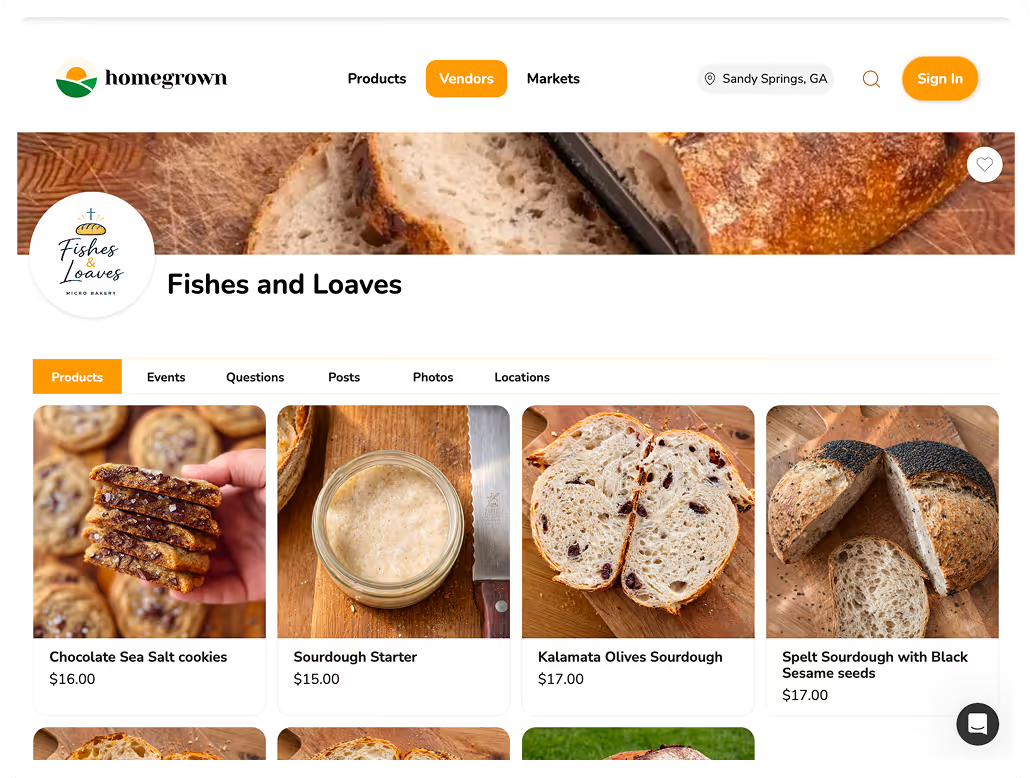
When you're ready to upgrade, moving your ordering off Instagram DMs takes a single weekend. Once you have a Homegrown storefront, the pre-order parts of this checklist start generating real revenue — customers browse your products, pay upfront, and pick up at the market.
How Do You Track Whether the Checklist Is Working?
Track two numbers each week:
- Pre-orders received before market day. This should grow over time as customers learn your routine. If you started at zero, even 3-5 pre-orders per week is a win.
- Total market day revenue. Compare weeks where you ran the full checklist vs. weeks you skipped it. Most vendors see a clear difference within a month.
Other signs the checklist is working:
- Customers say "I saw your post" when they show up
- Pre-order volume increases week over week
- You sell out more often (especially pre-ordered items)
- Fewer leftover products at the end of market day
- Customers start texting you to ask "what's available this week?" — which means they're trained to expect your announcements
Selling at markets or a farm stand? Let customers order ahead online. The easiest way to take local orders and get paid is an online storefront — see the best platform to sell food from home, or set up a Homegrown storefront in about 15 minutes ($10/mo, 0% commission).
Frequently Asked Questions
How Far in Advance Should I Update My Storefront?
Update your product list on Thursday for a Saturday market. This gives customers Friday to browse and pre-order, and gives you Friday evening to review orders and adjust your baking plan. For mid-week markets, update two days before market day.
Do I Need to Post on Social Media Every Single Week?
Yes, if you want consistent sales. Social media posts are the easiest way to remind customers you exist and tell them what's available. You don't need elaborate content — a quick phone photo of your products with the market time and a link is enough. Consistency matters more than quality.
What If I Don't Have an Email List?
Start with text messages. Most vendors have their top 10-20 customers' phone numbers from past orders or conversations at the market. A quick group text on Friday morning with your weekly menu is the simplest and most effective customer communication. You can build an email list later using a sign-up sheet at your booth.
Should I Close Pre-Orders Before Market Day?
Yes. Set a clear cutoff time — most vendors close pre-orders 12-24 hours before the market. This gives you time to finalize your baking and packing plan. Communicate the cutoff clearly on your ordering page and in your announcements. Customers will learn the rhythm within 2-3 weeks.
How Do I Handle Products That Sell Out Before Market Day?
If a product sells out through pre-orders, mark it as unavailable on your storefront immediately. Post a Story saying "Chocolate chip cookies are sold out for Saturday! Still have room for [other product]. Pre-order closes tonight." This creates urgency and drives orders for remaining products.
What's the Most Important Item on the Checklist?
Texting your regulars. Social media algorithms mean only 10-20% of your followers see any given post. But a text message has a 98% open rate. If you only do one thing from this checklist, send a text to your top 10 customers on Friday telling them what's available and how to order.
Do I Need a Different Checklist for Winter Markets?
The digital checklist stays the same year-round. The products you list will change with the seasons, and you may need to update market hours if they shift. But the process — update storefront, post availability, text regulars, manage pre-orders — works whether it's July or January. Your booth setup changes more with seasons than your digital prep does.
Make It Part of Your Routine
The digital market day checklist isn't extra work — it's the work that makes everything else more profitable. Twenty minutes on Thursday evening means more pre-orders Friday, less waste Saturday, and more revenue every single week.
Print it out. Stick it on the fridge. Run through it every week until it's automatic. The vendors who do this consistently — even imperfectly — outsell the vendors who show up and hope for the best. It's not about being perfect at social media or having the best photos. It's about showing up online the same way you show up at the market: reliably, every single week.
Set up your Homegrown storefront to make the pre-order steps even easier — update products, share your link, and take paid orders before you even load the truck. Customers order for pickup or local delivery, whichever they prefer.