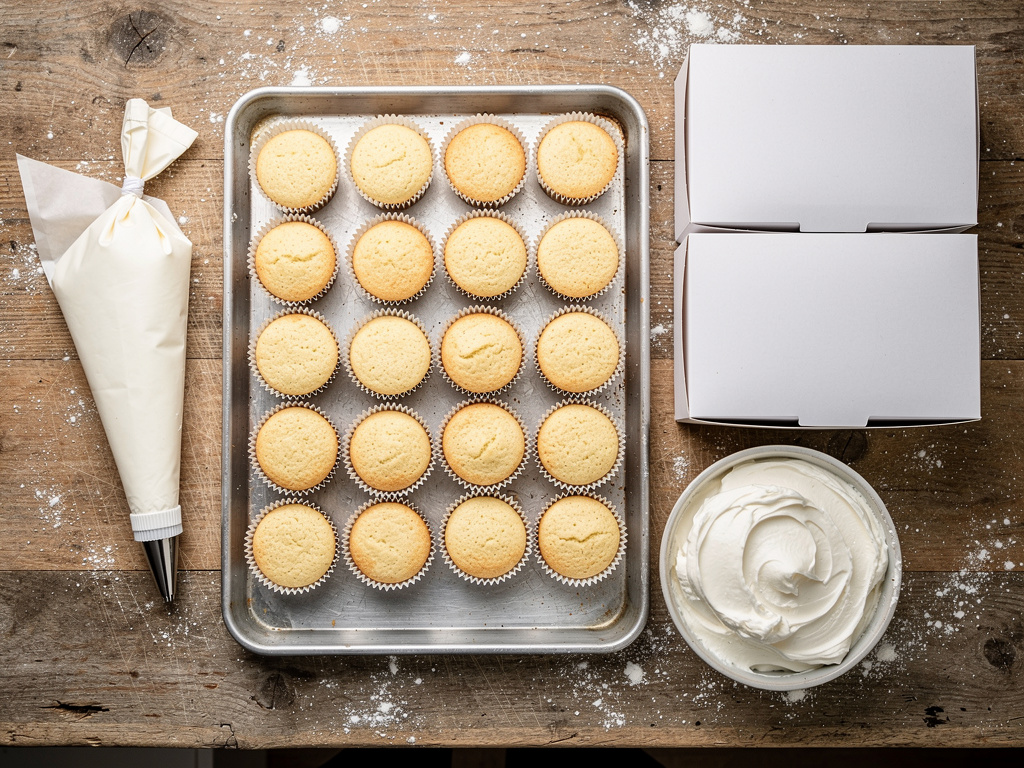



You get a text at 9 PM on a Wednesday. "Hey, can you do a custom cake for my daughter's birthday? She wants rainbow layers with buttercream flowers and her name on top. We need it Saturday."
Your stomach does that thing where it is somehow both excited and stressed at the same time. You want the sale. You love making custom work. But you also know that "rainbow layers with buttercream flowers" could mean twelve different things, and Saturday is three days away, and this person has not mentioned anything about price.
This is where most custom order problems start. Not because the customer is difficult. Not because you are bad at your job. But because nobody set expectations up front, and now two people are operating on completely different assumptions about what is going to happen.
The short version: Custom orders are one of the best ways to grow a cottage food business, but they are also the fastest way to burn yourself out if you do not set expectations clearly from the start. Before you accept any custom order, clarify exactly what the customer wants, agree on a price in writing, collect a deposit, set a firm timeline, and establish a cutoff for changes. You do not need a formal contract. A simple text confirmation covers you. The vendors who thrive with custom work are not the most talented bakers or cooks. They are the ones who communicate the clearest.
The core problem is that "custom" means something different to you than it does to your customer. To you, custom means extra time, special ingredients, adjusted recipes, and work that cannot be resold if they cancel. To the customer, custom often means "the same thing you already make, but slightly different." That gap in understanding is where every custom order headache begins.
Here are the most common issues vendors run into with custom orders:
> "Custom orders are not hard because of the baking. They are hard because of the communication."
The good news is that nearly all of these problems are preventable. You do not need to stop taking custom orders. You just need a system for handling them that protects both you and your customer. If you have ever had to deal with difficult customers over a misunderstanding, you know how much easier it is to prevent the problem than to fix it after the fact.
Get every detail nailed down before you say yes. Not after you have already started planning. Not when you are halfway through baking. Before you commit to anything, you need answers to a specific set of questions. This is not about being rigid. It is about making sure you and your customer are on the same page so nobody ends up frustrated.
Here is what to ask before accepting any custom order:
Use this checklist every single time:
| Custom Order Intake Checklist | Details to Confirm |
|---|---|
| Product description | Exact flavor, size, quantity, design elements |
| Dietary restrictions | Allergies, nut-free, gluten-free, vegan, etc. |
| Pickup date and time | Specific day, specific time, location |
| Price | Total cost including customization fees |
| Deposit | Amount due up front, when it is due |
| Change cutoff | Last date/time changes can be made |
| Cancellation policy | What happens to the deposit if they cancel |
| Your contact preference | Text, call, email, and response time expectations |
You do not need to hand someone a printed form. But you do need to cover every item on this list before you start working. A two-minute conversation now saves you hours of frustration later.
If you want to make this even smoother, create a pre-order system that walks customers through these questions automatically. That way the intake process feels professional without feeling formal.
Start with your base price and add a customization fee on top. Custom work takes more time, more planning, and often more expensive ingredients. This cake pricing guide recommends using a multiplier of 4 to 7 times your ingredient cost as a starting point. Your pricing needs to reflect that. If you charge the same price for custom orders as your standard products, you are losing money on every single one.
Here is a simple pricing structure that works for most cottage food vendors:
| Pricing Component | What It Covers | Example |
|---|---|---|
| Base price | Your standard product cost (ingredients, labor, packaging) | $3 per cupcake |
| Customization fee | Extra time for special designs, flavors, or modifications | +$1 per cupcake |
| Minimum order | The smallest custom order you will accept | 12 cupcakes minimum |
| Rush fee | Orders placed with less than your standard lead time | +25% of total |
| Specialty ingredients | Gluten-free flour, organic vanilla, edible gold, etc. | Priced per order |
A few pricing rules that protect your sanity:
If you are not sure what your products actually cost to make, this free pricing calculator for home bakers can help, or you can calculate your real cost per item before you set any custom pricing. You cannot add a fair customization fee if you do not know your base cost.
> "A custom order that loses you money is worse than no order at all. Price it right or do not offer it."
And if friends or family are the ones asking for custom work at a discount, you will want to read about how to handle friends and family who want free food. That is a whole separate conversation, but it comes up constantly with custom orders.
Set a lead time minimum and stick to it. Every vendor's lead time is different depending on what they make and how much prep time they need. For most cottage food vendors, a reasonable minimum is somewhere between 72 hours and one week for custom orders.
Here is how to think about your lead time:
Post your lead time on your ordering page, your social media, and anywhere else customers find you. When someone reaches out with a request inside your lead time window, you have two options.
Option 1: Accept it with a rush fee.
If you can realistically do the work without sacrificing quality or your sanity, accept the order with a rush fee attached. Be upfront about it: "I can definitely do that for you. Since it is inside my normal lead time, there is a 25% rush fee. The total would be $X. Want me to go ahead?"
Option 2: Decline it politely.
It is completely okay to say no. You are not a 24-hour bakery. You are a person running a business from your home kitchen, and your time has limits. Here are scripts you can use:
Notice what all of those scripts have in common. They are warm, they are clear, and they offer an alternative. You are not slamming the door. You are redirecting. The customer does not feel rejected, and you do not feel pressured into work you cannot do well.
> "Saying no to a rushed custom order is not losing a sale. It is protecting your reputation. A bad custom order does more damage than a declined one."
The biggest mistake vendors make with last-minute requests is saying yes when they should say no, then delivering something they are not proud of. Your reputation is built on every product you put out. One rushed, mediocre custom cake does more damage to your business than politely turning down the order.
You do not need a contract. You need a confirmation text. That is it. A single message that spells out what you agreed to, sent before you start working. This is not about being a corporate business with terms and conditions. It is about making sure you and your customer both remember the same conversation.
Here is what a confirmation text looks like in real life:
"Just to confirm: 2 dozen chocolate chip cookies, nut-free, ready for pickup Thursday at 4 PM. $45 plus $10 custom fee, so $55 total. $27.50 deposit due today, rest due at pickup. Any changes need to be in by Tuesday at noon. Sound right?"
That is 45 words. It takes thirty seconds to type. And it prevents about 90% of custom order disputes.
Why written confirmation matters so much:
Screenshot every confirmation. If you are communicating through a platform that could delete messages, take a screenshot and save it.
The format does not matter — text, email, Google Form — as long as the details are written somewhere both you and the customer can reference. But the more of this you can move into your ordering system instead of your text thread, the fewer screenshots you need.
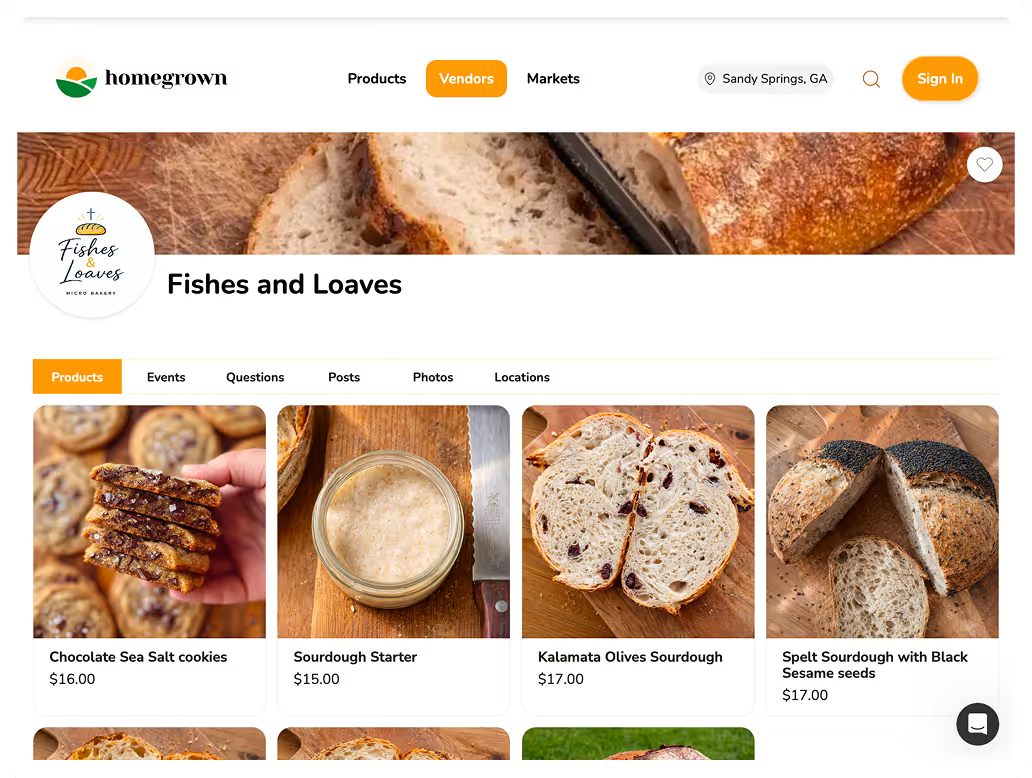
Homegrown is $10/month with no percentage fees. When a customer orders through your storefront, the item details, price, and payment are already recorded — no confirmation text needed because the order itself is the documentation. You can list custom options with descriptions and lead times so customers see your policies before they order, not after. A Google Form collects order details but not payment, so you still need a separate Venmo request and a separate confirmation text — that is three systems for one custom cake. Instagram DMs bury order details in a thread you cannot search three weeks later if a dispute comes up. Homegrown will not negotiate your custom pricing or enforce your change cutoff — that is your voice and your policies. But for the step where "nut-free, Thursday at 4, $55 total" needs to be documented somewhere both of you can find it, it replaces the screenshot you forgot to take.
Set a change cutoff and communicate it clearly at the time of order. For most cottage food vendors, a cutoff of 24-48 hours before the pickup time works well. This gives you enough buffer to finalize your prep without worrying about last-minute surprises.
Here is how to structure your change policy:
Scripts for handling post-cutoff change requests:
What about changes that affect the price?
If a customer asks to add items before the cutoff, update the price and get their confirmation before proceeding. Do not just absorb the cost of extras. If they want an additional dozen cookies, that is an additional charge, and they need to agree to it in writing before you start on the additions.
What about cancellations?
Your deposit policy handles this. If the customer cancels before your cutoff, you can offer a partial refund (minus the cost of any ingredients you have already purchased). If they cancel after the cutoff, the deposit is non-refundable. Make this clear at the time of order so there are no surprises.
> "A clear change policy is not about being inflexible. It is about respecting your own time and the work you have already put in."
The vendors who struggle most with custom orders are the ones who keep saying yes to every change, every addition, and every last-minute request. You end up doing twice the work for the same price, resenting the customer, and delivering something you are not happy with. A firm, clearly communicated policy prevents all of that.
Ready to start selling locally? The easiest way to take local orders and get paid is an online storefront — see the best platform to sell food from home, or set up a Homegrown storefront in about 15 minutes ($10/mo, 0% commission).
Start simple. Before you accept your first custom order, decide on three things: your minimum lead time, your pricing structure (base price plus customization fee), and your change cutoff. Write those down and communicate them to every customer who asks about custom work. You do not need a fancy system. You need clarity. As you take more custom orders, you will refine your process based on what comes up.
Yes. Even if the order is small, a deposit protects you from cancellations and no-shows. A 50% deposit is standard for custom food orders. The deposit covers your ingredient costs and guarantees the customer is committed. If someone pushes back on a deposit, that is actually a red flag. Serious customers understand why deposits exist.
Your policy is your policy. You can be flexible on small things (pickup time, minor flavor adjustments), but do not bend on the fundamentals: deposit, lead time, change cutoff, and pricing. If a customer's expectations do not align with your process, it is better to politely decline the order than to accommodate requests that will cost you time and money. Not every customer is the right customer.
The same way you handle them through text or in person. Ask all the same intake questions, confirm the details in writing within the DM thread, and collect your deposit before starting work. The risk with social media is that messages can get buried, so consider moving the conversation to text or email once you have the initial details. Better yet, direct them to your ordering page where orders are tracked automatically.
Most cottage food vendors charge a 25-50% rush fee for orders placed inside their standard lead time. The exact percentage depends on how much extra effort the rush requires. If a rush order means you are staying up until midnight or making a special trip to the store for ingredients, 50% is fair. If it just means shifting your schedule around slightly, 25% works. The point is not to punish the customer. It is to compensate you for the extra effort.
Absolutely. The key is framing. Instead of "my rules are," say "here is how I handle custom orders to make sure you get exactly what you want." You are not being strict. You are being organized. Customers actually prefer working with vendors who have a clear process because it makes them feel confident the order will turn out right. Nobody wants to hand over money and hope for the best.
Repeat customers are gold. Once someone has ordered from you before, you already know their preferences, dietary needs, and communication style. You can streamline the intake process: "Same as last time, or any changes?" But do not skip the confirmation text. Even with repeat customers, always send a written confirmation of the details and price. Familiarity is not a substitute for clarity.
Custom orders do not have to be stressful. They are actually one of the best parts of running a cottage food business because they let you do creative work, build deeper relationships with your customers, and charge premium prices for your skills.
The difference between vendors who love custom orders and vendors who dread them is not talent. It is systems. A simple intake checklist, a clear pricing structure, a written confirmation, and a firm change policy are all you need to set expectations that protect both you and your customer.
You do not need a lawyer. You do not need a contract. You need a two-minute text message that spells out what you are making, when it will be ready, and how much it costs. That is it.
You do not need a lawyer or a contract. You need a two-minute confirmation that spells out what you are making, when it will be ready, and how much it costs. Do that every time, and custom orders become one of the best parts of your business instead of the most stressful.