

The best approach for custom food orders is to collect a 50% non-refundable deposit when the customer places the order and the remaining 50% at pickup. This protects you from no-shows and last-minute cancellations while giving the customer confidence that their order is confirmed. If you have been burned by customers who order a custom cake, ghost on payment day, and leave you with a $60 product nobody wants, a deposit policy is the fix. Setting up a Venmo Business Profile makes deposit collection professional and keeps it separate from your personal transactions.
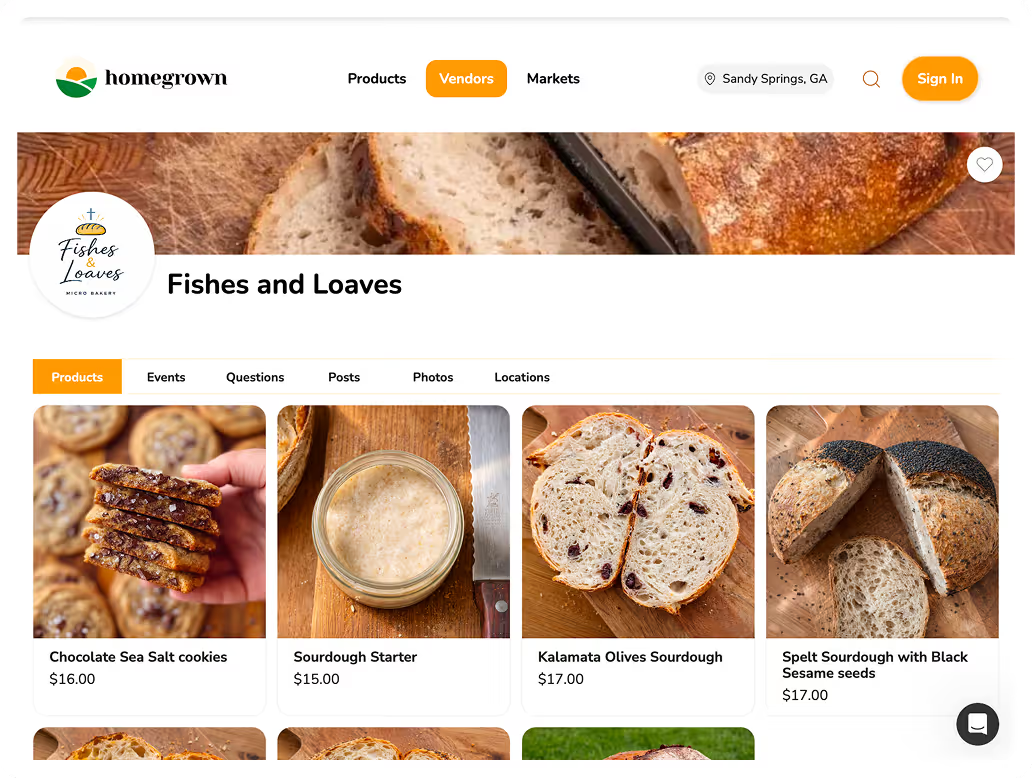
The short version: Collect a 50% deposit at the time of order, non-refundable, with the balance due at pickup. For orders under $25, collect the full amount upfront — the administrative overhead of splitting a small payment is not worth it. For orders over $100, a 50% deposit is standard and expected by customers who order custom food. Communicate your deposit policy before the customer confirms their order, not after. The simplest way to handle deposits is through an ordering platform that collects full payment upfront — a Homegrown storefront ($10 per month) eliminates the deposit conversation entirely because customers pay in full when they order. But if you take custom orders that require back-and-forth on design, flavors, or sizing, a deposit policy protects your time and ingredients.
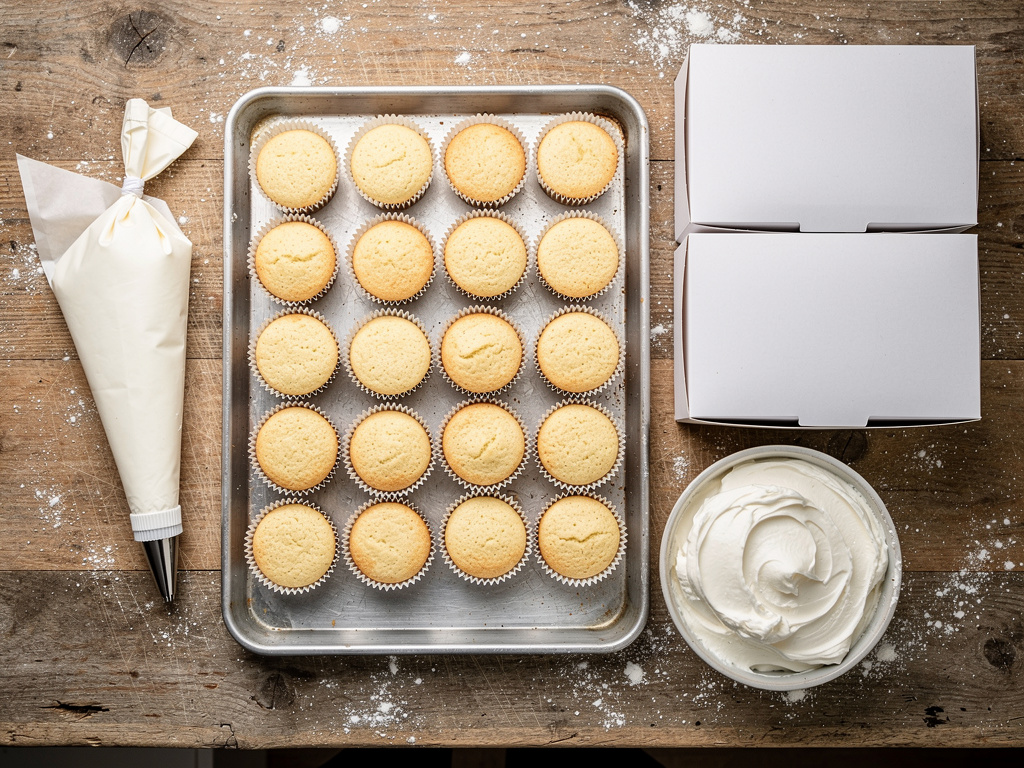
Custom food orders are different from standard product sales. When a customer orders a dozen chocolate chip cookies from your menu, you can sell those cookies to someone else if the first customer does not show up. When a customer orders a custom birthday cake with their daughter's name piped on top, that cake has one buyer. If they do not pay or do not pick up, you cannot sell it.
Here is what happens without a deposit policy:
A deposit solves this by ensuring the customer has financial skin in the game. Once they have paid $30 toward a $60 cake, they are far less likely to cancel or ghost. And if they do cancel, the non-refundable deposit covers your ingredients and some of your labor.
The math is simple: if one out of every ten custom orders cancels or no-shows, and your average custom order is $50, you lose $50 per month at 10 orders per month. A deposit policy reduces that loss to zero because cancellations are covered by the non-refundable deposit.
The standard deposit for custom food orders is 50% of the total order cost. This is the most common rate across the food industry, from custom cakes to catering. Customers expect it because they encounter similar policies at bakeries, restaurants, and event vendors everywhere.
Here is a framework based on order size:
| Order Total | Recommended Deposit | Why |
|---|---|---|
| Under $25 | Full payment upfront | Too small to split — collect everything now |
| $25-$75 | 50% deposit | Standard for most custom orders |
| $75-$150 | 50% deposit | Same policy, larger amounts |
| Over $150 | 50% deposit or tiered (30% now, 70% at pickup) | Larger orders may warrant flexibility |
For most cottage food vendors taking custom orders in the $30 to $80 range, a flat 50% deposit is the right approach. It is simple, easy to communicate, and large enough to discourage cancellations while small enough that customers do not hesitate to commit.
Some vendors use a flat-rate deposit instead of a percentage. "All custom orders require a $25 non-refundable deposit, with the balance due at pickup." This works well if your custom orders cluster around a similar price range.
The deposit policy needs to be communicated before the customer commits to the order, not after. If you tell a customer about the deposit after they have already described their dream cake in detail, it feels like a surprise fee. If you tell them upfront, it feels like a professional business practice.
Keep it friendly but clear. Here is a template you can customize:
"All custom orders require a 50% non-refundable deposit to confirm your order. The remaining balance is due at pickup. Deposits cover ingredients and preparation time. I will send a payment link after we finalize your order details."
Notice the language: "non-refundable deposit to confirm" frames the deposit as a confirmation step, not a penalty. "Deposits cover ingredients and preparation time" explains why it exists without being defensive.
Collect the deposit after the order details are finalized but before you start production. The sequence:
Never start production before receiving the deposit. This is the most common mistake. Vendors who "trust" the customer and begin baking before payment arrive end up absorbing the cost of cancellations.
Many vendors avoid deposit policies because asking for money upfront feels uncomfortable. They worry about seeming untrusting, pushy, or unprofessional. The opposite is true. Deposits are the standard practice across every food service business — from catering companies to wedding cake bakers to restaurant event reservations. Not having a deposit policy is what looks unprofessional.
Here is how to reframe the deposit conversation in your head:
The vendors who struggle most with deposits are the ones who think of themselves as "just selling to friends." Once you adopt the mindset that this is a business — with costs, schedules, and commitments — asking for a deposit feels as natural as posting your prices.
Several methods work for collecting deposits on custom orders:
Send a payment request for the deposit amount. The customer pays through the app. This works but has no formal order confirmation, no receipt, and no record linking the payment to the specific order.
Square lets you create invoices that you can send via text or email. The customer gets a professional invoice showing the order details and the deposit amount. They pay online. You get a receipt and payment record. Square invoicing is free to use (standard processing fees apply).
The cleanest approach is to eliminate deposits entirely by collecting full payment at the time of order. Homegrown costs $10/month with no percentage fees beyond standard payment processing (2.9 percent plus $0.30 per transaction). Customers order and pay the full amount upfront. There is no deposit conversation, no balance to collect later, and no risk of non-payment at pickup. Homegrown does not handle split payments, custom invoicing, or deposit-and-balance workflows — it collects full payment at order time, which eliminates the deposit problem entirely for standard and simple custom products.
For highly custom orders that require back-and-forth on details (elaborate cake designs, large catering orders), a deposit + balance approach through Square invoicing may still be necessary because the final price is not set until the details are confirmed.
| Collection Method | Deposit Handling | Best For |
|---|---|---|
| Venmo/Cash App | Manual request | Very small, informal orders |
| Square Invoice | Professional invoice | Custom orders $50+ |
| Ordering platform (full payment) | Eliminates deposits | Standard products, simple customs |
Your deposit policy needs a companion cancellation policy. Here is a straightforward framework:
Full deposit refund (minus any ingredients already purchased). If a customer cancels with plenty of notice, you have not started production and can refund without losing money. This goodwill gesture builds trust and encourages customers to order again.
50% deposit refund or credit toward a future order. You may have already purchased ingredients. The partial refund acknowledges their cancellation while covering your costs.
No refund. At this point, you have already purchased ingredients, baked the product, and committed your time. The non-refundable deposit covers your losses.
No refund. Balance still owed. If a customer does not pick up and does not cancel, the deposit is forfeited and they owe the remaining balance. In practice, most vendors write off the balance and keep the deposit, but having the policy gives you leverage if you need it.
Post your cancellation policy alongside your deposit policy. Customers who know the rules upfront are less likely to cancel last minute because they understand the consequences.
The balance payment at pickup needs to be as smooth as possible. Here are your options:
The pre-sent balance request is the best option because it eliminates the awkward payment moment at pickup. The customer arrives, you hand them their cake, they say thank you, and they leave. No fumbling with card readers or counting cash.
For standard weekly products (not custom orders), the simplest approach is full payment at order time through an ordering platform. If you sell both standard and custom products, use your Homegrown storefront for standard items (full payment at order) and a separate deposit process for custom orders. Over time, as you systematize your custom options, you can move even those to full-payment ordering.
For more on building an ordering system that handles payments cleanly, see our guide to the best online ordering systems for cottage food. And if you are still taking all orders through DMs, our guide on DM orders vs online storefronts explains when to switch.
If you also struggle with setting prices on custom orders before taking the deposit, our guide on how to set prices in DMs covers strategies for clear, efficient pricing conversations.
Yes. A 50% non-refundable deposit is the most common deposit structure for custom food orders across the industry. Customers who order custom cakes, catering, and specialty items encounter this policy regularly. It is professional, expected, and protects both you and the customer.
This is actually a filtering mechanism. Customers who refuse to pay a deposit are the same customers most likely to cancel or no-show. If someone will not commit $30 toward a $60 cake, they are not a reliable buyer. Politely hold firm: "I understand — the deposit helps me confirm the order and purchase ingredients. I am happy to help if you decide to move forward." If they walk, you avoided a likely cancellation.
No. Standard menu items (cookies, bread, jam) should be sold with full payment at the time of order through your ordering page. Deposits add complexity that is unnecessary for standard products. Reserve the deposit policy for custom orders where the product is made specifically for one customer and cannot be resold.
Send a Venmo request for exactly 50% of the order total. Include the order details in the Venmo note (e.g., "Deposit for custom birthday cake, 6/14 pickup"). When the customer pays, screenshot the confirmation for your records. Send the balance request the day before pickup. This is informal but functional for small operations.
Changes are fine if you have not started production. Adjust the order details, recalculate the total if needed, and communicate any price difference. If the change increases the total, collect the additional deposit amount. If it decreases the total, adjust the balance accordingly. Once you have started baking, significant changes may not be possible.
For orders over $150, some vendors offer a three-payment plan: 30% deposit, 40% one week before pickup, and 30% at pickup. This makes large orders more accessible. However, each additional payment is another collection step you need to manage. For most cottage food vendors, a simple 50% now and 50% at pickup is easier to track.
Deposits are income in the year you receive them. If a customer pays a $30 deposit in December and the remaining $30 at January pickup, $30 is 2025 income and $30 is 2026 income. Track each payment separately with the date received. Your ordering platform or invoicing tool creates these records automatically.