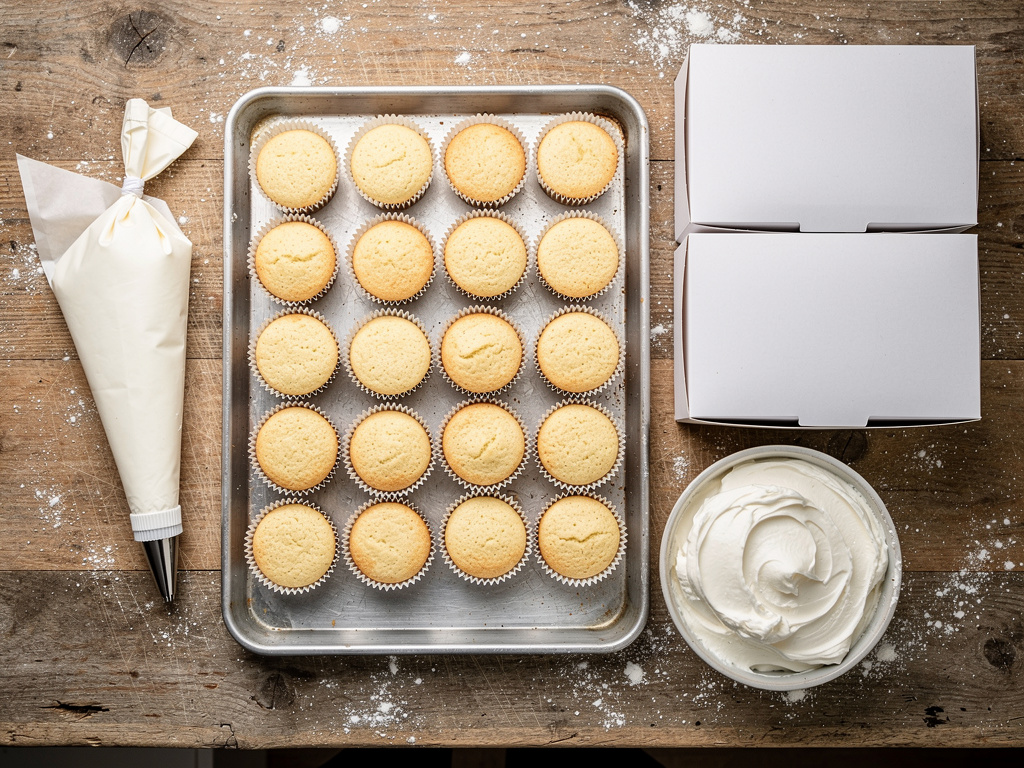


You just spent three hours baking a custom birthday cake. You bought the specialty sprinkles, mixed the buttercream to the exact shade of lavender the customer requested, and cleared your entire Saturday morning to finish it. Then your phone buzzes: "Hey, something came up. We don't need the cake anymore."
That cake is not going back on the shelf. The ingredients are gone. Your morning is gone. And the customer expects to walk away like nothing happened.
Last-minute order cancellations are one of the most frustrating parts of running a cottage food business. But they do not have to wreck your day or your bottom line. The fix is not about being harsh with customers. It is about having clear policies, communicating them early, and building systems that protect your time and money before a cancellation ever happens.
The short version: Last-minute order cancellations cost small food vendors real money because ingredients are already purchased, products are already made, and that production time cannot be recovered. Protect yourself with a written cancellation policy that includes a clear cutoff (24 to 48 hours before pickup), a non-refundable deposit of 50 percent on custom and large orders, and upfront communication so customers know the rules before they place an order. When cancellations do happen, have a plan to resell, repurpose, donate, or freeze the product. The best defense is prevention: require prepayment, send confirmation reminders, and use a storefront like Homegrown that collects payment at the time of ordering.
A last-minute cancellation costs a small food vendor far more than just the sale price of the product. The real damage hits in three places: ingredients, time, and opportunity cost.
Here is what you actually lose when a customer cancels after you have started production:
A single cancelled custom cake order can cost a home baker $40 to $80 in ingredients alone, plus 3 to 6 hours of unpaid labor. When you calculate your real cost per item, the true loss on a cancelled order is often double or triple the ingredient cost.
Large bakeries and restaurants absorb cancellations because they have volume. A cottage food vendor selling 10 to 20 orders per week feels every single one.
Start with a written cancellation policy before your next order. You do not need a lawyer or a fancy contract. You need three things: a cancellation cutoff, a deposit requirement, and clear consequences for late cancellations.
Here is what a strong cancellation policy includes:
Here is a sample cancellation policy table for different vendor types:
| Vendor Type | Deposit | Cancellation Cutoff | After Cutoff |
|---|---|---|---|
| Custom cakes and decorated baked goods | 50% non-refundable | 48 hours before pickup | Forfeit full deposit |
| Standard baked goods (cookies, bread, pies) | No deposit or 25% | 24 hours before pickup | Forfeit deposit or pay 50% |
| Meal prep and prepared foods | 50% non-refundable | 48 hours before pickup | Forfeit full deposit |
| Jams, preserves, shelf-stable items | No deposit | 24 hours before pickup | Full refund |
| Large catering-style orders ($100+) | 50% non-refundable | 72 hours before event | Forfeit full deposit |
The most important line in your cancellation policy is the one that says deposits are non-refundable after the cutoff. This is the sentence that protects you. Without it, you are absorbing the full cost of every cancellation.
When you set expectations on custom orders, your cancellation policy should be part of that conversation from the very first message.
Your cancellation cutoff should match the amount of lead time you need to produce the order. For most cottage food products, 24 to 48 hours before the scheduled pickup works. For large or complex orders, extend it to 72 hours.
The cutoff is not arbitrary. It is based on when you start spending money and time on that specific order.
Here is a breakdown by product type:
| Product Type | Recommended Cutoff | Why |
|---|---|---|
| Custom decorated cakes | 48-72 hours | Fondant work, multi-layer assembly, specialty ingredients ordered in advance |
| Cookies and brownies | 24 hours | Dough can be prepped quickly, ingredients are common staples |
| Bread and rolls | 24 hours | Dough needs rising time but ingredients are inexpensive |
| Pies and pastries | 24-48 hours | Fruit fillings and specialty crusts take prep time |
| Meal prep orders | 48 hours | Fresh proteins and produce purchased specifically for the order |
| Jams and preserves | 24 hours | Shelf-stable, can be sold to another customer easily |
| Large orders (10+ units or $100+) | 72 hours | Significant ingredient purchase and production commitment |
Set your cutoff based on when you would start buying ingredients or prepping for that specific order. If you buy ingredients two days before pickup, your cutoff needs to be at least two days out.
Some vendors use a sliding scale: full refund if cancelled more than 48 hours out, 50 percent refund between 24 and 48 hours, no refund within 24 hours. This gives customers flexibility while still protecting you during the crunch period.
Yes, require deposits on custom orders and any order over $50. A 50 percent non-refundable deposit is the industry standard for small food vendors, and it is the single most effective tool for preventing last-minute cancellations.
Here is why deposits work:
Here is a deposit structure that works for most cottage food vendors:
Requiring a 50 percent deposit on custom orders reduces last-minute cancellations by roughly 70 to 80 percent, based on what experienced cottage food vendors consistently report. The deposit does not just protect you financially. It changes the customer's mindset from "I might pick this up" to "I have money invested in this order."
The deposit only works if you actually collect it before you start baking. If your system is "Venmo me half before I start," you are still waiting on a payment that may or may not arrive while your butter softens on the counter. Instagram DMs and text-based ordering make deposits feel awkward — you are asking a customer to send money through a separate app based on a conversation, and some of them forget or delay.
Homegrown is $10/month with no percentage fees. Payment happens at the moment someone places their order, not after a back-and-forth about Venmo handles. Your cancellation policy sits on the same page as your menu, so every customer sees it before they pay — not after you are already prepping their cake. Compare that to Square Online, where you are paying 2.9% plus 30 cents per transaction on top of the monthly fee, or Etsy, where 6.5% of every sale goes to platform fees and your policies are buried in a tab most buyers never open. Homegrown does not enforce your cancellation deadlines or send reminder texts — that is your workflow. But it eliminates the gap between "they said they'd pay" and "they actually paid," which is where most last-minute cancellations live. Customers order for pickup or local delivery, whichever they prefer.
The way you present your cancellation policy matters as much as the policy itself. Customers are more likely to respect a policy that feels fair and transparent than one that feels like a punishment.
Here are scripts you can use in different situations:
When a customer places a custom order (text or message):
"Thanks so much for your order! Just a quick note: I require a 50 percent deposit on custom orders, and cancellations need to happen at least 48 hours before pickup for a refund on the deposit. This helps me make sure I can give your order the time and attention it deserves. Sound good?"
On your ordering page or menu:
"All custom orders require a 50% deposit. Cancellations made less than 48 hours before pickup are non-refundable. This policy helps me keep prices fair and quality high for every customer."
When a customer pushes back on the policy:
"I totally understand the hesitation. The deposit covers the ingredients I purchase specifically for your order, and since everything is made fresh, I start prepping 48 hours out. If anything changes on your end before the cutoff, I am happy to reschedule or switch to a different product."
At your farmers market booth (on a sign or printed card):
"Pre-orders require a deposit. Cancellations accepted up to 24 hours before market day. After that, deposits are non-refundable."
Tips for framing your policy so it feels reasonable:
When you deal with difficult customers who push back on your cancellation policy, the fact that it is written down and consistently applied gives you solid ground to stand on.
Even with the best policies, some cancellations will still happen. When they do, have a plan for the product so it does not go to waste and you recover as much value as possible. Food waste already costs the U.S. an estimated $218 billion per year, and small vendors who throw away cancelled orders are adding to that number out of their own pockets.
Here is your playbook for handling cancelled order products, ranked from most revenue recovery to least:
The fastest way to move a cancelled order product is to text your top 10 customers with a "surprise availability" message within 30 minutes of the cancellation. Urgency and exclusivity sell. Most vendors who do this consistently recover 60 to 80 percent of the lost revenue.
Prevention is cheaper and less stressful than damage control. Most last-minute cancellations happen because of weak commitment at the ordering stage, not because of genuine emergencies.
Here are the most effective prevention strategies:
| Prevention Method | Effectiveness | Effort to Implement |
|---|---|---|
| Full prepayment at ordering | Very high | Low (use an online storefront) |
| 48-hour confirmation reminder | High | Low (set a phone reminder or automate) |
| Non-refundable deposit | High | Low |
| Production started notification | Medium | Low |
| Specific pickup time commitment | Medium | Low |
| Waitlist communication | Medium | Medium |
| Modification cutoff | Medium | Low |
Ready to start selling locally? The easiest way to take local orders and get paid is an online storefront — see the best platform to sell food from home, or set up a Homegrown storefront in about 15 minutes ($10/mo, 0% commission).
Refer to your written cancellation policy. If the cancellation falls inside your cutoff window, the deposit is non-refundable, and you should calmly explain why: "I already purchased the ingredients and started making your order, so I am not able to refund the deposit. I can offer to reschedule your order for another date if that works better for you." Stay polite but firm. If you do not have a written policy yet, this is your sign to create one before your next order.
Repeat customers deserve some flexibility, but they still need to follow your policy. For a first-time cancellation from a loyal customer, consider offering a one-time reschedule instead of enforcing the penalty. For a second cancellation, apply the standard policy. If a repeat customer cancels frequently, require full prepayment on future orders. Protecting the relationship matters, but so does protecting your business.
Cancellation fees are harder to enforce than deposits. A deposit is money you already have. A cancellation fee is money you have to collect from someone who just told you they do not want your product. Most cottage food vendors find that deposits work better because the financial commitment happens at ordering, not after cancellation. If you do use a cancellation fee, make it clear in writing and consider it a backup to deposits, not a replacement.
Yes, in most states, non-refundable deposits are legal as long as the customer agreed to the terms before paying. The key is disclosure: your cancellation policy must be communicated before the customer places the order and pays the deposit. Put it on your ordering page, in your order confirmation message, and on any order form. If a customer disputes the charge with their credit card company, having written proof that they agreed to the policy protects you.
Every cancellation you absorb without recovering costs eats into your profit margin. Over time, unrecovered cancellations force vendors to raise prices on all orders to cover the losses. A vendor who loses $200 per month to cancellations needs to spread that cost across their paying customers. This is exactly why cancellation policies exist: they keep your prices fair for the customers who do follow through.
Most cottage food vendors report cancellation rates between 5 and 15 percent of total orders when they do not have a formal policy. With a strong cancellation policy and prepayment requirement, that rate typically drops to 2 to 5 percent. If your cancellation rate stays above 10 percent even with a policy in place, look at whether you are collecting deposits, sending confirmation reminders, and requiring specific pickup times.
Announce it. Post on your social media, update your storefront, and include it in your next order confirmation. You do not need to apologize for it. Something like: "Starting this month, all custom orders require a 50 percent deposit and cancellations must be made at least 48 hours before pickup. This helps me keep ingredients fresh and prices fair for everyone." Existing customers will adjust. New customers will not know any different.
Cancellations are part of running a food business, but they do not have to be a part that costs you money. Set your policy, communicate it clearly, collect your deposits, and spend your energy on the customers who show up. Your time and your ingredients are worth protecting.