

You don't need a retail lease to sell food. Thousands of people across the country sell baked goods, preserves, farm products, and homemade meals without ever renting commercial space or opening a shop.
But when you search for how to do it, most of the advice assumes you want to open a restaurant or build the next big food brand. You don't. You just want to sell your cookies, your salsa, your farm eggs — to people nearby who want to buy them.
Here's every way to sell food without a physical storefront, what each option actually costs, what's legally required, and how to set up ordering so you're not managing everything through text messages.
The short version: You can legally sell food without a retail storefront in nearly every state. Cottage food laws let you make and sell shelf-stable products from your home kitchen, directly to customers. Your main sales channels are farmers markets, home pickup, online pre-orders through a Homegrown storefront, and social media. Most vendors start with under $300 in total costs and can make $500-2,000/month part-time.
Yes — in nearly every state, you can sell food without a retail storefront using cottage food laws.
Cottage food laws allow you to make and sell certain foods from your home kitchen without a commercial license. These laws vary by state, but most allow baked goods, jams, honey, candy, dry mixes, and other shelf-stable items. Some states have expanded their laws to include more products.
The key rule in most states: you're selling directly to the end consumer. That means person-to-person — at your door, at a farmers market, or through an online order that the customer picks up from you. You're not selling through a retailer or shipping across state lines.
Most states set annual revenue caps for cottage food sales. These range from around $25,000 to $75,000, with some states having no cap at all. For a part-time food vendor, these limits are rarely a problem.
When do you need more than a home kitchen? If you want to sell products that aren't covered by your state's cottage food law, sell wholesale to stores or restaurants, or exceed your state's revenue cap, you'll need a licensed commercial or shared kitchen. More on that below.
For your specific state's rules, search "[your state] cottage food law" — every state has its own list of allowed products, labeling requirements, and sales limits.
The five most common ways to sell food without a retail location are from your home kitchen, through a shared kitchen, at farmers markets, through a Homegrown storefront, and via social media. There's no single right way to do this. Most successful food vendors without storefronts use a combination of these methods.
This is the simplest starting point. You make food in your own kitchen and sell it directly to customers.
How it works: You produce food at home, following your state's cottage food guidelines for labeling and food safety. Customers buy from you in person — at your door, at a market, or at a community event. You can look up your state's specific cottage food rules on Forrager, which maintains the most up-to-date directory of cottage food laws by state.
What's typically allowed: Baked goods, cookies, breads, jams, jellies, honey, candy, granola, dry herbs, spice mixes, and similar shelf-stable items. Some states allow more (including certain acidified foods, fermented items, or even some frozen goods).
What it costs: Basically nothing beyond your ingredients, packaging, and any labeling supplies. Most states require a simple registration or permit that costs $0-50.
Best for: Bakers, preserve makers, honey producers, candy makers, and anyone selling shelf-stable products at relatively small volume.
The main limitation: Product restrictions and sales caps. If your state doesn't allow the product you want to sell under cottage food laws, or if you're hitting the revenue ceiling, you'll need to move to a licensed kitchen.
A shared kitchen (sometimes called a commissary kitchen or commercial kitchen rental) is a licensed commercial kitchen that multiple food producers share. You rent time in the space to produce your products.
How it works: You find a shared kitchen in your area, book time (usually by the hour or in blocks), and produce your food there. Because it's a licensed commercial facility, you can sell a wider range of products and in larger quantities than cottage food laws allow.
What it costs: Most shared kitchens charge $15-30 per hour, with some offering monthly memberships at a discount. Some charge a flat daily rate. You may also need your own food handler's permit or business license, depending on your state.
How to find one: Search "[your city] shared kitchen rental" or "[your city] commissary kitchen." Many are listed on sites like The Kitchen Door or through your local Small Business Development Center. Some churches, community centers, and restaurants also rent their kitchens during off-hours.
Best for: Vendors who've outgrown cottage food limits, anyone making products not covered by cottage food laws (like items requiring refrigeration), and vendors who want to do wholesale to stores or restaurants.
The main limitation: Cost adds up. If you're producing twice a week at $25/hour for four-hour sessions, that's $800/month in kitchen rental alone. Make sure your sales volume justifies the expense before committing.
Farmers markets are the most common sales channel for food vendors without storefronts. Pop-up events, craft fairs, and community markets work similarly.
How it works: You apply for a booth at a local market, pay a booth fee, and show up on market day with your products. Customers browse, buy, and take their food home.
What it costs: Booth fees range from $20-75 per market day for most local farmers markets. You'll also need a table, signage, and packaging. Some markets require a food handler's permit or proof of insurance.
Best for: Building a customer base, testing products, getting direct feedback, and making sales with zero technology. Markets are where most food vendors without storefronts make their first real money.
The main limitation: You can only sell when the market is open. If your market runs Saturday mornings, that's 4-5 hours per week of selling time. The rest of the week, potential customers have no way to buy from you — unless you set up online ordering.
For a complete walkthrough of getting started at markets, see our guide on how to sell at a farmers market.
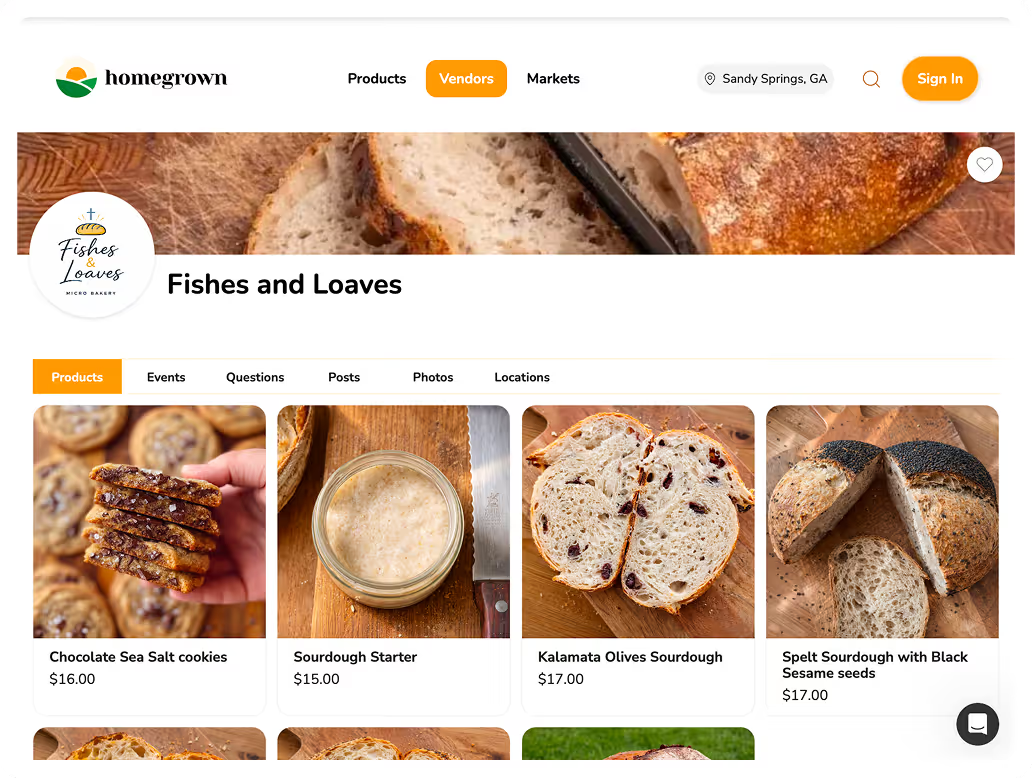
A Homegrown storefront isn't a full website. It's a simple link where customers can see what you're selling, place an order, and pay — all without texting you back and forth.
How it works: You set up a storefront on a platform built for local food vendors. You add your products, set your pickup times and locations, and share the link. Customers order on their own schedule. You get a clean order list and the money goes to your bank. Keep in mind that online sales income is subject to self-employment tax — set aside roughly 30% of your profit for taxes.
What it costs: Platforms range from free (with limitations) to $10-50/month depending on features. Payment processing fees (typically 2.9% + 30 cents per transaction) apply on most platforms.
Best for: Taking orders between market days, building a regular customer base, and eliminating the DM juggle. If you already sell at markets and want your customers to be able to order during the week, this is the upgrade that changes everything.
You don't need to choose between markets and online ordering — they work together. Take pre-orders online during the week, bring those orders to market on Saturday, and sell your remaining inventory to walk-up customers. You start market day with guaranteed revenue already in your bank account.
For platform recommendations, see our guide on the best platform to sell local food online.
Instagram, Facebook, text messages, and good old word of mouth. This is how most food vendors start — and where most get stuck.
How it works: You post photos of your products on social media. Interested customers DM you or text you. You negotiate what they want, when they'll pick up, and how they'll pay. Repeat for every single order.
What it costs: Free, unless you run ads.
Best for: Getting your very first customers and building initial buzz. Social media is excellent for marketing — showing off your products, sharing your story, and building a following.
The main limitation: It doesn't scale. When you have 5 customers, managing orders through DMs is fine. When you have 25, it's a part-time job. You're copying and pasting the same pickup instructions, chasing payments, trying to remember who ordered what, and losing orders in your inbox. Social media is great for marketing but terrible for operations.
The smart move: use social media to find customers, then send them to your Homegrown storefront to actually order and pay.
| Method | Cost | Best For | Main Limitation |
|---|---|---|---|
| Home kitchen (cottage food) | $0-50 permit | Shelf-stable products at small volume | Product restrictions and sales caps |
| Shared/commercial kitchen | $15-30/hour | Products not covered by cottage food | Cost adds up ($800+/month at regular use) |
| Farmers markets | $20-75/market day | Building a customer base, testing products | Limited to market hours (4-5 hrs/week) |
| Homegrown storefront | $10/month | Taking orders between market days | Not built for shipping |
| Social media/word of mouth | Free | Finding first customers, marketing | Does not scale past ~10 regular customers |
The simplest way to take orders is through a Homegrown storefront link — one URL where customers see your products, order, and pay. The biggest operational headache for food vendors without retail locations isn't making food — it's managing orders.
When you're taking orders through texts, DMs, and in-person conversations, every sale requires multiple back-and-forth messages: What do you want? When do you need it? How will you pay? Where will you pick up? And then you're tracking all of that in your head, in a notebook, or in a spreadsheet that's already out of date.
What you actually need is simple:
A shareable link — one URL you can text to regulars, post on Instagram, hand out at the market, or print on a business card.
Payment processing — customers pay when they order. Money goes to your bank. No more Venmo requests, no more "I'll pay you at pickup," no more chasing people down.
Pickup scheduling — you set when and where customers pick up (your house, the market, a parking lot — whatever works). Customers choose from your available times when they order.
That's the entire technology requirement. You don't need a full website, you don't need a Shopify store, and you don't need to learn web design. You need a link that lets people order and pay.
Homegrown costs $10/month with no percentage fees beyond standard payment processing (2.9 percent plus $0.30 per transaction). Etsy charges 6.5 percent per transaction and is built for shipped craft products, not local pickup orders. Square Online offers a free tier but charges 3.3 percent and lacks dedicated pickup scheduling. Homegrown does not build you a full website, ship your products, or manage your social media marketing — it handles the ordering, payments, and pickup coordination that replace your DM workflow.
You need permits for your state, a kitchen setup, packaging and labels, a way to take orders, and optionally insurance. Whether you sell from your home kitchen, a shared kitchen, or a farmers market booth, here's the baseline of what you need:
Permits and licenses. At minimum, check your state's cottage food law requirements. Most states require a simple registration or permit. If you're selling at farmers markets, the market may require a food handler's card or proof of insurance. If you're using a shared kitchen, you'll likely need a business license. The SBDC in your area can help you navigate local permit requirements for free.
A kitchen setup. For cottage food, your home kitchen works. Keep it clean, follow your state's guidelines, and maintain any required records. For higher volume or restricted products, find a shared kitchen.
Packaging and labeling. Most states require cottage food products to include your name, address, a "made in a home kitchen" disclaimer, ingredients list, and allergen information. Requirements vary — check your state's specific rules.
A way to take orders. Start with whatever works — texts, DMs, a sign-up sheet at the market. But as soon as you have more than a handful of regular customers, get an online storefront set up. The time you save on order management is worth far more than the monthly cost.
Insurance (optional but recommended). A basic product liability policy typically costs $200-500/year and protects you if someone claims your food made them sick. Many farmers markets require it. It's not legally mandatory in most cases for cottage food, but it's smart protection.
It depends on your state and how much you're selling. Many states allow cottage food sales with just a simple registration — no business license required. However, if you're selling regularly and treating it as a business (which you should, even part-time), getting a basic business license is usually cheap ($50-100) and gives you legitimacy. Check your state and local requirements.
It varies enormously. Part-time cottage food vendors often make $500-2,000 per month selling at one or two markets per week plus online orders. Full-time vendors using shared kitchens and multiple sales channels can make $3,000-8,000+ per month. Your income depends on your products, pricing, customer base, and how many hours you put in. The ceiling is much higher than most people expect.
Yes — you can market and take orders through social media. The question is whether you should. For your first few customers, DMs work fine. But social media is designed for marketing, not for managing orders. As you grow, you'll want to direct customers to an online storefront where they can order and pay without back-and-forth messaging. The storefront doesn't replace your Instagram — it replaces the DM conversations.
Most states don't legally require insurance for cottage food sales, but many farmers markets do require proof of product liability coverage. Even if it's not required, a basic policy ($200-500/year) protects you if someone files a claim. As your sales grow, insurance becomes more important — not less.
Most states allow you to sell shelf-stable baked goods, jams, honey, candy, granola, and dry mixes from your home kitchen under cottage food laws without a commercial license. The specific list of allowed products varies by state. Check your state's cottage food law for the full list of what qualifies.
Set up a Homegrown storefront, add your products, and set your farmers market as a pickup location. Share the link with your customers during the week. They order and pay online, and you bring their orders to the market on Saturday. Pre-orders eliminate waste and guarantee revenue before you start baking.
Yes. Cottage food laws allow year-round sales in most states. While farmers markets are seasonal in many areas, online ordering through a Homegrown storefront, home pickup, and social media marketing work all year. Many vendors actually do better in the off-season because they have built a regular customer base during market season.
For more on selling food from your own kitchen, see our guide on how to sell food online.
The bottom line: you don't need a storefront, a restaurant, or a retail lease to sell food. You need a kitchen, the right permits for your state, and a way for customers to order and pay you. Start with whatever setup works right now — your home kitchen, a Saturday market, a shared link on Instagram — and add structure as you grow. If budget is a concern, our guide on starting a food business from home with no money breaks down how to launch with less than $100.
Ready to take orders without a storefront? Homegrown gives you a simple online storefront where local customers can see what's available, order, and pay — all in one link. Set it up in 15 minutes and share it with your regulars today.