

You already know how to make food people love. The problem isn't your recipe or your product. It's that managing orders through DMs, texts, and Venmo requests is eating your evenings alive.
Every "how to sell food online" guide on the internet tells you to write a business plan, find a supplier, and set up a Shopify store. That advice is built for someone launching a nationwide food brand from scratch. It's not built for you — the jam maker at the Saturday farmers market, the cottage baker filling orders from your kitchen, or the hot sauce vendor whose phone blows up every Wednesday with "can I get 3 bottles this week?"
This guide is different. It's for local food vendors who already have customers and need a better system to take orders and get paid. No shipping infrastructure. No $300-a-month software. Just practical steps you can finish in a weekend.
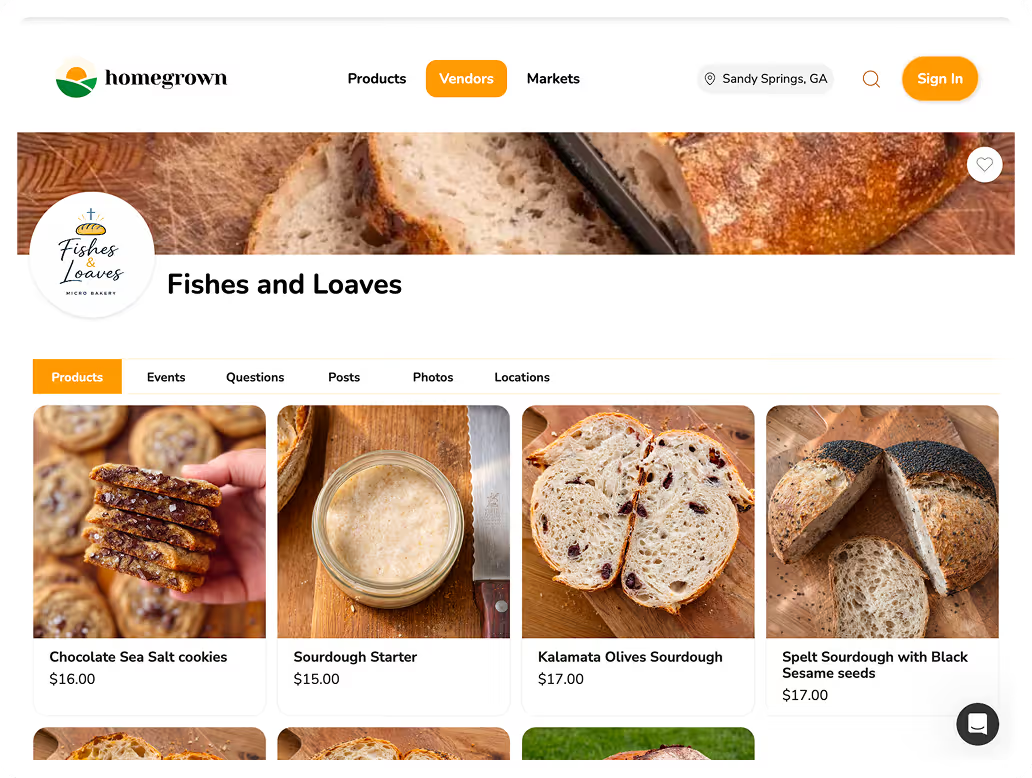
The short version: To sell food online as a local vendor, you need to check your state's cottage food laws, pick a simple storefront platform like Homegrown, add your best-selling products, set up local pickup, and share your ordering link with existing customers. Most vendors can be up and running in under an hour — no website, shipping, or tech skills required. The goal is not to build an e-commerce empire; it's to move your existing orders out of DMs and into a system that handles payments and scheduling automatically.
DMs and texts stop working because they turn order management into a second unpaid job. If you've been selling food for more than a few weeks, the pattern is familiar. Someone messages you on Instagram asking what's available. You reply with your list. They pick three things. You tell them the total. They Venmo you — maybe. You write the order in a notebook or a note on your phone. Repeat this fifteen times and your Wednesday night is gone.
At five customers, this works. At twenty, it becomes a second job. Here's what starts breaking down:
Direct-to-consumer food sales reached $17.5 billion in 2022, a 25 percent increase since 2017. The demand for locally made food isn't the bottleneck. The ordering process is.
Here's the bigger issue: you can only take orders when you're actively checking messages. That means customers can only buy from you when you happen to be staring at your phone.
If someone wants to order your cinnamon rolls at 11 p.m. on a Tuesday, they can't. They might remember to message you tomorrow — or they might not.
An online ordering system flips that. Customers browse what you're offering, place an order, and pay. All without you being involved. You check your orders in the morning and know exactly what to make.
For vendors who sell at farmers markets, an ordering system also captures sales between farmers market days. Your regulars want your products on Wednesday, not just Saturday. That's revenue you're leaving on the table every single week.
Every state has cottage food laws, and checking yours is the first step before you sell food online. These laws allow you to sell certain homemade foods — they typically cover shelf-stable products like baked goods, jams, jellies, honey, candy, dry mixes, and sauces. Eight states — including California, Texas, and Utah — also allow some refrigerated products as of 2025.
Revenue caps vary widely by state:
| State | Annual Revenue Cap |
|---|---|
| Florida | $250,000 |
| Texas | $150,000 |
| California (Class B) | $172,000 (inflation-adjusted) |
| New York | No cap |
To find your state's rules, search for "[your state] cottage food law" or check your state's Department of Agriculture website. The Institute for Justice maintains a good overview of recent state reforms.
Here's the practical part: if you're already selling at a farmers market, you've likely already met most of these requirements. You probably have a food handler's certificate and know which products you're allowed to sell. Moving those sales online doesn't change what you're allowed to make — it just changes how customers order it. See Penn State Extension's food safety training resources for additional context — and pricing your products for a farmers market can help with that.
Start with your best-selling products — the ones people ask about between farmers markets or request through DMs most often. Not everything from your farmers market table needs to go online right away.
Think about what works well for pickup timing:
You can always add more products later. Starting with three to five of your most popular products gets you online faster and keeps things manageable while you figure out the workflow.
Your online prices should match or be slightly higher than your farmers market prices. A small price bump to cover platform fees is completely reasonable because you're providing convenience — customers can order from their couch at midnight instead of standing in line on Saturday morning.
Here's a quick way to think about it. If a platform charges 3 percent on transactions and you sell a jar of jam for $12, you're paying about 36 cents per jar. That's less than the gas money most vendors spend driving to a farmers market.
Don't underprice your online products to attract orders. Your existing customers already know your product is worth what you charge. They're not shopping for the cheapest jam on the internet. They want your jam, ordered in a way that doesn't involve texting you at 9 p.m.
A simple storefront platform is the right starting point for most local food vendors. You already have customers — you just need a better way for them to order. There are three types of platforms for selling food online, and they serve very different vendors.
| Platform Type | Monthly Cost | Transaction Fees | Best For |
|---|---|---|---|
| Simple storefronts (e.g., Homegrown) | $10–20/month | ~2.5–3% card processing | Local vendors doing under $3,000/month who need orders and payments handled |
| Website builders (e.g., Shopify, Square Online) | $30–80/month | Varies by plan | Vendors planning to scale beyond local sales or wanting a branded website |
| Marketplaces (e.g., Etsy, Amazon Handmade) | Free to list | 6.5–15% per sale + fees | Vendors who need to find brand-new customers |
For a deeper comparison of specific platforms and pricing, check out our best platforms for selling food online guide.
You don't need professional photography — a phone camera and natural light will get you 90 percent of the way there. Here's what to include for each product:
Local vendors have a massive advantage over anyone trying to ship food — your customer drives five minutes and picks up their order. You don't need packaging supplies, shipping labels, or cold-chain logistics.
Customers pay when they order — that's the biggest quality-of-life upgrade you'll get from selling food online. No more Venmo requests that go unanswered for three days. No more cash at pickup where someone shows up $2 short. No more tracking who paid and who didn't in a spreadsheet.
Most Homegrown storefront platforms include built-in payment processing. The customer enters their card when they place the order, and the money goes straight to your bank account, usually within a few business days. Transaction fees run around 2.5 to 3 percent — standard for any card payment. See USDA organic certification requirements for additional context.
If a platform makes you set up Stripe or a separate payment processor yourself, that's one more step. It's not hard, but platforms with built-in payments save you the setup time.
Your Homegrown storefront gives you one link — that link is now the single most valuable thing in your marketing arsenal. Here are the best places to share it:
This isn't about marketing to strangers. It's about giving the people who already know and love your food a better way to buy it.
Need more help here? See our guide on the best platform to sell local food online.
Your first online orders should come from people who already buy from you — not from strangers on the internet. The biggest mistake new online vendors make is thinking they need to find new customers. You don't. Not yet. You need to redirect the customers you already have to a system that doesn't involve your DMs.
Here's how to get your first ten online orders:
The goal right now isn't growth. It's getting existing sales out of your message inbox and into a system that handles orders and payments automatically. Growth comes later, once the system is running.
Consistency is what turns an occasional online order into a weekly routine. Set a predictable schedule and stick to it so customers know exactly when and how to order.
Your own Homegrown storefront should be home base — marketplaces work best as a secondary channel for discovering new customers. Here's the honest breakdown.
Marketplaces are good for discovery. If you need to find brand-new customers who don't know you exist, marketplaces put you in front of their audience. That's valuable.
But marketplaces are expensive. Etsy charges listing fees plus a 6.5 percent transaction fee. Amazon Handmade takes 15 percent. Those commissions add up fast on food products where margins are already thin.
| Platform | Fees | Net on a $12 Jar of Jam |
|---|---|---|
| Homegrown storefront | ~3% card processing | ~$11.64 |
| Etsy | 6.5% transaction + listing fees | ~$10.75 |
| Amazon Handmade | 15% referral fee | ~$10.20 |
Sell a hundred jars a month on Etsy and you're giving up $125 compared to your own storefront.
And marketplaces own the customer. When someone buys your jam on Etsy, Etsy gets their email and their attention. That customer might come back to Etsy and find a different jam vendor next time. On your own Homegrown storefront, every customer is yours. You control the relationship.
For most local food vendors, the best approach is straightforward. Set up your own Homegrown storefront first to handle orders from people who already know you. Consider adding marketplace listings later as a bonus channel for new customer discovery.
For a more detailed comparison of platforms, see our best e-commerce platforms for local vendors guide.
No — a Homegrown storefront is not the same as building a full website. Storefront platforms give you a product page and a checkout, which is all most local vendors need. You don't need a homepage, an about page, or a blog. You need a place where customers can see what you're selling, pick what they want, and pay.
If you want a full website someday, you can always add one later. But don't let "I need to build a website first" stop you from getting online. A simple Homegrown storefront gets you taking orders today.
Yes, in most cases. All 50 states have cottage food laws that allow you to sell certain homemade foods directly to consumers. The rules vary by state — what you can sell, how much you can earn, and where you can sell it. The Stripe online payments guide provides additional guidance on accepting payments.
The most commonly allowed products are baked goods, jams, jellies, honey, candies, dry mixes, and sauces. Some states also allow pickled vegetables, roasted nuts, and dried herbs.
If you're already selling at a farmers market, you've likely already met your state's requirements. Selling online through your own Homegrown storefront is just another direct-to-consumer sales channel — the legal requirements are usually the same as selling at a booth.
Most local vendors spend $10-20 per month on a simple storefront platform, plus standard card processing fees of about 2.5-3%. That's the most affordable way to sell food online. Here's how the options compare:
For a local vendor doing $1,000-2,000 per month, a $10-20 Homegrown storefront pays for itself with just a few orders. The comparison gets even better when you factor in the time you save not managing DMs and chasing payments.
If you can post on Instagram or send a text, you can set up a Homegrown storefront. The platforms built for local vendors are designed to be simple on purpose. You're not writing code or designing a website. You're adding products, setting prices, and choosing pickup times.
Most vendors are fully set up and taking orders within an hour. If you get stuck, most platforms have support teams that will walk you through it.
Shelf-stable products tend to sell best online because they don't require tight pickup windows. The top-selling categories for local vendors who sell food online include:
Start with whatever your customers already ask about between farmers markets. Those are the products people want to order on their own schedule.
It depends on your state and what you're selling. Most vendors selling shelf-stable products from a home kitchen fall under cottage food laws, which typically require a food handler's certificate but not a full commercial food license. If you're already selling at a farmers market, you likely have the permits you need. Check your state's Department of Agriculture website for specific requirements that apply when you sell food online.
Absolutely — and you should. Your farmers market customers are your best first online customers. Setting up a Homegrown storefront lets your regulars order between farmers market days instead of waiting until Saturday. You keep selling the same products under the same cottage food rules; the only thing that changes is that customers can order and pay through your storefront link instead of messaging you directly.
You don't need to build a brand, write a business plan, or figure out nationwide shipping. You're already making food people love. You just need a link your customers can order from.
Check your state's cottage food laws. Pick a simple platform. Add your best-selling products. Share the link with the people who already buy from you. You can be taking online orders by this weekend.
Ready to set up your Homegrown storefront? Homegrown helps local food vendors get a Homegrown storefront live in 15 minutes — orders, payments, and pickup all handled. Try it free.