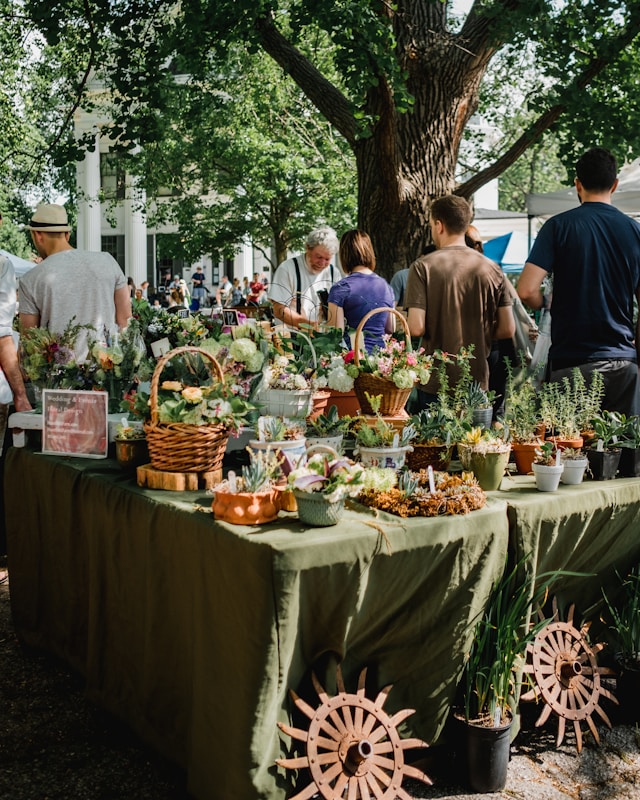


Fresh produce is the top-selling category at summer farmers markets, followed by baked goods, preserved foods, cut flowers, and honey. For more warm-weather strategies, see our farmers market summer tips. But the real question for vendors is not just what sells — it is what sells in the heat. Products that do well in spring and fall (buttercream cakes, chocolate, fudge) become liabilities in June through August. Holiday weekends drive major foot traffic — see our fourth of july food vendor sales guide.The vendors who do best in summer are the ones who adjust their lineup to match the season, both in flavor and in heat tolerance.
A national survey of 5,141 farmers market shoppers found that 80 percent of Americans visit a farmers market at least once a year, and 41 percent are frequent visitors who go six or more times. Summer is when that traffic peaks — 85 percent of annual farmers market attendance happens between June and August. This guide breaks down what actually sells during those three months so you can stock your booth with the right products.
The short version: Fresh produce, dry baked goods (cookies, scones, breads), berry and stone fruit jams, cut flowers, and honey are the top sellers at summer farmers markets. Products with buttercream, chocolate, fudge, or cream cheese frosting fail in summer heat — butter melts at 85 degrees. Adjust your lineup monthly: cherries and strawberries peak in June, heirloom tomatoes and peaches peak in July, and sweet corn and watermelon dominate August. The impulse buy sweet spot is $3 to $8 items that customers grab without overthinking.
Summer markets have the highest foot traffic and the highest average spend of any season. Farm market gross sales rose 17 percent in 2023, with customer counts up 11 percent — and summer drives the majority of that growth. Here is how each product category performs.
Fresh produce is the number one draw at every summer farmers market. The key to selling produce well is offering what is in peak season that week, not what you can grow in bulk.
Top summer produce sellers:
Heat is the defining challenge for baked goods vendors in summer. Butter melts at 85 degrees, which means anything with buttercream frosting, chocolate coating, or cream cheese icing becomes a liability on a hot market day.
What sells well in summer heat:
| Product | Why It Works | Price Range |
|---|---|---|
| Cookies (no frosting) | Shelf-stable, no melt risk | $2-$4 each |
| Scones and muffins | Berry varieties match the season | $3-$5 each |
| Breads and dinner rolls | Heat-stable, pairs with seasonal produce | $5-$8 per loaf |
| Brownies (unfrosted) | Dense structure holds up | $3-$5 each |
| Granola and trail mix | Zero heat risk, long shelf life | $8-$12 per bag |
| Lemon bars | Summer flavor, no frosting needed | $3-$5 each |
| Savory crackers | Herb-forward (rosemary, thyme) | $6-$10 per bag |
| Biscotti | Twice-baked = virtually indestructible | $2-$4 each |
What fails in summer heat:
If you sell frosted products year-round, consider switching to an all-shortening frosting for summer months, or pivot to unfrosted options entirely.
Jams, preserves, and honey are ideal summer products because they are shelf-stable, heat-resistant, and align with peak fruit season. Customers buying fresh peaches at the market will also buy peach jam.
Best-selling summer jam flavors:
Summer-aligned preserved products:
Frame these products for summer use cases at your booth: peach jam for grilling, pepper jelly for a cheese board, corn relish for burgers. The use case sells the product.
Cut flowers are one of the highest-margin categories at summer markets. Well-managed flower farms earn $25,000 to $30,000 per acre through direct sales, and weekly vendor revenue ranges from $500 to $2,000.
Top summer cut flower varieties:
The strategy for flower vendors is to pair common varieties (zinnias, cosmos) with a statement flower (dahlia, lisianthus) to differentiate from produce vendors who casually sell $3 zinnia bunches on the side.
Honey is one of the highest-margin products at any farmers market. Local raw honey sells itself — the "local" angle and allergy-season demand create year-round sales, but summer is peak. Offer infused varieties (lavender, cinnamon) and extension products (beeswax candles, lip balm) to increase average transaction size.
Lavender products peak in summer demand: bundles, sachets, culinary lavender, and lavender honey.
Handmade soap with summer scents (citrus, mint, lavender) moves well as an impulse add-on purchase at $4 to $8 per bar.
If you are deciding what to sell for the first time, our guide on how to decide what to sell at your first farmers market walks through the full decision process.
Summer is not one block — what sells shifts significantly from June to August. Planning your inventory around these monthly shifts keeps your booth feeling fresh and gives customers a reason to come back every week.
June is the transition from spring to summer. Early-season products command premium pricing because supply is still limited.
Peak June products:
For bakers and preserved food vendors: Strawberry products are still in high demand. Cherry jam and cherry hand pies have a narrow window — capitalize on it.
July is the highest-traffic month at most farmers markets. Heirloom tomatoes, peaches, and sweet corn arrive, and customers show up in force.
Peak July products:
For bakers and preserved food vendors: Peach products take center stage — peach jam, peach scones, peach hand pies. Blueberry products are also at peak demand.
August is the abundance month. Nearly everything is available at once, which means prices drop for common items but variety sells.
Peak August products:
For bakers and preserved food vendors: Tomato-based products emerge — tomato jam, salsa (if your state allows it under cottage food). Late-summer berry jams. Start teasing fall flavors in the last week of August to build anticipation.
Try Homegrown free for 7 days to set up your online ordering page and let customers order their favorite summer products between market days.
Not every region follows the same summer timeline. Here is a quick reference for the four major market regions.
| Product | Southeast | Midwest | Northeast | Pacific NW |
|---|---|---|---|---|
| Peaches | Peak June | Peak July-Aug | Peak Aug | Peak July-Aug |
| Tomatoes | June-Aug | July-Aug | Late July-Aug | Late July-Aug |
| Sweet corn | June-July | July-Aug (peak) | Aug | Aug |
| Berries | May-July | June-Aug | June-Aug | June-Aug |
| Watermelon | June-Aug | July-Aug | Late July-Aug | Aug |
| Apples | Late Aug | Late Aug | Late Aug | Sept |
Southeast note: Extreme summer heat means some vendors enter a production gap in July and August when spring crops are done and fall crops have not started. If this applies to you, lean into preserved foods and baked goods during the gap.
Pacific Northwest note: The PNW has exceptional berry diversity. Walla Walla sweet onions (Washington) and hazelnuts (Oregon) are regional standouts that command premium prices.
Some products are not worth the effort in June through August. As Modern Farmer's vendor guide notes, experienced vendors adjust their lineup seasonally rather than fighting the weather.
Skip these in summer unless you have active cooling:
Products that are naturally heat-proof:
If you want to keep selling heat-sensitive products, some vendors use a display case with mesh-backed ice packs and a small fan — a low-cost non-electric cooling system that has kept products intact in 90-degree heat. But most vendors find it simpler to pivot their lineup.
Summer is the highest-revenue season for farmers market vendors. Here is how the numbers break down.
| Metric | Summer Data |
|---|---|
| Share of annual market attendance | 85% |
| Average household spend per visit | $32 (2023) |
| Couples spend per visit | $45 average |
| Impulse buy share of sales | 28% |
| Average impulse purchase | $9 |
| Farm market gross sales growth (2023) | +17% year over year |
| Customer count growth (2023) | +11% year over year |
Peak traffic timing: The highest transaction totals happen at market opening. Totals decline as the morning progresses. Saturday markets draw the most traffic — 97 percent of surveyed shoppers attended Saturday markets, compared to only 17 percent for weekday markets.
The July 4th bump: Multiple markets hold special events around Independence Day, driving traffic spikes. Grilling and BBQ-adjacent products (spice rubs, pepper jelly, corn relish, herb bunches for grilling) sell especially well that week.
Rainy day effect: Rain cuts attendance by roughly 45 percent, but the customers who show up spend about 25 percent more. Stock less volume on rainy days but keep your full product range available.
If you are adjusting your lineup for summer, here is a practical framework.
Do not overhaul your entire booth for summer. Keep your top 3 to 5 products that sell year-round, then add 2 to 3 seasonal items.
Bring a small batch of 10 to 15 units of a new summer product alongside your proven sellers. If you need help with this process, read our guide on how to test a new product at the market without committing to a full batch.
The summer impulse buy sweet spot is $3 to $8. Products in this range — single cookies, small jam jars, herb bunches, soap bars, honey sticks — get purchased without deliberation. Have at least 2 to 3 items in this price range at the front of your booth.
Bundle products around a summer use case:
Bundles increase your average transaction size and give customers a reason to buy more than one product.
Change at least one product or flavor each week. Customers who visit every Saturday need a reason to stop at your booth instead of walking past. A new flavor, a seasonal special, or a limited-run product creates that reason.
Start your free trial at Homegrown to create your online ordering page so customers can order their favorite summer products from you all week — not just on market day.
Fresh heirloom tomatoes are the single biggest draw at summer markets, with peak sales in July and August. They sell for $3 to $6 per pound, and customers specifically seek out varieties they cannot find at grocery stores. For non-produce vendors, dry cookies and jams are the top-selling cottage food products in summer.
Cookies without frosting, scones, breads, muffins, brownies, granola, lemon bars, and biscotti all hold up well in summer heat. Avoid anything with buttercream, chocolate coating, cream cheese frosting, fudge, or caramel — butter melts at 85 degrees, which is a typical summer market temperature.
Average weekly vendor revenue varies by market size and location, but industry benchmarks show summer is the highest-revenue season. The average household spends $32 per market visit, couples spend $45, and farm market gross sales grew 17 percent year over year in 2023. Your revenue depends on your product mix, pricing, and market traffic.
Berry flavors (blueberry, blackberry, raspberry, strawberry) and stone fruit flavors (peach, cherry, plum) dominate summer demand. Lemon, lavender, and fresh herb flavors (basil, rosemary) also perform well. Save heavy fall flavors like pumpkin, apple cider, and cinnamon for September.
Yes. The most successful vendors adjust their lineup seasonally. This does not mean a complete overhaul — keep your proven year-round sellers and add 2 to 3 summer-specific items. Drop any products that struggle in heat, and add seasonal flavors that match what is fresh at the market that month.
The highest transaction totals happen at market opening. Sales decline steadily through the morning. Arrive early, be fully set up before the market opens, and have your display and samples ready for the first wave of shoppers. Saturday markets draw dramatically more traffic than weekday markets.
For products that need cooling, use a display case with mesh-backed ice packs and a small battery-powered fan. This low-cost setup keeps products intact in 90-degree heat without electricity. For most vendors, the simpler approach is to pivot your product lineup to heat-stable items from June through August.
If you are getting ready for the season, read our full guide on how to prepare your food business for market season opening for the complete preparation checklist.
Start your free trial at Homegrown to set up your online ordering page before summer markets start and let customers find you between market days.