

The Fourth of July is the single biggest outdoor eating day of the year. Americans spent $9.4 billion on food for the holiday in 2024, with 86 percent of the country celebrating and 66 percent attending a picnic or cookout. The average person spends $92 on food for the Fourth alone. For cottage food vendors and farmers market sellers, this is a concentrated, high-traffic selling opportunity — especially because shelf-stable baked goods have a massive practical advantage over perishable foods in summer heat.
The key is choosing the right products, the right venue, and starting early enough. Community event vendor applications close 6 to 8 weeks before the holiday, and the best booth spots go fast. This guide covers patriotic product ideas, the two sales channels that work for small vendors, heat-safe product selection, pricing with the holiday premium, temporary event permits, and the full marketing timeline from May through July 4th.
The short version: Fourth of July food sales for cottage food vendors center on patriotic-themed baked goods — red-white-blue decorated cookies, cupcakes, chocolate bark, and cake pops. Shelf-stable products have a major advantage at outdoor summer events because they do not require refrigeration. You have two sales channels: your regular farmers market (20 to 40 percent more traffic on holiday weekend) and community event booths (5 to 10 times larger crowds but requiring a temporary food permit and $50 to $500 booth fee). Apply for community event booths by mid-May. Charge a 10 to 20 percent holiday premium on themed products. Pre-sell 2 to 3 weeks ahead to guarantee a sales floor.
Patriotic-themed baked goods are the top-selling cottage food products for July 4th because they are visually obvious, shelf-stable in summer heat, and easy to eat with one hand at a picnic. The best products require minimal decoration to look festive — red, white, and blue colors do most of the work.
| Product | Price Range | Production Speed | Heat Stability | Best For |
|---|---|---|---|---|
| Decorated sugar cookies (stars, flags) | $3-$6 each | Slow | Excellent | Pre-orders, gift bags |
| Red-white-blue cupcakes | $4-$6 each | Medium | Good (buttercream) | Market booth, events |
| Patriotic chocolate bark | $6-$10/bag | Very fast | Fair (keep in shade) | Impulse buys, add-ons |
| Cake pops (red, white, blue) | $3-$4 each | Medium | Good | Kids, individual treats |
| Cookie bars with M&Ms | $3-$5 each | Very fast | Excellent | Volume sales, easy to cut |
| Fudge in star molds | $5-$8/piece | Fast | Fair (keep in shade) | Unique, premium feel |
| Berry jam (patriotic label) | $8-$12/jar | Fast | Excellent | Market regulars, host gifts |
| Snickerdoodles with sprinkles | $2-$3 each | Very fast | Excellent | Grab-and-go, low price point |
If you are short on time, these require the least labor per unit:
Summer heat is the practical constraint for Fourth of July food sales. At outdoor temperatures above 90 degrees, perishable foods are only safe for 1 hour.
Products to avoid at outdoor summer events:
Products that are safe outdoors:
Cottage food products are almost entirely shelf-stable by definition, which gives you a competitive advantage over vendors selling perishable items at outdoor events.
You have two distinct sales channels for the Fourth of July, and they work differently.
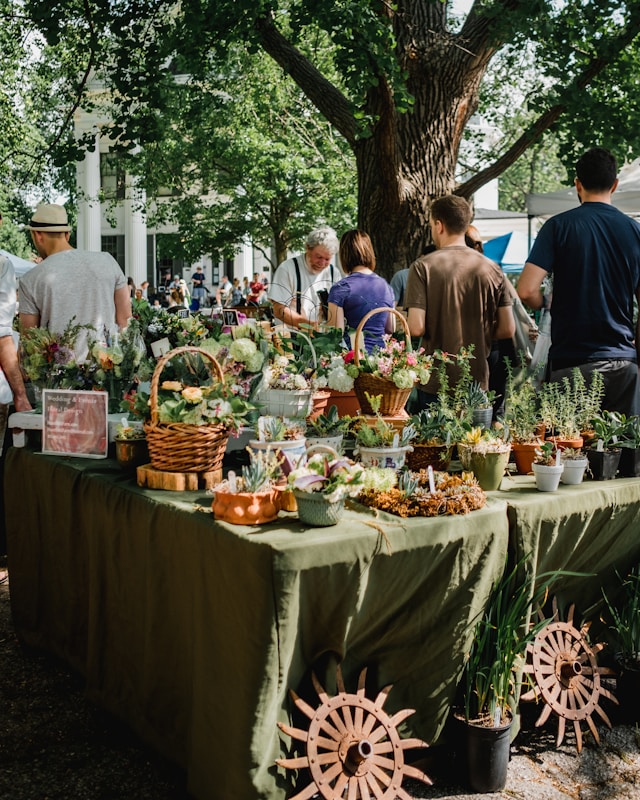
Your regular farmers market likely draws 20 to 40 percent more traffic on the weekend closest to July 4th. This is the easier option because you already have a booth, know the setup, and have regular customers.
Community fireworks events, parades, and block parties draw 5 to 10 times more people than a typical farmers market. A mid-size community fireworks event draws 12,000 to 70,000 people.
A booth fee of $150 sounds expensive until you run the numbers. If you bring 200 decorated cookies priced at $4 each, your gross revenue potential is $800. Subtract $150 for the booth, $100 for ingredients and packaging, and you clear $550 from a single afternoon. Even selling half your inventory yields $250 in profit after costs.
The American Farm Bureau reported that cookout costs have risen 30 percent since 2019, with ground beef up 11 percent and even lemonade up 12 percent year over year. Your $4 decorated cookie is no longer an impulse luxury — it is competitively priced against the rising cost of everything else at the cookout.
Selling at a community event is not the same as selling at your regular farmers market. Most jurisdictions require a separate Temporary Food Establishment (TFE) permit for public events, even if you already have a cottage food registration.
The New York State Department of Health's guidance on temporary food events outlines the standard framework that most states follow:
It depends on your state and the event:
If you are new to cottage food rules, read our guide on how to start a cottage food business for the basics on what is allowed in your state.
Fourth of July marketing for food vendors starts earlier than most vendors expect — not because the holiday is far away, but because community event applications have early deadlines.
Mid-May (6-8 Weeks Out): Apply for Booths
Early June (4 Weeks Out): Finalize Products and Start Teasing
Mid-June (2-3 Weeks Out): Open Pre-Orders
Late June (1 Week Out): Final Push
July 3-4: Sell
Try Homegrown free for 7 days to set up your Fourth of July pre-order page and let customers browse, select, and pay before you bake.
Holiday-themed products command a premium. The same cupcake that sells for $3 at your regular market sells for $4 to $5 with red-white-blue frosting and a flag topper at a July 4th event. Customers expect to pay more for themed items at a holiday celebration.
| Product | Regular Price | Fourth of July Price | Premium |
|---|---|---|---|
| Plain cupcake | $3.00 | $4.00-$5.00 | 33-67% |
| Decorated cookie | $3.50 | $4.50-$6.00 | 29-71% |
| Cake pop | $2.50 | $3.00-$4.00 | 20-60% |
| Cookie bar | $3.00 | $3.50-$5.00 | 17-67% |
| Chocolate bark (bag) | $6.00 | $7.00-$10.00 | 17-67% |
Heat is the biggest practical challenge for selling food at Fourth of July events. The key is choosing heat-stable products and managing your display.
Start your free trial at Homegrown to set up your summer pre-order page with product photos, descriptions, and automatic payment collection.
A single community event can generate $500 to $1,500 in revenue if you maximize volume, speed, and average order value.
A cottage food vendor with 200 items priced at $4 each has a gross revenue potential of $800 from a single event. After a $150 booth fee and $100 in ingredients and packaging, that is $550 in profit. Vendors at large community events with 10,000 to 50,000 attendees can gross $1,000 to $1,500 if they bring enough inventory and price appropriately.
Patriotic-themed baked goods — red-white-blue decorated cookies, cupcakes with flag toppers, chocolate bark with star sprinkles, and cake pops in red, white, and blue candy melts. Anything that looks festive, is easy to eat with one hand, and does not require refrigeration. Grab-and-go items at the $3 to $5 price point sell fastest at events.
In most jurisdictions, yes. Public community events require a Temporary Food Establishment (TFE) permit, which is separate from your cottage food registration. Applications typically require a form, fee, proof of insurance, and food handler certification. Apply 4 to 6 weeks before the event — some deadlines close as early as April or May.
Shelf-stable baked goods (cookies, bars, brownies, quick breads) are safe at any outdoor temperature. Buttercream cupcakes hold in shade up to about 90 degrees. Chocolate and fudge soften above 85 degrees but remain safe — display in small batches and store the rest in a cooler. Never bring cream cheese frosted, custard-filled, or whipped cream items to outdoor summer events.
Apply by mid-May at the latest. Many community events close vendor applications 6 to 8 weeks before the holiday. Fort Worth's applications close April 30. Smaller events may accept applications through mid-June, but the best booth locations go first. Search for "July 4th vendor application" plus your city or county to find open events.
Both work, and ideally you do both. Your regular farmers market is easier — you already have the booth and the customers, and holiday weekends draw 20 to 40 percent more traffic. Community events are higher effort (permit, higher fee, logistics) but offer 5 to 10 times the crowd. If you can only choose one, pick the one with higher foot traffic relative to the booth fee.
Chocolate bark and fudge soften above 85 degrees but do not become unsafe. Display 5 to 6 bags or pieces at a time and keep the rest in a cooler with ice packs. Set up under a pop-up canopy for shade. Chocolate re-hardens when cooled, so softening is a display issue, not a safety issue.
The Fourth of July is not just a holiday — it is a $9.4 billion food event. Cottage food vendors who show up with patriotic-themed, heat-stable, grab-and-go products at the right price point can clear $500 to $1,500 in a single afternoon. Start your booth applications in May, open pre-orders in June, and bring more inventory than you think you need.
Start your free trial at Homegrown to create your Fourth of July pre-order page and start collecting orders before the holiday rush.