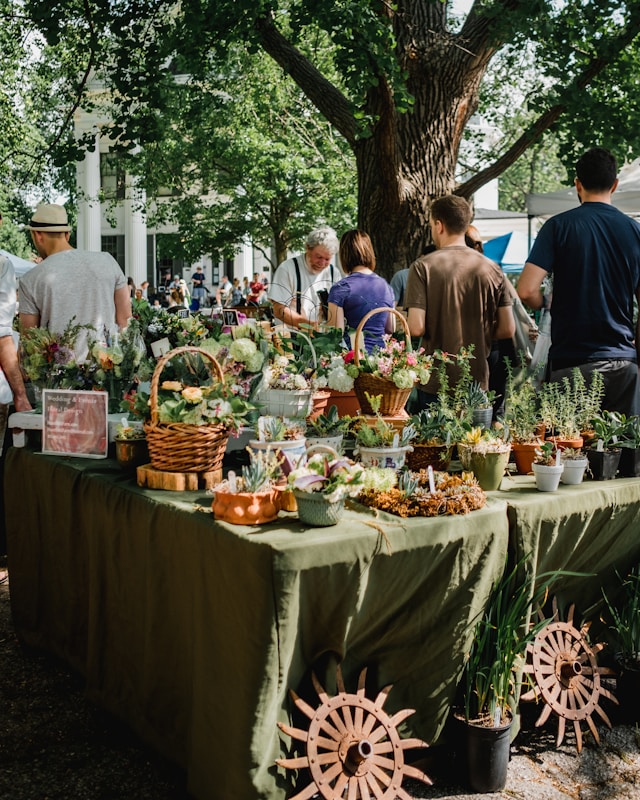


Summer is peak season for farmers markets — and the most physically demanding time of year for vendors. The crowds are bigger, the sales are higher, and the heat can be brutal.
The National Weather Service classifies heat as the leading weather-related killer in the United States. And OSHA data shows that 50 to 70 percent of outdoor heat fatalities happen in the first few days of working in warm environments. For market vendors, that means the opening weekends of summer season are actually your highest-risk days.
This guide covers everything a cottage food vendor needs to survive summer market days — protecting yourself from heat exhaustion, keeping your products safe and sellable, setting up your booth for maximum shade, and packing the right gear so you're ready for anything.
The short version: Summer markets are your biggest revenue opportunity, but heat creates real risks for both you and your products. Stay hydrated (1 gallon of water per person minimum), set up your canopy to block the sun's path, keep temperature-sensitive products in coolers and only display what you can sell in the next hour, and know the signs of heat exhaustion so you can act fast. Bacteria double every 20 minutes in the 40-140 degree danger zone, so the 2-hour food safety window drops to just 1 hour when temperatures exceed 90 degrees. Arrive early, pack smart, and never trade your health for one more hour of sales.
Summer brings the highest foot traffic and the biggest sales days of the year, but it also puts your body and your products under serious stress. Temperatures at outdoor markets regularly hit 90 to 100 degrees, and pavement and asphalt can push ground-level heat even higher.
The danger is twofold. First, you're standing in direct or near-direct sun for 4 to 6 hours, often while doing physical work — lifting coolers, rearranging displays, and engaging with customers nonstop. Second, your products are sitting in the same heat, and food safety rules tighten dramatically when temperatures rise.
Most vendors treat summer as "business as usual with sunscreen." That's not enough. Summer requires different prep, different packing, different booth setup, and a different mindset about when to stop selling.
Heat affects cottage food products differently than produce or crafts. Here's what happens to common cottage food items when temperatures climb:
Knowing which of your products are heat-vulnerable lets you plan your display, packing, and production around the forecast.
Personal safety comes first. You can't sell products if you're dizzy, nauseous, or passed out behind your booth. Heat-related illness is preventable, but only if you take it seriously before symptoms start.
Heat exhaustion is the stage before heat stroke, and catching it early is critical. Watch for these symptoms in yourself and anyone helping you:
If you notice any of these, stop selling immediately. Move to shade, drink cool water, apply wet cloths to your skin, and rest. If symptoms don't improve within 15 minutes, or if you develop confusion, a rapid pulse, or stop sweating entirely, that's heat stroke — call 911.
Start hydrating the night before market day, not the morning of. By the time you feel thirsty, you're already mildly dehydrated.
One gallon sounds like a lot until you're four hours into a 95-degree market day. Bring more than you think you need.
What you wear directly affects how your body manages heat:
Your canopy is your single most important summer tool. A well-positioned canopy can drop the temperature at your booth by 10 to 15 degrees compared to direct sun. For a complete setup guide, see our walkthrough on how to set up a farmers market tent.
How you arrange your table matters more in summer than any other season:
Food safety is the non-negotiable part of summer selling. Bacteria can double every 20 minutes in the temperature danger zone between 40 and 140 degrees Fahrenheit. That growth rate means a product that was perfectly safe at 8 a.m. can become a safety concern by 10 a.m. if it's sitting in direct heat.
For a deeper dive into temperature rules and cottage food safety requirements, see our food safety guide for cottage food businesses.
The standard food safety rule says perishable food should never sit out for more than 2 hours at ambient temperature. But when the air temperature exceeds 90 degrees, that window drops to just 1 hour.
This matters for cottage food vendors selling:
Most shelf-stable cottage food products (jams, honey, dry cookies, granola, bread) are not considered perishable and aren't subject to the 2-hour rule. But even shelf-stable items lose quality in extreme heat.
For a full breakdown of food temperature safety rules, including safe holding temperatures and how to use a food thermometer at your booth, check out our temperature safety guide.
Not all cottage food products are equal in summer. Plan your production around heat resilience: Wondering what to bring? Here are the best-selling products at summer farmers markets based on real vendor data.
Heat-friendly products (safe to display all day):
Heat-sensitive products (display with caution):
For a full breakdown of what sells best in each season, see our guide on what to sell at farmers markets each season. Leaning into heat-friendly products during summer months simplifies your day and reduces food safety risk.
Use this checklist before every summer market. Missing one item can make the difference between a good day and a miserable one.
Hydration and personal safety:
Product protection:
Booth essentials:
Pack your vehicle the night before so your morning is about setup, not scrambling.
The vendors who handle summer best aren't tougher — they're more strategic. They plan their day around the heat instead of fighting through it.
Night before:
Morning (arrive 60-90 minutes early):
During market:
End of market:
Sometimes the smartest business decision is to leave early:
Your health is worth more than any single market day. You can always come back next week. You can't come back if you're hospitalized for heat stroke.
There's no universal cutoff, but most vendors start struggling above 100 degrees. The more important question is whether you can keep yourself safe and your products at proper temperatures. If you can't maintain hydration, shade, or product safety, it's time to leave — regardless of the exact temperature.
Yes, if you sell any temperature-sensitive products. A simple instant-read food thermometer costs $10-$15 and takes seconds to use. Check your products every 1-2 hours, especially anything with dairy, eggs, or cream-based ingredients. If a product is above 40 degrees and has been out for more than 2 hours (1 hour above 90 degrees ambient), discard it.
You can, but it requires extra planning. Keep chocolate products in a cooler and only bring them out when a customer is ready to buy. For frosted items, use buttercream recipes with a higher sugar-to-butter ratio (they hold up better in heat) or switch to a heat-stable frosting. Some vendors skip chocolate and frosted items entirely during peak summer and focus on products that handle heat without any special handling.
Battery-operated fans, frozen water bottles, cooling towels, and shade management are your main tools. Position your canopy to block peak sun, add a sidewall on the sunny side, and use light-colored surfaces that reflect heat. Some vendors bring a small battery-powered misting fan, which can drop perceived temperature by 5-10 degrees.
Pre-chill products before packing them. Use insulated coolers with frozen gel packs — not loose ice, which melts and creates moisture that damages packaging. Keep coolers in the air-conditioned cab of your vehicle, not in a hot trunk or truck bed. Drive directly to the market without stops, and unload coolers into shade immediately upon arrival.
Bring smaller display quantities and keep the rest in coolers. This reduces waste from heat damage and keeps your displayed products looking fresh throughout the day. You can always rotate stock from your cooler as items sell. Many experienced summer vendors bring 70-80% of their normal quantity and focus on heat-friendly products that don't require special handling.
Arrive 60 to 90 minutes before the market opens. This gives you time to set up your canopy and shade before the sun gets high, arrange your display strategically, and get your coolers positioned in shade. Rushing your setup in full sun means you start the day already hot, dehydrated, and disorganized.
Summer markets are your biggest earning opportunity of the year. The vendors who earn the most aren't the ones who tough it out in the heat — they're the ones who plan for it. Set up your shade early, pack smart, protect your products, and take care of yourself first.
And if you don't have an online presence yet, set up your Homegrown storefront before peak summer season. Pre-orders through your storefront mean less product sitting in the heat — customers buy online and pick up at the market, so you only display what you need to attract walk-up buyers.