

Most food vendors start each year the same way they ended the last one — winging it. They show up at the same markets, make the same products, charge the same prices, and hope for a better result. That's not a plan. That's a habit. Spring planning should include Mother's Day food vendor ideas — it is one of the biggest gifting holidays for baked goods. Late summer brings another opportunity — explore back-to-school food vendor ideas for snack boxes and lunch prep.
Businesses that set goals and track progress grow up to 30% faster than those that operate without a plan. And you don't need a 20-page strategy document to get that advantage. A spring review sets up the rest of your year — use our annual review checklist food business spring. You need a few hours, a notebook, and a simple process you repeat every year.
This guide walks you through a practical annual planning process built for cottage food vendors and farmers market sellers — not restaurants, not food trucks, not corporate kitchens. Just you, your products, and a clearer path to a more profitable year.
The short version: Annual planning for a food business means reviewing last year's numbers, setting a revenue goal, planning your market calendar and product lineup by season, updating your pricing, handling administrative renewals, and scheduling quarterly check-ins to stay on track. Most vendors can complete their annual plan in 2-3 focused hours. The payoff is fewer wasted market days, better product decisions, and a realistic revenue target you can actually hit.
Annual planning is the single most effective habit you can build as a food vendor. People who write down their goals are 42% more likely to achieve them. Businesses that track their progress hit their targets at nearly twice the rate of those that don't.
This isn't about corporate strategy or investor decks. It's about knowing what worked last year, what didn't, and what you'll do differently this time. Even 2-3 hours of intentional planning can change the direction of your entire season.
Without a plan, you repeat the same mistakes. You attend markets that aren't worth the booth fee. You keep making products that sit on the table while your best sellers run out by 10 a.m. You leave money on the table because you never raised prices to match your rising ingredient costs.
Annual planning fixes all of that.
A business plan is a one-time foundational document that defines your business — what you sell, who you sell to, and how you plan to make money. If you don't have one yet, start with our guide on how to write a business plan for your food business.
Annual planning is different. It's a yearly review-and-reset process. You look at what happened, decide what to change, and set goals for the next 12 months. Think of your business plan as the blueprint and annual planning as the yearly inspection that keeps the building standing.
You need both, but annual planning is what keeps you moving forward year after year.
Start with what you know. Pull out your sales records, market receipts, and expense tracking from the past year. If you kept good records, this takes 30 minutes. If you didn't, this is the year you start.
The goal is simple: figure out what made money, what cost money, and what wasted your time.
These are the six numbers every food vendor should know before planning next year:
If you don't have clean expense records, start tracking now. Our guide on how to track your expenses as a food vendor walks you through a simple system.
Numbers tell part of the story. The rest comes from honest reflection:
Write down your answers. You'll reference them when you set goals for the year ahead.
Start with last year's total revenue and decide what you want this year to look like. Do you want to grow? Maintain? Scale back to reduce stress? There's no wrong answer, but you need a specific number to aim for.
Here's a simple formula that works for most cottage food vendors:
If your average revenue per market day was $300 last year and you plan to attend 25 market days, that's $7,500 from markets alone. Add $1,500 from online orders and $1,000 from holiday markets, and your target is $10,000.
That's a real, measurable goal you can track throughout the year.
If you don't have last year's data, use these benchmarks to set your starting target:
First-year vendors who track their numbers consistently set dramatically better goals in year two.
Your market calendar is the backbone of your annual plan. It determines how many selling days you have, how much revenue is possible, and how much prep work you need to do.
Markets open 7 or more months per year average $57,290 in monthly vendor sales, compared to just $20,770 for markets open 6 months or less. Longer seasons mean more revenue opportunity — but only if you're at the right markets.
Review each market you attended last year using these criteria:
Drop markets that consistently underperform. Apply for new ones that might be a better fit. Popular markets fill up early — many accept applications in January or February, so plan ahead.
Most part-time cottage food vendors attend 15 to 30 market days per year. But more markets doesn't automatically mean more revenue. A vendor doing 20 strong market days at high-traffic locations can earn more than one doing 40 mediocre days at low-traffic markets.
When counting market days, factor in prep time. Every market day requires hours of baking, cooking, packaging, and loading before you ever set up your booth. If a market only brings in $100 in sales but takes 8 hours of total work, that's $12.50 per hour — and that's before expenses.
Choose quality over quantity.
Map your products to the seasons they sell best. Most food vendors don't need a completely different product line every quarter, but you should know which products peak in which months and plan your production accordingly.
For a full breakdown of what sells when, check out our guide on what to sell at farmers markets each season.
Here's how a typical cottage food vendor's product calendar looks:
Add 1 to 2 new products per year — not 10. Each new product means new recipes, new labels, new packaging, and new compliance checks. Too many new products dilute your focus and increase your costs.
Before committing to full production, test new products at 2-3 markets. Bring small batches, see how they sell, and get customer feedback. If they move, add them to your regular lineup. If they don't, drop them without a major loss.
At the same time, review your current lineup. If a product has underperformed for two consecutive seasons, it's time to cut it. Every product on your table should earn its space.
Review your pricing once a year, before the new season starts. This is not optional.
Ingredient costs change every year. Flour, sugar, butter, and fruit prices fluctuate with supply chains and inflation. If your costs went up and your prices stayed the same, your profit margin shrank — even if your sales looked the same.
Here's how to do a quick pricing review:
Don't wait until mid-season to raise prices. Raise them before your first market of the year. Existing customers rarely notice a $1 increase, but waiting and raising prices mid-season feels more noticeable and can confuse your regulars.
A home-based business annual review process should always include a pricing check as one of the first items on the list.
Annual planning isn't just about sales goals and product lineups. There's a short list of administrative tasks that need attention once a year to keep your business running legally and efficiently.
The best annual plan in the world is useless if you forget about it by March. Build in quarterly check-ins — 30 minutes every three months — to review your progress and adjust your course.
Each quarterly check-in should answer three questions: Am I on track? What's working? What needs to change?
If your mid-year check-in shows you're behind your revenue target, you have options:
Don't panic. Small adjustments compounded over several months can close a revenue gap faster than you'd expect.
Most cottage food vendors can complete their annual planning in 2 to 3 focused hours. That includes reviewing last year's numbers, setting a revenue goal, planning your market calendar, and creating a rough product lineup for the year. If you track your sales and expenses throughout the year, the review portion takes 30 minutes or less.
No. Annual planning and a business plan are two different things. A business plan is a one-time document that defines your business model. Annual planning is a yearly check-in where you review performance and set goals. Annual planning works whether you have a formal business plan or not — though having both gives you a stronger foundation.
Start with what you remember. Estimate your total sales, your best markets, and your top products. Even rough numbers give you a starting point. Then commit to tracking everything this year — total sales, product breakdown, and market conditions for every selling day. Next year's annual planning will be dramatically easier with real data.
Calculate your average revenue per market day from last year and multiply by the number of market days you plan to attend this year. Add any other revenue sources like online orders or wholesale accounts. If the total feels like a stretch, lower it. A goal you can actually hit is more valuable than an ambitious number you'll abandon by June.
Not necessarily. Some years, maintaining last year's revenue while reducing your workload is the better goal. Growth for its own sake can lead to burnout, especially for solo vendors. Decide what "a good year" looks like for your life — not just your revenue — and plan accordingly.
Late December through January works best for most food vendors. Markets have wrapped up, holiday sales are finished, and you have a quiet window before the new season starts. If you missed that window, do it now — planning late is always better than not planning at all.
Absolutely. Annual planning is valuable whether you attend 5 markets or 50. Even if your business is small, reviewing your numbers, adjusting your product lineup, and setting a revenue target puts you ahead of most vendors who never plan at all. The process scales to fit any size operation.
A few hours of annual planning can turn a scattered, reactive year into your most profitable one yet. You don't need complex spreadsheets or business consultants. You need last year's numbers, a clear goal, and quarterly check-ins to keep you honest.
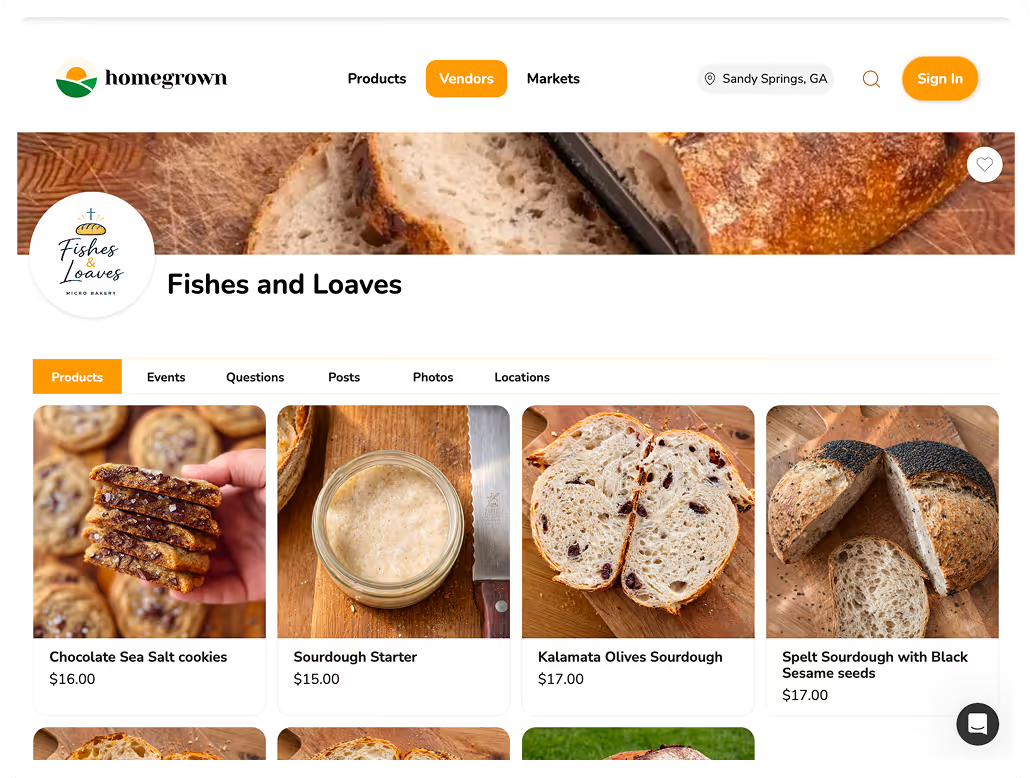
Start your annual plan this week. And if you don't have an online storefront yet, set up your Homegrown storefront before the new season starts — it's the easiest way to take pre-orders, list your products, and give customers a way to find you year-round.