

Back-to-school season is a $39.4 billion spending window, and 67 percent of shoppers start buying by early July. While most of that spending goes to clothing, supplies, and electronics, the snack category is growing fast — snack bars were up 20.3 percent and packaged cookies up 13.1 percent year over year. Parents are actively looking for individually packaged, lunchbox-ready treats, and the ones who care most about what goes in the lunchbox — parents of kids with food allergies, parents who want clean ingredients — are the exact buyers a cottage food vendor is built to serve.
This is not a one-time holiday push like Valentine's Day or Easter. Back-to-school is the start of a 9-month selling cycle. A weekly snack subscription that begins in August can run through May. This guide covers the best products for school-adjacent sales, the allergen-free angle, PTA fundraiser partnerships, teacher appreciation gift sets, weekly snack subscriptions, and the July-August marketing timeline.
The short version: Back-to-school snack ideas for food vendors include lunchbox treat packs (5 individually wrapped items for $8 to $12 per week), after-school snack bundles ($6 to $10), and teacher appreciation gift sets ($25 to $45). The strongest angle is allergen-safe — marketing as "nut-free, made in a nut-free kitchen" lets you serve an underserved parent group. PTA fundraiser partnerships and weekly snack subscriptions create recurring revenue through the school year. Start promoting at your farmers market by the first Saturday in July.
The best school-season products for cottage food vendors are individually wrapped, lunchbox-sized, and easy for a parent to grab on their way out the door. The products need to survive a lunchbox or backpack for several hours without refrigeration — which is exactly what cottage food is designed to do.
| Product | Price | Format | Best For |
|---|---|---|---|
| Lunchbox treat pack (5/week) | $8-$12 | Individually wrapped | Weekly subscription, market regulars |
| After-school snack bundle (4-6 items) | $6-$10 | Mixed bag | One-time purchase, gift |
| Granola bars (homemade) | $2-$3 each | Wrapped individual | Market impulse, snack packs |
| Cookies (mini/standard) | $1.50-$3 each | Wrapped individual | Lunchbox, grab-and-go |
| Muffins | $2-$4 each | Wrapped individual | Breakfast, after-school |
| Flavored popcorn | $5-$8/bag | Resealable bag | Snacking, party treat |
| Energy bites | $1.50-$2.50 each | Wrapped 2-pack | Healthy snack positioning |
| Banana bread slices | $3-$4 each | Wrapped individual | Lunchbox, after-school |
The single most valuable back-to-school product for a food vendor is a weekly lunchbox pack. Five individually wrapped treats — enough for one per school day — packaged together and delivered or picked up weekly. Price at $8 to $12 per week.
This creates recurring revenue. Even 15 families subscribing at $10 per week generates $150 per week, or $600 per month, from one product category running September through May. You know exactly what to bake each week, your costs are predictable, and customers build the pack into their weekly routine.
Vary the contents weekly so kids do not get bored: cookies one day, a granola bar the next, a muffin, a brownie, popcorn. Parents love the variety because it saves them decision-making.
A one-time purchase bundle with 4 to 6 mixed snack items in a bag or box, priced at $6 to $10. This is the grab-and-go version of the weekly pack — the parent who is not ready for a subscription but wants something better than grocery store granola bars.
Stock these at your market booth with a sign: "After-School Snack Packs — homemade, nut-free, ready for the week." The convenience angle sells itself.
Parents of children with food allergies are one of the most underserved, most motivated buyer segments in the food market. When your child has a peanut allergy, every snack purchase involves reading labels, calling manufacturers, and hoping the "may contain" warning is accurate. A local vendor who can look that parent in the eye and say "I made this in my kitchen, there are no tree nuts or peanuts in my kitchen, and here is the full ingredient list" offers something no grocery store brand can match.
The nine allergens responsible for 90 percent of allergic reactions are:
PTA and PTO organizations actively seek food vendor partnerships for fundraising events. This is a direct sales channel that most cottage food vendors never explore.
The National PTA Fundraising Marketplace connects vendors with PTA organizations looking for fundraising products.
Contact the PTA president or treasurer directly. Most PTAs start planning fall fundraisers in June and July.
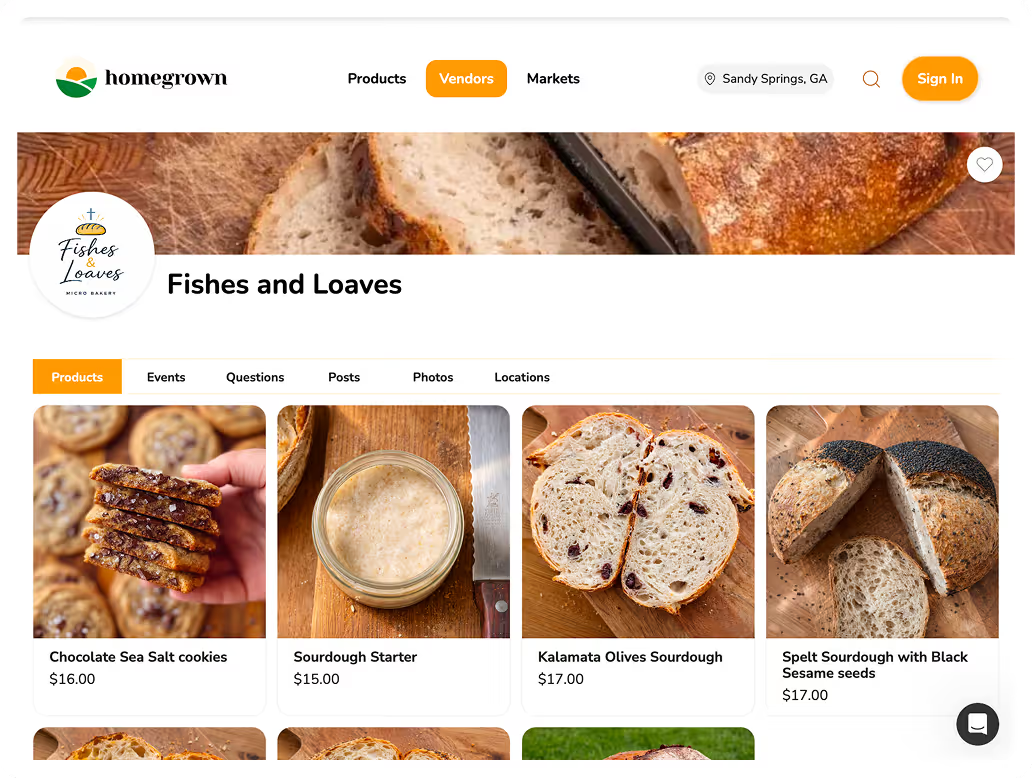
Try Homegrown free for 7 days to set up your back-to-school pre-order page and let parents browse, select, and pay online.
A weekly snack subscription is the most valuable product a food vendor can launch for back-to-school because it creates predictable, recurring revenue that lasts the entire school year.
| Plan | Frequency | Contents | Price |
|---|---|---|---|
| Basic | Weekly | 5 items (cookies, bars, muffins) | $8-$10/week |
| Premium | Weekly | 5 items + 1 bonus (seasonal treat) | $10-$12/week |
| Bi-weekly | Every 2 weeks | 10 items | $15-$20 |
| Monthly | Monthly | 20 items | $30-$40 |
If you already sell at a farmers market, set up online ordering so parents can subscribe without having to find you at the market every week.
Teacher gifts are a separate seasonal peak from back-to-school, but the customer base is identical — school parents. Teacher Appreciation Week falls in the first week of May each year, and the buying is coordinated by room parents and PTAs.
| Product | Price Range | Best For |
|---|---|---|
| Decorated cookie tin (12 cookies) | $25-$35 | Individual teacher gift |
| Jam, honey, and granola gift box | $30-$45 | Premium teacher gift |
| Flavored popcorn assortment | $15-$22 | Staff appreciation (classroom aides, office staff) |
| "Thank You" cookie set (6 decorated) | $18-$25 | Budget-friendly class gift |
| Breakfast bundle (scone mix + jam + honey) | $28-$38 | Brunch-adjacent, pairs with Mother's Day timing |
Start your free trial at Homegrown to create your teacher appreciation pre-order page alongside your back-to-school snack menu.
Back-to-school marketing starts earlier than most vendors expect. Two-thirds of shoppers begin buying by early July, and the best PTA partnerships require summer outreach.
Late June: Plan and Prep
First Week of July: Launch
Mid-July to Early August: Push
Late August: Convert and Retain
September Onward: Maintain
Selling on school property is not explicitly covered by most state cottage food laws. This is a gray area that varies by state, school district, and even individual school.
If you are unsure what your state allows, read our guide on how to start a cottage food business for the basics on venue rules and approved products.
Instead of trying to sell on school property, use the school community as your customer base and sell through your own channels:
Individually wrapped cookies, homemade granola bars, muffins, flavored popcorn, and energy bites are the top sellers. The key is individual wrapping and lunchbox-friendly sizing. Nut-free products sell especially well because parents of allergic children are actively looking for safe options they can trust.
Set up an online ordering page with weekly or monthly subscription options. Offer 5 individually wrapped items per week for $8 to $12. Let parents choose pickup at your market booth or porch delivery. Start with a no-contract, cancel-anytime model to lower the barrier to entry. Even 15 subscribers at $10 per week generates $600 per month in predictable revenue.
It depends on your state. Most cottage food laws explicitly allow sales at farmers markets and community events, but school property is often not specifically listed. Many states have separate charitable exemptions for PTA bake sales. Check with your school administration and state health department before selling on school grounds. The safer approach is to sell through your own channels and use the school community as your customer base.
Label every product with a complete ingredient list and Top 9 allergen declarations. If your kitchen is nut-free, say so explicitly: "Made in a home kitchen that does not process peanuts or tree nuts." Reference SnackSafely.com's Safe Snack Guide if your products meet their criteria. Do not make medical claims like "safe for allergies" — state factual claims only.
Start by the first Saturday of July. Two-thirds of back-to-school shoppers have already begun buying by early July. Have your products photographed, your subscription plan finalized, and your signage ready for your July market booth. Reach out to PTAs in June or July to secure fall fundraiser partnerships.
Pitch room parents and PTAs in March or April for Teacher Appreciation Week in early May. Offer gift sets at $25 to $45 — positioned as more thoughtful and more affordable than $69 commercial gift baskets. Offer a group buy discount for schools ordering 5 or more sets.
Individual items should be $1.50 to $4. Weekly packs of 5 items should be $8 to $12. After-school snack bundles should be $6 to $10. Teacher gift sets should be $25 to $45. These price points are competitive with grocery store options while commanding a premium for the homemade, locally-made, allergen-labeled advantage.
Back-to-school is not a single holiday — it is the start of a 9-month selling cycle that runs through the entire school year. The vendors who build subscriptions, partner with PTAs, and position as allergen-safe will generate consistent weekly revenue long after the back-to-school shopping rush ends.
Start your free trial at Homegrown to set up your snack subscription page and start collecting weekly orders from school families.