

You can spend money on ads, post on social media every day, and hand out flyers at every event in town. But none of that will ever work as well as one customer telling their neighbor, "You have to try this jam."
Word-of-mouth is not just one marketing channel among many for food vendors. It is the marketing channel. When someone at a farmers market tells the person next to them in line that your hot sauce is incredible, that recommendation carries more weight than any ad you could run. The person hearing it trusts their friend. They are already at the market. And now they are walking toward your booth.
The good news is that food vendors have a natural advantage when it comes to word-of-mouth. You make something people eat, share, and give as gifts. You see your customers face-to-face every week. And your business runs on exactly the kind of personal connection that makes people want to recommend you.
The challenge is that most word-of-mouth happens by accident. This guide shows you how to make it happen on purpose.
Here is what you need to know: Word-of-mouth is the most effective marketing channel for food vendors because people trust personal recommendations far more than advertising. To generate more of it, focus on three things: make a product worth talking about, give customers easy ways to share and refer friends, and stay connected between market days so people remember you when the conversation comes up. You do not need referral software, marketing apps, or a big budget — you need a great product, a simple system, and the habit of asking.
The short version: Word-of-mouth is the most powerful marketing for food vendors. You earn it by making a product worth talking about, giving customers an easy way to refer you (cards, samples, a memorable name), and consistently delighting regulars. Make it easy to share and easy to find you, and your customers become your sales team.
Word-of-mouth is not just nice to have. For most small food businesses, it is the primary way new customers find you.
Think about the last time you tried a new restaurant. You probably went because someone told you it was good — not because you saw an ad. According to word-of-mouth marketing research from WiserReview, 88% of consumers globally trust personal recommendations from people they know, making it the most trusted form of marketing by a wide margin. No Instagram ad, no flyer, and no booth sign can compete with a friend saying "this is the best salsa I have ever had."
For food vendors, this matters even more than it does for most businesses. Food is personal. People do not recommend a jar of jam the way they might mention a phone charger. When someone recommends your food, they are putting their taste and judgment on the line. That makes the recommendation stronger.
Unlike online businesses or big brands, you meet your customers in person every week. You hand them samples. You answer their questions. You remember their names. That personal connection is exactly what triggers word-of-mouth. People talk about businesses that feel personal — and your business is personal by nature.
You also sell something people share. A jar of your jam shows up at a dinner party. Your hot sauce goes to a barbecue. Your baked goods arrive at an office. Every time your product leaves a customer's hands and enters someone else's, that is word-of-mouth happening without you doing anything.
Word-of-mouth starts with the product. No marketing trick can get people talking about something that is just okay.
People talk about things that surprise them. A jar of strawberry jam is nice. A jar of strawberry-jalapeño jam with a story about your grandmother's recipe is something people mention at dinner. The bar for "worth talking about" is not perfection — it is distinctiveness. What makes your product different from what people can buy at a grocery store?
If your answer is "it is homemade" or "it is fresh," that is a start, but it is not enough on its own. Hundreds of vendors at farmers markets sell homemade, fresh products. The ones people talk about have something specific: an unusual flavor combination, a product that is hard to find locally, a family recipe with a story, or a quality level that obviously surpasses anything on a store shelf.
Your entire product line does not need to be conversation-worthy. You need one signature product that people remember and mention. The "you have to try their [specific product]" item. Everything else in your lineup benefits from that one product getting people to your booth.
Think about what customers already talk about. If people consistently say "your blueberry muffins are incredible," that is your signature product. Feature it prominently, make sure it is always available, and build your word-of-mouth strategy around it.
Your packaging is a marketing tool that travels with your product. When your jam sits on someone's kitchen counter, what does it communicate? A plain jar with a handwritten label says "homemade." A clean, well-designed label with your brand name and a brief story says "this is a real business that makes an exceptional product."
Good packaging does not have to be expensive. It has to be noticeable. A distinctive jar shape, a consistent color scheme, or a short tagline on the label gives people something to reference when they tell a friend about you. "It comes in the little jar with the red label" is easier to remember than "I got it at the market from one of the booths."
The market is your best word-of-mouth engine. You have a captive audience of food-interested people standing right in front of you.
Sampling is the single most effective word-of-mouth tool a food vendor has. When someone tastes your product and their eyes light up, they are already composing the recommendation they will give to their friends later.
But not all sampling is equal. Handing someone a cracker with jam on it is fine. Handing them a sample and saying "this is our peach-bourbon butter — we use peaches from the farm down the road and it took us six months to get the recipe right" turns a taste into a story. Stories travel. Facts do not.
When you sample, watch for the reaction. If someone says "wow, this is amazing," that is your cue: "Thank you — if you know anyone who would love it, we are here every Saturday." Plant the seed right when the enthusiasm is highest.
People cannot recommend you if they cannot remember you. A plain table with jars lined up in a row is forgettable. Your booth does not need to be elaborate, but it needs at least one visual element that sticks in someone's memory — your brand name displayed clearly, a distinctive tablecloth or banner, or your products arranged in a way that catches the eye.
When a customer tells their friend about you, you want them to be able to say "look for the booth with the green sign" or "they are the ones with the bright orange labels." Give people an easy way to identify and find you again.
This is the simplest word-of-mouth strategy and the one most vendors skip. When a regular customer buys from you, say: "If you know anyone who would love this, bring them by next week — I will give you both a sample of our new flavor."
You are not asking for a huge favor. You are giving them a reason to mention you to someone who already eats food (which is everyone). According to word-of-mouth marketing data compiled by Trustmary, referrals from friends make consumers four times more likely to make a purchase, so that casual "bring a friend" invitation has real impact.
You do not need referral software or an app. You need a system simple enough that you will actually use it every week.
Print small cards (business card size) that say something like: "Know someone who would love [your product]? Give them this card for a free sample at our booth." Include your business name, the market where you sell, and your Homegrown storefront or website link.
Hand two or three cards to every customer who buys from you. Most will end up in a purse or pocket and never get passed along. Some will. The ones that do bring you a new customer who shows up already predisposed to buy because a friend sent them.
Cost: about two to three cents per card. Return: a new customer who could buy from you every week for years.
You do not need a viral post. You need customers to tag you in their own posts. When someone buys your product, say: "If you post a photo, tag us — we love seeing where our products end up." That is it. No contest, no giveaway, no complicated hashtag campaign.
When a customer posts a photo of your jam on their toast and tags your account, their friends see it. Those friends are local (because your customers are local), and now they know your product exists. This is digital word-of-mouth, and it works the same way as in-person recommendations. For tips on making the most of these tags and building your account, our guide on running a food business Instagram covers what to post and how often.
Ask every new customer how they heard about you. Keep a tally on your phone or a notepad. After a month, you will know whether most new customers come from friend recommendations, social media, market foot traffic, or somewhere else.
This does not have to be formal. A simple "how did you find us?" when someone new approaches your booth is enough. If the answer is usually "my friend told me about you," your word-of-mouth is working and you should double down on whatever is driving it.
The biggest word-of-mouth challenge for market vendors is the gap between market days. You are visible on Saturday but invisible the rest of the week. Staying top of mind between markets keeps you in people's conversations.
When someone thinks "I should bring something to the dinner party this weekend," you want them to think of your product. That only happens if they have seen or heard from you recently.
A weekly email or a few social media posts between market days keeps you visible. You do not need to create elaborate content. A photo of this week's batch, a reminder of your next market date, or a quick note about a seasonal product coming back is enough to stay in the mental rotation. Getting those first 100 customers on your email list is one of the most valuable things you can do for long-term word-of-mouth.
A customer who recommends you once will often recommend you again — if you give them a reason. When you launch a new flavor, tell your regulars first. When you have a special batch, let them know before you announce it publicly. Making your best customers feel like insiders gives them fresh things to talk about.
This does not require a formal loyalty program (though our guide on creating a loyalty program shows how to set one up if you want to). It just requires paying attention to who your biggest fans are and treating them like the valuable asset they are.
When someone leaves a review on Google, tags you on Instagram, or mentions you in a Facebook post, respond. Every time. A simple "thank you so much — we are glad you loved it" takes ten seconds and accomplishes two things: it rewards the customer for talking about you (making them more likely to do it again), and it shows other potential customers that you are engaged and responsive.
If you need help getting more of those reviews in the first place, our guide on how to ask for reviews and testimonials walks through exactly what to say and when to ask.
Some common mistakes quietly prevent word-of-mouth from happening, even when you have a great product.
If your jam is incredible one week and just okay the next, customers stop recommending you. They will not risk their credibility on a product that might disappoint their friend. Consistency is more important than perfection. A product that is reliably very good gets more recommendations than a product that is sometimes extraordinary and sometimes mediocre.
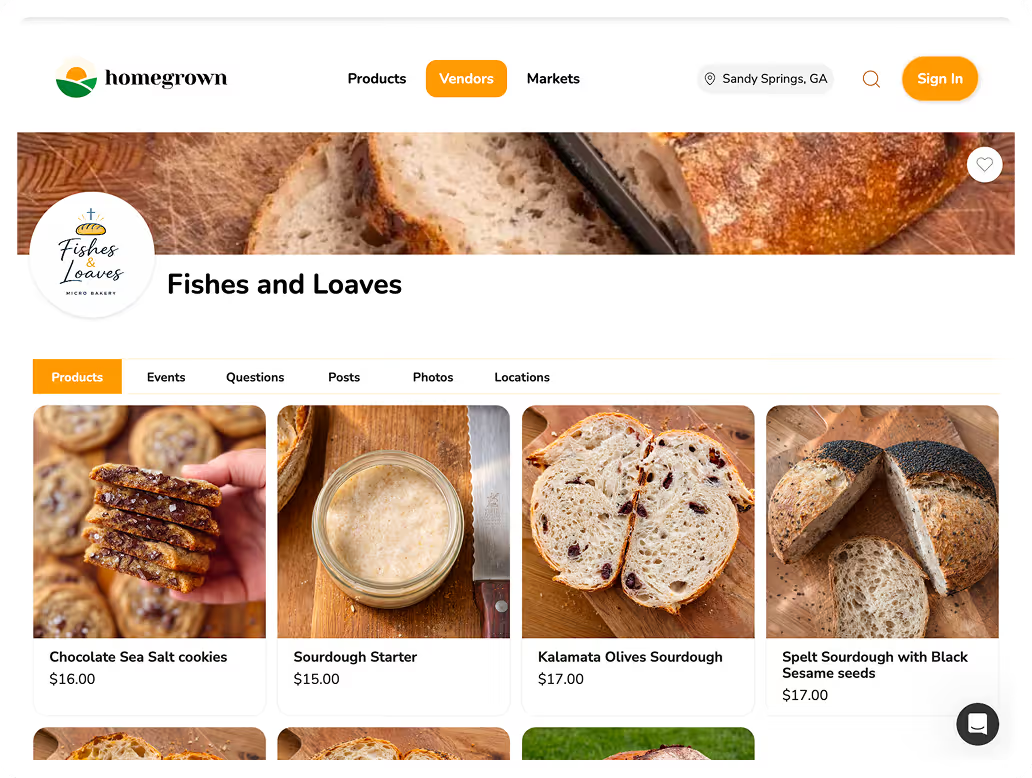
"You have to try this jam from the market — but I do not remember which booth, they are only there some Saturdays, and I am not sure how to order online." That recommendation dies before it starts. An Instagram account lets people follow you, but following is not buying — there is no checkout, no order form, nothing that turns interest into a sale. A Facebook page is the same problem with worse reach. What word-of-mouth needs is one link your customer can text to their friend that ends in a placed order, not a follow. Homegrown is $10/month — your customer texts the link, their friend sees your products and prices, and they order for Saturday pickup before the conversation is over. It does not grow your Instagram following or send marketing emails — but for converting a recommendation into a sale while the enthusiasm is still fresh, it gives the recommendation somewhere to land.
Most vendors wait for word-of-mouth to happen naturally. It does happen naturally — but it happens a lot more when you ask. "If you have a friend who would love this, send them our way" is not pushy. It is helpful. You are giving your customer an easy way to share something they already enjoy.
The vendors who get the most referrals are not the ones with the best products. They are the ones with great products who also ask.
How long does it take for word-of-mouth to start working?
Word-of-mouth builds slowly but compounds over time. You will not see a flood of referrals in your first month. But if you consistently ask customers to spread the word and give them reasons to do so, you will notice a steady increase in new customers who say "my friend told me about you" within two to three months. Unlike paid ads that stop working when you stop paying, word-of-mouth keeps going.
Do I need to offer discounts to get referrals?
No. Most people recommend products because they genuinely like them, not because they get a discount. A free sample for both the referrer and the new customer is more effective than a percentage-off coupon because it feels like a gift rather than a transaction. If you do offer an incentive, keep it small and product-focused — a free sample, a bonus item, or early access to a new flavor.
What if my product is not unique enough to generate word-of-mouth?
Every product has something worth talking about. If your recipe is not unusual, your story might be — why you started, where your ingredients come from, how you make it. If your product is similar to what others sell, your customer experience can be the differentiator. The vendor who remembers your name, asks about your family, and always has a new sample ready is the one people recommend, even if the product itself is similar to what five other booths sell.
Should I give away free products to get word-of-mouth?
Sampling is valuable. Giving away full-size products is not. A small taste costs you pennies and creates the "wow" moment that triggers a recommendation. Giving away a full jar of jam costs you money and trains people to expect free products. Sample generously, but sell your products.
How do I handle word-of-mouth that is negative?
Address it directly and quickly. If someone posts a complaint, respond publicly with a genuine apology and an offer to make it right. If you hear that a customer was unhappy, reach out to them. Most negative word-of-mouth comes from feeling ignored, not from a bad product. A customer whose complaint was handled well often becomes a stronger advocate than one who never had a problem.
Is word-of-mouth more important than social media marketing?
Word-of-mouth and social media are not separate things — social media is one of the channels where word-of-mouth happens. When a customer tags you in a post, that is digital word-of-mouth. When they tell a friend about you at a dinner party, that is in-person word-of-mouth. Both matter. But if you had to choose between a perfectly curated Instagram feed and a hundred customers who actively tell their friends about you, the hundred customers win every time.