

If you search for Instagram tips for food businesses, almost every result is written for food bloggers. How to grow your following. How to get sponsorship deals. How to become a food influencer. None of that applies to you. You are not trying to build an audience of a million followers. You are trying to get more people to show up at your farmers market booth on Saturday and buy your jam.
A food business Instagram and a food blog Instagram are two completely different things. A food blogger posts recipes and pretty flat-lays to grow followers. A food vendor posts product photos and market announcements to get customers. The strategies are different. The goals are different. The time commitment is different.
This guide shows you how to run an Instagram account that actually sells your food products — without spending hours on content creation, chasing followers, or pretending to be a food influencer.
Here is what you need to know: Your food business Instagram should focus on one thing: getting customers to buy your products. Post 3-4 times per week with market day announcements, product photos, behind-the-scenes content, and customer testimonials. Use local hashtags to reach people in your area, link your ordering page in your bio, and include a call to action in every post. You can run an effective food business Instagram in 15-20 minutes per week — no editing software, no content calendar, no viral strategy required.
The short version: As a local food vendor, your Instagram goal isn't followers — it's getting nearby people to your booth or online orders. Post your products and exactly where to buy them, use local hashtags and location tags, show up in Stories consistently, and make ordering dead simple. Ignore influencer advice about growth and sponsorships; it doesn't apply to you.
The difference comes down to one thing: what you want people to do after they see your post.
A food blogger wants followers. More followers mean more sponsorships, more ad revenue, and more brand deals. Their posts are designed to get likes, comments, and shares. They spend hours styling a single photo, writing long captions with storytelling hooks, and engaging with hundreds of accounts every day. Their success metric is follower count.
That is not your business model. You do not get paid per follower. You get paid when someone walks up to your booth and hands you $10 for a jar of jam.
A food business Instagram has one job: remind people you exist, show them what you sell, and tell them where to buy it. Your success metric is not followers — it is sales. A food vendor with 300 local followers who buy products is more successful on Instagram than a food blogger with 50,000 followers who never buy anything.
Every post you make should answer one of three questions for your audience: What do you sell? When can they get it? Where can they buy it?
Setting up your Instagram correctly takes about 10 minutes. Get it right once and you will not have to think about it again.
Go to Settings → Account → Switch to Professional Account → Business. A business profile gives you access to Instagram Insights (basic analytics), the ability to add a contact button, and the option to run ads later if you choose. It costs nothing.
The analytics alone make it worth switching. You will be able to see how many people saw each post, which posts got the most engagement, and when your followers are most active — all useful information for figuring out what to post and when.
Your bio gets 150 characters. Do not waste them on cute phrases or emojis. State exactly what you sell, where you sell it, and how to order.
Include your city or region so local customers can find you. If you have a Homegrown storefront or ordering page, put the link in your bio — that is the one clickable link Instagram gives you, and it should go directly to where customers can buy.
Add your email, phone number, and business address (or market location) to your profile. The "Contact" button lets customers reach you directly without searching for your information. If you take custom orders, this is how people will find you.
You do not need 20 different content types. Five types of posts cover everything a food vendor needs.
Post every market day morning (or the night before) with what you are bringing. "Here is what I am bringing to the Saturday market" with a photo of your products ready to go is one of the most effective posts a food vendor can make. It tells customers exactly what to expect and gives them a reason to seek you out.
Include the market name, your booth location if you know it, and what time you will be there. This post is the bread and butter of your food business Instagram.
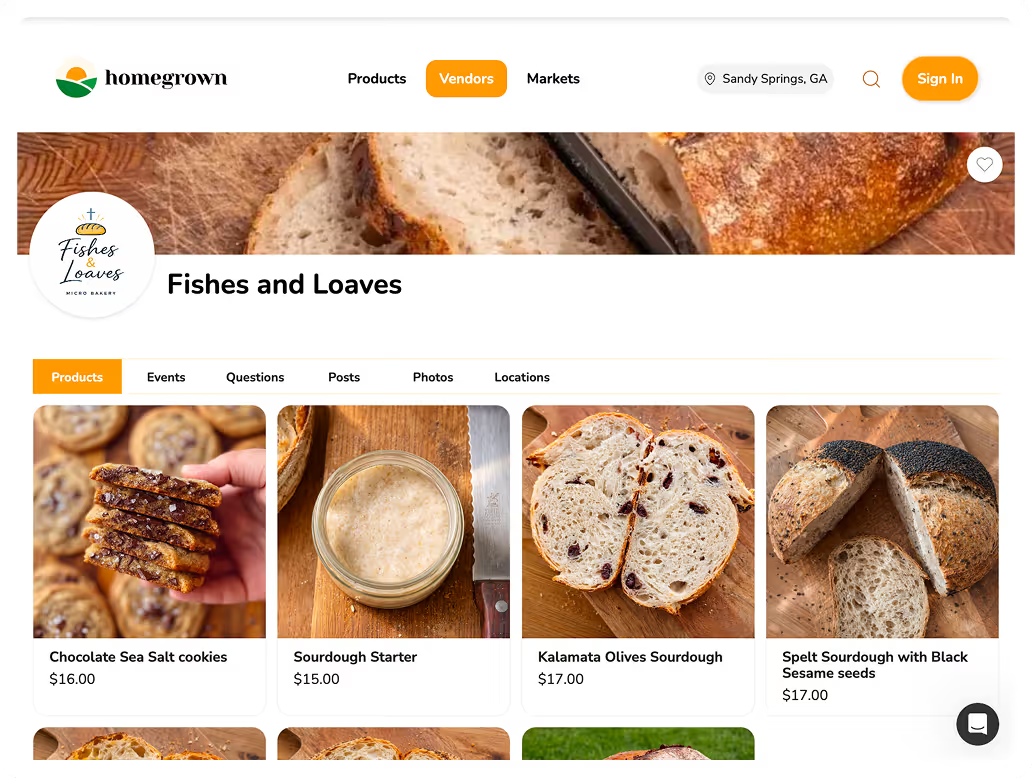
When you make a new batch, take a photo. When you add a new flavor, show it off. When your products look great sitting on your kitchen counter, snap a picture. These posts do not need to be professional — they need to be clear and appetizing. Natural light, a clean background, and a steady hand are enough. For more detailed advice, our guide on food photography for vendors covers everything you need using just your phone.
Always include the product name, price, and where to buy in the caption. Do not make people ask — tell them.
Show yourself making the product. A 15-second video of you stirring a pot of jam, pulling bread out of the oven, or packaging orders for the market humanizes your business and builds trust. People want to know their food is made by a real person, not a factory.
These posts do not need to be polished. A shaky phone video of your kitchen with the caption "Making tomorrow's market batch of strawberry jam" works perfectly. Authenticity sells better than perfection.
When a customer sends you a text saying your jam is the best they have ever had, screenshot it and post it (with their permission). When someone leaves a Google review, share a quote on your Instagram. According to research on social media and the food industry from ProfileTree, 39% of Instagram users explore food content on the platform, so putting your best customer quotes where food-interested users will see them matters.
If you need more reviews to share, our guide on how to ask for reviews and testimonials covers exactly what to say and when to ask.
When peach season starts and your peach butter is back, post about it. When you sell out of something popular, let people know. When you are taking a week off from the market, tell your followers. Seasonal posts create urgency — "Only available until September" gives people a reason to buy now instead of later.
More is not always better. Consistency matters more than frequency.
Three to four posts per week is the sweet spot for most food vendors. A simple weekly schedule:
That is it. You do not need to post every day. You do not need to spend an hour on each post. Write a caption in two minutes, take a photo, and post it. Fifteen to twenty minutes per week is enough.
Post when your customers are likely scrolling. For most food vendors, that means:
Check your Instagram Insights (available with a business profile) to see when your specific followers are most active. But do not overthink timing — a good post at a bad time still beats no post at all.
Stories and Reels get more visibility than regular posts. But you do not need to become a video editor to use them.
Instagram Stories disappear after 24 hours, which means they do not need to be perfect. Use them for:
Each of these takes less than a minute to create. Post two or three Stories on market day and one or two during the week. That is plenty.
Reels do not need to be edited or scripted. A 10-second video of you pouring jam into jars, slicing bread, or setting up your booth is enough. Instagram's algorithm pushes Reels to more people than regular posts, so even a simple video can reach new potential customers.
Film it on your phone, add a caption describing what you are making, and post it. No transitions, no music selection, no editing app needed. If you also use TikTok, you can repurpose the same short videos — our guide on using TikTok for food vendors covers that platform's approach.
Hashtags help people who do not follow you find your posts. But the right hashtags matter more than the number of hashtags.
Generic hashtags like #food or #homemade have hundreds of millions of posts. Your post will disappear in seconds. Local hashtags like #AustinFarmersMarket, #PortlandFood, or #DenverMade have thousands of posts — small enough that your content stays visible, and they reach the people who actually live near you and could buy your products.
Use a mix of:
Five to fifteen hashtags per post is plenty. Instagram allows up to 30, but you do not need to use them all. Pick hashtags that are specific to your location and product type. Put them at the end of your caption or in the first comment — either way works.
Followers who never buy are not helping your business. The point of Instagram is to convert followers into paying customers.
Your Instagram bio link should go directly to where customers can order. Not your personal website homepage. Not a Linktree with ten options — that gives people choices instead of sales. Not Etsy, which takes 6.5% of every sale and is designed for shipped products, not local pickup at Saturday's market. Homegrown is $10/month — one link that shows this week's menu with prices, lets customers select and pay for what they want, and closes the listing when you sell out. It will not help you grow your Instagram following or manage your content calendar — but as the destination your bio link points to, it converts the follower who just saw your jam photo into the customer who shows up Saturday with payment already collected. According to small business social media research from Gitnux, one in three small business customers discover brands through social media — make that discovery link count.
Every post should tell people what to do next:
Without a call to action, people see your post, think "that looks nice," and keep scrolling. Tell them exactly what to do and they are far more likely to do it. This directly supports your strategy for getting your first 100 customers.
Instagram is rented land. The algorithm changes. Accounts get hacked. Posts get hidden. You do not own your Instagram followers — but you do own your email list.
Use Instagram to drive people to sign up for your email list. Offer a market schedule, a product list, or first access to seasonal flavors in exchange for their email address. Once they are on your email list, you can reach them directly without depending on the Instagram algorithm.
A few common mistakes keep food vendors from getting results on Instagram.
Your business Instagram is not for posting sunsets, family dinners, or motivational quotes (unless they relate to your food business). Every post should be connected to your products or your business. Keep a personal account for personal content.
If you disappear for three weeks and then post five times in one day, Instagram's algorithm penalizes you and your followers forget about you. Consistency beats frequency. Three posts per week, every week, is better than ten posts in one week and none for the next month.
A vendor with 200 local followers who buy products every week is doing better on Instagram than a vendor with 10,000 followers from across the country who never purchase anything. Do not buy followers. Do not follow thousands of random accounts hoping they follow back. Focus on reaching people in your area who might actually show up at your booth.
How many followers do I need before Instagram helps my food business?
You do not need a specific number. Even 100 local followers can generate real sales if they are people in your area who buy food at farmers markets. Focus on reaching the right people, not hitting a follower count. One hundred engaged local followers are more valuable than 5,000 random followers.
Should I pay for Instagram ads as a small food vendor?
Only after you have a consistent posting habit and something to send people to (a market booth, ordering page, or storefront). Start with free posts first. If you have an ordering page and want to reach more local customers, a $5-10 boosted post targeting your city can be worth testing. But organic posts are enough for most vendors starting out.
Do I need to show my face on Instagram?
No, but it helps. Posts with faces get more engagement than product-only posts. You do not need to be on camera talking — a photo of you at your booth or a quick video of your hands making a product is enough to humanize your brand.
What is the best time to post for a food business?
Check your Instagram Insights to see when your followers are online. For most food vendors, mornings (7-9 AM) and evenings (6-8 PM) work well. Market day mornings are the most important time to post — remind people you are there while they are deciding where to shop.
Should I use Instagram or Facebook for my food business?
Both are useful, but they serve different purposes. Instagram is better for visual product showcase and reaching younger customers. Facebook is better for community groups, events, and reaching an older demographic. If you can only manage one, pick the platform where your customers spend time. Most food vendors under 40 do better on Instagram.
How do I handle negative comments on my food posts?
Respond politely and take it offline. A calm reply like "I am sorry to hear that — please DM me so I can make it right" shows other followers you care about your customers. Never argue in the comments. Delete spam comments, but leave genuine criticism and respond professionally.
Can I sell food directly through Instagram?
Instagram has a shopping feature, but it requires a business with a qualifying e-commerce website. For most cottage food vendors and market sellers, the best approach is to link to your ordering page in your bio and direct customers there. You can also take orders through DMs, though tracking them gets tricky once you have more than a few customers per week.