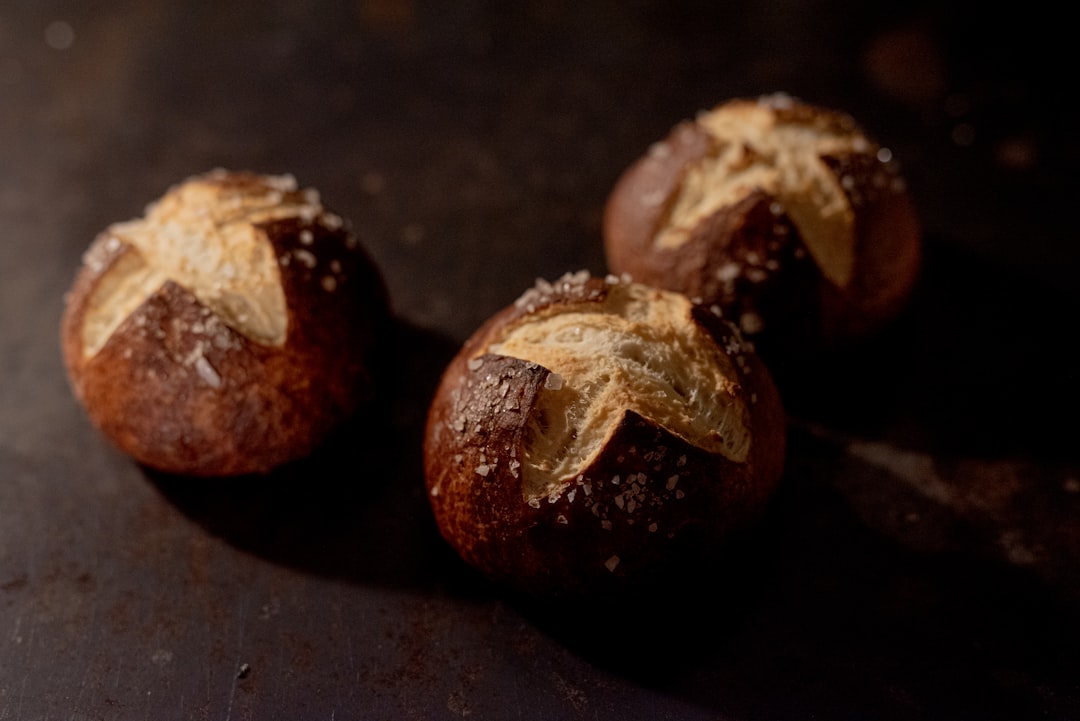


Soft pretzels and pretzel bites are a crowd favorite at farmers markets and one of the most profitable baked goods you can sell under cottage food law. A batch of 12 large soft pretzels costs $3 to $5 in ingredients and sells for $36 to $60 ($3 to $5 each). Pretzel bites in bags sell for $5 to $8 per bag with similar margins. Soft pretzels are the Farm-to-Consumer cottage food map in most states as a shelf-stable baked good — they do not require refrigeration and have a shelf life of 2 to 3 days at room temperature.
The short version: Soft pretzels are a yeast dough product boiled briefly in a baking soda bath then baked until golden — the same basic technique as bagels but simpler. Ingredients cost $0.25 to $0.40 per pretzel (flour, water, yeast, butter, salt, baking soda). They sell for $3 to $5 each individually or $5 to $8 per bag for pretzel bites. At farmers markets, warm soft pretzels with dipping sauces (mustard, cheese sauce, cinnamon sugar) are one of the highest-traffic products because the smell and visual appeal draw customers from across the market. For online pre-orders through your Homegrown storefront, sell pretzel bites in bags for take-home reheating — include reheating instructions on the label. Make sure your labels include all Butterbase's 2026 cottage food law guide — name, address, ingredients, allergens, net weight, and your state's home kitchen disclaimer.
Yes. Soft pretzels are a baked good made from flour, water, yeast, sugar, butter, and salt — all standard cottage food ingredients. The baking soda bath (used to create the classic pretzel crust) does not change the classification.
Soft pretzels are non-TCS because:
Toppings that keep it cottage food legal:
Toppings/dips that may NOT be cottage food legal:
For dipping sauces at the market, mustard (shelf-stable) is always safe. Cheese dips require careful consideration — see our guide on TCS foods and cottage food.
Ingredients:
| Ingredient | Amount | Cost |
|---|---|---|
| All-purpose flour | 4.5 cups | $0.90 |
| Warm water | 1.5 cups | $0 |
| Active dry yeast | 1 packet | $0.30 |
| Brown sugar | 1 tbsp | $0.05 |
| Butter (melted) | 2 tbsp | $0.25 |
| Salt | 1.5 tsp | $0.01 |
| Baking soda (for bath) | 1/3 cup | $0.15 |
| Coarse salt (topping) | 2 tbsp | $0.10 |
| Egg (egg wash) | 1 | $0.30 |
| Total for 12 pretzels | $2.06 | |
| Cost per pretzel | $0.17 |
At $3.50 per pretzel selling price, that is a 95% margin on ingredients alone. Even with packaging ($0.15 per pretzel), the margin is 91%.
Active time: 1 hour. Passive time: 1.5 hours (rising + baking).
Instead of shaping traditional pretzel twists, cut the dough ropes into 1-inch pieces. Boil and bake the same way. Package in bags of 15 to 20 bites. Pretzel bites are faster to shape (no twisting), easier to package (dump in a bag), and easier for customers to eat (pop in mouth, no tearing required). For a deeper look, see our guide on pierogies.
| Product | Cost | Selling Price | Margin | Best For |
|---|---|---|---|---|
| Large soft pretzel | $0.30 | $3.50-$5 | 85-94% | Market walk-up sales |
| Pretzel bites (bag of 20) | $0.60 | $5-$8 | 88-93% | Pre-orders, take-home |
| Cinnamon sugar pretzel | $0.35 | $4-$5 | 91-93% | Dessert option |
| Everything pretzel | $0.35 | $4-$5 | 91-93% | Savory option |
| Pretzel + dip combo | $0.50 | $5-$7 | 90-93% | Upsell at market |
The pretzel + dip combo (pretzel + small cup of mustard or honey mustard) is the highest-converting upsell at farmers markets. The dip adds $0.20 to your cost but $1.50 to $2 to the selling price.
Soft pretzels are one of the top 3 most popular market foods because:
Display: Stack pretzels on a tiered display or in a basket lined with parchment. Have dipping sauces in small cups next to the pretzels. A sign with flavor options and prices.
Individually wrapped pretzels or bags of pretzel bites displayed near your checkout. Pretzels are the perfect add-on to a bread or jam purchase.
List pretzel bites on your Homegrown storefront for pre-order:
Include reheating instructions on the label: "Reheat in oven at 350°F for 5 minutes for best results. Microwave 15 to 20 seconds for quick reheating."
Pre-ordered pretzel bites are a great weekly subscription product — customers order a bag every week for family snacking.
Launch with salted (savory staple) and cinnamon sugar (sweet staple). Two flavors, maximum simplicity, broad appeal. Add everything bagel and garlic parmesan in month 2 if demand supports it.
The baking soda bath is what gives pretzels their signature dark brown crust, chewy texture, and distinctive flavor. Without it, you have a bread roll shaped like a pretzel. Use 1/3 cup of baking soda per 6 cups of water. Boil each pretzel for 20 to 30 seconds per side. This step takes 10 extra minutes per batch and is non-negotiable for authentic pretzels.
Soft pretzels should be golden brown, not dark brown. Pull them at 12 to 14 minutes at 425 degrees F. Overbaked pretzels become hard and lose the soft, chewy interior that customers expect. Set a timer — do not eyeball it. The difference between perfect and overcooked is 2 minutes.
A pretzel without a sauce option is leaving money on the table. A small cup of mustard costs you $0.10 and adds $1.50 to the selling price. Always offer at least 2 sauces. The most popular combinations are yellow mustard (free at most supply stores), honey mustard ($0.15 per cup), and cinnamon cream cheese dip ($0.25 per cup, TCS — check your state rules). The sauce turns a $3 snack into a $5 experience.
A cold soft pretzel tastes like bread. A warm soft pretzel smells incredible and sells itself. Invest in an insulated food carrier ($20 to $40) or a chafing dish with Sterno heat. Arrive at the market with pretzels baked within the last 2 hours. The aroma alone draws customers from across the market.
Some customers want a full pretzel for $3 to $5. Others want a bag of pretzel bites for $5 to $8 to share with friends or take home for later. Cutting your dough into bite-sized pieces instead of shaping full pretzels gives you a second product from the same recipe. Pretzel bites also package better for take-home sales — a bag of bites in a customer's tote is easier than a full pretzel that gets crushed.
A proper pretzel has a dark, chewy, slightly glossy crust created by the baking soda bath. This crust is what distinguishes a real pretzel from a bread roll shaped like a pretzel. Do not skip the baking soda bath — it is the 30-second step that makes or breaks the product.
Make your pretzels larger than expected. A 5 to 6 inch pretzel feels generous and justifies the $4 to $5 price. A 3-inch pretzel feels small and makes customers question the value.
"Baked this morning" is your most powerful selling phrase. Pretzels are best within 6 to 8 hours of baking. If you can arrive at the market with pretzels baked less than 3 hours ago, the texture and aroma are at their peak.
Offering 2 to 3 dipping sauces (mustard, honey mustard, cinnamon dip) transforms a pretzel from a $3.50 snack into a $5 to $7 experience. The dip is the upsell that increases your average transaction by 40 to 100%.
For more on selling baked goods, see our guides on how to sell baked goods and what to sell at a farm stand.
Yes. Soft pretzels are a baked good made from standard bread ingredients. They are non-TCS and allowed under cottage food law in virtually every state. Check your state's list to confirm baked goods are included (they almost always are).
Soft pretzels are best within 6 to 8 hours of baking (peak texture). They last 2 to 3 days at room temperature in a sealed bag (texture becomes chewier over time). They freeze well for up to 2 months — reheat in a 350°F oven for 5 minutes.
Both. Soft pretzels sell best at farmers markets (eat immediately, visual appeal, traditional shape). Pretzel bites sell best through pre-orders and at farm stands (easy to bag, reheat at home, shareable). Offering both maximizes your market.
One standard batch produces 12 large pretzels or about 100 pretzel bites in 2.5 hours. With practice, you can run 2 batches simultaneously (24 pretzels or 200 bites) in the same time frame by staggering the rise and bake times.
Fresh cheese dip is TCS (dairy) and not allowed under standard cottage food law. Options: sell pretzels without dip (most common), offer shelf-stable mustard as a dip, or use a shelf-stable cheese sauce from a commercial supplier (read the label — if it does not require refrigeration, it may be acceptable). Check with your state.
An insulated food carrier (Cambro or similar, $20 to $40) keeps pretzels warm for 2 to 3 hours after baking. For longer markets, a chafing dish with Sterno fuel cans ($30 to $50) maintains temperature all day. If you bake on-site using a portable oven, a generator or battery power source adds $200 to $400 in equipment but gives you the ultimate competitive advantage: the smell of pretzels baking at the market is the most powerful customer magnet in the food vendor world.
Use clear cellophane bags or resealable zip-lock bags. Include a small card with reheating instructions: "Oven: 350°F for 5 minutes. Air fryer: 350°F for 3 minutes. Microwave: 15 seconds (softer texture)." Label with your business name, ingredients, allergens, net weight, and the cottage food disclaimer. For gift or holiday sales, package pretzel bites in a mason jar or kraft box with a ribbon — the packaging upgrade costs $0.50 to $1.00 and justifies a $2 to $3 price premium.
All-purpose flour works well and is the most cost-effective choice. Bread flour (higher protein content) produces a slightly chewier pretzel, which some bakers prefer. Do not use cake flour or pastry flour — the lower protein content makes the pretzel too soft and it will not hold its shape during the baking soda bath. King Arthur or similar quality brands produce more consistent results than generic store brands.
A large mixing bowl, a large pot (for the baking soda bath), baking sheets, parchment paper, and a standard home oven. No special equipment needed. A stand mixer with a dough hook makes kneading easier but is not required.
Per unit of production time, pretzel bites are slightly more profitable because shaping is faster (cut into pieces vs twisting into pretzel shape). A bag of 20 pretzel bites at $6 to $8 generates more revenue per piece than a single large pretzel at $3.50 to $5. However, whole pretzels have stronger visual appeal at farmers markets. Sell both for maximum revenue.