

You just sat down with your morning coffee when your phone buzzes. A customer wants a dozen cupcakes for a birthday party tonight. Then another text comes in asking if you have any bread left from yesterday's bake. Before you have even started your planned production for the week, you are already scrambling to figure out what you can pull off in the next few hours.
Same-day orders can feel like a constant fire drill. But they do not have to be. With a few simple systems in place, you can take same-day orders confidently, protect your sanity, and actually make more money from them.
The short version: Same-day orders create stress because they interrupt your planned production, force you to improvise with whatever ingredients you have on hand, and put your product quality at risk. The fix is not to stop accepting them. It is to build a system around them: a limited same-day menu, a clear ordering cutoff time, a daily order cap, and a simple way to communicate what is available. Most vendors who set up these guardrails find that same-day orders become one of their most profitable revenue streams because customers pay full price and there is zero waste.
Same-day orders are stressful because they eliminate the buffer time you normally use to plan, prep, and produce quality products. When a customer wants something today, every part of your workflow gets compressed into hours instead of days.
Here is what actually happens when a same-day order comes in without a system:
The average cottage food vendor spends 30 to 45 minutes per same-day order just figuring out logistics before any actual production starts. That is time you are not getting paid for. A system eliminates most of that decision-making overhead.
Yes, most vendors should accept same-day orders, but only with guardrails. The extra revenue and customer loyalty are worth it when you control the terms. The problems start when you accept every request with no limits.
Here is the honest breakdown:
| Factor | Accepting Same-Day Orders | Not Accepting Same-Day Orders |
|---|---|---|
| Revenue | Extra income from impulse buyers and last-minute needs | You miss sales you could have captured |
| Customer loyalty | Customers love vendors who can help in a pinch | Customers look elsewhere and may not come back |
| Flexibility | You can fill slow days with profitable orders | Your schedule stays predictable but potentially underbooked |
| Production quality | Risk of rushing if you do not have limits | Quality stays consistent |
| Stress level | High without a system, low with one | Low, but you leave money on the table |
| Inventory waste | Sell what you already made, less waste | May end the day with unsold products |
The vendors who struggle with same-day orders are the ones who treat every request as a custom project. They say yes to anything, start from scratch each time, and wonder why they are burned out by 3 PM.
The vendors who thrive with same-day orders treat them like a vending machine: limited selection, set hours, fixed quantities. The customer picks from what is available. You do not reinvent your production schedule for every text message.
If you want to keep same-day orders completely separate from your main ordering flow, consider setting up a way to create a pre-order system for your advance orders so the two channels do not bleed into each other.
A working same-day order system has four components: a limited menu, a cutoff time, a daily cap, and a single place where customers can see what is available. Get those four things right and same-day orders stop being chaotic.
Here is how to build each piece:
Your same-day menu should only include products you can make quickly or already have on hand. This is not your full product list. It is a curated subset of items that work within a compressed timeline.
Pick a time and stick to it. Orders that come in after the cutoff go to the next available day. No exceptions.
Decide how many same-day orders you can handle without compromising your planned production. For most home-based vendors, that number is 2 to 5 orders per day.
Customers need one clear place to check same-day availability and place their order. If your same-day system is "text me," you are fielding the same three questions from every customer: what do you have, how much, and how do I pay? That is 10 minutes of back-and-forth per order before any baking starts. Instagram DMs are worse — the message sits unread while you are elbow-deep in dough, and by the time you see it, the customer found something else.
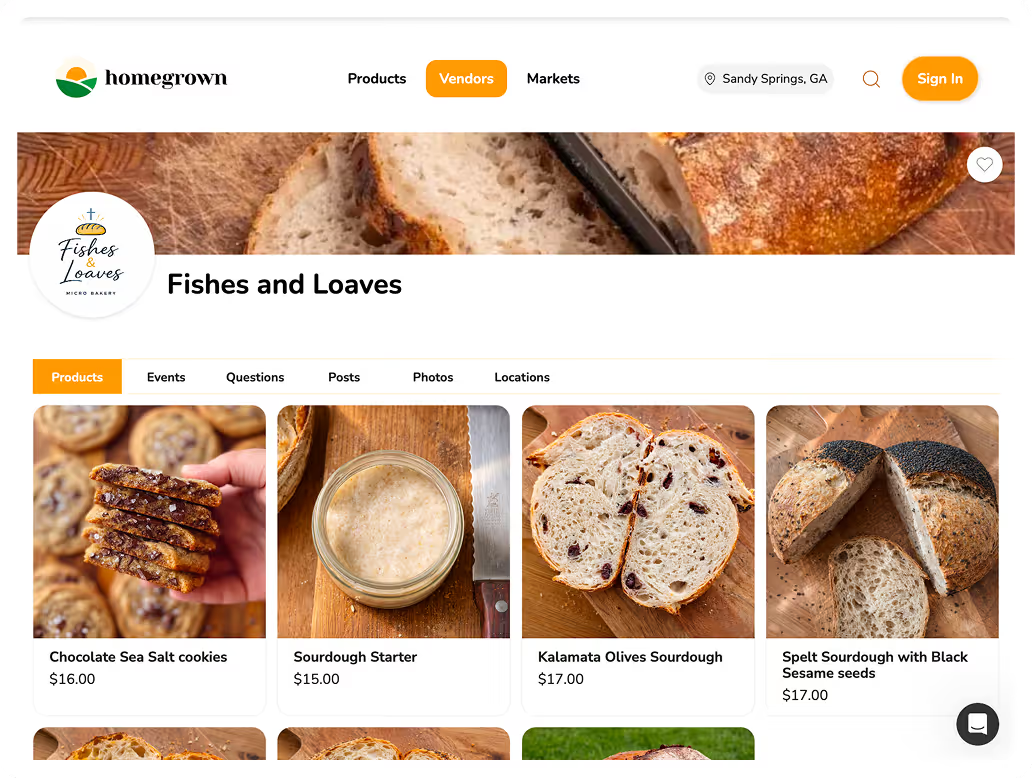
Homegrown is $10/month with no percentage fees. You update what is available each morning, customers see it immediately, and payment happens at checkout — not through a Venmo request you send while mixing batter. When something sells out, you mark it unavailable and no more orders come in for that item. Compare that to Square Online, where you get the same listing functionality but pay 2.9% plus 30 cents on every transaction, or Etsy, where you pay 6.5% per sale and your same-day availability post competes with thousands of other sellers for attention. Homegrown does not text your customer list or post your daily menu on social media — that is your morning routine. But it gives every same-day customer one link where they can see what is available, order, and pay without a single DM.
Stop managing same-day orders through DMs and text threads. Every order that lives only in a text conversation is an order that can get lost, forgotten, or miscommunicated.
The best same-day products are ones you either already have made or can produce quickly with ingredients you always keep stocked. The worst same-day products are anything custom, anything with long production times, or anything that requires ingredients you do not keep on hand.
| Good Same-Day Products | Why They Work |
|---|---|
| Cookies (drop cookies, bar cookies) | 30 to 45 minutes from mixing to packaged |
| Quick breads (banana bread, zucchini bread) | Use pantry staples, one-bowl recipes |
| Muffins | Fast bake time, easy to package in quantities |
| Granola and trail mix | Shelf-stable, can be pre-made in batches |
| Jams and preserves | Already made and jarred, grab-and-go |
| Honey (plain or infused) | Shelf-stable, always ready |
| Snack mixes and flavored nuts | Batch-produced, shelf-stable |
| Bad Same-Day Products | Why They Do Not Work |
|---|---|
| Custom decorated cakes | Need design time, chilling, and precise work |
| Yeasted breads (sourdough, brioche) | Require hours of rise time |
| Custom flavor requests | May need ingredients you do not have |
| Large catering orders (20+ servings) | Too much volume to add to your day |
| Anything requiring special molds or equipment | Setup and cleanup eat your timeline |
The sweet spot for same-day orders is shelf-stable products you already have in inventory plus 2 to 3 quick-prep items you can make from your core pantry staples. This means you are selling what you have already made most of the time and only producing new product when the order justifies it.
Think of your same-day menu as your "greatest hits" list. These are the products you can make with your eyes closed, with ingredients you always have, in a timeline that does not wreck your day.
Your cutoff time should give you enough production and packaging time to deliver a quality product without rushing. Your daily limit should protect your planned production schedule while still capturing extra revenue.
Here are recommended cutoffs by product type:
| Product Type | Recommended Cutoff | Reason |
|---|---|---|
| Already-made shelf-stable products (granola, honey, jams) | 12 PM (noon) for same-day pickup | No production needed, just packaging and logistics |
| Quick-bake products (cookies, muffins, quick breads) | 10 AM for same-day pickup | Gives you 2 to 4 hours for production and cooling |
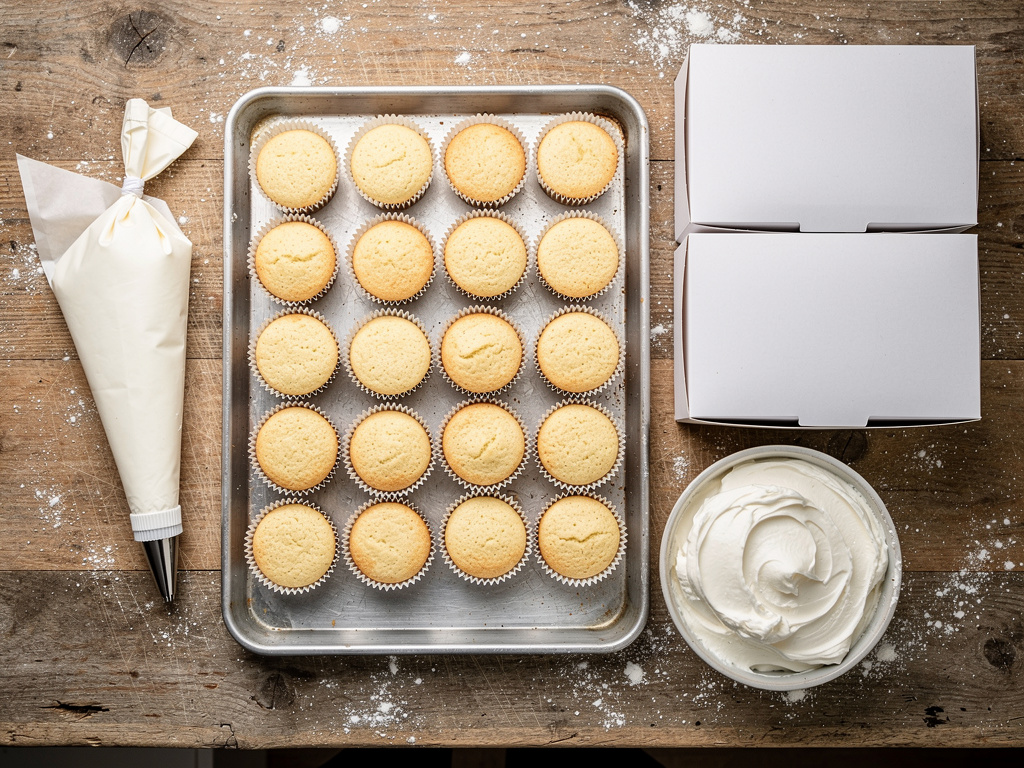
| Products needing some prep (decorated cupcakes, layered bars) | 8 PM the night before | You need evening or early morning prep time |
| Anything requiring overnight processes | Not available same-day | Move these to your regular pre-order system |
For daily order caps, here is what works for most home-based vendors:
Start with the low end of these ranges. It is much better to sell out by 11 AM and leave customers wanting more than to overcommit and deliver rushed products. According to research from the National Restaurant Association, consumers increasingly expect same-day fulfillment options from food businesses, but they also rank quality and accuracy above speed.
Track your same-day orders for two weeks before adjusting your cap. You will quickly see your actual capacity versus what you think you can handle.
If a same-day request falls outside your cutoff or your cap is full, do not just say no. Redirect them. Offer to add them to tomorrow's list, suggest a product you do have available, or point them to your regular ordering page where they can handle recurring orders so they never have to scramble last-minute again.
Post your same-day availability in the same places your customers already look for you, updated every morning you are accepting same-day orders. The goal is to make it effortless for customers to see what is available and place an order before your cutoff.
Here is a simple daily communication system:
Your Homegrown storefront should be the hub. Update your available products and quantities each morning. When an item sells out, mark it unavailable. This is your single source of truth so you are not tracking orders across five different platforms.
A quick social media post each morning showing what you have available for same-day pickup drives impulse orders. Keep it simple:
Here is a template that works:
"Fresh today: Lemon blueberry muffins (6-packs), chocolate chip cookies (dozen), strawberry jam (8 oz jars). Same-day pickup available until 2 PM. Order link in bio. First come, first served."
If you have a list of regular customers (and you should), a quick group text or broadcast message in the morning is one of the most effective ways to fill same-day orders. Keep it short:
Vendors who text their customer list see 40 to 60 percent of their same-day inventory sell within the first hour. Texting is personal, fast, and does not get buried in an algorithm like social media posts.
Pick a phrase and use it every time so your customers learn to recognize it. "Available today," "fresh today," or "same-day pickup" all work. When people see that phrase, they should immediately know what it means and how to act on it.
If you already run a weekly food drop, your same-day availability posts can complement that schedule. Customers who missed the weekly pre-order deadline get a second chance through your same-day channel.
You do not. Same-day and custom do not mix. Custom orders require consultation, ingredient sourcing, and production time that same-day timelines cannot support.
When a customer asks for something custom on a same-day timeline:
Having clear boundaries on custom orders prevents the most stressful same-day scenarios. Make sure you set expectations on custom orders upfront so customers know the difference between your same-day menu and your custom order process.
The phrase that saves you every time: "That is not on my same-day menu, but I can absolutely make it for you with a few days notice." It is a yes wrapped in a boundary.
Most home-based food vendors should start with 2 to 3 same-day orders per day and adjust from there. The right number depends on your production capacity, whether you have help, and how much time your products need. A solo vendor making cookies can handle more same-day orders than a solo vendor making decorated cupcakes. Track your output for two weeks, note how many orders you can fill without rushing, and set your cap there.
For baked goods and other products that need production time, a 10 AM cutoff works well for same-day afternoon pickup. For shelf-stable products you already have in inventory, you can push that cutoff to noon or even 1 PM since no production is needed. The key is picking a time that gives you enough runway to produce, package, and prepare for pickup without cutting into your planned production schedule.
Price same-day orders at your regular prices or higher. Never discount same-day orders. You are providing convenience and speed, which are premium services. Some vendors add a $3 to $5 same-day surcharge, which is completely reasonable. If anything, same-day orders should cost more, not less, because of the extra flexibility you are offering. Customers who need something today understand they are asking for a favor and are willing to pay for it.
You can take same-day orders through social media, but it is not the best system. Managing orders through DMs and comments leads to missed messages, miscommunication, and no payment tracking. A better approach is to use social media to announce what is available and drive customers to your storefront where they can place and pay for their order in one step. That way you get the visibility of social media without the chaos of managing orders in your inbox.
Mark your same-day products as sold out on your storefront and post a quick update on social media. Then offer two options: customers can place an order for the next available day, or they can sign up for your text list so they get first notice next time you post same-day availability. Selling out is actually a good thing. It creates urgency and teaches customers to order quickly when they see your "available today" post.
Treat it the same way you would handle any order issue: acknowledge the problem, apologize, and make it right with a replacement or refund. The key is to have a policy in place before it happens so you are not making emotional decisions in the moment. If rushed production caused the quality issue, that is a sign your same-day cap is too high or your cutoff time is too late. Adjust your system so it does not happen again.
Pickup is the simplest place to start, and same-day delivery in particular adds logistics like route planning, travel time, and tight windows. Most vendors begin with pickup. Homegrown does have built-in delivery you can turn on when you are ready: set your radius, a flat fee, and your delivery days. Once your same-day pickup system is running smoothly and you are consistently hitting your order cap, you can test delivery for a small radius. But pickup keeps things simple, and most customers expecting same-day fulfillment are happy to come to you.
Running a same-day order system does not require fancy software or a complicated workflow. It requires four decisions: what you will sell, when orders close, how many you will accept, and where customers go to order. Make those decisions once, communicate them clearly, and same-day orders become one of the easiest ways to fill slow days and boost your weekly revenue.
Set up your Homegrown storefront and start posting your same-day availability this week. You will be surprised how many customers are waiting to buy from you right now if you just make it easy for them.