

One of the most confusing parts of selling at a farmers market is figuring out sales tax. Do you charge it? On which products? How do you collect it at a booth? And what happens if you get it wrong?
This guide explains how sales tax works for farmers market vendors and cottage food sellers — in plain language, without the legal jargon.
The short version: Whether you need to charge sales tax depends on your state and what you sell. Most states tax "prepared food" (ready-to-eat items) but exempt "grocery" items (packaged food for later consumption). You'll need a sales tax permit from your state before you start selling, and you'll file periodic returns to remit the tax you collected. Five states have no sales tax at all. The specifics vary by state, so check with your state's department of revenue for the exact rules that apply to you.
If you sell taxable products at a farmers market, you're required to collect sales tax — just like any retail store. The farmers market setting doesn't create a special exemption. As far as your state's tax authority is concerned, your booth is a business making retail sales.
Here's how it works:
The good news: many food products are exempt from sales tax in most states. The key is understanding which of your products are taxable and which aren't.
This is where it gets tricky — and where most of the confusion lives. The general principle in most states is:
Unprepared food (grocery items) = usually exempt from sales tax Prepared food (ready to eat) = usually taxable
But states define "prepared" and "unprepared" differently, and the categories aren't always intuitive.
These items are typically treated as grocery items and not subject to sales tax:
The common thread: these are sold in packaging for the customer to take home and consume later.
These items are typically subject to sales tax:
The common thread: these are sold for immediate consumption, often at or near the booth.
Some products fall into gray areas that vary significantly by state:
The safest approach: Contact your state's department of revenue and ask specifically about your products. Many states have published guidance or hotlines for exactly these questions.
Before you start selling taxable items, you need to register with your state for a sales tax permit (also called a seller's permit, sales tax license, or certificate of authority depending on your state).
How to register:
Important details:
If you're also wondering about other permits, our guide on whether you need a license to sell food from home covers food-specific permits and licensing.
Collecting sales tax at a farmers market booth is simpler than most vendors expect.
Your sales tax rate is based on the location where the sale happens — not where your business is based. If your home is in a county with 6% sales tax but you sell at a market in a city with 8.5% sales tax, you charge 8.5%.
Look up the rate for each market location before your first day. Your state's department of revenue website usually has a rate lookup tool by address or zip code, and the Tax Foundation publishes combined state and local rates for every jurisdiction — useful if you sell at markets across multiple tax districts.
Option 1: Add tax at the register. Price your items at their base price and add sales tax at checkout. A $5 jar of jam in a state with 7% tax would ring up as $5.35. This is the standard approach and what customers expect at most businesses.
Option 2: Include tax in your prices. Set your prices to include tax so every transaction is a round number. That $5 jar would be priced at $5.35 (or you'd round up to $6 and absorb the difference). You still owe the tax — you'll just calculate it out of your total sales when you file.
Most vendors at farmers markets prefer option 2 for simplicity, especially for cash transactions. Dealing in round numbers speeds up your line.
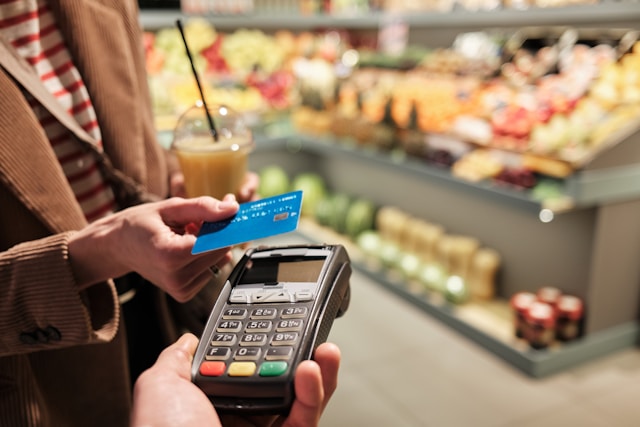
If you accept card payments through Square, Stripe, PayPal Zettle, or another point-of-sale system, you can set it to calculate sales tax automatically. This eliminates math errors and creates an automatic record for filing. Most POS systems let you set different tax rates for different product categories, so your exempt items ring up tax-free while your taxable items get the correct rate applied automatically — no mental math required during a busy market rush.
Homegrown is $10/month with no percentage fees beyond standard payment processing (2.9% + $0.30) and tracks every sale in your dashboard — order totals, payment dates, and transaction fees are all documented automatically. Compare that to coordinating orders through Venmo and text messages where you have no consolidated record at tax time. Homegrown doesn't file your taxes or calculate your sales tax rate — it gives you clean order records that make filing straightforward.
If you sell at multiple markets in different locations, make a rate card listing the sales tax rate for each location. Tape it to your cash box so you always charge the right amount.
Collecting sales tax is only half the equation. You also need to file returns and send the money to your state.
Your state will tell you how often to file based on your expected sales volume:
Even seasonal sellers need to file. If you only sell at markets during summer months, you still file returns for the non-selling periods (these are called "zero returns").
Your sales tax return typically asks for:
Most states let you file online through their tax portal. Some states also accept paper returns mailed in. Online filing is faster and creates a confirmation record.
Late filing or non-payment can result in:
File on time, even if you owe zero. Many states penalize vendors who skip filing periods, even when no tax is due.
Five states have no state-level sales tax:
If you sell exclusively in one of these states, you don't need to worry about collecting or remitting state sales tax. However, note that Alaska allows local jurisdictions to impose their own sales taxes, so some Alaska vendors may still need to collect local sales tax.
These mistakes are easy to make and can cause problems with your state tax authority.
Not registering before you start selling. Get your sales tax permit before your first market day. Selling without one can result in penalties, and your market manager may not let you set up without it.
Assuming all food is exempt. While many food items are exempt from sales tax, prepared food, candy, and beverages are often taxable. Don't assume — verify with your state.
Not filing returns. Even if you collected zero sales tax (because all your products are exempt), you may still need to file a return reporting your exempt sales. Skipping a filing period can trigger notices and penalties.
Forgetting about local rates. Sales tax isn't just your state rate. Cities and counties often add their own sales tax on top. The rate can change from one market location to another just a few miles away.
Not keeping records. Track your total sales, taxable sales, and tax collected at every market. A simple notebook or spreadsheet works. Without records, you're guessing on your return — and guessing can be expensive if you're audited.
If you're tracking all your business expenses for tax deductions, add sales tax records to the same system. Keep everything in one place.
Bring a calculator. Even if you include tax in your prices, you'll need it for multi-item sales.
Have a cash box system. Keep sales tax money separate if possible. Some vendors put collected tax into a separate envelope after each market day so it doesn't get mixed with income. This habit prevents the most common cash-flow mistake new vendors make — spending the sales tax they collected as if it were profit, then scrambling to come up with the money when their return is due.
Post your prices clearly. If you add tax at checkout, put a small sign at your booth: "Sales tax will be added to all taxable items." This avoids confusion at the register.
Track each market separately. If you sell at markets in different cities or counties with different tax rates, track sales from each location separately. You may need to report them as separate jurisdictions on your return.
Save your receipts. Keep copies of all ingredient and supply purchases. These are deductible business expenses and also help document your cost of goods sold.
Whether you're just starting a cottage food business or you've been selling for years, staying on top of sales tax keeps your business in good standing and avoids surprises.
Set up an ordering page to sell your homemade food online. Every sale is tracked automatically in your dashboard — making it easier to keep records for tax time.
Selling at markets? Keep clean records and take orders online. The easiest way to take local orders and get paid is an online storefront — see the best platform to sell food from home, or set up a Homegrown storefront in about 15 minutes ($10/mo, 0% commission).
Usually no. In most states, one sales tax permit covers all your sales locations within the state. However, you may need to report sales by location on your tax return, and some states require you to notify them of additional selling locations. Check with your state's department of revenue.
Yes. Many farmers market vendors build tax into their prices for simpler transactions. You'll still owe the tax — you just calculate it out of your gross sales when filing. For example, if your tax rate is 7% and you sell a $5 item (tax included), the item price was $4.67 and the tax was $0.33.
Yes. Sales tax applies to all taxable sales regardless of where they happen. Online sales may have additional complexity around where the buyer is located (destination-based vs. origin-based taxation), but in general, you collect tax on all taxable sales through any channel.
Your state's department of revenue website usually has a rate lookup tool. Enter the address of your market location to get the exact combined rate (state + county + city). You can also ask your market manager — they often know the local rate since all vendors at that location use the same one.
No. Samples given away for free aren't sales, so no sales tax applies. However, if you charge for a "sample portion" or a "tasting," that's a sale and may be subject to sales tax if the item is taxable.
Some states exempt all food from sales tax — not just grocery items, but prepared food too. If your state exempts all food, you still need a sales tax permit if you sell any non-food items (like crafts, cutting boards, or merchandise). You'll also still need to file returns reporting your exempt food sales.
This article is for informational purposes and does not constitute tax or legal advice. Sales tax rules vary by state and locality. Contact your state's department of revenue or a qualified tax professional for guidance specific to your situation.
Sales are tracked automatically in your ordering dashboard, making record-keeping easier.