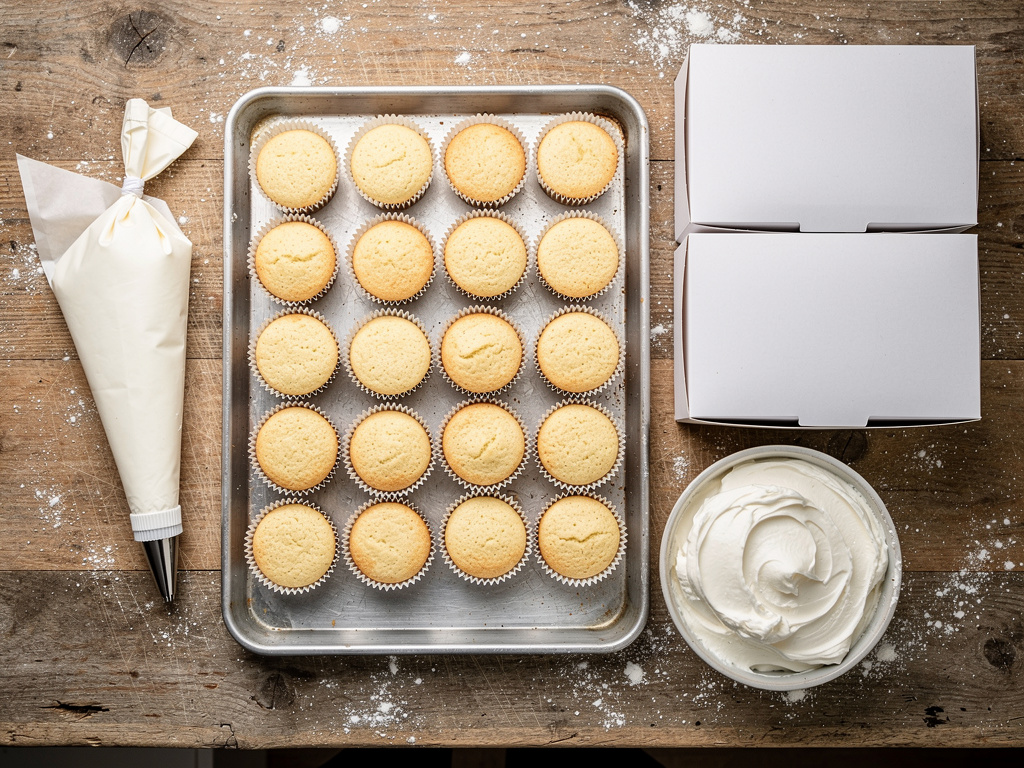


You get a text from a new customer: "Hey, I just Venmo'd you for six dozen cupcakes. Can I pick them up in an hour?" You check your Venmo. Nothing there. They send you a screenshot showing a completed payment. It looks real. But the money never hits your account. You just handed over $150 worth of product for free.
This happens to small food vendors more often than most people realize. Fake payment screenshots, chargebacks on credit card orders, customers claiming they already paid when they did not. And because most cottage food vendors are running a one-person operation, they do not have fraud departments or dedicated payment teams catching these things. They just lose money and feel terrible about it.
The short version: Payment fraud protection for food vendors starts with one rule: never release product until you have confirmed payment in your actual payment app, not from a screenshot or a customer's word. Beyond that, use a payment system that gives you transaction records, require payment before pickup or delivery, keep photo documentation of every order, and set clear policies upfront. Most fraud targeting small vendors is opportunistic, not sophisticated, which means simple habits stop almost all of it.
Small food vendors face five main types of payment fraud, and most of them are low-tech scams that rely on the vendor being too busy or too trusting to verify. Unlike large retailers dealing with stolen credit cards and identity theft, cottage food fraud is almost always someone exploiting the informal nature of a small business.
Here are the most common fraud types hitting food vendors:
| Fraud Type | How It Works | Risk Level for Food Vendors |
|---|---|---|
| Fake payment screenshots | Customer shows fabricated proof of payment | High — very common with peer-to-peer apps |
| Chargeback fraud | Customer disputes a legitimate charge after receiving product | Medium — mostly affects card payments |
| "I already paid" claims | Customer claims payment was made when it was not | Medium — common at busy markets |
| Bounced checks | Payment reverses after product is delivered | Low — fewer vendors accept checks now |
| Overpayment scams | Fraudulent payment exceeds order total, refund requested | Low — but losses can be large |
The average chargeback costs a small business $190 when you factor in the lost product, the refunded amount, and the chargeback fee from the payment processor. That is a full day's revenue for many cottage food vendors.
The best way to prevent chargebacks is to create a paper trail that proves the customer ordered, received, and was satisfied with their product. Most chargebacks against food vendors succeed because the vendor has zero documentation to dispute them.
Follow these steps to protect yourself from chargeback fraud:
If you do receive a chargeback, respond immediately. Most payment processors give you a short window (usually 7 to 14 days) to submit evidence. Your photos, receipts, and order confirmations become your defense.
Vendors who collect payment before releasing product and keep photo evidence of delivery see chargeback rates drop to near zero. The documentation alone deters most bad actors because they know you can dispute it.
The biggest red flag is an unusually large order from someone you have never sold to before, especially when they are in a rush. Legitimate new customers ordering 10 dozen cookies for a party do exist, but they usually ask questions, discuss timing, and are not pressuring you to skip your normal process.
Watch for these warning signs:
Not every large order from a new customer is fraud. But when you see two or three of these flags on the same order, slow down. Ask questions. Verify payment. A real customer will not mind your professionalism. A scammer will disappear the moment you add friction.
Trust your gut. If an order feels off, it probably is. You are not being rude by verifying payment or asking a new customer how they found you. You are being a smart business owner.
Always verify payment in your actual payment app or account dashboard, never from a screenshot, text message, or the customer's phone screen. As Wise's seller safety guide warns, relying on screenshots is the single most common way small vendors get scammed. Screenshots can be faked in under a minute with basic photo editing. Your own app cannot be faked.
Here is how to verify each common payment method:
| Payment Method | How to Verify | Wait Time Before Releasing Product |
|---|---|---|
| Venmo | Open your Venmo app and check your transaction feed for the payment | Instant once it appears in your feed |
| CashApp | Open CashApp, check activity tab for incoming payment | Instant once it appears |
| Zelle | Check your bank account or Zelle app for the deposit | Instant for enrolled accounts, 1-3 days for new recipients |
| Square | Check your Square dashboard for completed transaction | Instant for card payments |
| PayPal | Log into PayPal and check recent activity (watch for "pending" status) | Wait until status shows "completed," not "pending" |
| Cash | Count it | Instant |
| Check | Deposit and wait for it to clear | 3-5 business days minimum |
Steps for verifying any digital payment:
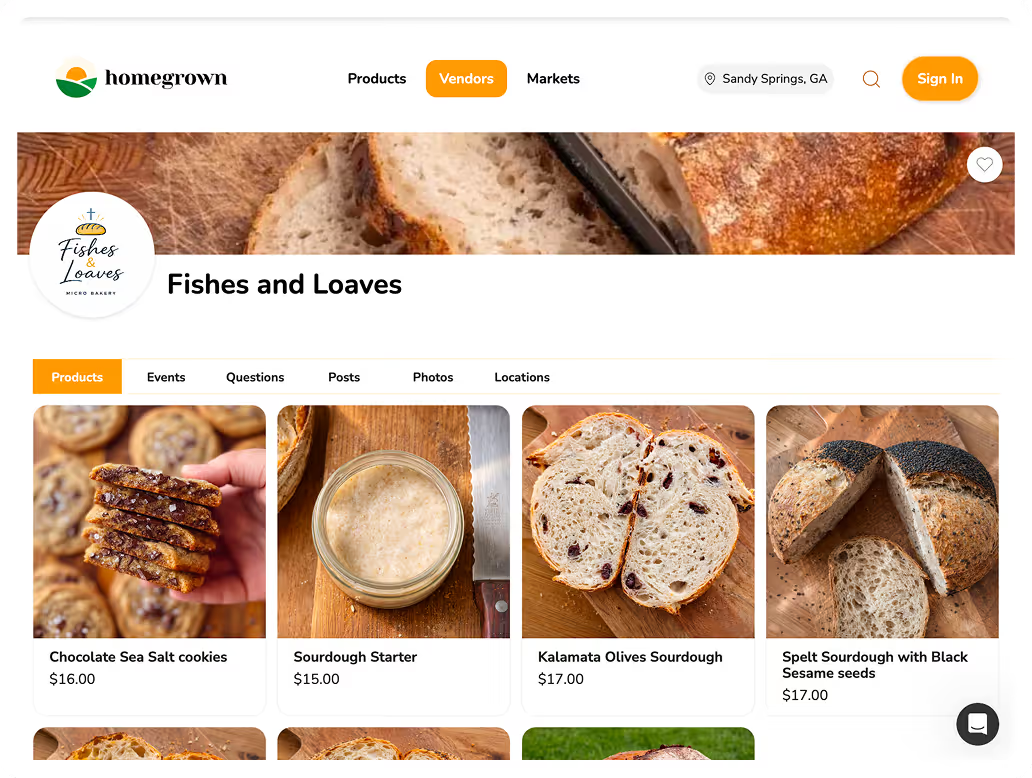
If you use a platform like a Homegrown storefront, payments are processed through the system before the order is confirmed. You never have to wonder if a customer actually paid because the order does not come through until payment clears. That removes the verification step entirely.
Never release product based on a customer's claim that payment was sent. If it is not in your account, it has not been sent. Period.
No, you should not stop taking cash. Cash is still the most common payment method at farmers markets, and refusing it would cost you more in lost sales than you would ever lose to cash-related issues. But you do need to track it.
Here is how to handle cash safely:
Here is how cash compares to digital payment methods:
| Factor | Cash | Peer-to-Peer Apps (Venmo, Zelle) | Card Payments (Square, Stripe) |
|---|---|---|---|
| Fraud risk | Low (what you see is what you get) | Medium (fake screenshots, pending payments) | Medium (chargebacks) |
| Transaction fees | None | None or minimal | 2.6% to 3.5% per transaction |
| Record keeping | Manual — you must track it yourself | Automatic in-app history | Automatic with full reporting |
| Customer convenience | High at in-person markets | High for online and delivery orders | High for all order types |
| Chargeback risk | Zero | Low (most apps are non-reversible) | Moderate |
| Best for | Farmers market booth sales | Pre-orders, delivery payments | Online orders, recurring orders |
The safest approach is accepting multiple payment methods while having clear verification procedures for each one. Cash is perfectly safe when you track it. Digital payments are perfectly safe when you verify them before releasing product.
The safest payment systems for small food vendors are ones that process payment automatically before the customer receives their order, give you transaction records, and handle disputes on your behalf. Square, Stripe, and platforms with built-in payment processing meet all three criteria.
Here is what to look for in a payment system:
Recommended payment solutions for cottage food vendors:
When you use a dedicated ordering system, you also get the benefit of setting expectations for custom orders upfront. Customers see exactly what they are ordering and paying for, which eliminates the ambiguity that leads to disputes.
Vendors who switch from peer-to-peer apps to a proper payment system cut payment-related problems by over 90%. The small transaction fee is worth it for the protection and professionalism.
Square and Stripe solve payment processing — card readers, transaction records, chargeback support. But they do not solve the ordering problem: the gap between "customer wants to buy" and "payment is confirmed" where most cottage food fraud happens.
Homegrown is $10/month with no percentage fees. It merges ordering and payment into one step. The customer browses your menu, selects products, and pays at checkout. The order does not reach your dashboard until payment clears. There is no window for fake screenshots because customers pay through the page, not through a separate app.
Compare that to Square, which gives you a card reader but charges 2.6% plus 10 cents per swipe and does not handle online pre-orders unless you add Square Online at 2.9% plus 30 cents. Or Venmo and Zelle, which process payments but offer no order tracking, no receipts, and no dispute support for sellers.
Homegrown does not replace your Square reader for walk-up market sales — cash and card at the booth still need their own tools. But for every pre-order, custom order, and subscription that flows through texts and Venmo, it eliminates the fraud window entirely.
Do not release the product. Politely tell the customer you do not see the payment in your account yet and ask them to resend it. If the payment never appears, the customer was attempting fraud. You do not need to confront them or accuse them of anything. Simply say your policy is to confirm payment in your account before fulfilling orders. Most scammers will walk away at that point. Block their number and move on.
Contact your payment processor immediately and submit all evidence you have: order confirmation messages, delivery photos, receipts, and any communication with the customer. Most processors give you 7 to 14 days to respond. The more documentation you have, the better your chances of winning the dispute. Payment fraud protection food vendor businesses rely on comes down to keeping good records from the start.
Venmo works for casual transactions, but it was designed for splitting dinner bills, not running a business. Venmo's purchase protection does not cover in-person transactions, and business accounts have limited dispute resolution compared to Square or Stripe. If you use Venmo, always verify payments in your own app before releasing product, and consider moving to a business-grade solution as your order volume grows.
Yes, and you should. Requiring payment before pickup is standard practice for pre-orders and is one of the most effective forms of payment fraud protection food vendor businesses can implement. Take a few walk-up cash sales at the booth, but for any pre-order or custom order, collect payment when the order is placed, not when the customer shows up.
Use a duplicate receipt book and write a receipt for every cash transaction. Record the time, products sold, and amount paid. At the end of the day, compare your receipt book total to the cash in your box. Many vendors also take a photo of their receipt book page at the end of each market day as a backup. This simple system catches errors and gives you records for tax purposes.
For most cottage food vendors, yes. Checks take days to clear, can bounce, and offer the weakest fraud protection of any payment method. If a long-time customer insists on paying by check, that is a judgment call. But for new customers and large orders, stick to cash, cards, or digital payments that clear instantly.
A Homegrown storefront processes payment automatically when a customer places an order. The order does not come through to you until payment clears. There is no opportunity for fake screenshots, "I already paid" claims, or unverified payments because the system handles everything. You also get a refund policy framework and full transaction records for every order, giving you documentation if any dispute does arise.
Payment fraud does not have to be a cost of doing business. Simple verification habits, proper documentation, and the right payment tools stop the vast majority of scams before they cost you a dollar. Start with the basics: confirm every payment in your own account, never release product on a promise, and keep records of everything. Your baked goods are worth protecting.