

You sell at the farmers market every Saturday. Your regulars show up. Your jars of jam, bags of granola, or boxes of fudge sell steadily. But the second you leave that booth, sales stop. You only make money when you are physically standing behind a table.
Now imagine your products sitting on a shelf in a gift shop downtown. Customers pick them up, read the label, and buy them — while you are at home baking the next batch. You are not behind a booth. You are not on Instagram answering DMs. Your products are doing the selling for you.
Getting your food into a local gift shop, boutique, coffee shop, or specialty store is one of the most practical ways to build passive income from your food business. It does not require a distributor, a UPC barcode, or a slotting fee. What it requires is good products, a simple pitch, and the right store.
Here is how to do it, step by step.
The short version: To get your food into a local gift shop or boutique, start by finding stores that already carry local or artisan products. Visit as a customer first to understand what they sell and at what price point. Then approach the owner with samples and a one-page sell sheet showing your product, wholesale pricing, and reorder details. Most small stores mark up shelf-stable products 40 to 100 percent, so your wholesale price needs to leave room for that margin. Many vendors start with a consignment arrangement — you own the product until it sells, and the store takes 30 to 50 percent. Before pitching any store, check your state's cottage food law — some states do not allow cottage food products to be sold through third-party retailers.
Selling through local stores gives you a sales channel that works without your direct presence. You stock the shelf, the store sells your product, and you restock when inventory runs low. That is time you get back for production, marketing, or simply taking a day off.
There are several reasons this channel works especially well for small food vendors:
The key is that retail placement works alongside your other channels. You keep selling at the market. You keep running your food drops. And the store adds a revenue stream that does not require your time on the day of sale.
Not every store is the right match for your products. The best retail partners are small, independently owned shops whose customers already value local, handmade, and artisan goods.
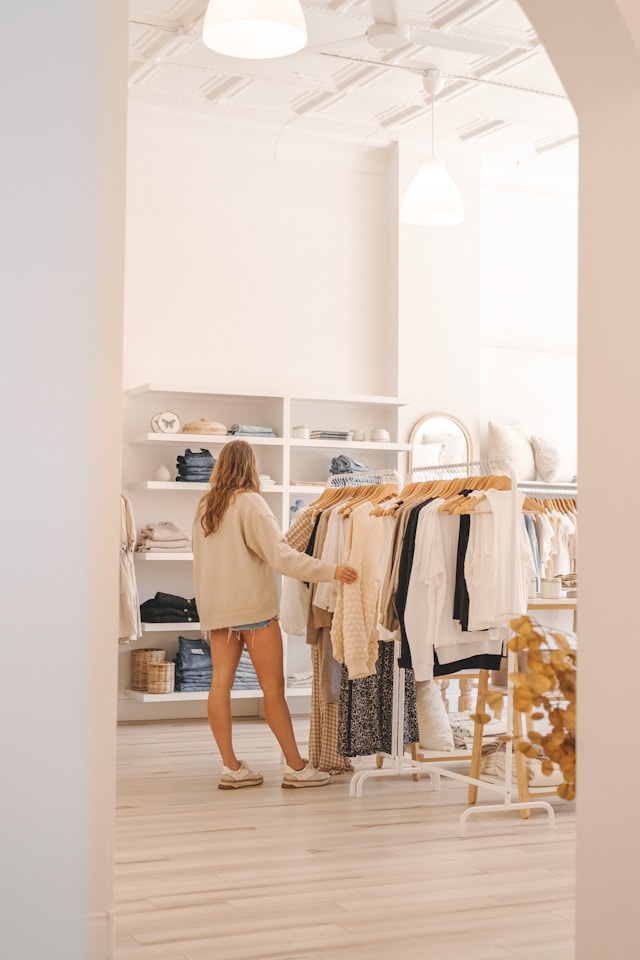
Gift shops are the single best starting point for most cottage food vendors. Customers walk into a gift shop looking for something unique, local, and giftable. A jar of locally made hot sauce, a bag of small-batch granola, or a box of handcrafted fudge fits perfectly alongside candles, soaps, and handmade cards.
What makes gift shops ideal:
Coffee shops are a natural fit for baked goods, granola, cookies, honey, and anything that pairs with coffee. Many small coffee shops are open to carrying a few local food items on the counter near the register.
The advantage of coffee shops is foot traffic. People visit daily, and an eye-catching display of local cookies or honey near the register can generate impulse purchases every day.
If you sell produce, preserves, eggs, or honey, a local farm store or food co-op is a strong fit. The customer base already values local food and expects to pay fair prices for it. Many farm stores and co-ops have established vendor programs with clear terms for pricing, delivery, and shelf space.
Specialty food stores carry higher-end products — artisan sauces, small-batch seasonings, gourmet baked goods. These stores have a higher price tolerance, meaning you can charge more per unit. The trade-off is that they may require more professional packaging and labeling. If your products already look polished and retail-ready, specialty stores can be your most profitable retail channel.
Whether you can sell your cottage food products through a third-party retailer depends entirely on your state's law. This is the first thing to check before approaching any store.
Some states allow indirect sales — meaning you can sell your cottage food products to a store, and the store resells them to consumers. States like California, Maine, Ohio, and Texas allow some form of retail or consignment sales for cottage food products.
Other states restrict cottage food sales to direct producer-to-consumer transactions only. In Georgia, for example, you must sell your cottage food products directly to the end consumer. You cannot place them in a store for someone else to sell on your behalf.
If your state does not allow cottage food products to be sold through retail stores, you have two options:
Check your state's cottage food law specifically for language about "indirect sales," "third-party sales," "wholesale," or "consignment." If you are not operating under a cottage food exemption — if you already have a food license and produce in a licensed kitchen — this restriction typically does not apply to you.
Your wholesale price is the price the store pays you for each unit. The store then marks it up to the retail price that the customer pays. Getting this math right is critical — if your wholesale price is too high, the store cannot make money. If it is too low, you cannot make money.
According to MSU Extension's guide to selling food in local stores, typical store markups after the producer captures their 35% margin are around 50% for deli products, 30% for frozen and refrigerated items, and 18-25% for shelf-stable products. For small gift shops and boutiques carrying shelf-stable cottage food products, expect the store to mark up your wholesale price by 40 to 100%.
Here is a simple wholesale pricing formula:
Example: Your jam costs $3 per jar to make (ingredients, jar, lid, label, time). You want a $3 profit. Your wholesale price is $6 per jar. The gift shop marks it up 60% and sells it for $9.60, rounded to $10.
If the final retail price looks too high for the store's customer base, you need to either lower your production costs or accept a slimmer margin — not drop your wholesale price below profitability.
For a complete breakdown of wholesale pricing math, read How to Set Wholesale Prices for Your Food Products. And for broader pricing strategy across farmers markets, wholesale, and online, see How to Price Food for Farmers Market, Wholesale, and Online.
Finding the right store is more important than finding the most stores. One good retail partner who actively sells your product is worth more than five stores where your jars collect dust in a back corner.
How to identify the best-fit stores:
Do not start with chain stores. National chains have buying offices, vendor requirements, and slotting fees that are not realistic for small producers. Start with independently owned shops where you can talk directly to the owner.
Approaching a store owner for the first time can feel intimidating, but most small shop owners are genuinely interested in carrying local products. They want unique items that their competitors do not have. Your job is to make it easy for them to say yes.
Go to the store as a customer before you go as a vendor. Buy something. Look around. Pay attention to:
This visit tells you whether your products belong in this store. It also gives you something genuine to reference when you make your pitch: "I shop here regularly and I noticed you carry local honey. I think my jam would pair really well with it."
A sell sheet is a single page that tells the store owner everything they need to know about your product. It is not a flyer. It is not a brochure. It is a business document.
Your sell sheet should include:
Keep it clean, professional, and easy to scan. A store owner should be able to glance at your sell sheet and understand your product, your pricing, and how to order more in under 60 seconds. For tips on writing product descriptions that sell, read How to Write Product Descriptions That Sell Food Online.
Always bring product samples when you pitch. Store owners want to taste before they commit. Package your samples exactly as you would sell them — same jar, same label, same presentation. If the store owner likes how it tastes and how it looks, you are halfway to a yes.
Leave a sample and your sell sheet even if the owner is not available when you visit. Include a short handwritten note with your name and phone number.
Keep your pitch simple and direct. You are not giving a presentation. You are having a short conversation.
Something like: "I make [product] locally and I have been selling it at the [farmers market name] for [time period]. I think it would be a great fit for your store. I brought samples and a sell sheet with my wholesale pricing. Would you be open to trying a small order?"
Be ready to answer three questions:
Do not pressure the owner. If they want to think about it, leave your sell sheet and samples and let them know you will follow up.
Call or email one week after your visit. A simple follow-up: "Hi, I dropped off samples of my [product] last Tuesday. I wanted to check in and see if you had a chance to try them. I would love to set up a small initial order if you are interested."
If they say no, ask what would make them reconsider. Maybe the packaging needs work. Maybe the price point is too high. Maybe they already have a similar product. A "not right now" is not a permanent no — it is information you can use.
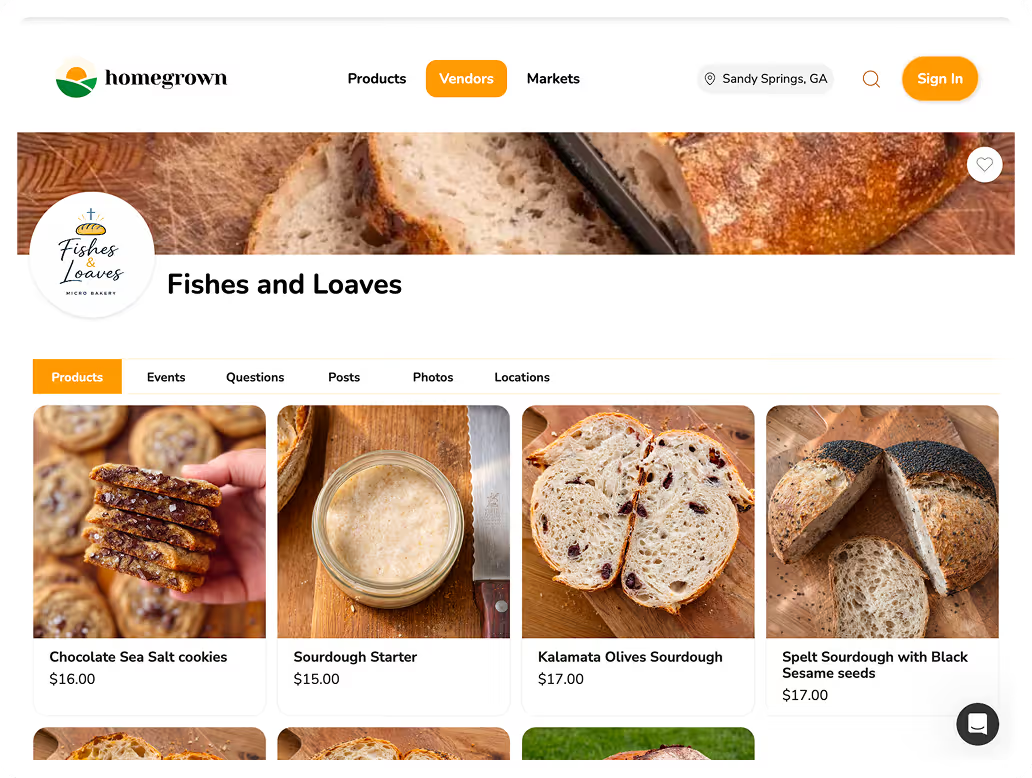
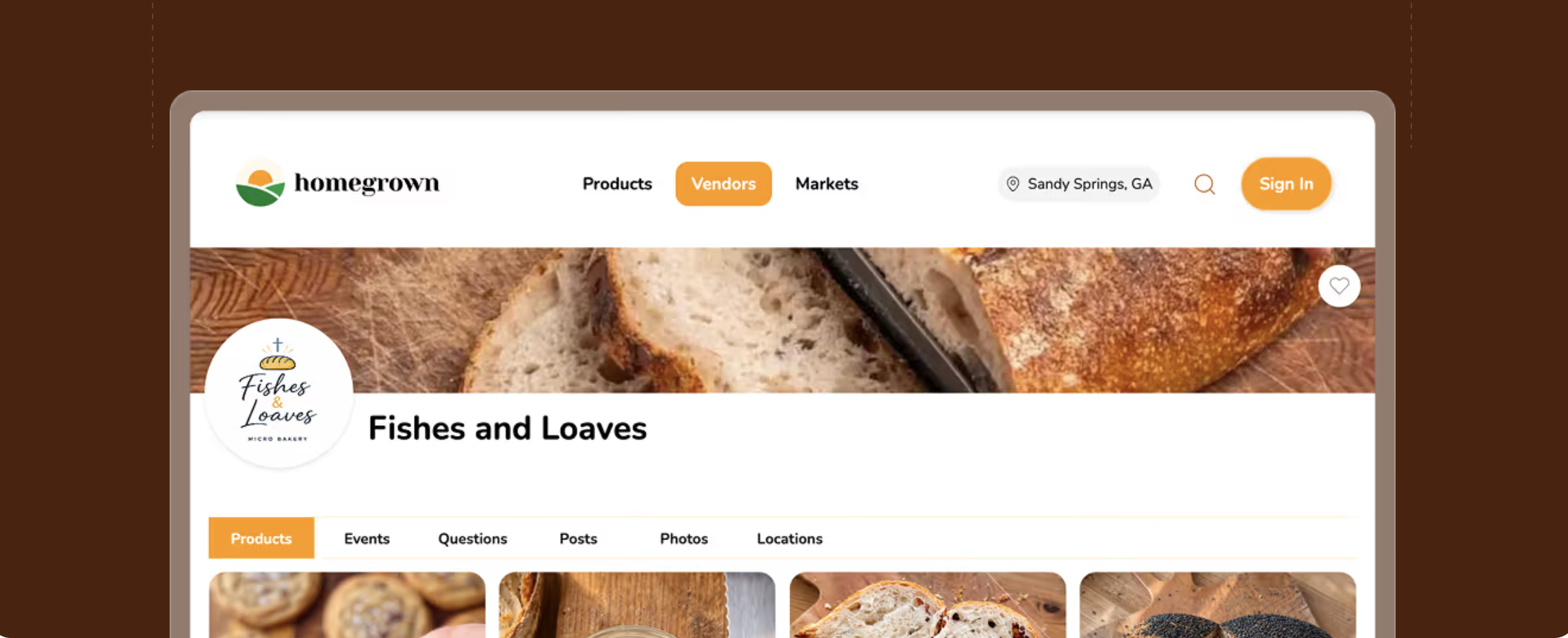
Having an online ordering page strengthens your pitch to store owners — it shows you are a real business, not just someone who bakes on weekends. Homegrown is $10/month with no percentage fees beyond standard payment processing and gives you a professional product catalog you can include in your sell sheet or email to buyers. Store owners can browse your full line, see your pricing, and understand what you offer before you walk in the door. It also gives you a direct-to-consumer channel that runs alongside your wholesale accounts — the customers who find you through a gift shop can reorder directly from you between store visits, keeping 100% of the margin on those sales instead of splitting it with a retailer. Compare that to Etsy, where 6.5% per transaction cuts into already-thin wholesale margins, or Instagram, where store owners see a feed of photos but no product catalog they can reference. Homegrown does not manage your wholesale relationships or handle store deliveries — it gives you a professional online presence and a direct sales channel that complements your retail placements.
When a store agrees to carry your product, you need to decide how the financial arrangement works. The two most common options for small food vendors are consignment and wholesale.
Consignment means you place your products in the store, but you still own them. The store only pays you when the product sells. The store takes a percentage of the sale — typically 30 to 50% — and you receive the rest. If the product does not sell, you take it back.
Wholesale means the store buys your products upfront at your wholesale price. The store owns the inventory. They mark it up and sell it at whatever retail price they choose. You get paid when you deliver the product, regardless of whether the store sells it.
Here is how they compare:
Most vendors start with consignment to prove their product sells in that store. Once you have 2-3 months of consistent sales data, renegotiate to a wholesale arrangement. At that point, the store knows your products move and they are more willing to buy upfront.
Regardless of the model, always have a written agreement. It does not need to be a formal contract — even a one-page document covering pricing, payment terms, restocking schedule, and what happens to unsold product is enough to avoid misunderstandings later.
Packaging that works at a farmers market booth — where you are standing right there to explain your product — may not work on a retail shelf where your product has to sell itself. Retail packaging needs to do the selling for you.
Key packaging requirements for retail placement:
For more packaging ideas and what works at markets and in retail, read Best Food Packaging Ideas for Farmers Market Vendors.
Getting your product on the shelf is only half the work. Keeping it there requires consistent effort.
What ongoing support looks like:
The vendors who keep their retail placements long-term are the ones who treat each store like a partnership, not a transaction.
One good retail placement is a foundation. Multiple placements create a real wholesale revenue stream. But growing from one store to five requires a deliberate approach — not just knocking on every door in town.
Growth strategies that work:
Getting your food into a local gift shop or boutique is one of the best ways to build passive income, reach new customers, and add credibility to your food business. You do not need a distributor. You do not need a UPC code. You need good products, professional packaging, and the willingness to walk into a store and make the ask.
Here is the simplest path:
Start with one store. Prove your products sell. Then grow from there.
Ready to grow your food business beyond the farmers market? Set up your ordering page and give customers and store owners a professional place to learn about your products and place orders.
No. Most small gift shops, boutiques, and specialty stores do not require UPC barcodes. They typically use their own point-of-sale system to ring up items by name or internal code. UPC barcodes are primarily required by chain retailers and grocery stores that use automated inventory scanning systems. If a store does ask for a barcode, you can purchase a UPC through GS1 US, but this is uncommon for small local retailers.
Start with your two or three best sellers. Store owners do not want to evaluate 15 products at once — they want to see your strongest items and understand whether those specific products fit their store. Once your initial products are selling well, you can introduce additional items. Leading with a focused selection is more compelling than overwhelming the owner with choices.
Give it at least 60 to 90 days before making a judgment. Ask the store owner where the product is placed — a back corner gets far less traffic than a spot near the register. Offer to do an in-store sampling day to introduce the product to customers. If sales are still slow after a full season, the store may not be the right fit for that particular product. Try a different product in that store or move on to a different type of store where your items may resonate better.
Your retail price at the farmers market should be the same as or close to the suggested retail price at the store. If your jam sells for $10 at your market booth and the store sells it for $10, there is no conflict. If you undercut the store by selling the same product for $7 at the market, the store owner will notice — and so will their customers. Price consistency across your sales channels protects your retail relationships and your margins.
In most cases, no. Exclusivity limits where you can sell and reduces your overall revenue. However, if a store is willing to place a large initial order or commit to a premium shelf position in exchange for exclusivity within their immediate neighborhood, it can be worth discussing. Any exclusivity agreement should be limited in scope (geographic area, not all stores everywhere) and limited in time (six months, not indefinitely).
Most consignment arrangements for food products give the store 30 to 50% of the retail price. A 60/40 split (60% to you, 40% to the store) is a common starting point for small retailers. Some stores take as little as 25% for high-demand items, while others may ask for 50% if they are providing prime shelf space and active promotion. Negotiate based on how much selling effort the store provides and how much of the customer relationship you bring.