

Fermented foods are one of the fastest-growing categories at farmers markets. Customers are looking for sauerkraut, kimchi, kombucha, fermented hot sauce, and other probiotic-rich products — and many of them want to buy local, small-batch versions.
If you already make fermented foods at home, selling them seems like a natural next step. But fermented foods sit in a legal gray area that is more complicated than selling cookies, bread, or jam. Some states allow certain fermented products under cottage food laws. Many do not. And one fermented product — kombucha — brings federal alcohol regulations into the picture.
This guide breaks down which fermented foods you can sell from home, the permits you need, how to handle pH testing, and how to price, package, and sell your products.
The short version: Whether you can sell fermented foods from home depends on your state and the type of ferment. Vegetable ferments like sauerkraut and kimchi are allowed under cottage food laws in some states if the pH is 4.6 or below. Kombucha is harder because it is a beverage (excluded in many states) and can exceed the 0.5% alcohol threshold that triggers federal TTB regulation. Dairy ferments like kefir and yogurt require refrigeration and are almost never allowed under cottage food laws. If your state does not allow your product under cottage food, a MEHKO permit or commissary kitchen is the next step.
The answer depends on two things: what type of fermented food you want to sell, and what state you live in. Not all fermented foods are treated the same under the law.
Lacto-fermented vegetables are the most likely fermented foods to be allowed under cottage food laws. Sauerkraut, kimchi, fermented pickles, and fermented hot sauce are all vegetable-based products that, when properly fermented, reach a pH of 4.6 or below — making them shelf-stable and safe at room temperature.
Several states explicitly allow fermented or acidified vegetables under their cottage food laws. Texas, for example, allows any homemade food item to be sold directly to consumers, including fermented vegetables, as long as you test each batch with a calibrated pH meter to confirm the pH is 4.6 or lower. Tennessee's Food Freedom Act is similarly broad.
Other states allow "acidified foods" or "pickled products" without specifically mentioning fermentation. In these states, lacto-fermented vegetables may qualify if they meet the pH requirement — but you should confirm with your health department before selling.
Many states, however, still do not allow fermented vegetables under cottage food laws. Their approved food lists are limited to baked goods, jams, and other traditional shelf-stable products. Check your state's cottage food law to see what is allowed.
Kombucha is the most legally complicated fermented food to sell from home for two reasons.
First, most cottage food laws do not allow beverages. Even states that allow some fermented foods may exclude drinks entirely from their cottage food approved lists.
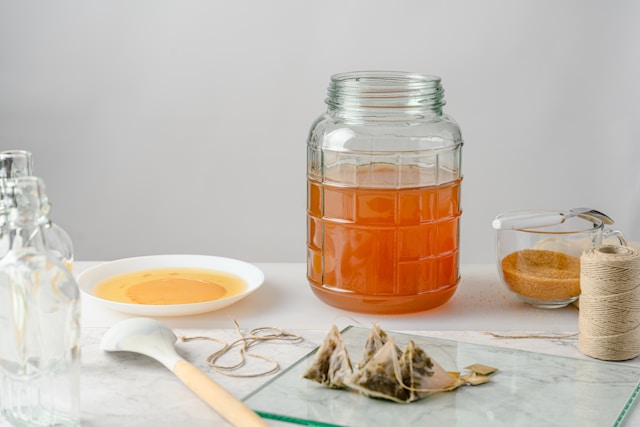
Second, kombucha can contain alcohol. During fermentation, the yeast in the SCOBY produces small amounts of ethanol. If the alcohol content of your kombucha reaches 0.5% ABV or higher — at any point during production, at bottling, or after bottling — it is classified as an alcoholic beverage under federal law and is regulated by the Alcohol and Tobacco Tax and Trade Bureau (TTB).
This means that even if your state allows kombucha under cottage food or MEHKO laws, you still need to ensure your product stays below 0.5% ABV. If it exceeds that threshold, you need federal permits and potentially a state liquor license.
For most home sellers, kombucha requires a licensed commercial kitchen, a food business license, and careful alcohol testing. It is rarely a cottage food product.
Dairy ferments like kefir, yogurt, and cultured buttermilk require refrigeration. They are perishable, potentially hazardous foods. Cottage food laws in virtually every state exclude dairy products that need refrigeration.
Selling dairy ferments from home typically requires a MEHKO permit (in states that offer them), a commercial kitchen, or a dairy processing license. The regulatory requirements are significantly higher than for vegetable ferments.
Most cottage food laws were written for baked goods, jams, and dry goods — simple shelf-stable products with low food safety risk. Fermented foods do not fit neatly into that category for several reasons.
These factors are why fermented foods have been slower to gain cottage food approval compared to baked goods and preserves. The regulatory landscape is changing — more states are expanding their laws to include fermented and acidified foods — but progress is uneven.
If you want to sell fermented foods from home, you have three main pathways depending on your state and the type of product.
In states that allow fermented foods under cottage food laws, this is the simplest and cheapest option. You make the products in your home kitchen, follow your state's labeling and sales rules, and sell directly to consumers.
The catch is that most states either do not allow fermented foods under cottage food at all, or they only allow specific types (usually vegetable ferments with pH testing). Check what you can sell under cottage food laws in your state to see if your fermented product qualifies.
Requirements typically include:
If your state has a MEHKO law, this permit allows you to sell a wider range of foods from your home kitchen, including some that are not allowed under cottage food laws. MEHKO permits typically allow perishable foods and have fewer product restrictions.
MEHKO requirements are stricter than cottage food:
A MEHKO permit may allow you to sell fermented vegetables, fermented hot sauce, and potentially some dairy ferments that would not qualify under cottage food. Check whether your state offers a MEHKO program and what products it covers.
If your state does not allow your fermented product under cottage food or MEHKO, a commissary kitchen is your next option. You rent time in a licensed, health-department-inspected commercial kitchen to produce your fermented foods.
A commissary kitchen removes most product restrictions. You can sell virtually any fermented food — vegetable ferments, kombucha (with proper alcohol testing), dairy ferments — as long as you have the appropriate food business license.
Expect to pay $15 to $45 per hour or $250 to $750 per month for shared access to a commissary kitchen.
The permits you need depend on which pathway you choose.
For cottage food (vegetable ferments in qualifying states):
For MEHKO:
For commercial kitchen / commissary:
If your state allows fermented foods under cottage food laws, it almost certainly requires pH testing. This is the most important food safety step for fermented products.
What you need:
How it works:
Keep records. Most states that allow fermented foods require you to maintain pH testing logs. Even if your state does not explicitly require it, keeping records protects you if a customer or health inspector ever has questions.
Fermented foods command higher prices than most cottage food products because they require specialized skills, longer production times, and quality ingredients.
Typical price ranges at farmers markets:
How to calculate your price:
Use this formula: (ingredients + packaging + labor + overhead) x 2.5 to 3 = retail price
For a batch of sauerkraut:
The formula gives you a floor. Compare your calculated price against what customers in your market are willing to pay. For most fermented foods, $8 to $14 per jar is the sweet spot.
Pricing tips:
For a deeper look at pricing strategies, read our guide on how to price your food products.
Packaging fermented foods properly is essential for safety, shelf life, and customer trust.
Packaging options:
Labeling requirements (cottage food): Your label must include:
Important: Fermented foods often contain common allergens that customers may not expect. Kimchi frequently contains fish sauce or shrimp paste. Fermented hot sauces may contain soy. Always list all ingredients clearly.
Farmers markets are the best starting point for fermented food sales. Customers at farmers markets are already looking for artisan, locally made, health-conscious products — exactly the category fermented foods fall into.
Bring samples. Fermented foods are an acquired taste for many people, and tasting is the most effective way to convert a curious browser into a paying customer. Use small sample cups and provide toothpicks or tasting spoons.
Keep your products at the correct temperature. If your fermented foods require refrigeration (most do after opening, and some need it at all times), bring a cooler with ice packs to your booth.
Fermented foods are ideal for a pre-order model because fermentation takes time. You cannot make sauerkraut or kimchi overnight — a typical batch takes one to four weeks to ferment. Taking pre-orders lets you plan your production schedule, reduce waste, and guarantee sales before you start fermenting.
A weekly or monthly subscription (for example, "one jar of seasonal ferment per month") creates predictable recurring revenue and gives customers something to look forward to. Homegrown is $10/month with no percentage fees beyond standard payment processing and gives you an ordering page where customers browse your ferments, place pre-orders, and pay upfront — so you know exactly how many jars to make before you start fermenting. Compare that to managing orders through Instagram DMs and Venmo (no consolidated order list, no payment confirmation, no cutoff when your batch is spoken for) or Etsy (6.5% per transaction, designed for shipping — not weekly local pickup). Homegrown does not handle shipping logistics or subscription billing — it gives you the ordering infrastructure to run a pre-order fermented foods business without living in your DMs.
Check your state's cottage food law to see if online sales and delivery are allowed. If they are, selling through your own ordering page lets you reach customers beyond the farmers market. Fermented foods ship well when properly packaged with insulation and cold packs, though shipping adds significant cost.
Local delivery is simpler and cheaper. Many fermented food sellers take orders online and deliver within a set radius once or twice per week.
Once you have a consistent product and a following, approach local health food stores, co-ops, and specialty grocery stores about carrying your products. Note that selling wholesale to retail stores typically requires a licensed commercial kitchen — cottage food laws usually do not allow wholesale sales.
Do not launch with ten varieties. Start with one or two products you make exceptionally well — a classic sauerkraut and a signature kimchi, for example. Master those recipes, dial in your production process, and build a customer base before expanding.
Record everything for each batch: ingredients, salt percentage, start date, temperature range, fermentation duration, final pH, and any observations. These records are essential for consistency, food safety compliance, and troubleshooting batches that do not turn out right.
A reliable digital pH meter ($50 to $150), quality fermentation crocks or food-grade buckets, an accurate kitchen scale, and proper glass jars are worth the upfront investment. Cheap pH meters give unreliable readings, and unreliable readings can mean selling an unsafe product or discarding a perfectly safe one.
Many customers are unfamiliar with fermented foods. Be prepared to explain what fermentation is, why it is good for gut health, how to store the product, and how to use it. A small information card included with each jar or posted at your booth goes a long way.
Unlike baked goods that you can make the morning of the market, fermented foods require days or weeks of lead time. Plan your production calendar well in advance. Stagger your batches so you always have product ready to sell.
Ready to turn this into a real business? The easiest way to take local orders and get paid is an online storefront — see the best platform to sell food from home, or set up a Homegrown storefront in about 15 minutes ($10/mo, 0% commission).
In most states, no. Most cottage food laws exclude beverages, and kombucha has the added complication of potential alcohol content. If your kombucha exceeds 0.5% ABV at any point — during production, at bottling, or after bottling — it is federally regulated as an alcoholic beverage. Selling kombucha typically requires a licensed commercial kitchen, a food business license, and careful alcohol monitoring.
If your state allows fermented foods under cottage food laws, it almost certainly requires pH testing with a calibrated digital pH meter. pH test strips are not accurate enough for food safety purposes. A reliable digital pH meter costs $50 to $150 and is a necessary investment.
Properly fermented and stored products have excellent shelf life. Sauerkraut and kimchi stored in sealed jars in the refrigerator can last 6 to 12 months or longer. Unopened jars stored at room temperature (if pH is 4.6 or below) can last several months. Once opened, most fermented foods should be refrigerated and consumed within 1 to 2 months.
Selling across state lines is complicated for fermented foods. Cottage food laws only apply within your state. Interstate sales of food products are regulated by the FDA and require your product to be produced in a licensed, inspected facility. If you want to sell across state lines, you need a commercial kitchen and FDA registration.
If you are selling under a cottage food permit, insurance is generally not required but is a smart investment. If you are using a MEHKO permit or a commissary kitchen, liability insurance is almost always required — typically $1 million per occurrence. Expect to pay $200 to $400 per year for a basic food business liability policy.
Kimchi and specialty sauerkraut varieties tend to be the most profitable fermented foods at farmers markets. They command $9 to $15 per jar, have relatively low ingredient costs, and benefit from strong customer loyalty — once someone finds a kimchi they love, they come back regularly. Fermented hot sauces are also highly profitable because they sell in smaller bottles at high per-ounce prices.
Fermented foods are a growing market with loyal customers and premium pricing. Whether you are selling sauerkraut at the farmers market or building a kombucha brand, start by understanding your state's laws and choosing the right permit pathway for your products.
Whether you sell fermented foods or any other homemade product, having the right ordering tools makes running your business easier. Focus on perfecting your ferments — and let your customers order them without the back-and-forth.