

You started this business because you loved making food. Now you're setting alarms at 4 a.m., spending every weekend at a market, and answering customer DMs while eating dinner. The joy is gone. What's left is a long to-do list and a growing sense of dread.
You're not alone. A recent survey found that 67% of side hustlers say their hustle leads to burnout, according to a Self.inc study on side hustle stress. And it's not just about being tired — it's about running a business that takes more from you than it gives back.
This article walks through how to identify burnout, where it comes from, and what to do about it — without quitting.
The short version: Burnout hits food vendors harder than most side hustles because you're doing physical labor, working with perishable deadlines, and feeling guilty every time you say no. The fix is not "take a break." It's restructuring your business so it stops demanding so much. That means order caps, a simpler menu, batched prep days, and prices that actually pay you for your time.
Burnout is not the same as being tired after a long market day. Burnout is a sustained loss of motivation that makes you dread the work you used to enjoy.
Most food vendors push through early burnout signs because the business depends on them. Here's what to watch for:
If three or more of these sound familiar, you're not just tired. You're burned out.
Not all side hustles burn people out the same way. Food businesses hit differently because of four compounding factors:
These four factors stack on top of each other. That's why food vendor burnout hits faster and harder than burnout in other types of side businesses.
Most food vendor burnout doesn't come from a single cause. It comes from three structural problems that feed each other.
This is the most common root cause. When you charge too little, you need to sell more units to make the same money. More units means more prep time, more ingredients, more packaging, and more hours on your feet.
A vendor selling $8 jars of jam needs to sell 50 jars to make $400 at a market. A vendor selling $14 jars only needs to sell 29. That's almost half the production for the same revenue.
If you haven't revisited your prices in the last year, start there. Most food vendors undercharge by 20-40% because they price based on what they'd pay, not what their time is worth. Check out our guide on how to price food products for a farmers market to run the real numbers.
Every yes is hours of work. When you say yes to a custom cake order, a last-minute market, a holiday pop-up, a friend's event — each one stacks onto a schedule that was already full.
The most burned-out vendors are usually the most generous ones. They don't want to let anyone down. But saying yes to everything means saying no to rest, family time, and the parts of the business you actually enjoy.
Here's a filter that helps: before you say yes to anything new, ask yourself — "If I had to do this every week, would I still say yes?" If the answer is no, it's a one-time energy drain that isn't worth the cost.
Social media, text orders, DMs, emails. The business follows you everywhere. You check your phone at dinner. You answer order questions at 10 p.m. You feel guilty if you don't post for two days.
Research from Founder Reports shows that 72% of entrepreneurs are impacted by a mental health condition, with anxiety and burnout leading the list. The "always on" culture of running a customer-facing food business is a major contributor.
Set business hours and stick to them. Turn off notifications after 7 p.m. Set up an auto-reply for messages received outside your hours. Your customers will adjust. The ones who don't respect your boundaries aren't customers worth keeping.
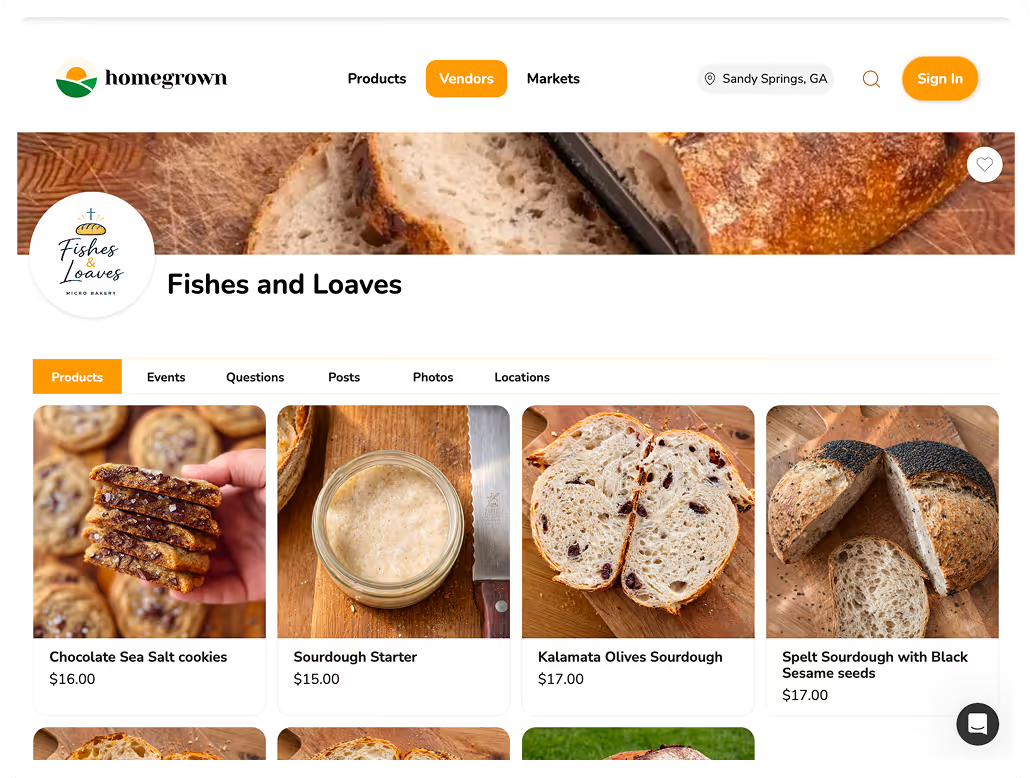
One of the fastest ways to reclaim your evenings is to stop being the ordering system. When every order requires a text conversation, you cannot set business hours because the business is wherever your phone is. A storefront like Homegrown ($10/month) lets customers see your menu and order without messaging you at all — the ordering window opens and closes automatically, payments are collected upfront, and confirmations go out without you typing anything. It does not manage your social media or your production schedule, but it does eliminate the 9 PM text threads that make you dread checking your phone.
The goal isn't to do less work. It's to do less of the work that drains you while protecting the revenue that matters.
The fastest way to cut your workload is to offer fewer products. Most vendors sell 8-15 items. Try cutting to your top 5.
Look at your sales data from the last three months. Which products sell the most? Which ones have the best margins? Which ones take the least time to produce? The answers to those three questions will show you your core menu.
Cut the products that are:
Fewer products means less prep time, fewer ingredients to buy, less packaging to manage, and a cleaner booth display. Most vendors who simplify find they actually make more money because they focus on what sells.
Custom orders are the biggest time drain for most food vendors. They interrupt your production schedule, require special ingredients, and come with higher customer expectations.
Set clear boundaries:
If managing orders feels chaotic, our guide on how to manage orders for a small food business walks through systems that keep things organized without eating up your evenings.
Cooking a little bit every day is a burnout accelerator. Instead, dedicate one or two focused days to all your production for the week.
Here's what batch production looks like in practice:
That's four touchpoints instead of seven. The rest of the week, your kitchen is yours again.
If you haven't set up a batch system yet, our guide on how to batch cook efficiently for your food business breaks down the whole process step by step.
Setting boundaries feels hard because your customers are real people who show up every week. But boundaries are what keep you in business long enough to keep serving them.
You don't need a long explanation. Short, kind, firm.
Here are phrases that work:
Most customers will understand. The few who push back are costing you more energy than their orders are worth.
If custom orders make up more than 30% of your revenue and more than 50% of your stress, something is off. Custom work should be a premium add-on, not the core of your business.
Consider switching to a set menu model:
This shift alone can cut 5-10 hours per week from your workload.
A sustainable food business doesn't run at full speed all year. It has a rhythm — busy seasons, light seasons, and planned breaks.
Map every hour you spend on your food business for one week. Include prep, cooking, packaging, market time, drive time, social media, ordering supplies, answering messages, and bookkeeping.
Most part-time vendors discover they're spending 15-25 hours per week on a business they thought was "just weekends." That's a half-time job on top of whatever else you do.
Once you see the real number, set a cap. Maybe it's 12 hours. Maybe it's 15. Whatever the number, use it as a filter for every decision. If adding a second market day would push you past your cap, the answer is no.
Our guide on how to manage your time as a part-time food vendor has a full framework for building a time budget that protects your energy.
You don't have to run at 100% capacity year-round. Plan your year around natural demand cycles:
Vendors who plan for off-season breaks come back stronger. Vendors who grind through 52 weeks straight come back resentful — or don't come back at all.
You don't have to do every market every week. Consider rotating:
That gives you one full weekend off per month and still maintains a presence at your regular markets. Most customers will adapt to your schedule, especially if you announce it in advance.
There's a difference between burnout that needs a restructure and burnout that means the business model doesn't work. Here's how to tell.
Burnout is temporary if the underlying structure can change. Take a break if:
A break doesn't mean failure. It means you're smart enough to step back before you crash.
Sometimes the business model itself is the problem. Consider walking away if:
Walking away from a business that isn't working is not failure. It's a good decision.
If you're on the fence, try this: make something just for fun. No orders, no labels, no packaging. Bake bread for your neighbor. Make jam for your family. Cook something ridiculous that you'd never sell.
If that sparks joy, your business needs restructuring, not ending. The love is still there — it's just buried under too many obligations.
If you want to revisit what drew you to food in the first place, our piece on how to turn your food hobby into a side business covers the early stage mindset that made it fun. Sometimes going back to basics is exactly what you need.
If you're burned out right now and want a concrete plan, here's a 4-week reset:
Week 1 — Audit
Week 2 — Cut
Week 3 — Restructure
Week 4 — Protect
This isn't about working harder. It's about building a business that doesn't need you to burn out to survive.
Burnout is not the price of running a food business. It is the price of running one without boundaries and systems. Fix the structure and the joy comes back. And if you are looking to grow at a pace that works for you, our guide on how to scale your food business without quitting your day job lays out a realistic path.
Most part-time food vendors should aim for 10-15 hours per week, including prep, production, selling, and admin. If you're consistently over 20 hours, your business is running you instead of the other way around. Track your time for one week to get an honest number, then set a cap.
Yes. Resenting your business doesn't mean you made a mistake — it means your current structure is asking too much of you. The food vendor who never feels frustrated is the food vendor who hasn't been at it long enough. The question isn't whether you feel it. It's whether you fix the things causing it.
Keep it simple and direct. Post on social media, send a message to your regulars, and put up a sign at your last market before the break. Something like: "Taking a short break to recharge — back on [date]. Pre-orders will reopen on [date]." Most customers will respect it. Many will tell you they're glad you're taking care of yourself.
Absolutely. Many successful vendors do exactly one market per week plus online pre-orders. The key is pricing your products high enough that one market day covers your costs and pays you fairly. If you need to do three markets a week to break even, the problem is your pricing, not your schedule.
Raise them and communicate clearly. Most vendors lose fewer customers than they expect. A 15-20% price increase typically causes less than a 5% drop in customers — and the customers who stay are spending more. Don't apologize. Just update your signs and your online listings. If someone asks, say: "My costs have gone up, so I've adjusted my prices to keep the quality where it needs to be."
Cut your product line. This single change reduces prep time, shopping time, packaging time, and decision fatigue. Most vendors can cut 30-40% of their products and see no change in revenue because they're eliminating low-sellers that cost more time than they earn.
Start by doing less. Hiring adds complexity — training, scheduling, food safety compliance, paying someone. If you simplify your menu, set order caps, and batch your production first, you may find you don't need help at all. If you still need more hands after restructuring, start with one helper for your busiest production day, not a full-time employee.