

You have a product. Maybe it is sourdough bread, homemade granola, hot sauce, or small-batch cookies. A roadside farm stand is the simplest alternative — here's how to set up a roadside farm stand. You are ready to start selling — but you are stuck on the first big decision: should you sign up for a farmers market or set up an online store?
Both channels work. Both channels have real costs, real time commitments, and real revenue potential. But when you are starting out with limited hours and a tight budget, trying to do both at once usually means doing neither one well. You need to pick one, build momentum, and add the second channel once the first one is running.
This is a side-by-side breakdown of what each channel actually costs, how much time it takes, what kind of revenue you can expect, and who each channel is best for — written specifically for cottage food vendors and small-scale food producers who are doing this part-time.
The short version: For most cottage food vendors, starting at a farmers market is the lowest-risk path because you get immediate revenue, face-to-face customer feedback, and a chance to test your products before investing in online infrastructure. But if your local markets are full, expensive, or poorly attended — or if your product ships well and you already have a social media following — starting with an online store can work just as well. The key is to pick one channel, get it running smoothly, and then add the other to capture repeat sales and reach new customers.
This decision matters because the channel you start with shapes your early customer base, your cash flow, and how fast you learn what works. Picking the wrong channel does not mean failure — but it can mean months of slow progress when you could have been building momentum somewhere else.
Your time is the bottleneck. If you are making food products part-time while working another job or managing a household, you probably have 10 to 15 hours a week to put toward your food business. That is enough to do one channel well. It is not enough to run a farmers market booth every Saturday and keep an online store stocked, marketed, and fulfilling orders during the week.
Each channel builds different skills. A farmers market teaches you in-person selling, product display, customer interaction, and real-time pricing feedback. An online store teaches you digital marketing, order management, packaging for delivery, and building a repeat customer list. Both skills matter — but starting with one lets you get good at it before adding complexity.
The wrong channel for your product costs money. A delicate decorated cake that melts in summer heat is a tough sell at an outdoor market but a great fit for local delivery through an online store. A product that people need to taste before they buy — like a new flavor of jam — converts much better when you can offer samples at a booth. For more on this topic, see our guide on sell farm products directly. Matching your product to the right first channel saves you from wasting money and energy.
Selling at a farmers market means showing up in person on market day with your products ready to sell, your booth set up, and your cash box or card reader in hand. It is a physical, face-to-face sales channel with a fixed weekly schedule.
A farmers market booth typically costs between $20 and $75 per week in booth fees, depending on the market's size and location. High-traffic urban markets can charge $100 or more. On top of the booth fee, you need basic equipment.
Typical startup costs for a farmers market vendor:
Total first-market investment: $260 to $815, plus your first week's booth fee.
The recurring cost is the weekly booth fee plus your packaging and ingredient costs. If a market charges $50 per week, you need to sell at least $50 worth of products just to break even on the space — before you count ingredients, gas, and your time.
A farmers market is a full-day commitment, even though the market itself only runs for four to six hours.
Typical weekly time breakdown:
Total weekly commitment: 11 to 19 hours for a single market day. If you are doing this part-time, that is your entire weekend plus an evening of prep.
The schedule is fixed. If the market runs every Saturday from 8 AM to 1 PM, you are there every Saturday from 8 AM to 1 PM — rain, heat, or slow days included. Missing a week means missing revenue and losing your regular customers' habit of looking for you.
Farm markets reported a 17% mean increase in gross sales in 2023 and an 11% increase in customer numbers, showing strong and growing demand for direct-from-producer sales. The channel is not shrinking — it is expanding.
Typical revenue range for a cottage food vendor at a single market:
Revenue at a farmers market is immediate. You sell a product, you get paid that day. There is no waiting for online orders to trickle in, no shipping delays, and no payment processing hold times beyond the standard card reader deposit (usually next business day).
But revenue is also capped by the number of market days and the number of customers who physically show up. You cannot sell more than your booth can hold, and you cannot sell on days the market is not open.
The biggest advantage of a farmers market is the face-to-face relationship you build with customers. They see you, they talk to you, they taste your product, and they decide on the spot. That personal connection creates trust faster than any website or social media post can.
For tips on making the most of your booth space and customer experience, read Farmers Market Booth Setup Ideas That Actually Work.
Selling through an online store means listing your products on a website or platform, taking orders digitally, and fulfilling them through local pickup, local delivery, or shipping. It is a flexible, schedule-free sales channel that reaches customers beyond your immediate area.
An online store can cost nothing or next to nothing to launch, depending on the platform you choose.
Typical startup costs for an online food store:
Total startup investment: $40 to $355, depending on whether you use a free platform and take your own photos.
The recurring cost is your payment processing fee, which comes out of each sale automatically. If you use a free platform, your only ongoing cost beyond ingredients and packaging is the 2.6-2.9% transaction fee. There is no weekly booth fee eating into your margins whether you sell anything that week or not.
For a detailed comparison of platform options for food vendors, read Square Online vs Shopify for Food Sellers.
Setting up an online store takes one to three hours if you use a simple platform designed for food vendors. You add your products, set your prices, write short descriptions, upload photos, and configure your pickup or delivery options. Then it is live.
For a step-by-step walkthrough, read How to Set Up Your First Online Store in 15 Minutes.
Typical weekly time breakdown for an online store:
Total weekly commitment: 5 to 13 hours, spread across the week on your own schedule.
The flexibility is the key difference. There is no fixed market day. You can batch your baking to specific days, set order windows and cutoff times, and work around your other commitments. If you have a busy week, you can temporarily close your store or limit available products.
The food e-commerce market was valued at $426.1 billion in 2024 and is projected to reach $954.6 billion by 2034, growing at an 8.40% compound annual growth rate. Consumers are increasingly comfortable buying food online, and that trend is accelerating.
Typical revenue range for a cottage food vendor selling online:
Online revenue builds more slowly than market revenue because you do not have foot traffic driving impulse purchases. You have to actively market your store through social media, word of mouth, email, and text messages. But once you build a repeat customer base, online revenue compounds — customers can reorder anytime without waiting for the next market day.
Online selling trades face-to-face interaction for reach and convenience. You cannot offer samples through a screen, but you can reach customers who would never drive to your local farmers market.
| Factor | Farmers Market | Online Store |
|---|---|---|
| Startup cost | $260-815 | $40-355 |
| Recurring cost | $20-75/week booth fee + ingredients | 2.6-2.9% per transaction + ingredients |
| Weekly time | 11-19 hours (fixed schedule) | 5-13 hours (flexible schedule) |
| Revenue timeline | Immediate (sell and get paid same day) | Slow build (weeks to months to gain traction) |
| Revenue per week | $100-1,200 (depends on market) | $50-1,500 (depends on marketing) |
| Customer reach | Limited to market attendees | Anyone in your area (or shipping radius) |
| Customer data | Hard to capture (need to ask) | Automatic with every order |
| Product testing | Easy (sampling, instant feedback) | Hard (rely on photos and descriptions) |
| Schedule flexibility | None (market days are fixed) | Full (set your own hours) |
| Scalability | Limited by market days and booth space | Scales with demand and marketing |
The right choice depends on your product, your schedule, your local market options, and whether you already have an audience. There is no universally correct answer — but there is a correct answer for your situation.
A farmers market is the better first channel when you need in-person validation and immediate cash flow.
An online store is the better first channel when you need flexibility and already have a way to reach customers.
Yes, but not at the start. The vendors who successfully run both channels almost always started with one, got it running smoothly over two to three months, and then layered in the second channel once they had systems in place.
The most effective combination is using the farmers market for customer acquisition and the online store for repeat sales. You meet customers face-to-face at the market, hand them a card with your online store link, and capture their email or phone number. Then you stay in touch between market days with order reminders, new product announcements, and seasonal specials through your online store.
This approach works because it plays to each channel's strength. The market gives you the trust-building, product-tasting, relationship-forming interaction that is hard to replicate online. The online store gives you the convenience, repeat ordering, and customer data that a market booth cannot capture on its own.
For a step-by-step guide on bridging these two channels, read How to Convert Market Customers to Online Customers.
What adding the second channel looks like: For more details, see our guide on selling through a local co-op or food hub.
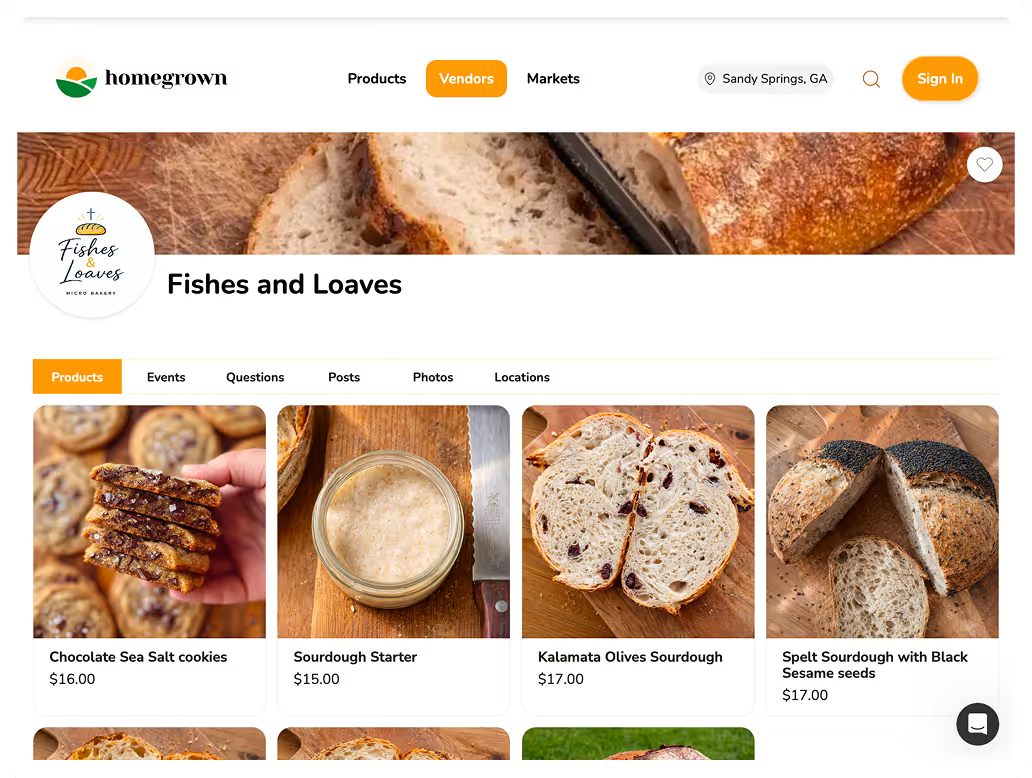
Want to launch your online store without the tech headaches? Sign up for Homegrown and get your store live in minutes — no coding, no monthly fees, and built specifically for food vendors.
Pricing for farmers markets and online stores requires different math because the cost structures are different. The product is the same, but the overhead changes depending on where you sell it.
Farmers market pricing factors:
Online store pricing factors:
The key rule: Your online price should be equal to or slightly higher than your market price to account for the added convenience and the cost of packaging or delivery. Do not undercut your own market prices online — that devalues your in-person sales and confuses customers who see you in both places.
For a complete guide to pricing your products across different channels, read How to Price Food for Farmers Market, Wholesale, and Online.
If you are a cottage food vendor or small-scale food producer deciding where to start, here is the simplest way to think about it.
Start at a farmers market if you want fast feedback and fast cash. You will know within two to three market days whether your product resonates, what price point works, and whether the market itself is worth your time. The learning curve is steep but short, and every dollar you earn is cash in hand that day.
Start with an online store if you want flexibility and long-term scalability. You will not make much money in the first month, but you will build a customer list, a digital presence, and a system that generates orders without requiring you to be physically present every weekend. The learning curve is gentler but the payoff takes longer to materialize.
For most vendors starting from zero, the farmers market is the better first step. It gives you the fastest feedback loop, the most immediate revenue, and the strongest foundation for adding online sales later. But there is no wrong answer — both channels work, and the best vendors eventually use both.
The most important thing is to start. Pick the channel that fits your schedule, your product, and your local options — and get your first sale this month.
Ready to add an online store to your sales mix? Sign up for Homegrown and set up your storefront in minutes.
It depends on your volume and costs. A farmers market gives you higher per-day revenue — most vendors earn $200 to $800 per market day — but you also pay a weekly booth fee and spend a full day on-site. An online store has lower overhead (no booth fee, just payment processing fees) and can generate orders seven days a week instead of just on market days. For many cottage food vendors, the farmers market is more profitable per hour spent in the first few months, but an online store becomes more profitable over time as repeat customers build up.
Most vendors spend $260 to $815 to get started at a farmers market. That includes a pop-up tent ($100-300), a folding table ($40-80), signage ($20-100), packaging ($50-150), and your first week's booth fee ($20-75). Some markets also require a business license, food handler's permit, or cottage food registration, which may add $25 to $100 depending on your state.
Yes. Several platforms let you create a simple online storefront without building a traditional website. Homegrown, Square Online's free tier, and even social media ordering through Instagram or Facebook can work for small-scale food vendors. You do not need to know how to code or design a website — most food-specific platforms let you set up a store in under an hour with just your product photos, descriptions, and prices.
Requirements vary by state. Most states allow cottage food sales (baked goods, jams, candy, and other shelf-stable items made in a home kitchen) with a cottage food registration or permit, which is simpler and cheaper than a full business license. Some states require a general business license on top of the cottage food permit, while others do not. Check your state's cottage food laws and your local county or city requirements before you start selling through either channel.
The most effective strategy is converting existing relationships into online customers. If you sell at a farmers market, hand every customer a card with your online store link and offer an incentive for their first online order. Post your products on social media with a direct link to order. Text your friends, family, and neighbors when you launch. Ask happy customers to share your store with one friend. Building an email or text list from day one is the single most important thing you can do — it gives you a direct line to repeat buyers without relying on social media algorithms.
Products that benefit from sampling and impulse buying — fresh baked goods, prepared foods, and anything with a strong visual or aroma appeal — tend to sell best at farmers markets. Products that are shelf-stable, ship easily, and appeal to a specific niche — like specialty hot sauces, spice blends, granola, gift boxes, and subscription items — tend to perform better online. Some products work well in both channels: cookies, jams, honey, and bread sell strongly at markets and also ship or deliver easily for online orders.