
A Blog Cover Single Image
A Client Image
Evan Knox
Cofounder, Homegrown
E-commerce
14 min read
March 1, 2026

Best Platform to Sell Food Online (2026 Comparison for Local Vendors)

You started with a batch of cinnamon rolls for friends. Then neighbors wanted some. Then someone from the farmers market said you should sell them. Now you've got people messaging you on Instagram, texting orders at 10 p.m., and Venmoing you random amounts with notes like "6 rolls Saturday." You're tracking it all in your head and hoping nobody gets forgotten.

Selling food online should be simpler than this. But when you search for the best platform to sell food online, every article recommends Amazon, Shopify, or some enterprise farm software that costs $300 a month. Those platforms are built for food brands shipping nationwide — not for someone selling baked goods, preserves, or homemade sauces to people in their community.

This guide compares the platforms that actually make sense for local food vendors. Real pricing. Honest tradeoffs. And a focus on what matters most: getting orders and payments handled without the DM chaos.

The short version: The best platform to sell food online depends on your sales volume and how you sell. For most local vendors doing under $2,000 per month with pickup-based sales, Homegrown ($10/month) is the most affordable purpose-built option — it sets up in 15 minutes and replaces the DM-and-Venmo juggle with a single ordering link. Higher-volume farms benefit from GrazeCart or Local Line, while vendors already using Square can start with Square Online's free plan. Marketplace options like Etsy and Market Wagon offer customer discovery but take 10-30% of every sale.

Why Do Local Food Vendors Need a Dedicated Platform?

What Goes Wrong with DMs and Cash Apps?

The DM-and-cash-app approach breaks down as soon as you have more than a handful of customers. If you've been selling food for more than a few weeks, the pattern is familiar. Someone messages you on Instagram asking what you've got this week. You reply with your list. They pick three things. You tell them the total. They Venmo you — maybe. You write their order in a notebook. Repeat this fifteen times and your Wednesday night is gone.

Direct-to-consumer food sales reached $3.2 billion in 2022, with the number of farm operations selling through direct channels more than doubling since 2017 (USDA Economic Research Service). Consumer demand for local food is real and growing. The bottleneck isn't demand — it's the ordering process.

Managing orders through DMs works with five customers. It falls apart at twenty. Here is what typically goes wrong:

  • Orders get lost in message threads
  • People forget to pay
  • You forget who wanted the spicy salsa versus the mild
  • You spend more time copying Venmo links than actually making your products

Why Are You Only Selling When You're Available?

Most local food vendors only take orders when they are actively checking messages — and that limits sales to the hours you happen to be online. If someone wants to order your jam at 11 p.m. on a Tuesday, they can't — unless you're awake and checking Instagram.

An online platform flips that. Customers browse your products, place an order, and pay — all without you being involved. Orders come in while you're sleeping, cooking, or at your day job. You check your dashboard in the morning and know exactly what to make.

For vendors already selling at farmers markets, a platform also captures sales between market days. Your customers want your products the other five or six days of the week. That's revenue sitting on the table.

What Should You Look for in a Food Selling Platform?

The right platform depends on how you sell, what you sell, and how much volume you do. Not every platform fits your situation. Here's what matters when you're selling food locally — not shipping granola bars across the country.

Pricing That Matches Your Revenue

Most e-commerce platforms are designed for businesses doing $10,000 or more per month in sales. If you're making $500 to $2,000 per month selling food, a platform that costs $100-plus per month eats your margins fast.

According to the USDA, 86 percent of U.S. farms are classified as small family farms, with the majority of household income coming from off-farm sources (USDA ERS). Most local food vendors aren't running a full-time operation. Your platform cost should reflect that reality.

Look at the total cost: monthly fee plus transaction fees at your actual sales volume. A "free" platform with a 10 to 30 percent commission can cost more than a $10 per month subscription once you're doing real volume.

Pickup-Friendly Ordering

Local pickup support is the single most important feature for vendors selling in their community. If you sell locally, your customers are picking up — at a farmers market booth, your kitchen, a porch, or a meetup point. Not every platform handles pickup well. Some are built around shipping and tack on pickup as an afterthought. Look for platforms where local pickup is a core feature, not a workaround.

Setup You Can Finish in a Day

Between making products, prepping for farmers markets, and everything else on your plate, you can't spend a week building a Homegrown storefront. If a platform takes more than an afternoon to set up, you probably won't finish. The best platforms for local vendors get you live in under an hour.

Built-In Payments

Built-in payments mean customers pay when they order, so you never chase anyone after the fact. Some platforms handle payments for you. Others make you set up Stripe or another payment processor yourself. Built-in payments save time and reduce friction for both you and your customers.

The 8 Best Platforms to Sell Food Online

Below is a quick-reference table comparing all eight platforms, followed by detailed breakdowns of each.

PlatformPriceTransaction FeeBest ForSetup Time
Homegrown$10/mo or $100/yr2.9% + $0.30Local vendors, cottage food, pickup~15 minutes
GrazeCart$49–$299/mo0%High-volume direct-to-consumer farmsA few hours
Square OnlineFree–$79/mo2.6%–2.9% + $0.30Vendors already using Square1–2 hours
Etsy$0.20/listing6.5% + 3% + $0.25Shelf-stable packaged productsA couple hours
Local Line$79–$319/mo2.0% + $0.20Full-time farms, CSA, wholesaleHours to days
Shopify$29–$299/mo2.4%–2.9% + $0.30National food brandsSeveral days
Facebook MarketplaceFreeFree for localTesting demandMinutes
Market WagonFree to list20–30% commissionNew customer exposureQuick

1. Homegrown — Best for Local Food Vendors

Price: $10/month or $100/year. 14-day free trial.

Transaction Fee: 2.9% + $0.30 per order

Best For: Cottage food producers, farmers market vendors, small food businesses selling for pickup

Setup Time: About 15 minutes

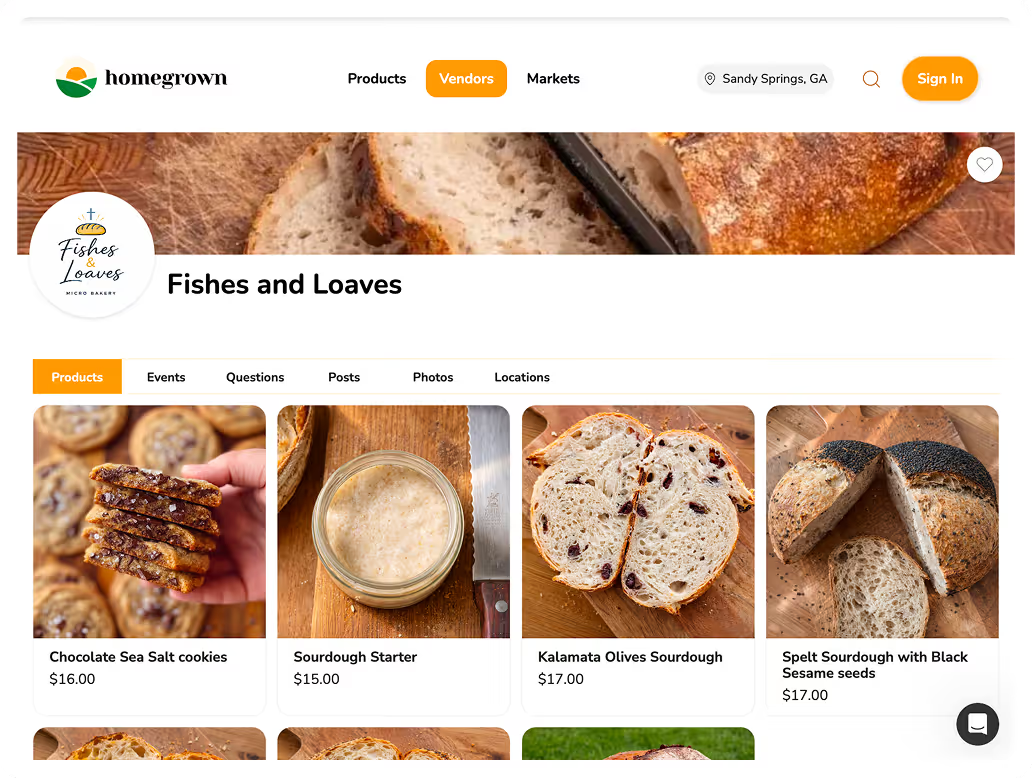
Homegrown is the most affordable dedicated Homegrown storefront built for local food vendors who sell for pickup. You add your products, set your pickup locations and schedule, and share one link with your customers. They order and pay through your storefront. You get a dashboard showing exactly what to make and when.

The platform was designed around the problem most local food vendors deal with — customers who want to order between market days or outside of your DM hours. Instead of managing messages across Instagram, Facebook, and text, you share one link and the platform handles ordering and payment.

At $10 per month, Homegrown is the most affordable dedicated option for food vendors. The tradeoff is that it's a newer platform, so advanced features like subscription boxes or point-of-sale integration aren't available yet. But for the core job — taking orders, collecting payments, and organizing pickups — it handles the work that used to eat your evenings.

Who it's for: Part-time food vendors who want a simple, affordable Homegrown storefront they can set up in 15 minutes. If you're tired of the DM juggle and want your customers to order and pay on their own, start here.

2. GrazeCart — Zero Transaction Fees for High-Volume Vendors

Price: $49 to $299/month

Transaction Fee: 0% (uses own payment processor)

Best For: Food vendors doing consistent volume who want to minimize per-sale costs

Setup Time: A few hours

GrazeCart is an e-commerce platform designed for direct-to-consumer food sales. Its standout feature is zero transaction fees — they use their own payment processor instead of charging a percentage on each order.

If you're doing enough volume, that zero-percent fee can offset the higher monthly cost. GrazeCart also includes a website builder, subscription box tools, and delivery route management. It's a solid platform for vendors who've outgrown basic tools and need more control over their operations.

The $49 per month starting price is a steep entry point for someone testing the waters with online ordering. And the feature set — delivery routes, subscription management — is more farm-operation focused than what most cottage food vendors or small vendors need.

Who it's for: Food vendors doing consistent direct-to-consumer sales of $3,000-plus per month who want to minimize transaction fees. The monthly cost makes less sense at lower volumes.

3. Square Online — Free Tier for Square Users

Price: Free plan available. Paid plans $29 to $79/month.

Transaction Fee: 2.6% to 2.9% + $0.30 per order

Best For: Vendors already using Square at the farmers market

Setup Time: An hour or two

If you already use a Square card reader at your booth or kitchen, Square Online lets you add an online store that connects to your existing account. The free plan charges no monthly fee — just transaction fees per order.

Square handles pickup ordering, which is a plus for local vendors. The catch is that it's a general-purpose e-commerce tool. Nothing about the platform is designed for food vendors specifically. Setting up menus, managing seasonal products, or organizing pickup schedules requires more manual configuration than purpose-built platforms.

Who it's for: Vendors already using Square who want to add basic online ordering without a monthly fee. Works as a starting point, though food-specific platforms offer a smoother experience.

4. Etsy — Marketplace Reach, Marketplace Fees

Price: $0.20 per listing + 6.5% transaction fee

Transaction Fee: 6.5% + payment processing (3% + $0.25)

Best For: Packaged food products with shelf stability

Setup Time: A couple of hours

Etsy has a food category with thousands of vendors offering baked goods, candy, spice blends, sauces, and other shelf-stable products. The platform brings buyer traffic — people actively searching for food products.

The fees are significant. Between the listing fee, 6.5 percent transaction fee, and payment processing, you're losing roughly 10 to 12 percent of every sale. And Etsy's policies require food products to be properly packaged and labeled, which adds production overhead.

Etsy also isn't designed for the local pickup model. It's built around shipping. If your food business is local — farmers market, porch pickup, community meetups — Etsy's infrastructure works against you rather than for you.

Who it's for: Vendors with packaged, shelf-stable food products who want access to Etsy's buyer traffic and are comfortable with the fee structure. Not ideal for perishable or local-pickup vendors.

5. Local Line — Enterprise Platform for Established Farms

Price: $79 to $319/month

Transaction Fee: 2.0% + $0.20 per order

Best For: Full-time farms with CSA programs and wholesale accounts

Setup Time: Several hours to days

Local Line is a full-featured farm e-commerce platform with tools for CSA management, wholesale ordering, inventory tracking by weight, and delivery route planning. It's serious software for serious farm operations.

The $79 per month starting price is nearly eight times the cost of more affordable options, and the feature set reflects that. If you're running a farm with multiple sales channels, wholesale accounts, and complex fulfillment logistics, Local Line can handle it.

For someone selling homemade salsa or baked goods at the Saturday farmers market, most of those features go unused — and you're paying for them anyway.

Who it's for: Full-time farms doing $5,000-plus per month in online sales with CSA or wholesale needs. Overkill for cottage food producers and part-time vendors.

6. Shopify — Full Website Builder (Overkill for Most Food Vendors)

Price: $29 to $299/month

Transaction Fee: 2.4% to 2.9% + $0.30 per order

Best For: Food brands building a national presence

Setup Time: Several days for a polished setup

Shopify is the biggest e-commerce platform in the world. Thousands of apps, hundreds of templates, near-infinite customization. If you want total control over your online store, Shopify can technically do anything.

The flip side is complexity. Setting up a Shopify store properly takes days, not minutes. Monthly costs climb once you add apps for features that food-specific platforms include by default. And nothing about Shopify is tailored to the local food vendor experience — no built-in pickup scheduling, no market-day workflows, no cottage food considerations.

A vendor who tried Shopify and found it too time-consuming to set up could have a Homegrown storefront link to text to customers the same day with a simpler platform.

Who it's for: Food brands building a recognizable online presence with plans to sell and ship nationwide. If you sell locally for pickup, this is more platform than you need.

7. Facebook Marketplace — Free but Manual

Price: Free to list

Transaction Fee: $0.40+ per shipped item (local sales typically free)

Best For: Testing demand before committing to a platform

Setup Time: Minutes

Facebook Marketplace lets you list food products for free and reach people in your area. Many cottage food vendors start here because the barrier to entry is zero — post a photo, set a price, and wait for messages.

The problem is scale. Every sale requires a back-and-forth conversation. There's no built-in payment processing for local pickup orders. No order tracking. No way for customers to browse your full menu and pay in advance. You're right back to the DM juggling act, just on a different app.

Facebook Marketplace is a decent place to validate demand, but it's not a long-term ordering system. Once you have regular customers, moving them to a dedicated Homegrown storefront saves hours per week. For tips on using social media as a marketing tool rather than an ordering system, check out our social media guide for farmers market vendors.

Who it's for: Vendors testing the waters or building an initial customer base. Transition to a real platform once you're taking more than a handful of orders per week.

8. Market Wagon — Online Farmers Market (20-30% Commission)

Price: Free to list

Transaction Fee: 20 to 30% commission per sale

Best For: Vendors who want new customer exposure

Setup Time: Quick onboarding

Market Wagon is an online farmers market — think of it like a DoorDash for local food. You list your products, and Market Wagon handles marketing and customer acquisition. Buyers browse the marketplace, find your products, and order through the platform.

The appeal is discovery. Market Wagon brings buyers to you. The cost is a steep commission — 20 to 30 percent of every sale. On a $25 order, you might lose $5 to $7.50 to the platform. Over time, many vendors find it more economical to drive customers to their own Homegrown storefront where they keep more of each sale.

Who it's for: Vendors who want exposure to new customers and are willing to pay the commission. Works best as a supplement to your own Homegrown storefront, not a replacement.

Ready to stop managing orders through DMs? Homegrown was built for local food vendors who want a simple Homegrown storefront — live in 15 minutes, $10 a month. Start your free 14-day trial.

How Do Platform Costs Actually Compare?

Here's what each platform actually costs at different sales volumes, so you can compare based on your reality — not marketing pages.

Monthly cost at $1,000/month in sales:

PlatformMonthly FeeTransaction FeesTotal CostEffective Rate
Homegrown$10~$29$39/month3.9%
Square Online (free plan)$0~$29$29/month2.9%
GrazeCart$49$0$49/month4.9%
Etsy~$2 listings~$98 fees + processing$100/month~10%
Local Line$79~$20$99/month9.9%
Shopify$29~$29$58/month5.8%
Market Wagon$0~$250 commission$250/month25%

Monthly cost at $2,000/month in sales:

PlatformMonthly FeeTransaction FeesTotal CostEffective Rate
Homegrown$10~$58$68/month3.4%
Square Online (free plan)$0~$58$58/month2.9%
GrazeCart$49$0$49/month2.5%
Etsy~$4~$195$199/month~10%
Local Line$79~$40$119/month6.0%
Shopify$29~$58$87/month5.8%
Market Wagon$0~$500 commission$500/month25%

At low volume, Square's free plan is the cheapest option on paper. But once you factor in the lack of food-specific features, the setup time, and no built-in pickup workflows, purpose-built platforms deliver more value per dollar for local food vendors. And marketplace commission models like Market Wagon's 20-30 percent cut get expensive fast as sales grow.

For a deeper comparison of platforms for vendors already selling at farmers markets, see our farmers market vendor platform guide.

Which Platform Is Right for You?

The right platform depends on your sales volume, how you sell, and where you are in your food business. Still not sure? Here's a quick framework:

  • You sell locally and make under $2,000 per month. Start with Homegrown. It's the most affordable dedicated platform, sets up in 15 minutes, and was designed for exactly your situation — taking orders between market days without the DM chaos.
  • You're just getting started and want to test demand. Use Facebook Marketplace to validate that people want your products. Once you have steady repeat customers, move them to a dedicated Homegrown storefront so you're not managing every order through messages.
  • You make shelf-stable products and want national reach. Look at Etsy for marketplace exposure or Shopify for your own branded store. Both are built for shipping, not local pickup.
  • You run a full-time farm with CSA and wholesale. Local Line or GrazeCart have the enterprise features you need and can justify the higher monthly cost.
  • You already use Square at the farmers market. Square Online is a natural next step. Just know it's generic, not food-specific.
  • You want new customers to find you. Marketplace models like Market Wagon and Etsy bring buyers to you — but the commission and fee costs are significant. Use them as a supplement to your own Homegrown storefront, not a replacement.

If you sell non-food products alongside your food products (crafts, soaps, candles), our guide to platforms for local vendors covers a broader range of options. And if you're still working on the basics — building a customer base and figuring out what sells — our guide to standing out at a farmers market is a good starting point.

Need more help here? See our guide on Shopify alternatives for farmers market vendors.

Frequently Asked Questions

Do I need a special license to sell food online?

Requirements depend on your state and what you're selling. Most states have cottage food laws that let you sell certain homemade foods (usually baked goods, jams, honey, and other shelf-stable products) with a basic permit or registration. Some states restrict online sales or require additional licensing for perishable products. Check your state's department of agriculture website for the specific cottage food rules in your area. The SBA has resources on getting started with online selling, and our guide on what you can sell at a farmers market covers common product categories and regulations.

Can I use a regular e-commerce platform like Shopify to sell food?

You can, but it's like using a Swiss Army knife to butter toast — technically possible, overkill in practice. Shopify is designed for general e-commerce and requires significant setup time, paid apps for food-specific features, and manual configuration for things like pickup scheduling. If you sell food locally, a platform built for local food vendors gets you live faster and costs less.

What if I already take orders through Instagram DMs?

Social media is excellent for marketing but inefficient for ordering. DMs get lost, payments are manual, there's no order tracking, and you're tied to your phone. A dedicated platform handles ordering and payments automatically — so you can use Instagram for what it's actually good at (getting people excited about your products) and send them to your Homegrown storefront to order. Our social media marketing guide covers how to use social platforms alongside your storefront.

How do I get my existing customers to order through a platform?

Share your Homegrown storefront link everywhere. Text it to your regulars. Put it on a sign at your booth. Add it to your Instagram bio. Post it in your Facebook group. Most customers love the convenience of ordering ahead — especially when it means their favorites are guaranteed and they skip the line. The transition is usually smoother than vendors expect.

Should I use a marketplace or my own storefront?

Both serve different purposes. Marketplaces like Market Wagon and Etsy bring new buyers to you — but take a significant cut of each sale (6.5 to 30 percent). Your own Homegrown storefront costs less per sale and gives you control over your brand, your customer relationships, and your pricing. The smart approach is using marketplaces for discovery while building your own Homegrown storefront for direct sales. As your customer base grows, more revenue shifts to your direct channel where you keep more of each dollar.

How much does it cost to start selling food online?

The cost to start selling food online ranges from free to several hundred dollars per month, depending on the platform. Facebook Marketplace is free but entirely manual. The best platform to sell food online for most local vendors is one with low monthly fees — Homegrown starts at $10 per month with a 14-day free trial. Square Online offers a free tier with per-transaction fees. Higher-end platforms like Local Line and GrazeCart run $49 to $319 per month and are better suited for established farm operations.

What features matter most when choosing a platform to sell food online?

For local food vendors, the most important features are pickup-friendly ordering, built-in payments, and fast setup. The best platform to sell food online for your situation should also match your sales volume — there's no point paying $79 per month for enterprise features when you're doing $500 in monthly sales. Look for these essentials:

  • Local pickup scheduling (not just shipping)
  • Built-in payment processing
  • A setup process you can finish in under an hour
  • Affordable pricing that scales with your revenue

Start Selling Smarter

Most "best platform to sell food online" articles aren't written for you. They're written by large platforms, for food brands with warehouses and shipping departments. They recommend Amazon, Walmart, and enterprise software that costs more per month than you make in a week. For a deeper look at this topic, see selling farm products online.

If you're a local food vendor — whether you bake from home, make preserves in your kitchen, or sell at the Saturday farmers market — the right platform should be affordable, fast to set up, and built for how you actually sell: locally, for pickup, to people in your community.

Homegrown was built for exactly that. Add your products, set your pickup schedule, share your link. Customers order and pay on their own time. You spend less time in DMs and more time doing what you love.

Your first 14 days are free. Start your Homegrown storefront today.

Key Takeaways

  • Most "best platform" lists recommend tools built for national food brands, not local vendors. Platforms like Amazon, Shopify, and enterprise farm software start at $29-500+/month and are designed for shipping — not local pickup.
  • Marketplace commissions add up fast. Etsy's ~10% fees and Market Wagon's 20-30% commission cost far more than a flat $10/month subscription once you're doing real volume.
  • The DM juggle is the biggest problem to solve. Any platform that lets customers order and pay without messaging you back and forth is a massive upgrade over Instagram DMs and Venmo.
  • Pickup-friendly ordering matters most for local vendors. Skip platforms built around shipping. Look for ones where local pickup is a core feature, not an afterthought.
  • Homegrown ($10/month) is the most affordable purpose-built option for local food vendors. 15-minute setup, built-in payments, one link to share with customers.
  • Start simple and upgrade later. You don't need enterprise features on day one. Get a Homegrown storefront live, share the link, and let customers order on their own time.

About the Author

Evan Knox is the cofounder of Homegrown, where he works with hundreds of small food vendors across the country to sell online. He built Homegrown after seeing how many local vendors were stuck taking orders through DMs and cash-only sales.

Your Store Could Be Live Tonight

15 minutes. That's all it takes. Add your products, share your link, and start taking orders. Free for 7 days.