

Most of your best customers came from someone else's recommendation. Referrals are the single most powerful way to grow a small food business, but asking for them? That part makes most vendors cringe. You picture yourself cornering a customer at the farmers market, fumbling through some sales pitch while they look for the exit.
It does not have to be that way. Asking for referrals can feel as natural as thanking someone for a compliment, and when you do it right, people are genuinely happy to spread the word. They already love your food. They just need a small nudge to share it.
This guide walks you through exactly when to ask, what to say, whether to offer incentives, and how to track it all so you can grow your customer base without spending a dime on ads or feeling like a door-to-door salesperson. As this cottage food marketing guide puts it, success comes from consistent effort through networking and community relationships — and referrals are at the center of that.
The short version: The best time to ask for a referral is right after a customer compliments your food or makes a repeat purchase. Keep it casual and specific: "If you know anyone who'd love this, send them my way." You do not need a formal referral program. A simple ask, a card in their order, or a text after delivery is enough to turn one happy customer into two or three. Small incentives like 10% off their next order can boost results, but even without them, most customers are glad to help when you make it easy.
Referrals convert better than any other marketing channel because they come with built-in trust. According to a survey of 7,500 small business owners, 85% said word-of-mouth referrals are the best way to acquire local customers — dramatically outpacing digital advertising at just 9%. When someone tells a friend "you have to try this jam," that friend shows up already wanting to buy. They are not scrolling past your post or ignoring your ad. They are actively seeking you out because someone they trust vouched for you.
A referred customer is pre-sold. They already know what you make, roughly what it costs, and that someone whose taste they respect loves it. That means less convincing on your end and a much higher chance they become a repeat buyer themselves.
For small food vendors, referrals also solve the biggest marketing challenge: budget. You are not a brand with thousands to spend on Instagram ads or a marketing team building funnels. You are one person making great food and trying to find more people who want it. Referrals cost you nothing but a few seconds of conversation.
Here is how referrals stack up against other marketing channels for small vendors:
| Channel | Cost | Trust Level | Conversion Rate | Time Investment |
|---|---|---|---|---|
| Referrals | Free | Very high (personal recommendation) | 30-50% | Low (a few seconds per ask) |
| Social media | Free (organic) | Medium (depends on following) | 2-5% | High (content creation, posting, engaging) |
| Paid ads | $5-20+ per new customer | Low (strangers seeing an ad) | 1-3% | Medium (setup, monitoring, adjusting) |
| Farmers market foot traffic | Booth fee ($20-75/week) | Medium (in-person sampling) | 10-20% | High (full market day) |
Referrals outperform every other channel because they combine zero cost with the highest trust. A single loyal customer who tells five friends can do more for your business in a week than a month of social media posting.
It feels awkward because you are conflating asking with begging. Most vendors have a voice in their head that says, "If my food is good enough, people will tell others on their own." And sometimes they do. But relying on that alone leaves a lot of growth on the table.
Here are the real reasons most vendors avoid asking:
Here is the truth that changes everything: people genuinely want to share great food discoveries. Think about the last time you ate something incredible at a restaurant. You probably told someone about it without being asked. Your customers feel the same way. They just need a small prompt to turn that feeling into action.
The difference between a customer who tells three friends and a customer who tells nobody is often just one sentence from you. Not a pitch. Not a script. Just a natural moment where you say, "If you know someone who would love this, I would really appreciate you sending them my way."
That is not begging. That is giving your customer permission to do something they already wanted to do.
The best time to ask for a referral is immediately after a customer expresses genuine satisfaction with your food. That moment of enthusiasm is when they are most likely to follow through, and when the ask feels most natural.
Here are the five highest-converting moments to make your ask:
Timing matters more than the words you use. Here is how each timing scenario compares:
| Timing | Why It Works | Estimated Follow-Through |
|---|---|---|
| Right after a compliment | Customer is emotionally engaged | 40-50% |
| After a repeat purchase | Proven loyalty, low risk ask | 30-40% |
| After subscription signup | Highest commitment level | 25-35% |
| After social media post | Already publicly endorsing you | 35-45% |
| During a special release | Urgency and excitement combined | 20-30% |
| Random cold ask (no trigger) | No emotional context | 5-10% |
Never ask for a referral during a complaint or when a customer seems rushed. Wait for a positive moment, and the ask will feel like a compliment, not a burden.
The most effective way to ask for a referral is in person, face to face, at the farmers market or during a delivery. Nothing matches the sincerity and warmth of a direct, human request. But you have several other channels that work well too.
Here are the top methods, ranked by effectiveness:
The best approach is to use two or three of these together. Ask in person, include a card in their next order, and follow up with a text. Each touchpoint reinforces the others without being pushy.
Here is what makes each channel work best:
Small incentives work, but they are not required. The most effective referral incentive for a small food vendor is a simple, two-sided discount: "Give a friend $5 off, get $5 off your next order." This makes both people feel like they are getting a deal, which increases the chance the referral actually converts.
Here are the key principles for referral incentives:
Here is how different incentive types compare:
| Incentive Type | Cost to You | Customer Appeal | Complexity |
|---|---|---|---|
| Two-sided discount ($5 off for both) | $10 per successful referral | High (both benefit) | Low |
| Free product for referrer | Cost of one product ($3-8) | Medium-high | Low |
| Percentage off (10% off next order) | Varies by order size | Medium | Low |
| Loyalty points | Varies | Low (too abstract) | High (avoid) |
| No incentive (just the ask) | $0 | Still works with strong relationship | None |
You do not need to offer anything to get referrals. Many vendors find that a genuine, well-timed ask generates plenty of referrals with no incentive at all. But if you want to increase volume, a small two-sided discount is the most reliable approach.
The biggest referral killer is friction. A customer wants to tell their friend about you, but what do they share? Your Instagram handle? A screenshot of your menu? A vague description of where you set up at the market? Every extra step between "you have to try this" and "I just ordered" is a step where the referral dies.
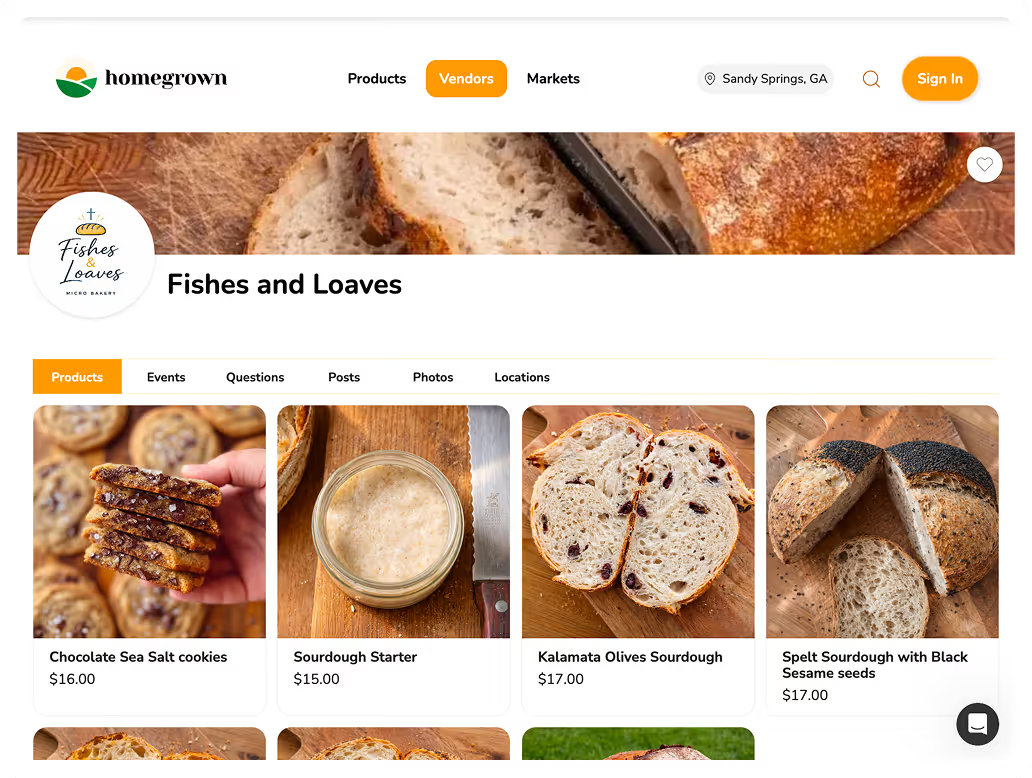
Homegrown is $10/month with no percentage fees. You get a shareable ordering link that customers can text to a friend in two seconds. The friend taps the link, sees your menu with photos and prices, and places an order. No searching, no DMs, no "wait, how do I find them?" An Instagram bio link works for discovery but has no ordering — the friend still has to DM you and figure out payment. A Facebook page lets people message you, but Facebook throttles business messages after 24 hours, so the referred friend's message might never reach you. Homegrown will not write your referral scripts or design your referral cards — that is your voice and your printer. But for the step where a happy customer needs to send one link that takes their friend from "you have to try this" to "I just placed my order," it is the link that closes the loop.
Here are ready-to-use scripts for every common situation. Adjust the product name and details, but keep the tone casual and warm.
At the farmers market (after a compliment):
> "That really makes my day, thank you. If you have a friend who would enjoy this, I would love to meet them. You can send them to my table or share my ordering link."
At the farmers market (repeat customer):
> "It is so great to see you again. If you ever have a friend who would want to try [product], just send them my way. I will take great care of them."
Via text after a delivery:
> "Hey [name], thanks so much for your order! I hope you love the [product]. If you know anyone who would enjoy it too, feel free to share this link: [ordering link]. It means a lot."
Via email after a subscription signup:
> "Welcome to the [product] family! You are going to love having fresh [product] every [week/month]. If you have a friend who would enjoy it too, share this link and you will both get 10% off your next order: [ordering link]."
On a card tucked into their order:
> "Know someone who would love fresh [product] every week? Share this link and you both get 10% off your next order: [ordering link]"
On social media:
> "Tag a friend who needs fresh, homemade [product] in their life. If they place their first order this week, you both get $5 off."
After a positive review or social media post:
> "Thank you so much for sharing this. It means the world to a small vendor like me. If you know anyone else who would enjoy [product], I would love for you to send them my way."
A few rules for all of these scripts:
The simplest way to track referrals is to ask every new customer, "How did you hear about us?" and write down the answer. You do not need software or a CRM to start. A notebook or a spreadsheet works perfectly.
Here are practical tracking methods for small vendors:
Your top referrers deserve special treatment. Once you identify the two or three customers who consistently send you new business, thank them personally. A free product, a handwritten note, or first access to new products goes a long way toward keeping them motivated.
Here is a simple tracking template you can copy:
| New Customer | Date | Referred By | First Order |
|---|---|---|---|
| Sarah M. | March 5 | Lisa T. | Sourdough loaf + jam |
| James K. | March 12 | Lisa T. | 2 sourdough loaves |
| Amy R. | March 15 | Direct (farmers market) | Cookie sampler |
In this example, Lisa is clearly a top referrer. She deserves a thank-you text and maybe a free loaf next time she orders.
You do not need to ask every customer every time. A good rhythm is to ask once after a customer has made at least two purchases and shown genuine enthusiasm for your products. After that initial ask, a gentle reminder every few months through a card in their order or a social media post is enough to keep referrals flowing without being repetitive.
Most customers will not say no directly. They will just smile and nod without following through, which is completely fine. Never pressure someone or ask a second time in the same conversation. If someone does decline, simply say "no worries at all" and move on. The relationship matters more than any single referral, and they may come around later on their own.
No. A formal referral program with tiers, points, and tracking software is overkill for most small food vendors. All you need is a simple ask, a shareable ordering link, and optionally a small discount code. The simpler your system, the more likely customers are to actually use it. You can always build something more structured later if your volume demands it.
Keep it personal and tied to a genuine moment. The difference between a salesperson and a food vendor asking for referrals is context. When you ask right after a customer compliments your product, it feels like a natural continuation of the conversation. Use their name, reference the specific product they love, and frame it as sharing something great rather than promoting a business.
Free samples can be a powerful way to convert referred customers, especially at a farmers market where they can taste before committing. A small sample costs you very little but gives the referred customer a risk-free way to confirm what their friend told them. It also makes the referrer look good for recommending you, which encourages them to refer more people in the future.
Absolutely. Adding a line to your order confirmation like "Know someone who would love [product]? Share this link and you both save 10%" turns every completed order into a referral opportunity. If you set up an ordering page, your link is already shareable, making it easy for customers to forward to friends with a single tap.
The best incentive is a two-sided discount that benefits both the referrer and the new customer. Something like "give a friend $5 off, get $5 off your next order" is simple, fair, and motivating. Product-based rewards like a free item also work well because they cost you less than a cash discount and feel more personal. Avoid complex point systems that require explanation.
You do not need a marketing budget, a social media strategy, or a referral platform to grow your customer base. You just need happy customers and the willingness to ask one simple question: "Do you know anyone who would love this?"
Start this week. Pick one script from this guide that feels natural to you. Use it at your next farmers market or in your next delivery text. Track who comes in from those referrals. Thank the customers who send you new business.
Your best marketing is already standing in front of you, paying for your food and telling you how much they love it. All you have to do is ask — and give them something easy to share when they say yes.