

You walk into the farmers market on a Saturday morning and see it. Another vendor, three booths down, selling something that looks almost exactly like your signature product. The same flavor combination. The same shape. Maybe even similar packaging. Your stomach drops. Your face gets hot. You want to march over there and say something. Or you want to pack up and leave.
That feeling is real and it is valid. But what you do next matters more than what they did. Because the way you handle being copied says everything about whether your business is built on one recipe or something much bigger.
This article walks you through what you can and cannot protect legally, what to actually do when it happens, how to differentiate yourself so thoroughly that a copycat cannot touch you, and when it is time to stop fuming and start building. Because the vendors who survive being copied are not the ones who fight the hardest. They are the ones who outgrow it.
The short version: Recipes generally cannot be copyrighted, so another vendor copying your product at the farmers market is frustrating but usually not illegal. Your best response is not confrontation. It is differentiation. Focus on your brand story, customer relationships, presentation, and online presence to make your version clearly the original and clearly better. The vendors who thrive after being copied are the ones who channel their frustration into innovation rather than conflict. Your energy is always better spent improving your business than policing someone else's.
It feels personal because it is personal. Your recipes are not just instructions on a page. They are the product of years of experimentation, failed batches, late nights, and family traditions. When someone copies your product, it does not feel like a business decision. It feels like theft.
And the context makes it worse. This is not some faceless corporation in another state. This is someone who sets up a table twenty feet from yours, smiles at the same customers, and sells something you poured yourself into creating. It is happening in your community, in your space, right in front of you.
Here is why the emotional response is so intense:
Every one of those feelings is normal. The vendor who tells you to "just get over it" has probably never had it happen to them. But here is the uncomfortable truth that will ultimately set you free: feeling personally attacked and acting on that feeling are two very different things.
"The anger you feel when someone copies your product is proof that you built something worth copying. That is not a small thing."
Before you do anything else, give yourself permission to be upset. Then read the rest of this article, because what you do next will determine whether this becomes a turning point for your business or a distraction that holds you back.
In most cases, no. Recipes themselves cannot be copyrighted under U.S. law. A simple list of ingredients and basic instructions is considered a fact-based formula, not a creative work. This is frustrating, but it is the legal reality that every food vendor needs to understand.
As Nolo's legal guide explains, food recipes are actually rather difficult to protect under intellectual property law. That said, there are some things you can protect. The distinction matters.
| What You Have | Protectable? | Type of Protection | Notes |
|---|---|---|---|
| A list of ingredients | No | None | Ingredients are facts, not creative expression |
| Specific written recipe instructions with personal commentary | Yes | Copyright | The literary expression is protectable, not the recipe itself |
| Your business name | Yes | Trademark | Register at state level ($50-150) or federal ($250-350) |
| Your logo and visual branding | Yes | Trademark/Copyright | Both the design and the brand association |
| Your product name (if unique) | Yes | Trademark | Must be distinctive, not just descriptive |
| Your secret process or technique | Yes | Trade secret | Only works if you actually keep it secret |
| Your packaging design | Partially | Trade dress | Must prove consumers associate the look with your brand |
Here is what each type of protection actually means for a small vendor:
The practical takeaway for most farmers market vendors: focus on protecting your brand, not your recipe. Trademark your business name and product names if they are unique. Keep your actual recipe methods private. And accept that the product itself, in most cases, is not something you can legally prevent someone from replicating.
"You cannot own a flavor. But you can own a brand that customers trust, recognize, and choose over everything else."
If you want to calculate your real cost per item, make sure you are factoring in the value of your brand and presentation, not just ingredients. That is where your true competitive advantage lives.
Do not confront them at the market. Do not post about it on social media. Do not complain to customers. The first 48 hours after you discover a copycat are when you are most likely to do something you will regret. Here is a step-by-step approach that protects your reputation and your business.
Step 1: Take a breath and do nothing for at least a week.
Your first instinct will be wrong. Whether it is confrontation, passive-aggressive social media posts, or venting to every customer who walks by, acting from anger almost always backfires at the farmers market. Vendors who lash out publicly end up looking petty, even when they are right.
Step 2: Honestly assess whether it is actually copying.
This is harder than it sounds. Ask yourself these questions:
Step 3: Talk to the market manager if there is a legitimate concern.
Most farmers markets have rules about product overlap. Some limit the number of vendors selling the same type of product. If you believe someone is deliberately copying your signature item, the market manager is the right person to talk to, not the other vendor and not your customers.
When you approach the manager:
Step 4: Focus on what makes your version better.
Instead of spending energy on the other vendor, pour it into your own booth. What can you do this week to make your product, your display, and your customer experience clearly superior? The vendor who doubles down on quality always wins in the long run.
Step 5: Compete on quality, relationships, and brand, not just recipe.
The recipe is the easiest part of your business to copy. Everything else is nearly impossible to replicate:
"The best response to being copied is not a better recipe. It is a better business."
If you need help handling customer questions about the situation with grace, learning to deal with difficult customers at the market will serve you well here too.
Your story and your brand are the one thing nobody can copy. A copycat can replicate your recipe, your packaging style, even your booth layout. But they cannot replicate why you started, what your food means to you, or the relationship you have built with your community. That is your moat.
Here are the specific ways to differentiate yourself when a vendor copied your product at the farmers market:
Tell your story everywhere.
Your story is your unfair advantage. The customer who knows you spent three years perfecting your hot sauce recipe because your dad grew the peppers in his backyard is not going to switch to a generic version from the next booth.
Deepen your customer relationships.
Level up your presentation and packaging.
Build your online presence and ordering system.
Customers who can order from you online between market days are not going to bother switching to a copycat vendor. An online storefront gives you reach that a booth-only vendor cannot match.
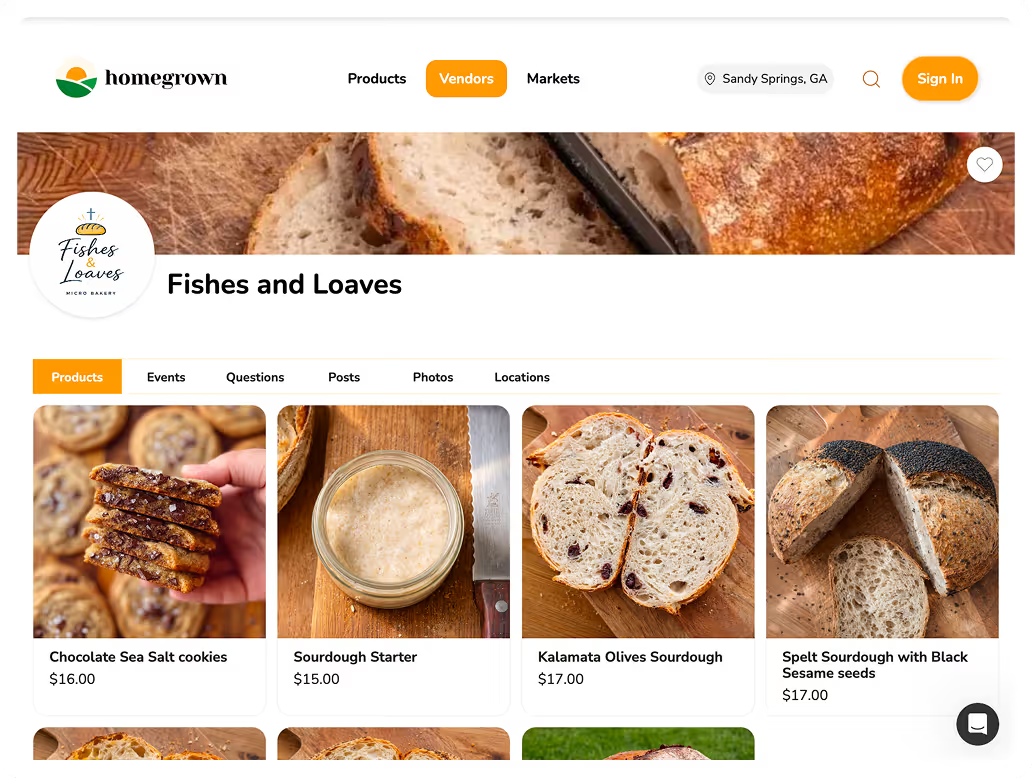
A Homegrown storefront lets your customers browse your products, place orders for pickup, and stay connected with you between markets. That ongoing convenience builds the kind of loyalty that makes copycats irrelevant.
Keep innovating your menu.
The biggest differentiator is momentum. While the copycat is busy replicating what you made last month, you are already three new flavors ahead. The vendors who keep evolving their product line are always one step ahead of anyone trying to follow.
"By the time someone copies what you are selling today, you should already be working on what you are selling next month."
| Differentiation Factor | Can Be Copied? | Your Action |
|---|---|---|
| Recipe/flavor | Yes, easily | Keep innovating new products |
| Brand name and logo | No (if trademarked) | Register your trademark |
| Your personal story | No | Tell it everywhere |
| Customer relationships | No | Deepen them intentionally |
| Online ordering/storefront | Difficult | Set up your Homegrown storefront |
| Reputation and trust | No | Earn it every week through consistency |
| Packaging and presentation | Partially | Invest in professional, distinctive design |
Sometimes yes, sometimes no. It depends entirely on your existing relationship and what you hope to accomplish. There is no one-size-fits-all answer here, and getting this wrong can make a bad situation much worse.
If they are a friend or someone you have a relationship with:
An honest, private conversation is usually worth having. Not at the market in front of customers, but over coffee or a phone call. Keep it factual and use "I" statements.
What to say:
What not to say:
If they are a stranger or someone you do not have a relationship with:
Focus on your own business. A confrontation with a stranger at the market rarely goes well and usually makes both of you look bad. The market manager is the appropriate intermediary if you believe there is a genuine issue.
Never badmouth another vendor publicly.
This is a non-negotiable rule. No matter how justified you feel, talking badly about another vendor at the market, on social media, or to customers will hurt you more than it hurts them. Customers do not want to be pulled into vendor drama. They want to buy good food from good people.
What to say when customers bring it up:
Customers will notice the similar product. Some will ask you about it directly. Here is how to handle those conversations:
In every case, redirect the conversation to your product's strengths. Never confirm, deny, or engage with the copying narrative publicly. If you need more strategies for handling uncomfortable customer interactions, learn how to respond to bad reviews with the same calm, professional approach.
"The vendor who stays above the drama always wins the customer's respect, even when the customer knows exactly what happened."
It is time to let it go when the anger is costing you more energy than the situation is costing you sales. Most vendors who get copied discover something surprising after a few weeks: their sales barely changed. Their loyal customers did not leave. The copycat might pick up a few new buyers, but the people who love your product are not switching.
Here is the reality that most vendors eventually come to terms with:
Signs it is time to move on:
The vendors who get copied and then go on to thrive all share one trait: they use the experience as fuel for improvement rather than fuel for resentment. Being copied is actually evidence that you created something good enough to be worth imitating. That is not nothing.
"The ultimate power move when someone copies your product is to keep getting better while they are stuck copying what you already moved past."
Channel your energy into these actions instead of anger:
The vendors who last in this business are not the ones who never get copied. They are the ones who respond to it by building something too big and too personal to replicate.
Yes, in almost all cases. Recipes cannot be copyrighted, and unless you hold a trademark on a specific product name or brand element, another vendor is legally allowed to sell a similar or even identical product at the same market. Some markets have internal rules limiting the number of vendors in the same product category, so check with your market manager about their specific overlap policies. The vendor copied product farmers market situation is frustrating, but it is rarely a legal issue.
Take a breath and do nothing impulsive for at least a week. Do not confront the vendor publicly, do not post about it on social media, and do not complain to customers. After that initial cooling period, honestly assess whether the product is truly copied or just similar, then decide whether to talk to your market manager. Your first action should always be internal reflection, not external confrontation.
Yes, trademarking your business name and unique product names is one of the most practical protections available to small food vendors. State-level trademark registration costs $50-150 and prevents anyone from selling products under your brand name. It will not stop someone from making a similar product, but it will stop them from using your name, logo, or brand identity. If you have a distinctive product name, register it sooner rather than later.
Compete on quality, brand, and relationship, not on price. Make sure customers understand what makes your version different by highlighting specific ingredients, your process, and your story. Offer samples so people can taste the difference for themselves. Vendors who race to the bottom on price always lose. Vendors who build a strong brand and loyal customer base can charge a premium because customers are paying for trust, consistency, and a personal connection, not just a product.
Most of them will not. Loyal customers who have been buying from you for months or years are invested in their relationship with you, not just your recipe. You may lose a few price-sensitive or casual buyers, but your core customer base is far more resilient than you think. The vendor copied product farmers market scenario feels devastating in the moment, but most vendors report that their sales stayed stable or even increased because the situation motivated them to step up their game.
It depends on your relationship with them. If you know them personally, a private, calm conversation can clear the air and sometimes resolve the situation. If they are a stranger, your energy is better spent on your own business. Never confront another vendor at the market in front of customers, and never make accusations you cannot back up. If you feel the situation needs intervention, the market manager is the appropriate person to involve.
You cannot fully prevent recipe copying, but you can make it harder and less impactful. Keep your exact recipes, techniques, and supplier sources private. Do not share detailed methods on social media or with other vendors. Focus on building a brand so strong that even if someone replicates your product, customers still choose yours. Invest in distinctive packaging, a recognizable name, and an online presence through a storefront like Homegrown that makes you the clear original in your market.
Being copied is one of those moments that forces you to decide what kind of vendor you want to be. The one who gets stuck in bitterness and drama, or the one who uses it as a catalyst to build something nobody can touch. The recipe was never your real advantage. You were.