

You can turn one Saturday farmers market into a full week of orders by collecting customer contact info at your booth, sending a simple weekly availability list, and letting people place orders online for next-market pickup. Most vendors who add between-market ordering see an extra $200 to $500 per week in sales from customers they already have, without adding a second market day or spending hours on social media.
The math is simple. If you already sell $400 on a Saturday, adding $200 to $500 in pre-orders means your weekly revenue jumps to $600 or $900. Those orders come from people who already know and like your products. They just need a way to buy from you when your booth is not open.
This guide walks you through the exact weekly rhythm, from collecting sign-ups at your table to sending your availability list to handing off pre-orders at next week's market. Every step is built for a vendor who works one market per week and does not have a staff, a warehouse, or a complicated tech setup.
The short version: Use your market booth to build a contact list. Even a simple clipboard sign-up sheet works. Each week, send your list what you have available and a link to order. Customers place orders online, pay in advance, and pick up at next week's market. The average online order from a farmers market customer is roughly double what they spend in person. You do not need a full website, a second market, or a big social media following. You just need a repeatable weekly rhythm.
A single market day caps your revenue because customers can only buy what they see, carry, and remember in the moment. The national average spend at a farmers market is $31 to $35 per visit, according to Penn State Extension research. But that number does not reflect what customers would spend if they could order from you on a Tuesday or Wednesday.
Here is what happens when your only sales channel is your Saturday booth:
The fix is not working harder on Saturday. It is treating your booth as a showroom, not your only sales channel. Your market booth is your best customer-acquisition tool, not your entire business. Every Saturday, dozens of people who already like your products walk up to your table. Right now, you lose all of them until next week.
"The average farmers market customer spends $31 to $35 per visit, but online orders from market customers average $59, which is nearly double the in-person amount."
A full week of orders means customers are buying from you between markets, not just on Saturday. For a small vendor, this does not look like running an Amazon warehouse. It looks like 5 to 15 extra orders per week from people you already know.
Here is a realistic example. Say you are a home baker who sells sourdough, cinnamon rolls, and cookies at a Saturday market. Right now, you make $400 on a good Saturday. With between-market ordering, your week might look like this:
| Market Only | Market + Online Orders | |
|---|---|---|
| Saturday revenue | $400 | $400 |
| Between-market orders | $0 | $200-$500 |
| Weekly total | $400 | $600-$900 |
| Unsold product and waste | Some weeks high | Lower (made to order) |
| Revenue predictability | Low | Higher (orders in by Wednesday) |
| Customer touchpoints per week | 1 | 2-3 |
The key insight is that the extra orders come from customers you already have. You are not advertising to strangers or spending money on marketing. You are giving your existing customers a way to buy from you when your booth is closed.
These are pre-paid orders. Customers pay when they place the order, not when they pick it up. That means no-shows drop dramatically, and you know exactly how much to make before you start prepping. Pre-paid orders turn guesswork into guaranteed revenue.
Start with a clipboard and a pen. A physical sign-up sheet at your booth is the fastest, cheapest way to build a contact list. Ask for a name and either a phone number or email address. That is all you need.
If you want to go one step further, print a QR code on a small table sign that links to a free Google Form. Customers scan it with their phone and type in their info in 10 seconds. But the clipboard works perfectly on day one.
Here are 5 steps to set up your sign-up system before next market:
Your goal is 5 to 10 sign-ups per market day. At that rate, you will have 20 to 40 contacts after one month and 50 or more after two months. That is more than enough to start generating consistent between-market orders.
For a deeper dive into turning booth visitors into repeat online buyers, read our guide on how to convert market customers to online customers.
"Five to ten sign-ups per market day gives you 20 to 40 contacts in a month, which is enough to generate $200 or more in weekly between-market orders."
Your weekly ordering rhythm is a repeatable 7-day cycle that turns one market day into a full week of sales. Follow this schedule and you will know exactly what to do on each day, with no guessing and no scrambling.
Here is the day-by-day breakdown:
This rhythm means you only make what is already sold. Less waste, more profit, and a lot less stress on Friday night wondering if you made too much or too little.
"When you bake based on orders instead of guesses, you stop throwing away unsold product and start getting paid before you turn on the oven."
The weekly schedule also gives your customers a habit to build around. They know that every Tuesday, they will get a message from you. They know they need to order by Thursday. They know they pick up on Saturday. Consistency builds trust, and trust builds repeat orders.
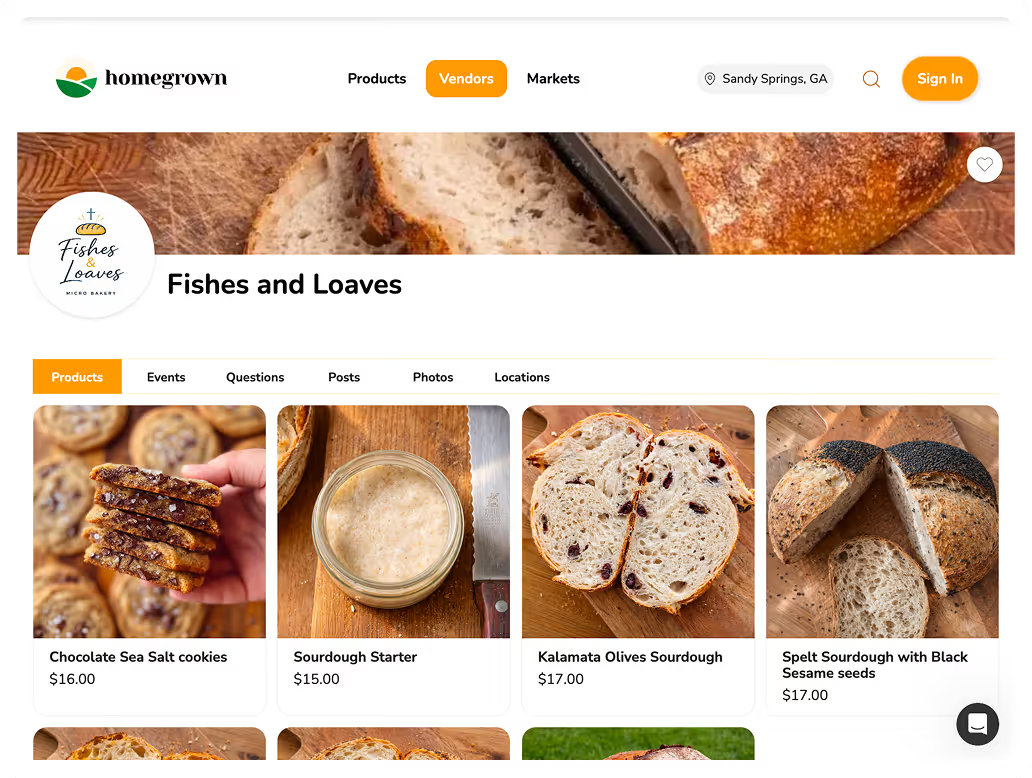
Homegrown gives you a simple online storefront where customers can browse your menu and place orders in minutes. Set yours up at findhomegrown.com/signup.
You need an ordering page, not a full website. Your ordering page is a single link where customers can see what you are selling this week, pick what they want, and pay. That is it.
Here are your options, ranked from simplest to most manual:
Michigan State Extension's guide to moving farm sales online walks through what to look for in a platform, from inventory management to payment processing, which is worth reading if you are comparing tools.
No matter which tool you pick, every ordering page needs these 4 things:
Do not overcomplicate this. If a customer can text you an order, they can fill out a one-page ordering form. For a full walkthrough of setting up online ordering from scratch, check out our guide on how to accept online orders as a farmers market vendor.
"Your ordering page needs exactly four things: product names with prices, pickup details, an order deadline, and payment at checkout."
Send a short text or email every week on the same day with your available products, prices, and a link to order. Keep it under 100 words. Your customers are busy. They do not want a newsletter. They want to know what you have and how to get it.
Here is a sample message you can copy and adjust:
That is the whole message. No fancy graphics, no long intro, no marketing speak. Just products, prices, and a link.
Here are the best tools for sending your weekly list:
"Send your availability list on the same day every week. Customers stop checking if the schedule is unpredictable."
Tuesday is the sweet spot for most vendors. It is early enough that customers have time to decide, and late enough that you know what you are making. Pick a day, stick with it, and do not skip weeks. Consistency is what turns a one-time sign-up into a repeat customer. For more details, see our guide on grow your pre-order customer base.
If you are looking for more detail on blending online ordering into your current market setup, our guide on how to add online ordering to your existing farmers market business covers the full process.
Pre-orders get picked up at your booth on market day. Bag or box each order separately, label it with the customer's name, and set aside a section of your table or a bin behind your booth for pickups. That is the whole system.
Here are 5 steps for smooth market-day pickup:
Here is a bonus that most vendors do not expect: pre-order customers who pick up at the market almost always buy something extra while they are there. They came for their sourdough loaf, but they see your new cinnamon rolls and grab a pack. Your pre-order customers become your highest-spending, most loyal shoppers.
"Pre-order customers who pick up at the market almost always buy something extra while they are there, making them your highest-revenue shoppers."
Yes, but start with market pickup first and add delivery only after demand justifies it. Market pickup costs you nothing extra because you are already there. Delivery takes time, gas, and coordination.
If you do want to offer delivery or alternative pickup, here are your simplest options:
If you offer delivery, protect your time and margins:
University of Missouri Extension research found that even rural farms selling directly to consumers online averaged over $18,000 in annual direct-to-consumer sales, a meaningful boost for a small operation that adds just a few hundred dollars per week.
"Keep your delivery radius to 10 to 15 minutes of driving. Anything farther eats into your profit margin and turns a side income into a second job."
Most vendors who try between-market ordering make the same handful of mistakes. Every one of them is avoidable if you know what to watch for.
"The biggest mistake is not the technology. It is inconsistency. Vendors who send their list every single week without skipping see three to four times more orders than vendors who send sporadically."
Homegrown keeps it simple. Your customers see your menu, pick what they want, and pay online. No app downloads, no complicated setup. Try it free for 7 days at findhomegrown.com/signup.
You grow your between-market orders the same way you grew your market booth: one customer at a time. The difference is that each new contact on your list compounds over time. A customer who orders once and likes the experience will order again and again.
Here is how to scale from your first handful of orders to a consistent 20 per week:
Here is the milestone framing that matters:
For a detailed breakdown of setting up the pre-order side of your business, read our guide on how to create a pre-order system for your food business.
"At 50 contacts ordering regularly, your between-market revenue stops being a bonus and starts being a genuine second income stream worth $200 to $500 every week."
No. You need an ordering page, not a full website. A simple storefront like Homegrown gives you a shareable link where customers can see your menu and place orders. You can be set up in 15 minutes without building a website from scratch. Share that single link in your texts, emails, and at your booth.
You can start seeing results with as few as 10 to 15 contacts. Even if only 20 to 30 percent of your list orders in a given week, that is 2 to 5 extra orders you would not have had. The list grows every market day, so your order volume increases naturally over time.
Selling out is actually the ideal scenario for adding pre-orders. Instead of selling out and turning people away, you take orders during the week and make exactly what is sold. Your market booth inventory and your pre-order inventory are separate. You prep for both based on actual demand, which means less waste and more revenue.
Yes. Keep prices consistent so customers trust you. If you want to offset the cost of packaging or a platform fee, add a small convenience fee or set a minimum order amount rather than raising individual product prices. A $1 to $2 order fee is common and most customers do not mind.
Use a platform that processes payments at checkout. Customers pay when they place the order, not at pickup. This eliminates no-shows and guarantees your revenue before you start prepping. Homegrown, Square Online, and similar tools all handle payment processing automatically so you never have to chase customers for money.
That works at first, but it does not scale. Once you have 15 or more orders per week, tracking texts becomes a mess. You will forget details, miss payments, and spend more time managing messages than making products. An ordering page keeps everything organized: order details, payments, and pickup info all in one place.
Yes. Your weekly rhythm shifts to a monthly rhythm. Send your availability list about a week before the market, take orders for 3 to 4 days, then prep and bring everything to market day. You can also offer mid-month delivery or porch pickup to keep orders flowing between markets and stay on your customers' radar.
Ready to turn your Saturday market into a full week of orders? Set up your free Homegrown storefront in 15 minutes and start taking orders this week. Get started at findhomegrown.com/signup.