

TCS stands for Time and Temperature Control for Safety — foods that must be kept at specific temperatures to prevent bacterial growth. In plain English, TCS foods are products that spoil or become dangerous if left at room temperature for too long. This matters for cottage food vendors because most state cottage food laws only allow non-TCS foods (shelf-stable products like baked goods, jams, and honey). If a product needs refrigeration to be safe, it is a TCS food, and most states will not let you sell it from a home kitchen under cottage food law. The Alabama Extension pH Pantry Guide provides a practical reference for understanding where the TCS/non-TCS line falls for specific foods, particularly acidified products like sauces and preserves.
The short version: TCS foods include dairy, eggs (in some states), meat, cooked rice and pasta, cut fruits and vegetables, and anything with cream-based fillings or frostings. Non-TCS foods include baked goods without cream filling, jams, jellies, honey, candy, dried herbs, and most shelf-stable preserves. If your product needs to stay below 41 degrees F or above 135 degrees F to be safe, it is TCS. If it can sit on your kitchen counter for days without becoming unsafe, it is probably non-TCS and allowed under cottage food law. The line between TCS and non-TCS determines what you can sell from your home kitchen versus what requires a licensed commercial kitchen. Understanding this distinction saves you from unknowingly selling products that violate your state's cottage food law.
TCS stands for Time and Temperature Control for Safety. The FDA uses this term to categorize foods that support rapid bacterial growth at certain temperatures. These foods must be:
The "danger zone" is the temperature range where bacteria like Salmonella, E. coli, and Listeria multiply rapidly. A TCS food left in the danger zone for more than 4 hours is considered unsafe for consumption.
For cottage food vendors, the practical implication is simple: if your product needs a refrigerator to be safe, it is TCS, and you probably cannot sell it under cottage food law.
| Food Category | Examples | Why It Is TCS |
|---|---|---|
| Dairy | Milk, cheese, yogurt, cream, butter | Protein + moisture = bacterial growth |
| Eggs | Cooked eggs, egg-based dishes | Protein + moisture |
| Meat and poultry | All cuts, ground meat, sausage | High protein, high moisture |
| Seafood | Fish, shellfish | High protein, rapid spoilage |
| Cooked grains | Rice, pasta, quinoa | Starches support bacterial growth when cooked |
| Cut produce | Sliced melons, cut tomatoes, fruit salad | Exposed flesh supports bacteria |
| Cream-based items | Cream cheese frosting, custard, cheesecake | Dairy + sugar + moisture |
| Tofu and soy products | Tofu, tempeh | Protein + moisture |
| Sprouts | Alfalfa, bean sprouts | Warm, moist growing conditions |
| Food Category | Examples | Why It Is Non-TCS |
|---|---|---|
| Baked goods | Bread, cookies, muffins, scones (no cream filling) | Low moisture, high sugar/starch |
| Jams and jellies | Strawberry jam, grape jelly | High sugar content inhibits bacteria |
| Honey | Raw honey, flavored honey | Naturally antibacterial |
| Candy | Caramels, fudge, brittle, toffee | High sugar, low moisture |
| Dried goods | Dried herbs, spice mixes, tea, jerky | Moisture removed |
| Vinegar-based | Hot sauce, some salsas, pickles | Acidity prevents bacterial growth |
| Nuts and seeds | Roasted nuts, nut butters, seed mixes | Low moisture |
| Oils | Infused oils (with some exceptions) | No water activity |
The key factors that make a food non-TCS are: low moisture (dried goods, candy), high sugar (jams, honey), high acidity (pickled foods, vinegar-based sauces), or combinations of these that prevent bacterial growth.
Cottage food laws were designed to allow safe food production in home kitchens. The fundamental assumption is that home kitchens cannot guarantee the temperature control that TCS foods require:
By limiting cottage food to non-TCS products, states reduce the food safety risk of home kitchen production to near zero. Shelf-stable products like bread, jam, and honey are inherently safe at room temperature — they do not need the temperature infrastructure that a commercial kitchen provides. The Serious Eats' fermentation guide explains how acidity and salt concentration create shelf stability in fermented products, making them another category of non-TCS products that many states allow.
This is why the TCS distinction matters for your business: it draws the line between what you can sell from home (non-TCS) and what requires a licensed kitchen with inspected refrigeration (TCS).
Some products straddle the TCS/non-TCS line, and their classification varies by state:
The question: Is a cupcake with cream cheese frosting TCS?
The answer: In most states, yes — the cream cheese makes it TCS. The cupcake itself (non-TCS) plus cream cheese frosting (TCS) = TCS product. Some states have recently allowed cream cheese frosting if the sugar content is high enough to lower the water activity below the TCS threshold. Check your specific state.
The safe route: Use buttercream frosting (butter + powdered sugar = non-TCS in most states) instead of cream cheese frosting.
The question: Are homemade pickles TCS?
The answer: Properly acidified pickles (pH below 4.6) are non-TCS because the acidity prevents bacterial growth. Improperly acidified pickles or fermented vegetables with insufficient acid ARE TCS. Many states require an acidified food course before you can sell pickled products. Some states include pickles under cottage food; others do not.
The question: Are fresh eggs TCS?
The answer: It depends on the state and whether they are washed. Unwashed eggs have a natural protective coating (bloom) that makes them shelf-stable at room temperature. Washed eggs are TCS because the protective coating is removed. Most states allow direct-to-consumer egg sales under separate egg regulations, not cottage food law.
The question: Are quick breads with fruit or vegetable puree TCS?
The answer: Generally no — the baking process reduces moisture and the high starch content prevents bacterial growth. Pumpkin bread, banana bread, and zucchini bread are classified as non-TCS baked goods in virtually all states. However, if you add a cream cheese swirl or glaze with dairy, the product becomes TCS.
The question: Are chocolate-covered strawberries TCS?
The answer: Yes — the fresh fruit underneath the chocolate is TCS. The chocolate coating does not change the classification of the fruit. Chocolate-covered pretzels or cookies (non-TCS items) are generally non-TCS.
If any ingredient is TCS on its own (dairy, meat, eggs, cut fresh fruit), the final product is likely TCS.
Even if individual ingredients are non-TCS, the final product might be TCS if the preparation process adds moisture or changes the properties:
Every state's cottage food law has a list of allowed products. If your product is on the list, your state considers it non-TCS for cottage food purposes. If it is not on the list, it may be TCS or may simply not have been considered.
Call your state's Department of Agriculture or Health and describe your specific product. They will tell you whether it is allowed under cottage food law. A 5-minute phone call is better than guessing wrong and selling a product that violates your state's law.
If the product you want to sell is classified as TCS and not allowed under cottage food law, you have four options:
Switch cream cheese frosting to buttercream. Replace fresh fruit topping with dried fruit. Use shelf-stable ingredients instead of refrigerated ones. Many products can be reformulated to eliminate TCS components while maintaining flavor and appeal.
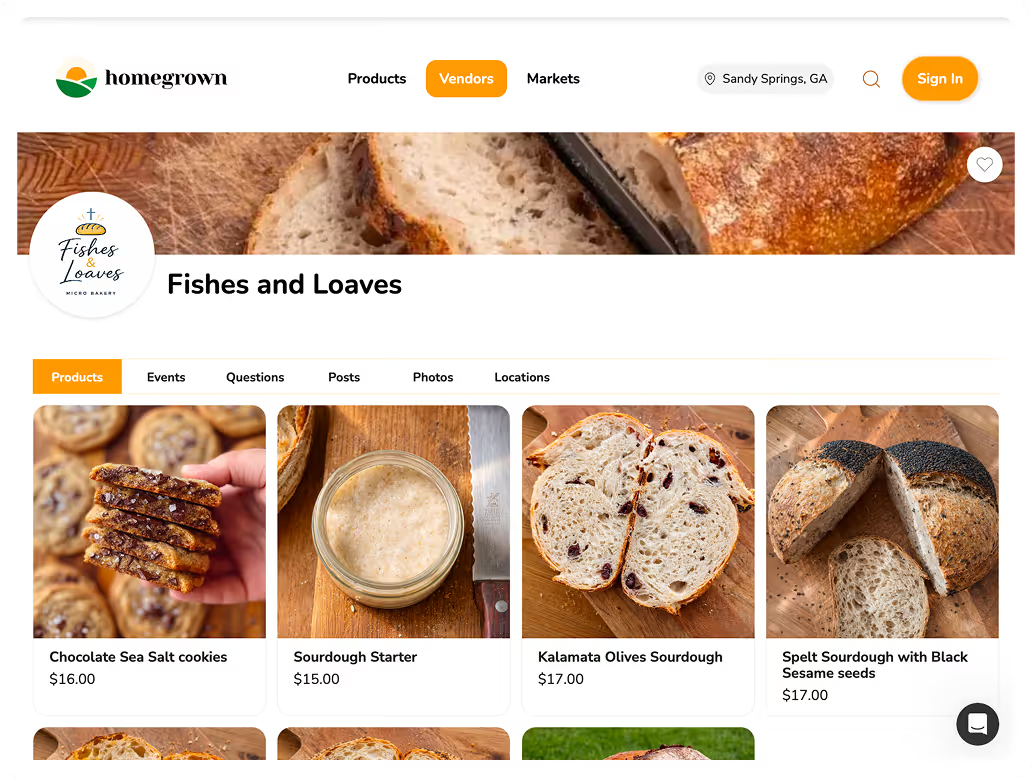
Focus on the many profitable non-TCS products that ARE allowed: sourdough bread, cookies, jam, honey, candy, dried herbs, sauces, and pickled vegetables (where allowed). These products have excellent margins and proven demand without the TCS complications.
If you need to sell TCS products, rent time in a commissary kitchen that has inspected refrigeration and holds the appropriate health department permits. See our guide on commissary kitchen vs home kitchen.
If you live in a state with food freedom laws (Wyoming, Utah, Maine, North Dakota, Arkansas), some TCS products may be allowed for direct-to-consumer sales from home kitchens. See our guide on food freedom states.
The trend across the US is toward allowing more products, including some TCS items, under cottage food and food freedom laws:
If a product you want to sell is currently restricted in your state, there is a reasonable chance the law will expand in the coming years. In the meantime, sell what is allowed and advocate for broader laws.
Regardless of what products your state allows, you need an ordering system that works for everything you sell. A Homegrown storefront at $10 per month handles product display, ordering, payment, and pickup scheduling for any product type — TCS or non-TCS. The platform does not change based on your regulatory status.
For more on the legal framework for home food sales, see our guides on food freedom explained, cottage food licensing for Instagram sellers, and health department permits for farm stands.
TCS stands for Time and Temperature Control for Safety. It refers to foods that require specific temperature control (below 41°F or above 135°F) to prevent bacterial growth and foodborne illness.
No. Bread (including sourdough, quick breads, and rolls) is non-TCS because baking reduces moisture to levels that do not support bacterial growth. Bread with cream cheese frosting, custard filling, or fresh fruit topping may become TCS because of the added ingredients.
No. Properly made jam with sufficient sugar content is non-TCS. The high sugar concentration prevents bacterial growth. This is why jam is allowed under cottage food law in every state.
Standard cookies (chocolate chip, oatmeal, sugar, peanut butter) are non-TCS. Cookies with cream filling, fresh fruit, or custard-based components may be TCS depending on the specific ingredients.
Buttercream made with butter and powdered sugar is generally non-TCS because the high sugar content inhibits bacterial growth. Cream cheese frosting IS TCS in most states. If in doubt, use buttercream.
Only if your state allows it (through cottage food law expansion, food freedom law, or a separate vendor permit) AND you can maintain proper temperature control at the market (insulated cooler with ice or a plug-in refrigerated display). Most markets require a health department permit for TCS products.
Check your state's current cottage food allowed product list. If cream-based products, fermented foods, or other traditionally TCS items appear on the list, your state allows some TCS products. If the list only includes shelf-stable items, TCS products are not allowed. When in doubt, call your state's Department of Agriculture.
In many cases, yes. The most common swap is replacing cream cheese frosting with buttercream frosting on cupcakes and cakes — this single change can move your product from TCS to non-TCS. Replacing fresh fruit toppings with dried fruit, using vinegar-based sauces instead of cream-based ones, and increasing sugar concentration in preserves are all ways to reformulate. The key is understanding which specific ingredient triggers the TCS classification and finding a shelf-stable alternative that maintains the flavor and appeal your customers expect.
If nobody gets sick and no complaint is filed, nothing happens — but you are taking an unnecessary risk. If a customer does get ill or reports you, the health department will investigate. Selling a restricted product without proper licensing can result in a stop-sale order, fines, and potential liability exposure that your cottage food insurance may not cover if you were knowingly non-compliant. The safest approach is to verify every product against your state's allowed list before you sell it. A 5-minute phone call to your Department of Agriculture is far cheaper than a food safety incident. The TCS classification system exists to protect consumers, and understanding where your products fall gives you the confidence to sell legally and market your food without second-guessing.