

The short version: StandScout is free forever at $0, then $9.99 Starter, $29.99 Pro, and $59.99 Business a month, with add-ons from $4.99 to $14.99 each. Before you compare it to anything: StandScout has no checkout. It is a farm-stand discovery directory with 37,000+ stands listed, not an ordering platform, so there is no platform fee and no processing rate because no money moves through it. That makes it a marketing spend rather than an operations one, and it should be judged the way you judge an ad: by whether it brings you customers, not by what it costs.
Figures came from StandScout's own pricing page in July 2026.
Four tiers and a menu of add-ons.
| StandScout | |
|---|---|
| Subscription | Free $0 forever · Starter $9.99/mo · Pro $29.99/mo · Business $59.99/mo. Add-ons: extra location +$14.99, team seat +$4.99, social auto-post +$9.99, email widget +$9.99, competitor insights +$14.99 |
| Free trial | Not needed. The free tier requires no card |
| Platform fee | Not applicable. There is no checkout, so no orders pass through it |
| Card processing | Not applicable, for the same reason |
StandScout also charges shoppers on the other side: Scout+ at $2.99 and Scout Pro at $5.99. That is worth knowing because it tells you something about the model, which is unusual for this category.
Because it puts StandScout in a different budget line than every other platform you might be comparing.
An ordering platform is an operations cost. It processes payments, tracks orders, and replaces work you would otherwise do by hand. You justify it by hours saved and errors avoided.
A directory listing is a marketing cost. It does not process anything. You justify it by customers who found you and would not have otherwise.
Which means the question "is $9.99 a month good value?" is the wrong one. The right question is "how many new customers does a listing bring, and what is one worth to me?"
Work it as a payback calculation. If a new customer at your stand is worth $40 over a season, Starter at $119.88 a year pays for itself with three new customers. Pro at $359.88 needs nine. Business at $719.88 needs eighteen.
Those are not demanding numbers. They are also not automatic, and no directory can promise them. Hold that thought, though, because as the tier breakdown below shows, the paid plans are not actually what determines whether you get found.
The other half of the same arithmetic is what happens after someone finds you. A listing that sends a shopper to a phone number they have to call converts far worse than one that sends them somewhere they can order. If you are going to spend on discovery, it is worth having somewhere for it to land first: a storefront costs about $120 a year, which is roughly what StandScout's Starter tier costs, and it is the difference between a lead and an order.
This is the part most vendors skip, and it is the only part that matters for a marketing spend.
Point five is the one that turns this from guesswork into a decision. Work out roughly what an average customer spends across a season, decide how many you need, and then you have a threshold rather than an opinion.
Not what most people assume, and this is the single most useful finding on the page.
The paid tiers do not buy prominence. Your listing, your customer reviews, your in-stock toggle, and basic analytics are all on the free plan. What you pay for is inventory and listing management:
Read that list again with the discovery question in mind. Nothing on any paid tier makes shoppers more likely to find you. The listing is free, and the money buys you better tools for running it.
That is actually a point in StandScout's favour. Plenty of directories sell placement, which means the vendor with the biggest budget appears first regardless of whether their stand is any good. Here, being found is free and paying gets you a better-managed listing.
Images per product are the real metered resource: 1, then 5, then 10. For food that matters more than it sounds, since a photograph is most of the decision. Going from one image to five is the substantive jump, and it costs $20 a month.
The add-ons stack quickly, so price the setup rather than the tier. Pro at $29.99 with a second location, social auto-post, and the email capture widget is $64.96 a month, or $780 a year, which is more than the headline Business tier and buys less.
Sometimes, and the honest answer depends on whether the directory has the audience.
A directory works when shoppers actually use it to decide where to go. StandScout says 37,000+ stands are listed, which speaks to supply rather than demand. The number you want is how many shoppers search it in your area, and that is not published.
So ask directly, and ask specifically:
But note that the paid vendor tiers do not change the answer to whether you get found, because the listing is free either way. Take the free listing regardless. It costs nothing and might get found, and there is no version of this where not listing is better than listing.
The paid decision is therefore a completely separate one: not "will this bring me customers" but "do I want stock levels, variants, and more photographs for my listing." Those are worth something on their own, and they are worth nothing if nobody is looking.
The shopper-side subscriptions are a useful signal here. A directory charging shoppers $2.99 or $5.99 is one where at least some shoppers find it valuable enough to pay, which is a better indicator than a stand count. Ask how many paying shoppers there are in your area.
Before paying for any directory, make sure the free channels are done properly, because they are usually worth more.
Google Business Profile is the single highest-value listing for a physical farm stand and it costs nothing. Someone searching "farm stand near me" is a customer with intent, and a complete profile with hours, photos, and current products beats a paid listing in a niche directory almost every time. Our guide to getting your farm stand on Google Maps covers the setup.
A sign that actually works is the other one. Our piece on farm stand sign ideas covers what makes people stop, and for a roadside stand it is a larger lever than any online listing.
The sensible sequence is: Google Business Profile first, a good sign second, a free StandScout listing third, and only then consider paying for prominence anywhere. Most stands have not finished the first two.
USDA's Economic Research Service work on food markets and prices is useful background on how direct-to-consumer sales are actually reaching people, which is worth reading before assuming discovery is your bottleneck at all.
One practical point about being findable at all: if your stand is at your home, appearing in a public directory means publishing where you live. That is a trade many vendors make without thinking about it, and it is worth thinking about once. The FTC's privacy and data security guidance for businesses is aimed at customer data rather than yours, but the same instinct applies: decide deliberately what you are publishing rather than accepting a default.
Worth listing plainly, because the category confusion is the main risk here.
That last line is the practical takeaway. StandScout and an ordering platform are not alternatives to each other; they are two different jobs. Being listed in a directory does not let anyone buy from you, and having a storefront does not help anyone find it.
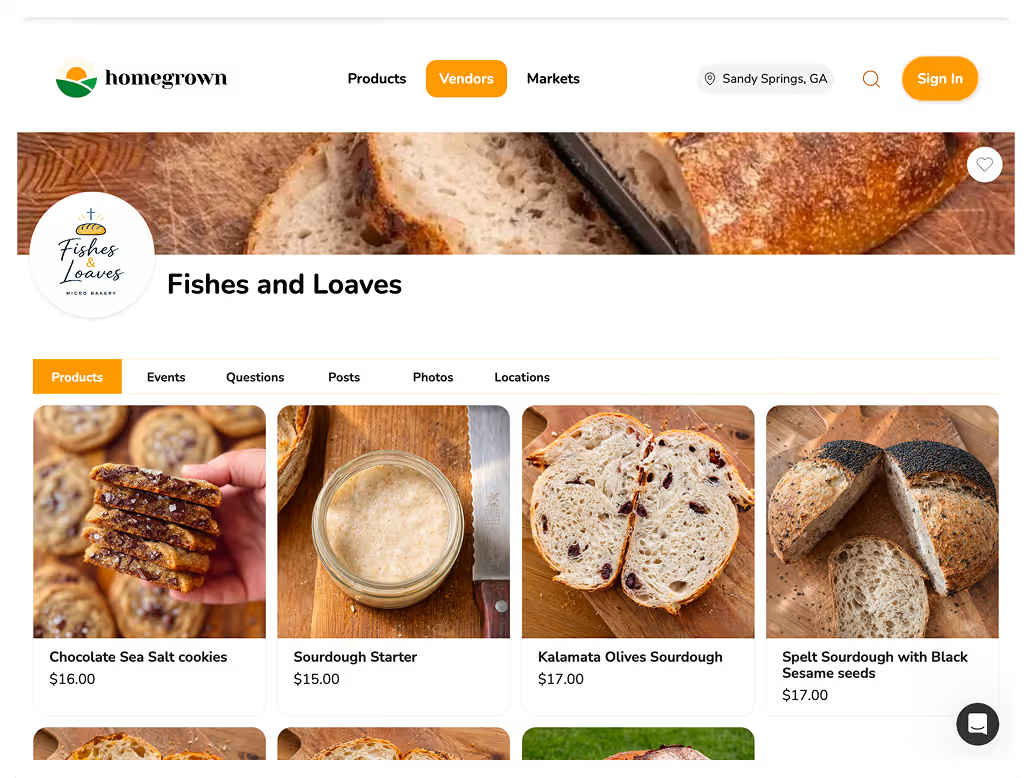
If what you actually need is the ordering half, Homegrown is $10 a month billed annually with 0% commission and 2.9% plus $0.30 processing published up front, and it handles pickup at each place you sell with its own schedule and cutoff, local delivery with a radius and a route, and sales tax calculated, filed, and remitted in all 50 states. The honest bound: it is not a discovery channel. Homegrown does not send you customers, and any storefront that claims to should be asked for numbers. If your problem is that people cannot find you, a directory or Google Business Profile is the right spend. If your problem is that people find you and then have to text you their order, you can run a week of real orders through a storefront and see what changes.
Our look at StandScout for market vendors covers the product in more detail, and our guide to moving a farm stand from cash to online payments covers the ordering side that a directory cannot touch.
Usually yes, and it costs less than people assume.
A free StandScout listing plus a $120-a-year storefront is $120 a year total, and covers both jobs at the lowest possible price. Add Starter at $9.99 only once you have evidence the free listing is producing anything.
The order matters:
Most vendors do this backwards, paying for prominence before they have anywhere for the traffic to land. A listing that sends people to a phone number they have to call is leaking most of what it produces.
There is a free tier at $0 forever, then Starter at $9.99 a month, Pro at $29.99, and Business at $59.99. Add-ons run $4.99 to $14.99 each, including extra locations at $14.99.
No, because there are no sales. StandScout is a discovery directory without a checkout, so no orders or payments pass through it and there is no platform or processing fee.
No. It lists stands so people can find them. Ordering, payment, pickup scheduling, and everything operational happens somewhere else, which means you still need an ordering method alongside it.
For most stands, yes. Free gets you the listing, the in-stock toggle, customer reviews, and basic analytics. Upgrade only if you specifically want stock levels, product variants, or more than one photograph per product.
Ask every new customer how they found you and write it down for a full season. Decide in advance what a new customer is worth: Starter at $119.88 a year needs about three to break even.
No. The listing itself, customer reviews, and basic analytics are all on the free plan. Paid tiers buy inventory management: granular stock levels, product variants, more images per product, exports, and extra locations.
Google Business Profile is free and is the highest-value listing for a physical stand. Complete that first. Consider paid directory tiers only after your free listings and your signage are doing their job.
StandScout is priced reasonably for what it is: free forever at the entry tier, $9.99 to get started, and add-ons that stack quickly if you are not watching. A free listing is worth having and costs nothing.
The category is the thing to get right. This is marketing spend, not operations spend. There is no checkout, no commission, and no processing rate because no money moves through it, so comparing it to an ordering platform on price is comparing two different budget lines.
Judge it like an ad. Decide what a new customer is worth, note that Starter needs about three of them a year and Business about eighteen, ask every new face how they found you, and set a kill date at the end of one season. If it has not paid for itself by then, the free listing is the right tier.