

You are spending too much on ingredients. Every trip to the grocery store chips away at your margins, and the produce sitting under fluorescent lights for a week does not compare to what you could get from the farm down the road. If you sell:
The good news is that sourcing ingredients locally can drop your costs, improve the quality of your products, and give you a marketing story that customers will actually pay more for. You do not need a wholesale license or a giant operation to make this work. You just need to know where to look and how to build the right relationships.
The short version: Small food vendors can source ingredients locally from farmers markets, direct-from-farm purchases, u-pick operations, co-ops, and restaurant supply stores to cut ingredient costs by 20 to 40 percent compared to retail grocery. The key is buying in bulk, asking about imperfect produce, committing to regular orders, and building genuine relationships with local growers. Local sourcing also gives you a premium marketing angle that justifies higher prices to your customers.
Sourcing ingredients locally gives small food vendors four advantages that grocery store runs cannot match: fresher products, lower per-unit costs, stronger marketing, and a more resilient supply chain.
Fresher ingredients make better products. Produce from a local farm was picked within the last day or two. Grocery store produce was picked days or weeks ago, shipped across the country, and sat in a warehouse before hitting the shelf. When you make strawberry jam with berries picked yesterday versus berries picked ten days ago, your customers can taste the difference.
Your costs drop when you cut out the middlemen. A grocery store marks up produce anywhere from 30 to 50 percent above what they paid the distributor, who already marked it up above what the farmer received. When you buy direct from a farmer, you skip those layers entirely. A flat of strawberries that costs $8 at the grocery store might run $4 to $5 direct from the grower.
"Made with local ingredients" is a real selling point. Customers respond to local sourcing because it feels personal and trustworthy. When your label says "made with honey from Miller Family Apiary" instead of "contains honey," that story commands a premium. USDA data shows direct-to-consumer food sales have grown steadily over the past decade, driven largely by consumer demand for locally produced food.
You build a more reliable supply chain. When egg prices spike nationally or there is a shortage on butter, the vendor who already has a relationship with a local egg farmer or dairy is in a much stronger position than the one scrambling at Walmart. If you have dealt with ingredient price spikes before, you know how much a reliable local source is worth.
Benefits of local sourcing at a glance:
"A cottage food vendor who sources even three or four key ingredients locally can save $50 to $150 per month while producing a noticeably better product."
Local ingredients are closer and cheaper than most vendors realize. The best sources for small food vendors are:
Here is where to start looking:
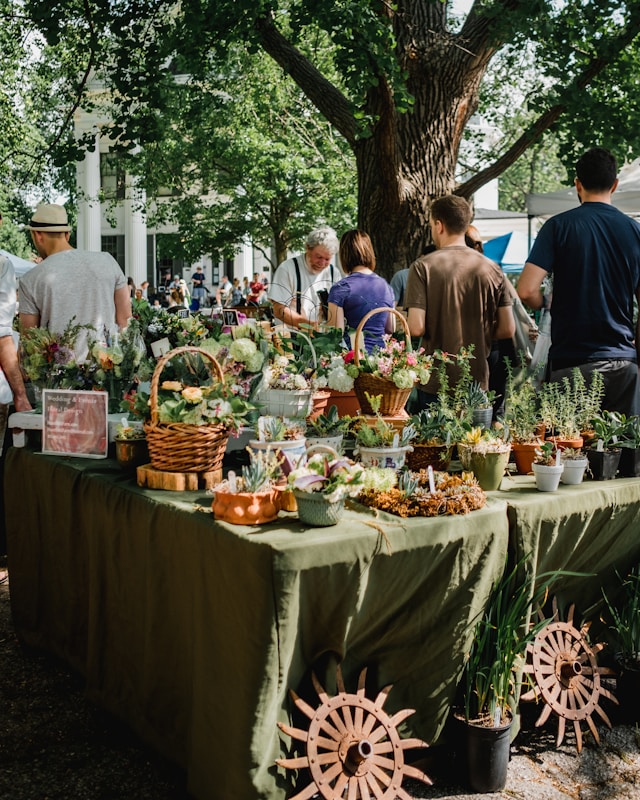
You already sell at a farmers market. Start buying there too. The egg vendor two booths down, the honey producer across the aisle, and the berry farmer at the end of the row are all potential suppliers. Many market vendors will cut you a deal if you are buying in quantity and picking up consistently.
Search for farms near you that sell direct. Many small farms sell:
Check your county's agricultural extension website, local farm directories, or simply ask around at your farmers market. A quick conversation often leads to a connection you would never find online.
U-pick farms are one of the best-kept secrets for cottage food vendors. You do the harvesting labor, so the farmer charges you less. Strawberries, blueberries, peaches, apples, and other fruits can cost 40 to 60 percent less at a u-pick compared to retail. The trade-off is your time, but if you are making 50 jars of jam, the savings add up fast.
Food co-ops pool purchasing power across multiple buyers, getting you near-wholesale pricing on everything from flour to butter to sugar. Some areas also have informal buying clubs where small producers split bulk orders. According to the National Cooperative Grocers, co-op member-owners often access products at 10 to 20 percent below standard retail.
Places like Restaurant Depot, Chef'Store, and local restaurant supply outlets sell commercial quantities at prices well below grocery retail. A 50-pound bag of flour at a restaurant supply store costs roughly $15 to $20, compared to $3 to $4 for a five-pound bag at the grocery store. That is a 50 percent savings per pound. You may need a business license or resale certificate to shop at some of these stores, but the savings are substantial.
| Source | Best For | Typical Savings vs Retail | Minimum Order | Notes |
|---|---|---|---|---|
| Farmers market vendors | Eggs, honey, seasonal produce | 15-30% | No minimum | Build relationships at your own market |
| Direct farm purchases | Fruits, vegetables, herbs, dairy | 20-40% | Varies by farm | Call ahead, commit to regular pickups |
| U-pick operations | Berries, stone fruit, apples | 40-60% | No minimum | You provide the labor |
| Food co-ops | Flour, sugar, butter, dry goods | 10-20% | Membership fee | Great for staples you use every week |
| Restaurant supply stores | Flour, sugar, oils, bulk staples | 30-50% | Large quantities | May need business license |
| Wholesale clubs (Costco, Sam's) | Butter, sugar, vanilla, chocolate | 15-25% | Membership fee | Consistent pricing year-round |
The simplest way to get a better price from a local supplier is to buy more, buy regularly, and make their life easier. Farmers and small producers value consistency and reliability just as much as you do.
Here are the strategies that work:
"Asking about seconds or imperfect produce can save a cottage food vendor 30 to 50 percent on fruits and vegetables without any drop in product quality."
Not every ingredient is worth sourcing locally. Some products are cheaper and more consistent from a warehouse store, while others are dramatically better and cheaper from a local source. The trick is knowing which is which.
Use this table to decide where to spend your sourcing energy:
| Ingredient | Local Advantage | Store Advantage | Best Source |
|---|---|---|---|
| Seasonal berries | 40-60% cheaper at u-pick, much fresher | Available year-round frozen | Local (in season), store (off season) |
| Eggs | Fresher, richer yolks, farm-direct pricing | Consistent pricing, always available | Local farm |
| Honey | Premium marketing angle, bulk pricing from beekeepers | Cheaper at Costco if you do not need the story | Local beekeeper |
| Butter | Small local dairies sometimes offer bulk pricing | Costco butter is hard to beat on price | Wholesale club |
| All-purpose flour | No real local advantage for commodity flour | Restaurant supply stores beat everyone on price | Restaurant supply |
| Specialty flour (whole wheat, rye) | Local mills produce a superior product | More variety in specialty stores | Local mill if available |
| Sugar | No local advantage | Costco or restaurant supply | Wholesale club |
| Vanilla extract | No local advantage | Buy in bulk online or restaurant supply | Restaurant supply |
| Stone fruit (peaches, plums) | 30-50% cheaper direct, dramatically fresher | Available off-season frozen or canned | Local (in season) |
| Herbs | Grow your own or buy farm-direct for pennies | Grocery herbs are overpriced and wilt fast | Local or homegrown |
| Chocolate/cocoa | No local advantage | Buy bulk online or restaurant supply | Online bulk supplier |
| Pecans, walnuts | Sometimes available from local orchards | Costco bulk bags are very competitive | Compare prices |
The general rule: Source ingredients locally when freshness matters for your product quality or when the "local" story adds marketing value. Buy staples like:
If you have not already built a master ingredient list for your food business, start there. Knowing exactly what you use and how much you use makes it much easier to identify where local sourcing will save you the most money.
The vendors who get the best prices and the first call when something special comes in are the ones who show up consistently, pay reliably, and treat the relationship like a partnership rather than a transaction.
Here is how to build those relationships:
"The vendor who shows up every week, pays in cash, and tags the farmer on Instagram gets better prices than the vendor who just sends a text when they need something."
Building supplier relationships is similar to building customer relationships. If you want to calculate your true cost per item, factor in the value of a reliable supplier who gives you priority access and fair pricing year after year.
Local sourcing changes both sides of the equation. It lowers your ingredient costs and raises the price your customers are willing to pay. That is a rare combination in any business.
When you source locally, your ingredient costs go down on the products where it matters most. Seasonal fruit from a u-pick operation at $1.50 per pound versus $4 per pound at the grocery store means your jam costs 40 percent less to make. Even if only a few of your ingredients come from local sources, the savings compound over a full production cycle.
Track your ingredient costs before and after switching to local sources. Most vendors find they save $50 to $200 per month once they have a few reliable local suppliers in place.
"Made with local honey from Johnson Family Farm" is a completely different product story than "contains honey." Customers pay more for products with a local story because it signals quality, freshness, and community support.
Here is how to leverage local sourcing in your marketing:
According to a Food Marketing Institute study, 73 percent of shoppers are willing to pay more for products with locally sourced ingredients. That premium typically ranges from 10 to 25 percent above comparable non-local products.
If you ever need to communicate a price increase, your local sourcing story makes that conversation much easier. Customers understand that supporting local farms costs a little more, and most are happy to pay it.
The math works like this:
| Scenario | Ingredient Cost | Retail Price | Margin |
|---|---|---|---|
| Grocery store berries, no story | $3.50/jar | $8.00/jar | $4.50 (56%) |
| Local u-pick berries + local story | $2.00/jar | $9.00/jar | $7.00 (78%) |
That is not a typo. Sourcing locally can nearly double your margin on the right products by simultaneously cutting costs and raising the price customers are willing to pay.
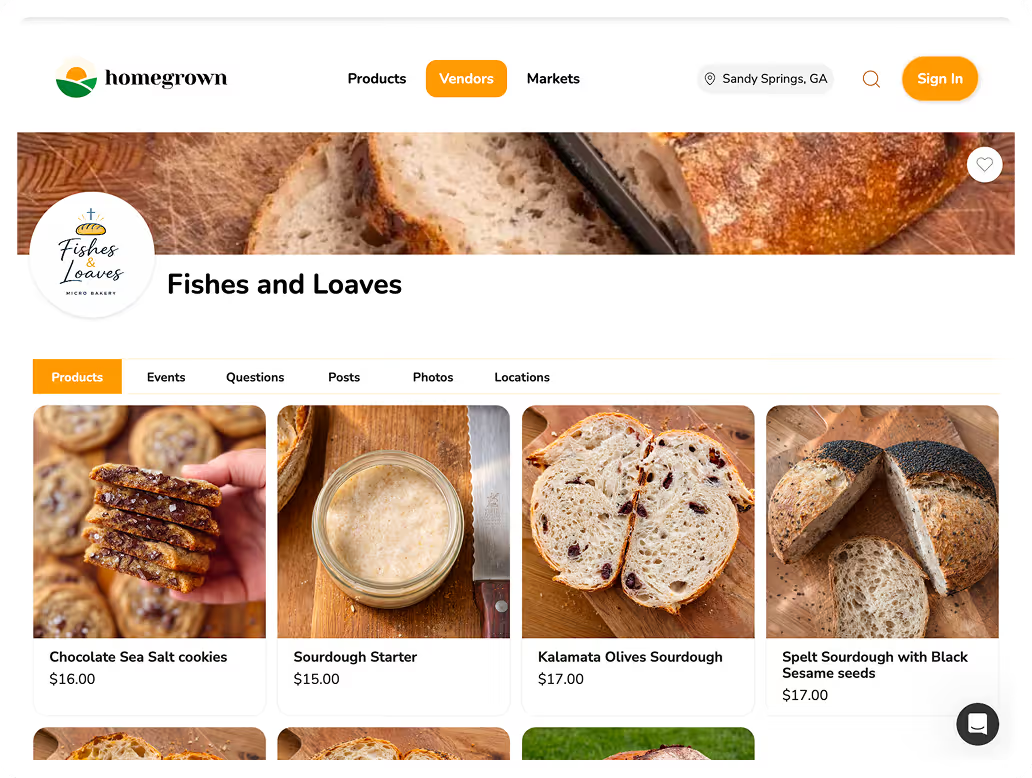
Ready to start selling your locally sourced products with a system that handles ordering and payments automatically? Set up your Homegrown storefront and share your ordering link with customers in minutes.
Rural vendors often have the easiest time sourcing locally because farms are nearby. Drive the back roads in your area and look for farm stands, "eggs for sale" signs, and produce stands. Ask at your local feed store or agricultural extension office for a list of farms that sell direct. Even in areas without a formal farmers market, small farms are usually happy to sell to a local food vendor who will buy consistently.
No special license is needed to buy ingredients from local farms for your cottage food business. You are simply purchasing food as a consumer. If you want to shop at a restaurant supply store like Restaurant Depot, you may need a business license or resale certificate, but buying from farms, u-pick operations, and co-ops requires nothing beyond showing up and paying.
Most cottage food vendors who source ingredients locally save 20 to 40 percent on seasonal produce and 10 to 20 percent on staples like eggs and honey compared to grocery store prices. On a typical monthly ingredient bill of $300 to $500, that translates to $60 to $200 in savings. The biggest savings come from u-pick operations and buying imperfect produce directly from farms.
Seasonal availability is the biggest limitation of local sourcing. The solution is to stock up during peak season. Buy in bulk when berries, stone fruit, or other seasonal ingredients are at their cheapest and freeze, can, or dehydrate them for use throughout the year. Many vendors buy 50 to 100 pounds of fruit during a two-week harvest window and process it all at once.
Yes. Local sourcing typically lowers your costs on the ingredients where it matters most, and the "made with local ingredients" story lets you charge a premium that more than covers any items where local is slightly more expensive. The net effect for most vendors is lower costs and higher prices, which means better margins overall.
Start by asking at your farmers market. Many of the vendors selling at market also sell bulk quantities directly from the farm. Your state's agricultural extension service often maintains a directory of farms that sell direct. You can also search for local food hubs or food co-ops in your area, which connect small producers with small buyers.
Absolutely. Even if your food business is small, local sourcing makes sense. Buying from the egg farmer or berry grower at your own market builds community, cuts your costs, and gives you a marketing story. Start with just one or two ingredients and expand from there as you build relationships and see the savings.
You do not need to overhaul your entire supply chain overnight. Pick one ingredient you buy every week, find a local source, and compare the cost. Most vendors are surprised how quickly the savings add up once they start buying direct.
Build your sourcing list, negotiate a standing order with a local farmer, and put the farm name on your label. Your products will taste better, your margins will improve, and your customers will notice the difference.
When you are ready to share your locally sourced products with more customers, set up your Homegrown storefront and start taking orders online. It takes less than an hour, and your ordering link works whether customers find you at the farmers market, on social media, or through word of mouth.