

Christmas markets and holiday night markets are the most concentrated revenue opportunity of the year for cottage food vendors. Holiday retail sales totaled $976.1 billion in 2024, and experiential holiday spending rose 16 percent as shoppers actively sought in-person market experiences. A single well-run holiday market season — just 4 to 6 weekends in November and December — can account for 20 to 50 percent of a vendor's annual revenue.
But holiday markets are not just "your regular farmers market with lights on." They run longer hours, attract gift-buying shoppers instead of grocery shoppers, require festive booth displays, and often have application deadlines that close months before the event. This guide covers how to find and apply for holiday markets, what to sell, how to price for gift buyers, booth setup and lighting, production planning for multi-weekend runs, and the night market format that is growing fast.
The short version: Christmas markets and holiday night markets are a 6-week window where cottage food vendors can earn 20 to 50 percent of their annual revenue. Applications open January through March and fill by July — apply early. Booth fees range from $35 at small community markets to $500+ at urban events. Gift-buying shoppers support 20 to 30 percent higher pricing than regular farmers markets. Fudge, decorated cookies, gift boxes, jams, and dry mixes are the top sellers. For night markets, use warm-toned LED string lights and invest in festive booth decoration — presentation matters more here than at any other venue.
Christmas markets are a fundamentally different selling environment than the Saturday morning farmers market you may be used to. The hours, the shoppers, and the expectations are all different.
| Factor | Regular Farmers Market | Christmas / Holiday Market |
|---|---|---|
| Hours | 7am-1pm (morning only) | 10am-9pm or later |
| Duration | Single morning per week | Multi-weekend run (4-6 weekends) |
| Shopper mindset | Grocery shopping | Gift buying |
| Average transaction | $8-$15 | $15-$35 |
| Booth setup | Folding table, canopy | Decorated booth, lights, garland |
| Product rules | Minimal restrictions | Often require handmade, festive items |
| Booth fee | $25-$75/week | $35-$500+ per event |
| Competition | Other food vendors | Craft vendors, artisans, gift sellers |
The gift-buying mindset is the single biggest difference. At a farmers market, shoppers are feeding their family for the week. At a Christmas market, they are buying gifts for other people. This changes everything about your product selection, packaging, and pricing.
Gift buyers care more about presentation than portion size. They care about how the product will look when unwrapped. They are willing to pay a premium for something that looks special. And they are making impulse decisions more often because they are browsing for ideas, not shopping from a list.
The best-selling food products at Christmas markets share three qualities: they look like gifts, they are shelf-stable (no refrigeration needed in a cold outdoor booth), and they photograph well enough for the buyer to show off on social media.
| Product | Price Range | Margin | Why It Works |
|---|---|---|---|
| Fudge (assorted flavors) | $8-$12/half-pound | 75%+ | Highest margin, impulse buy, classic holiday |
| Decorated sugar cookies | $4-$12 each | High | Visual, gift-worthy, Instagram-ready |
| Gift boxes (cookie + jam + honey) | $25-$45 | High | Bundled value, one-stop gift purchase |
| Jams and preserves | $8-$12/jar | Medium-high | Shelf-stable, stocking stuffer, wide appeal |
| Dry baking mixes (cookie, bread) | $8-$14 | Very high | Light to carry, cheap to produce, gift-ready |
| Gingerbread (cookies or houses) | $5-$15 | Medium-high | Classic Christmas product, long shelf life |
| Flavored popcorn (holiday flavors) | $6-$10/bag | Very high | Fast production, cheap ingredients |
| Candy (caramels, toffee, bark) | $8-$14/bag | High | Impulse buy, gifting, wide appeal |
Bundled gift boxes consistently outperform individual items at holiday markets. A jar of jam sells for $10 alone. A gift box with jam, a small bag of granola, and a jar of honey sells for $32. The $3 box and tissue paper you added turns three separate products into one complete gift that the buyer does not need to wrap, present, or think about. They pick it up, hand it to someone, and their gift shopping is done.
For detailed product ideas and pricing, read our guide on how to sell Christmas cookies and holiday gift sets.
Fudge deserves a special mention because it has the best margins of any common cottage food product at holiday markets. A half-pound of fudge costs under $2 to produce and retails for $8 to $12. That is a 75 percent or higher margin before packaging. It requires no decoration skills, no fancy equipment, and produces in large batches. Offer:
The biggest mistake first-time holiday market vendors make is waiting too long to apply. Most Christmas markets open applications in January through March, and the best spots fill by July.
As Quictents' guide to Christmas market vending explains, holiday market organizers typically look for uniqueness, quality presentation, and handmade products. Most applications require:
| When | What |
|---|---|
| January-March | Major market applications open |
| April-June | Apply and submit materials |
| July | Most major markets fully booked |
| August-September | Smaller community markets still accepting |
| October | Final deadline for most events; confirm booth details |
| November-December | Market season runs |
Apply to 3 to 5 markets to increase your chances of getting accepted. Organizers curate their vendor mix, so a rejection from one market does not mean your products are wrong — it may mean they already had a similar vendor.
Booth fees for holiday markets range dramatically based on the market's size, location, and prestige.
| Market Type | Fee Range | What You Get |
|---|---|---|
| Small community market | $35-$75 | 6-foot table, single day |
| Mid-range weekend market | $180-$325 | 10x10 space, one weekend |
| Multi-weekend community market | $225-$720 | 10x10 space, 2-4 weekends |
| Premium urban craft fair | $400-$550 | 5x10 or 10x10, one event |
| Major city market | $400-$500/day | Full setup, high traffic |
According to Capital One Shopping's holiday research, holiday retail sales hit $976.1 billion in 2024 — even a tiny share of local holiday spending adds up fast. A $200 booth fee at a mid-range market sounds expensive until you consider that a single afternoon of holiday market sales can gross $500 to $1,500 for a prepared vendor.
Run the math before you commit:
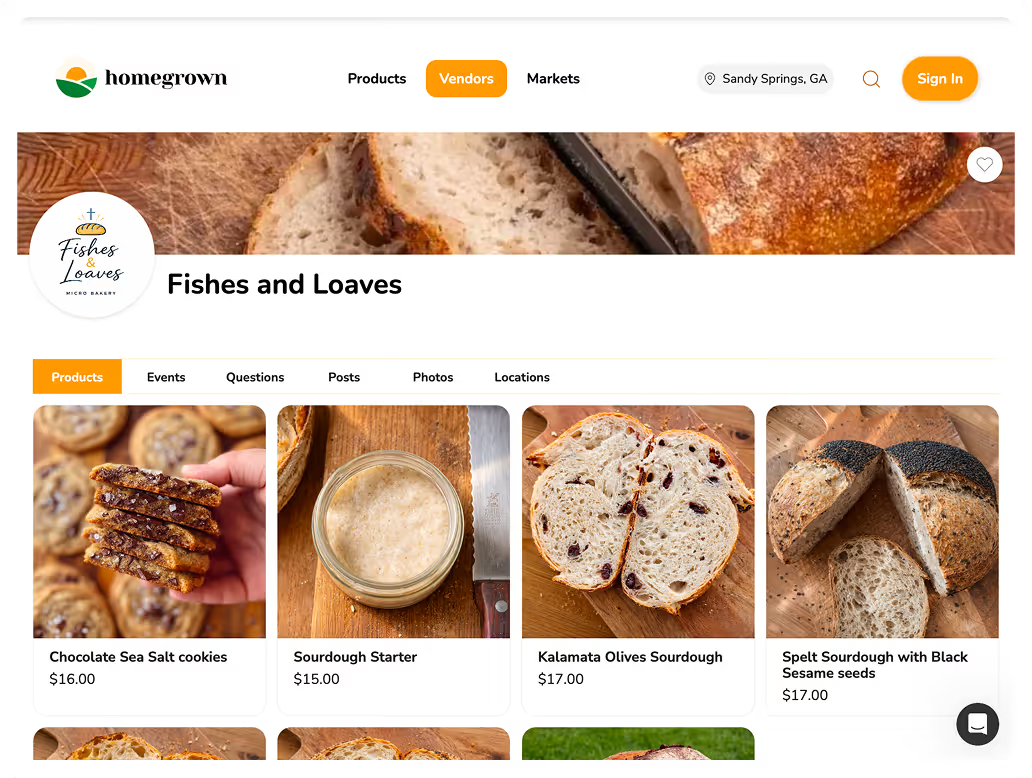
Try Homegrown free for 7 days to set up your holiday pre-order page so customers who discover you at the market can order from you all year long.
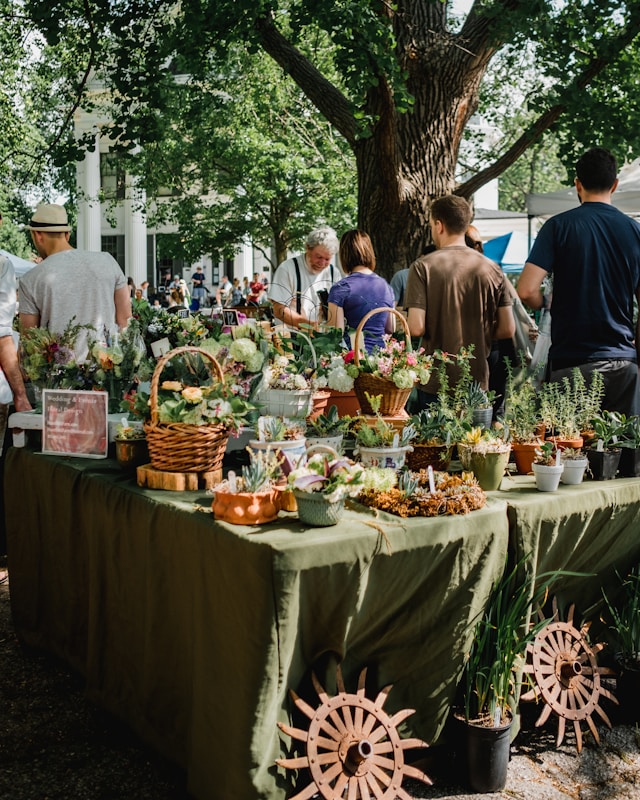
Holiday market booth presentation matters more than at any other selling venue. Shoppers are browsing for gifts in a festive atmosphere, and your booth needs to match the mood.
Holiday night markets (5pm to 9pm or later) require intentional lighting. Your booth needs to be warm, inviting, and bright enough to see products clearly.
Holiday market shoppers are gift buyers, not grocery shoppers. They expect premium prices and are less likely to comparison-shop.
| Product | Regular Market | Holiday Market | Premium |
|---|---|---|---|
| Fudge (half-pound) | $8 | $10-$12 | 25-50% |
| Decorated cookies (each) | $4 | $5-$6 | 25-50% |
| Jam jar | $8 | $10-$12 | 25-50% |
| Cookie gift box (dozen) | $24 | $30-$36 | 25-50% |
| Gift bundle (3 items) | N/A | $30-$45 | Bundle premium |
Holiday market season is 4 to 6 weekends of sustained selling — the highest-volume, highest-stress window of the year. Production planning is the difference between profitability and burnout.
If you have customers from your regular farmers market or online ordering page, offer pre-orders for holiday gift boxes. This guarantees revenue before you bake, covers your ingredient costs, and lets you bring exactly the right amount to the market.
If you are new to cottage food and want to understand the basics before committing to a holiday market, start with our guide on how to start a cottage food business.
Start your free trial at Homegrown to create your holiday pre-order page and let customers order gift boxes, cookie tins, and fudge assortments online.
Search Google for "[your city] Christmas market vendor application" or "holiday craft fair vendor [your county]." Check your local chamber of commerce website, your farmers market organizer, and event platforms like Eventbrite and Eventeny. Apply by spring — most major markets fill their vendor spots by July.
Booth fees range from $35 to $75 at small community markets to $180 to $325 per weekend at mid-range markets and $400 to $550 at premium craft fairs. Major city markets can charge $400 to $500 per day. The booth fee is worth it if you can cover it by selling 50 percent of your inventory — everything above that is profit.
Fudge (75 percent or higher margins), decorated sugar cookies, gift boxes bundling multiple products, jams and preserves, dry baking mixes, gingerbread, and holiday-flavored candy. Bundled gift boxes consistently outperform single items because shoppers are buying gifts, not snacks. Presentation and packaging matter more at holiday markets than any other venue.
Use warm-toned LED string lights in the 2700K to 3000K range along your canopy frame and table edges. Add LED strip lights under shelves to illuminate products from below. Use a clamp light aimed at your signage and price tags. Avoid cool-white or fluorescent lighting — it kills the warm, festive atmosphere that draws shoppers in.
No, except to clear inventory on the final day. Holiday shoppers expect premium prices for gift-ready products. Discounting erodes the perceived quality you worked to build. Instead, offer bundles that feel like a deal ("any 3 items for $25") while maintaining per-unit margins.
Focus on 3 to 5 top-selling products rather than a large menu. Stage production by shelf stability — make fudge, jams, and dry mixes 2 to 3 weeks ahead, cookies the week before, frosted items the day before. Track what sold out versus what came home after each weekend and adjust quantities for the next. Buy packaging supplies in bulk before October.
Apply in spring, ideally between January and June. Major Christmas markets open applications as early as January and fill their vendor rosters by July. Smaller community markets may accept applications through September. Apply to 3 to 5 markets to increase your chances of acceptance.
Christmas markets and holiday night markets are the highest-revenue, highest-atmosphere selling environment a cottage food vendor can enter. The 6-week window from November through December concentrates gift-motivated shoppers into festive venues where premium pricing is expected and presentation drives sales. Apply early, invest in your booth display, price for the gift buyer, and plan production across multiple weekends.
Start your free trial at Homegrown to set up your holiday pre-order page and start collecting orders alongside your market booth sales.