

Instagram is the best free marketing tool for a farm stand because food sells on visuals, and Instagram is the most visual platform on the internet. A farm stand with 300 local Instagram followers who see weekly product photos generates more consistent traffic than a farm stand with a great road sign but no online presence. The strategy is simple: post what you are selling this week with photos that make people hungry, include your location and hours, and link to an ordering page so followers can pre-order for pickup at your stand.
The short version: Post 3 to 5 times per week with a mix of product photos (Monday menu post with prices and your ordering link), behind-the-scenes content (harvesting, baking, setting up the stand), and customer photos or testimonials. Use 5 to 10 local hashtags on every post (#[YourCity]FarmStand, #LocalFood[YourCity]). Put your ordering link in your bio so customers can pre-order for farm stand pickup. Post Stories on your selling days with "we are open now" and a link sticker. The vendors who get the most farm stand traffic from Instagram are not the ones with the most followers — they are the ones who post consistently every week with clear information about what is available, what it costs, and how to order.
Farm stands sell food. Food is the most photographed category on Instagram. The platform was practically designed for you.
Here is why Instagram works specifically for farm stand promotion:
The vendors who fail at Instagram for farm stand promotion make one of two mistakes: they post great photos but never include pricing or ordering information, or they post sporadically instead of consistently. Instagram's algorithm weighs DM shares more heavily than likes when deciding what to distribute, according to Buffer's 2026 algorithm guide — so posts that your customers share with friends reach more people than posts that just get hearts. Fix those two things and Instagram becomes your most reliable traffic driver.
Your Instagram content should serve three purposes: show what you sell (product posts), show who you are (behind-the-scenes), and show that real people buy from you (social proof).
Product posts are your money posts. They show specific products with prices and tell customers how to order.
Monday menu post: Your most important post of the week. List what is available this week with prices and your ordering link. This is the post that generates direct orders. Pin it to the top of your grid. For a complete menu post guide, see our article on how to write Instagram menu posts that get orders.
Midweek highlight post: Feature one product with a close-up photo and a specific detail that makes it special. "This week's sourdough is made with heirloom wheat from [local farm]. Nutty, crusty, and absolutely worth the 48-hour ferment. $8 per loaf — order through the link in bio."
Behind-the-scenes posts build the personal connection that makes customers choose your farm stand over a grocery store:
These posts do not directly sell products but create the emotional investment that turns followers into regulars. People buy from people they feel connected to, and BTS content is how you build that connection without being in person.
Social proof shows that real people buy from you and enjoy your products:
Social proof is the most effective content type for converting followers who have been watching but have not ordered yet. Seeing another person's positive experience removes the risk of trying a new vendor.
Hashtags make your posts discoverable to people who do not follow you. Use 5 to 10 hashtags per post, focused on your location and product types:
Do NOT use generic hashtags like #food, #yummy, or #delicious — they are too broad and attract followers from around the world who will never visit your farm stand. Every hashtag should target people in your selling area.
Instagram Stories are your real-time marketing channel. Use them on your selling days to create urgency:
Post when you open for the day: a photo or short video of your stand set up and ready, with text overlay "OPEN NOW" and your hours. Add a location sticker for your address. Add a link sticker to your ordering page.
Walk through your products on camera or post photos of each item with prices. This is your live menu for walk-in customers. Add a "Swipe up to pre-order" or link sticker for customers who want to order for later pickup.
Post midway through your selling window: "Sourdough is going fast — 4 loaves left." This creates urgency for both walk-in and online customers. Scarcity drives action.
When a popular item sells out: "Cinnamon rolls sold out by 10 AM. Want to guarantee one next week? Pre-order through my link." This captures demand for next week and trains followers to pre-order instead of hoping for availability.
For a complete Stories strategy, see our guide on how to use Instagram Stories to take food orders.
Instagram drives awareness. Your ordering page drives sales. The connection between them is your bio link.
Your Instagram bio should include:
Replace "DM to order" with your ordering page URL. "DM to order" puts you in a conversation for every single sale — reading messages, confirming availability, negotiating pickup times, chasing payment. At 5 customers it is manageable. At 20 it is a second job that has nothing to do with growing food.
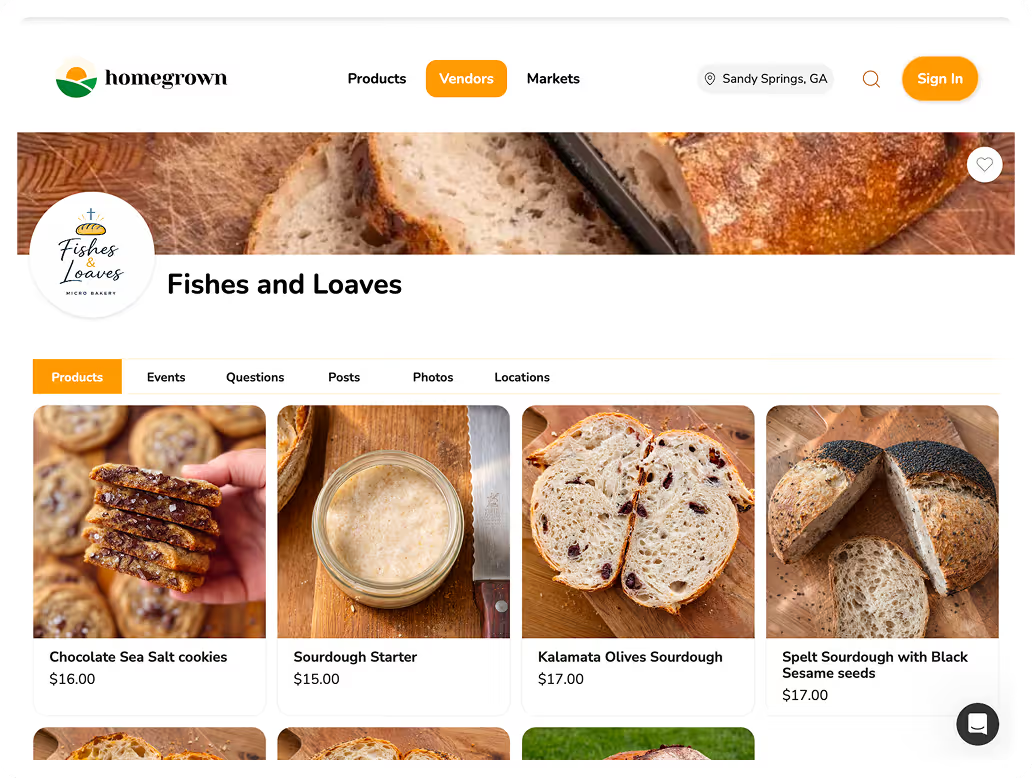
Homegrown costs $10/month with no percentage fees and gives you one link where customers see your current products, select items, pay, and choose farm stand pickup. Every Instagram post drives to this link. A Linktree page adds a click between the customer and the purchase and does not handle ordering or payment — you still end up in DMs. Square Online handles checkout but charges 2.9% plus 30 cents per transaction and requires building a full website when all you need is a product list with a payment button. Homegrown does not manage your Instagram content, write your captions, or schedule your posts — this guide covers those. What it does is give your bio link a destination that converts a follower into a prepaid order without any back-and-forth.
For complete bio optimization, see our guide on what to write in your Instagram bio when you sell food.
Every product post caption should end with a call to action pointing to your link:
Every Story that features a product should include a link sticker to your ordering page. Stories with link stickers convert better than Stories that say "link in bio" because the customer does not have to navigate to your profile — they tap and go directly to your ordering page.
Here is a realistic weekly Instagram schedule for a farm stand vendor:
| Day | Content Type | Platform | Time |
|---|---|---|---|
| Monday | Weekly menu post with prices + ordering link | Feed | 8-9 AM |
| Tuesday | Behind-the-scenes (prep, harvesting, baking) | Feed or Story | Anytime |
| Wednesday | Midweek product highlight or customer testimonial | Feed | 12-1 PM |
| Thursday | Behind-the-scenes Story (getting ready for Saturday) | Story | Anytime |
| Friday | "Tomorrow's lineup" reminder + link sticker | Story | 5-7 PM |
| Saturday | "We are open" + "almost gone" + "sold out" Stories | Story | Throughout the day |
| Sunday | Rest (optional: "What should I make next week?" poll) | Story | Optional |
Total time: 30 to 45 minutes per week. This schedule keeps you visible to followers every day without requiring daily feed posts.
More local followers means more potential farm stand customers. Here is how to grow:
The goal is not 10,000 followers. The goal is 300 to 500 local followers who can actually visit your stand and order from you. One hundred local customers who buy $15 per week is $78,000 per year. You do not need viral content to build that. You need consistent local visibility — and Instagram still delivers roughly triple the organic reach of Facebook, according to Socialinsider's 2025 cross-platform study, making it the strongest free channel for a local food vendor.
For more on growing beyond your existing network, see our guide on how to grow your food business beyond the people you already know.
Instagram is useful from day one. Even 50 local followers represent 50 people who see your weekly menu. Most farm stands generate meaningful traffic from Instagram with 200 to 500 local followers. Focus on local relevance, not follower count.
Yes. Reels reach non-followers through the Explore page, making them the best format for attracting new local followers. A 15-second Reel of you slicing fresh bread or setting up your stand with a trending audio clip can reach thousands of local users. Post 1 to 2 Reels per week alongside your regular feed posts and Stories.
For farm stand vendors, post product content in the morning (8 to 10 AM) when people are planning their day or week. Post Stories during your selling hours so followers see real-time availability. Post behind-the-scenes content anytime — it performs well regardless of timing.
No. Three to five posts per week is sufficient. Consistency matters more than frequency. Three posts every week for a year outperforms daily posting for one month followed by silence. Pick a schedule you can maintain and stick with it.
You can cross-post, but tailor slightly for each platform. Facebook captions can be longer and more detailed. Instagram captions should lead with the visual. Include your ordering link on both. Facebook groups are a separate channel from your Facebook page — post in groups manually with group-appropriate language.
Post your weekly menu in a feed post with your location, prices, and ordering link. Share it to your Story with a link sticker. Use 5 to 10 local hashtags. If nobody orders from the feed post, share the link in 2 to 3 local Facebook groups (which also drives Instagram followers). Your first Instagram customer typically comes within 1 to 2 weeks of consistent posting.
You do not need to be good. You need natural light and a clean background. Shoot near a window. Use a cutting board or white countertop. Take 10 photos and pick the best one. Your customers want to see real food from a real person, not magazine photography. Imperfect but honest photos often perform better than polished ones because they feel authentic.
Ask questions in your captions and use interactive Story features like polls and question boxes. "What should I bake this week — cinnamon rolls or blueberry scones?" gets more replies than "New scones available Saturday." Engagement drives the algorithm to show your content to more people, which means more potential customers see your stand. Reply to every comment and DM quickly — the faster you respond, the more Instagram treats your post as active and worth distributing.
For most farm stand vendors, no — not until your organic posting is consistent and generating regular orders. Free content in your feed, Stories, and Reels reaches your local audience effectively when paired with location hashtags. If you do want to boost a post, spend $5 to $10 on a single high-performing product post targeted to your city or zip code. But organic consistency beats paid promotion for farm stands because the audience is hyper-local and the products sell through trust, not ad impressions.